

Il dipinto del giorno: l’Annunciazione di Orazio Gentileschi
L’opera che vi propongo è uno dei massimi capolavori di Orazio Gentileschi se non la sua opera più bella in assoluto: l’Annunciazione.
Una straordinaria composizione che mette assieme l’impostazione tradizionale fiorentina del Quattrocento e il realismo a lui contemporaneo di Caravaggio.
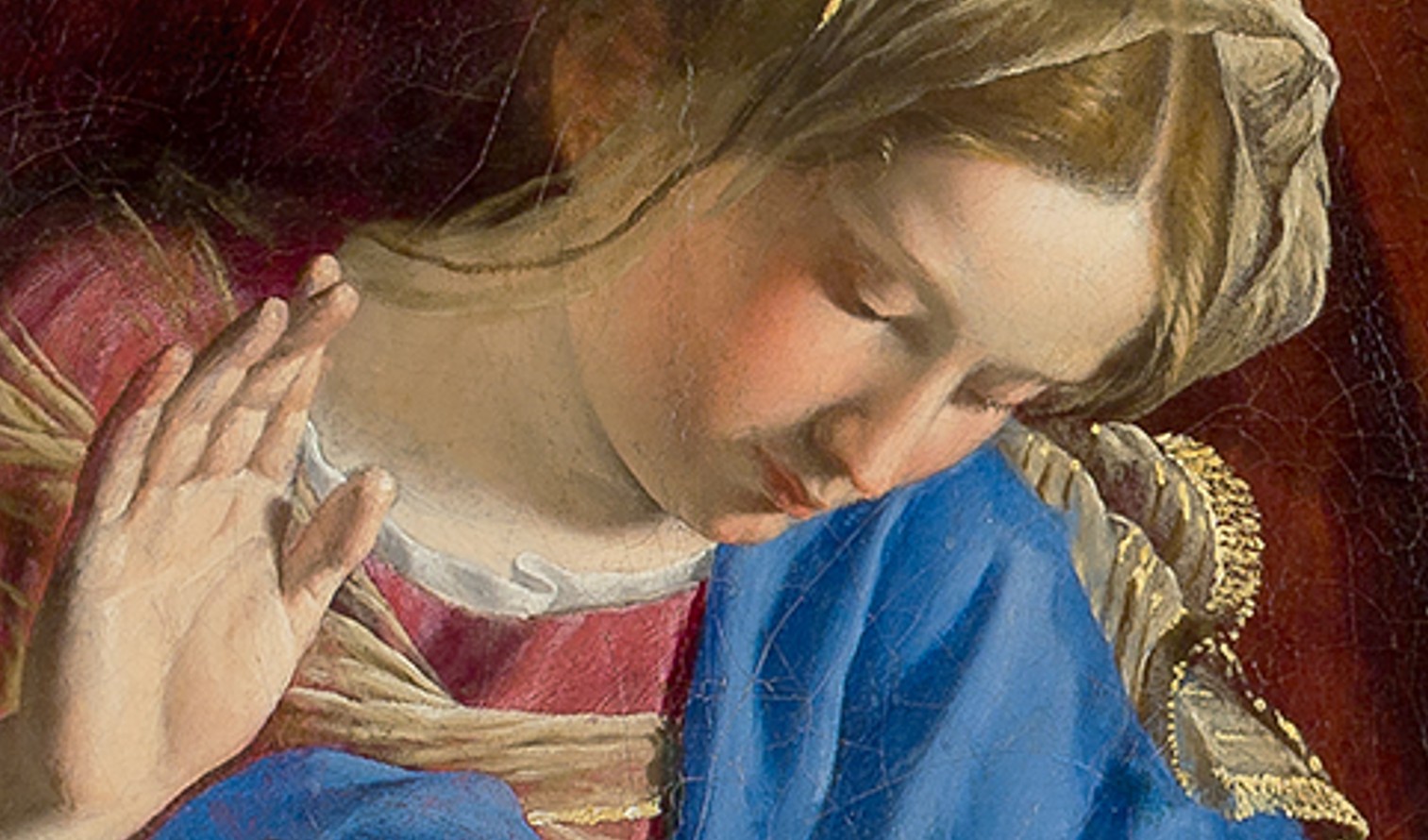

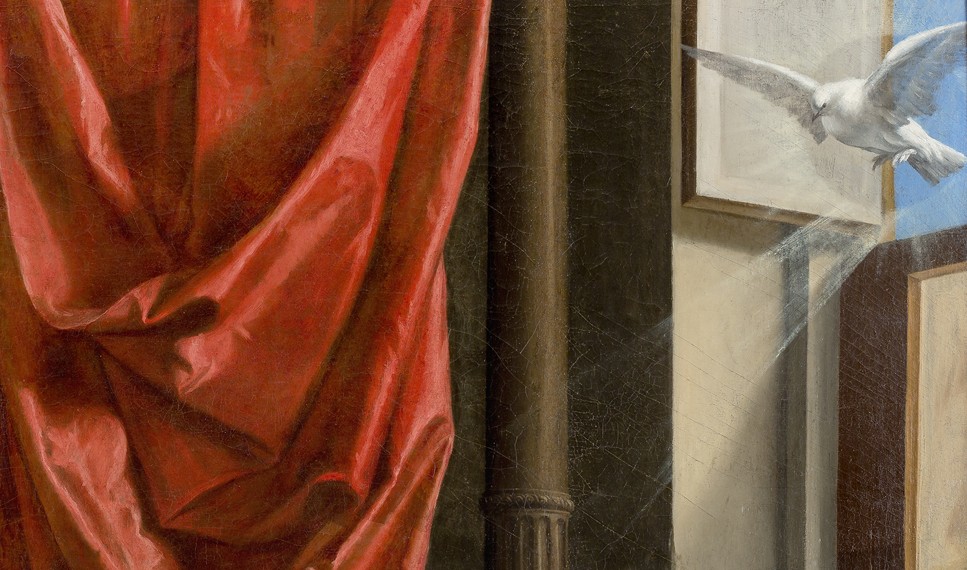
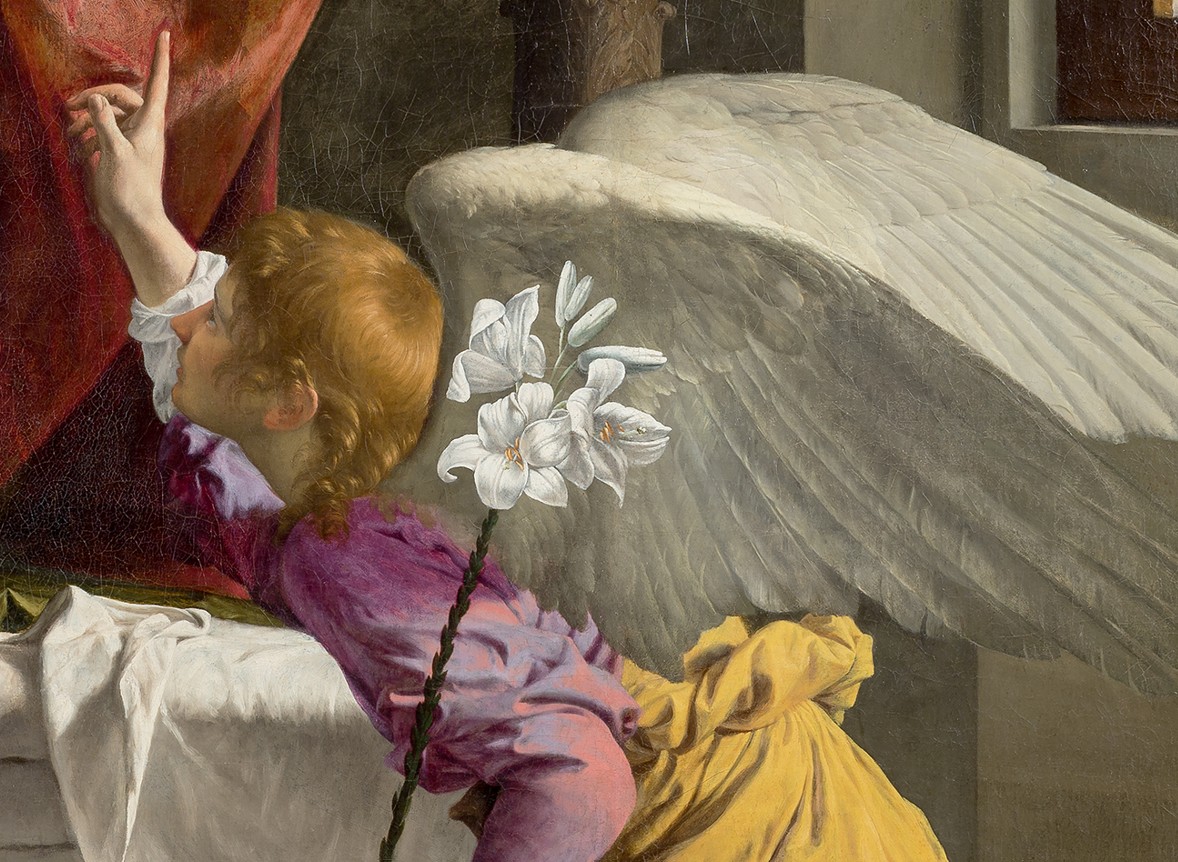
La vera protagonista del dipinto è la luce che inonda i due personaggi che si muovono sulla scena. La Madonna e l’Arcangelo Gabriele con un giglio in mano, simbolo di purezza sono avvolti nel bagliore proveniente direttamente dalla colomba dello Spirito Santo, capace di modellare i volumi alla stregua di uno scultore.
La Vergine è abbigliata con una veste rossa, più scura del drappo dello stesso colore che ha alle spalle. Ha un manto celeste e un velo semi trasparente che le copre il capo e le scende sulle spalle. L’Arcangelo invece ha una veste lilla e un manto giallo ocra.
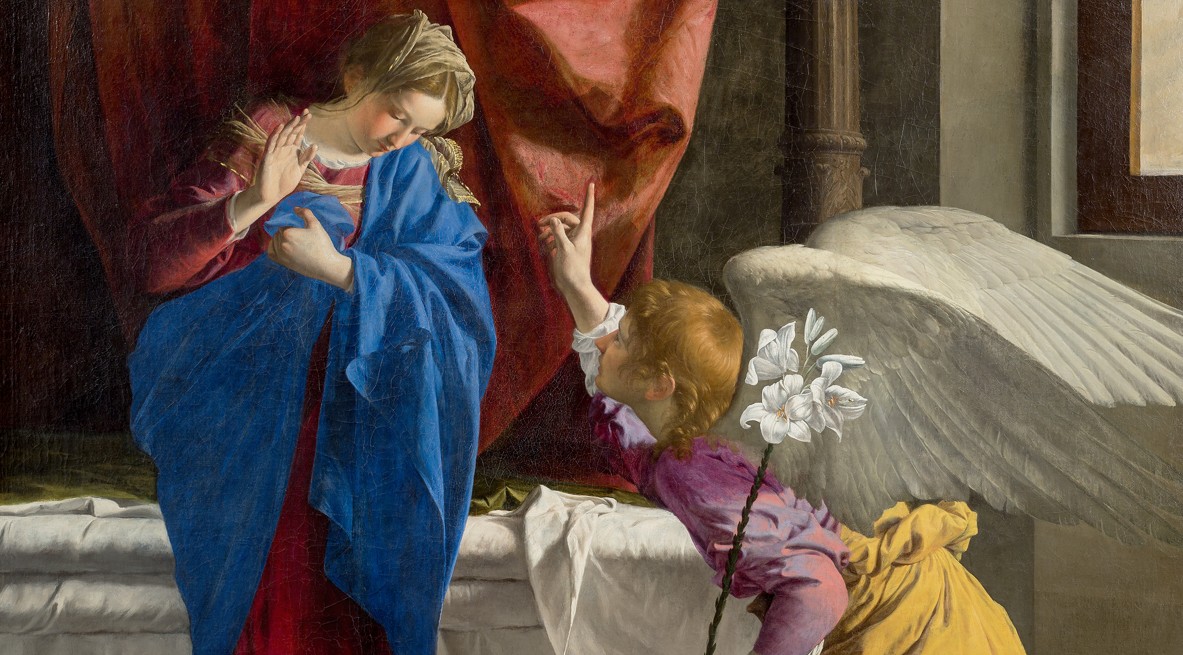
Sullo sfondo risaltano nitidamente il bianco che si staglia contro il rosso del tendaggio del baldacchino. Qui Gentileschi usa uno stratagemma tipico di Caravaggio.
Il maestro romano infatti era solito accentuare l’importanza dei protagonisti di un dipinto vestendoli di rosso oppure mettendo dietro di loro un qualcosa che avesse questo colore, per farli risaltare meglio.
L’ambiente in cui ha luogo la scena è reso in modo eccellente dall’artista. Guardate per esempio il muro leggermente sbrecciato vicino alla finestra: una vera chicca.
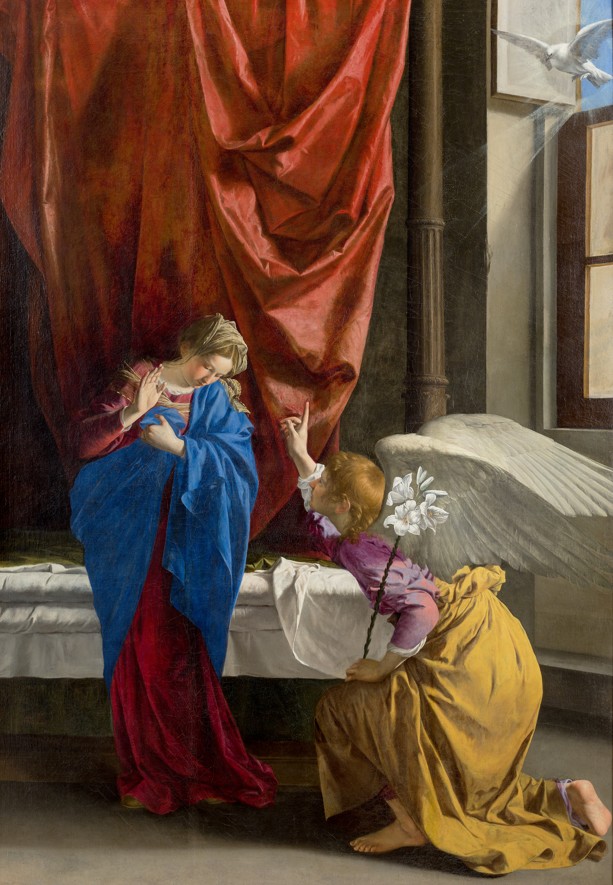

Sapete, era il 2 aprile 1623 quando Orazio Gentileschi inviò da Genova a Torino la grande tela dell’Annunciazione, oggi custodita abitualmente alla Galleria Sabauda, destinandola in dono al duca di Savoia Carlo Emanuele I.
Il dipinto fu presentato tramite il figlio Francesco e accompagnato da una lettera nella quale l’artista ricordava la sua familiarità con la corte torinese per precedenti servizi resi al duca Baudi di Vesme.
Probabilmente i contati giovanili erano dovuti alla pala con la Madonna in gloria e la Santissima Trinità, oggi al Museo Civico d’Arte Antica di Torino, eseguita attorno al 1605 per l’altare maggiore della chiesa del Monte dei Cappuccini, voluta proprio da Carlo Emanuele I.
L’Annunciazione di Gentileschi: un’opera rubata da Napoleone
Nel 1799, durante le spoliazioni napoleoniche, il dipinto dell’Annunciazione di Gentileschi fu portato a Parigi e sottoposto a un intervento di restaurato.
L’opera però ebbe la buona sorte di far rientro a Torino nel 1815, grazie al recupero effettuato dal funzionario sabaudo Lodovico Costa.

Per il momento il sempre vostro Michelangelo Buonarroti vi saluta dandovi appuntamento ai prossimi post e sui social.
Painting of the Day: The Annunciation by Orazio Gentileschi
The work I propose is one of Orazio Gentileschi’s greatest masterpieces, if not his most beautiful work of all: The Annunciation.
An extraordinary composition that combines the traditional Florentine style of the fifteenth century with the contemporary realism of Caravaggio.
The true protagonist of the painting is the light that floods the two figures moving across the scene. The Madonna and the Archangel Gabriel, holding a lily, a symbol of purity, are enveloped in the glow coming directly from the dove of the Holy Spirit, capable of shaping the volumes like a sculptor.
The Virgin is dressed in a red robe, darker than the red cloth she wears behind her. She wears a light blue cloak and a semi-transparent veil that covers her head and falls over her shoulders. The Archangel, on the other hand, wears a lilac robe and an ochre-yellow cloak.
In the background, the white stands out clearly against the red of the canopy curtains. Here, Gentileschi uses a typical Caravaggio device. The Roman master often emphasized the importance of the subjects in a painting by dressing them in red or placing something red behind them to make them stand out more.
The setting in which the scene takes place is excellently rendered by the artist. Look, for example, at the slightly chipped wall near the window: a real gem.
You know, it was April 2, 1623, when Orazio Gentileschi sent the large canvas of the Annunciation, now usually housed in the Galleria Sabauda, from Genoa to Turin, intending it as a gift to the Duke of Savoy, Charles Emmanuel I.
The painting was presented by his son Francesco and accompanied by a letter in which the artist recalled his familiarity with the Turin court through previous services rendered to Duke Baudi di Vesme.
These early contacts were likely due to the altarpiece with the Madonna in Glory and the Holy Trinity, now in the Civic Museum of Ancient Art in Turin, painted around 1605 for the high altar of the church of Monte dei Cappuccini, commissioned by Charles Emmanuel I.
Gentileschi’s Annunciation: a work stolen by Napoleon
In 1799, during the Napoleonic plundering, Gentileschi’s Annunciation painting was taken to Paris and restored.
The work, however, had the good fortune of returning to Turin in 1815, thanks to its recovery by the Savoy official Lodovico Costa.
For now, yours truly, Michelangelo Buonarroti bids you farewell and invites you to see him in future posts and on social media.

Sostienici – Support Us
Se questo blog ti piace e ti appassiona, puoi aiutarci a farlo crescere sempre più sostenendoci in modo concreto condividendo i post, seguendo le pagine social e con un contributo che ci aiuta ad andare avanti con il nostro lavoro di divulgazione. . ENGLISH: If you like and are passionate about this blog, you can help us make it grow more and more by supporting us in a concrete way by sharing posts, following social pages and with a contribution that helps us to move forward with our dissemination work.
10,00 €
Condividi:


Questo sono io





sostienici

Sostienici – Support Us
Se questo blog ti piace e ti appassiona, puoi aiutarci a farlo crescere sempre più sostenendoci in modo concreto condividendo i post, seguendo le pagine social e con un contributo che ci aiuta ad andare avanti con il nostro lavoro di divulgazione. . ENGLISH: If you like and are passionate about this blog, you can help us make it grow more and more by supporting us in a concrete way by sharing posts, following social pages and with a contribution that helps us to move forward with our dissemination work.
€10,00


