
La straordinaria Bibbia di Borso d’Este
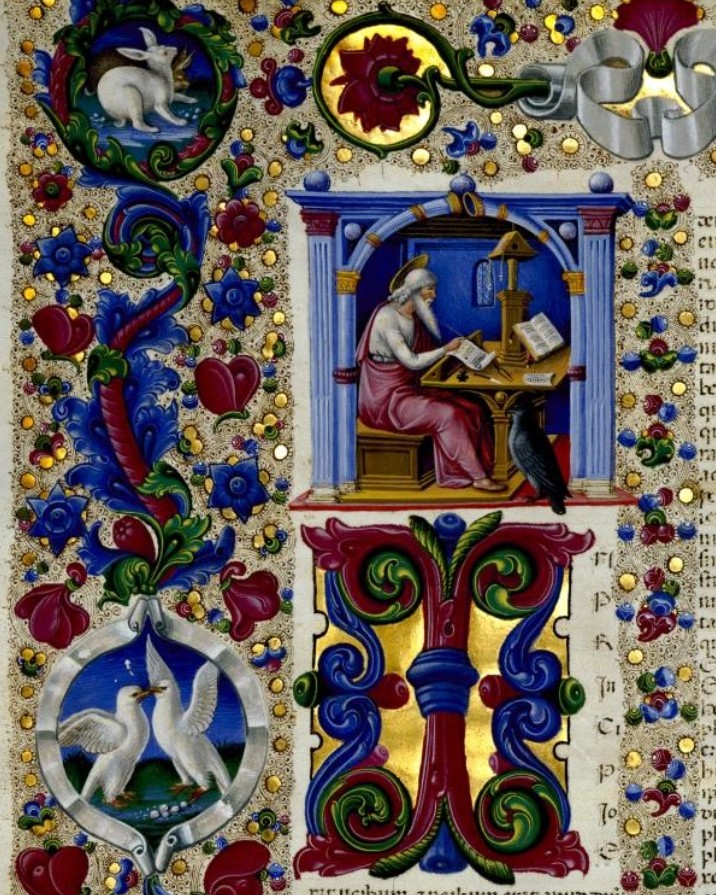
La Bibbia di Borso d’Este è uno capolavoro mozzafiato. Si tratta di uno dei codici miniati del periodo rinascimentale più noti e amati di sempre, esempio della cultura figurativa sviluppatasi nell’antica capitale del ducato estense: Modena.
Oggi la preziosissima Bibbia miniata è custodita presso la Biblioteca Estense di Modena. Venne decorata da un nutrito gruppo di miniatori sotto la direzione e sorveglianza diretta di Taddeo Crivelli e Franco dei Russi.

La bottega dei due artisti era divenuta un vero e proprio centro dal quale prese vita lo stile della scuola ferrarese rinascimentale. Com’è noto, si tratta del più celebre codice miniato italiano.
Borso d’Este commissionò il codice non tanto per devozione ma con lo scopo di celebrare lo splendore della propria casata.
La Bibbia venne miniata in terra ferrarese tra il 1455 e il 1461, coinvolgendo diversi abili miniatori.

Il manoscritto di Boso d’Este è composto da 606 fogli minati su tutte e due le facce. La sua decorazione della Bibbia lascia senza fiato Incredibilmente moderna per la sua epoca, mette assieme innovazioni già affermatesi nel Rinascimento toscano con le novità provenienti dalla pittura fiamminga. L’opulenza dei fregi e la quantità di miniature, tutte raffinate e arricchite da imprese ed emblemi estensi, rendono il codice un unicum nel panorama artistico europeo.
L’apparato illustrativo è un capolavoro straordinario. La scelta di incorniciare anche le carte interne con fregi raffinati e l’utilizzo e l’uso di pigmenti costosissimi come il lapislazzuli proveniente dall’Afghanistan, aggiungono preziosità all’incredibile lavoro di miniatura.

L’opera è suddivisa in due differenti volumi. Il primo riporta l’Antico Testamento mentre il secondo che comincia dal libro profetico di Isaia, include tutti i volumi del Nuovo Testamento e la lista dei nomi ebraici.
Questo manoscritto venne esibito agli ambasciatori e portata da Borso nel viaggio a Roma per ottenere il titolo ducale da papa Paolo II nel 1471.
La Bibbia arrivò a Modena nel 1598, quando la corte estense si trasferì da Ferrara dopo la devoluzione della città allo Stato Pontificio. Rimase di proprietà della famiglia d’Este per ben tre secoli consecutivi fino a quando la principessa Zita d’Asburgo, ultima erede della casata estense, la volle mettere in vendita attraverso un antiquario francese.
Nel 1923 il codice fu acquistato dall’imprenditore tessile Giovanni Treccani degli Alfieri ovvero colui che successivamente avrebbe creato l’Istituto della Enciclopedia Italiana. L’acquisto si concluse con il pagamento da parte di Treccani della cifra record per l’epoca di cinque milioni di lire. Treccani però non tenne per sé quel patrimonio ma volle farne dono allo Stato Italiano.

La Bibbia di Boso, detta anche “Bibla bèla”, fece così ritorno a Modena, dove è tuttora conservata alla Biblioteca Estense Universitaria.
Per il momento il sempre vostro Michelangelo Buonarroti vi saluta dandovi appuntamento ai prossimi post e sui social.
The Extraordinary Borso d’Este Bible
The Borso d’Este Bible is a breathtaking masterpiece. It is one of the most famous and beloved illuminated manuscripts of the Renaissance period, an example of the figurative culture that developed in the ancient capital of the Duchy of Este: Modena.
Today, the priceless illuminated Bible is housed in the Estense Library in Modena. It was decorated by a large group of illuminators under the direct direction and supervision of Taddeo Crivelli and Franco dei Russi.
The workshop of these two artists had become a true center for the development of the Ferrarese Renaissance school of painting. As is well known, it is the most famous illuminated manuscript in Italy. Borso d’Este commissioned the manuscript not so much out of devotion as to celebrate the splendor of his family.
The Bible was illuminated in the Ferrarese area between 1455 and 1461, involving several skilled illuminators.
The Boso d’Este manuscript comprises 606 leaves illuminated on both sides. Its decoration of the Bible is breathtaking. Incredibly modern for its time, it combines innovations already established in the Tuscan Renaissance with innovations from Flemish painting. The opulence of the friezes and the abundance of miniatures, all refined and enriched with Este devices and emblems, make the codex unique in the European artistic panorama.
The illustrative apparatus is an extraordinary masterpiece. The choice to frame even the internal pages with refined friezes and the use of extremely expensive pigments such as lapis lazuli from Afghanistan add preciousness to the incredible illumination work.
The work is divided into two different volumes. The first contains the Old Testament, while the second, beginning with the prophetic book of Isaiah, includes all the volumes of the New Testament and the list of Hebrew names.
This manuscript was presented to the ambassadors and carried by Borso on his journey to Rome to obtain the ducal title from Pope Paul II in 1471.
The Bible arrived in Modena in 1598, when the Este court moved from Ferrara after the city’s devolution to the Papal States. It remained the property of the Este family for three centuries until Princess Zita of Habsburg, the last heir of the House of Este, put it up for sale through a French antiques dealer.
In 1923, the codex was purchased by the textile entrepreneur Giovanni Treccani degli Alfieri, the man who would later found the Institute of the Italian Encyclopedia. The purchase was finalized with Treccani’s payment of the then-record sum of five million lire. Treccani, however, did not keep the heritage for himself but instead donated it to the Italian State.
The Boso Bible, also known as the “Bibla bèla,” thus returned to Modena, where it is still preserved at the Biblioteca Estense Universitaria.
For now, yours truly, Michelangelo Buonarroti bids farewell and invites you to join him in future posts and on social media.

Sostienici – Support Us
Se questo blog ti piace e ti appassiona, puoi aiutarci a farlo crescere sempre più sostenendoci in modo concreto condividendo i post, seguendo le pagine social e con un contributo che ci aiuta ad andare avanti con il nostro lavoro di divulgazione. . ENGLISH: If you like and are passionate about this blog, you can help us make it grow more and more by supporting us in a concrete way by sharing posts, following social pages and with a contribution that helps us to move forward with our dissemination work.
10,00 €
Condividi:


Questo sono io





sostienici

Sostienici – Support Us
Se questo blog ti piace e ti appassiona, puoi aiutarci a farlo crescere sempre più sostenendoci in modo concreto condividendo i post, seguendo le pagine social e con un contributo che ci aiuta ad andare avanti con il nostro lavoro di divulgazione. . ENGLISH: If you like and are passionate about this blog, you can help us make it grow more and more by supporting us in a concrete way by sharing posts, following social pages and with a contribution that helps us to move forward with our dissemination work.
€10,00


