

Michelangelo a Bologna: la mostra che mancava
Apre oggi al pubblico la mostra ‘Michelangelo a Bologna’ dedicata ai due momenti della mia vita in cui ebbi modo di rimanere in città per diverso tempo, realizzando quattro opere, tre delle quali tutt’oggi visibili.
Una mostra che a mio avviso ancora mancava e che racconta in modo approfondito i miei periodi bolognesi, il rapporto che ebbi con i due committenti dell’epoca ma mette in luce anche quanto ebbi modo probabilmente di apprendere dagli artisti che all’epoca lavoravano in città.
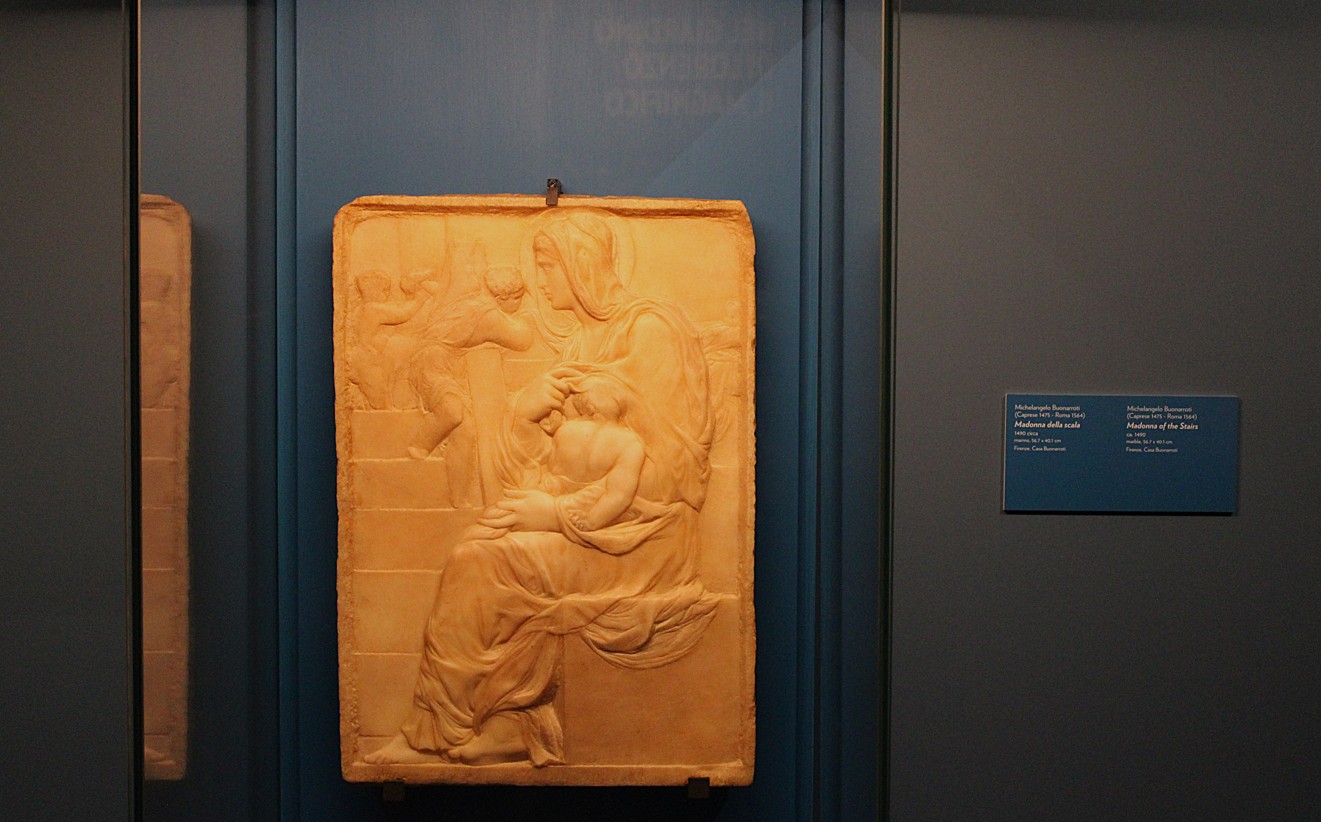
L’esposizione curata da Cristina Acidini e Alessandro Cecchi è stata allestita in occasione del 550 anni dalla mia nascita, avvenuta a Caprese il 6 marzo del 1475 e si snoda attraverso sei sezioni.
Oltre cinquanta le opere esposte tra sculture, documenti, disegni, libri e documenti d’archivio che narrano il mio rapporto con Bologna, gli artisti e le personalità dell’epoca.
Arrivai per la prima volta in città 1494 assieme a due amici dei quali è ignota ancora oggi l’identità. Mi rifugiai qua anticipando la cacciata dei Medici da Firenze ma ebbi subito a che fare con un notevole problema. Avevo 19 anni all’epoca e ignoravo che ai forestieri era richiesta una tassa da pagare per entrare a Bologna. Dopo il pagamento veniva apposto un sigillo di cera rossa sull’unghia del pollice: sigillo che io e gli altri non avevamo.
Presto le autorità se ne resero conto e ci fermarono pretendendo da ciascuno di noi una multa di 50 bolognini.
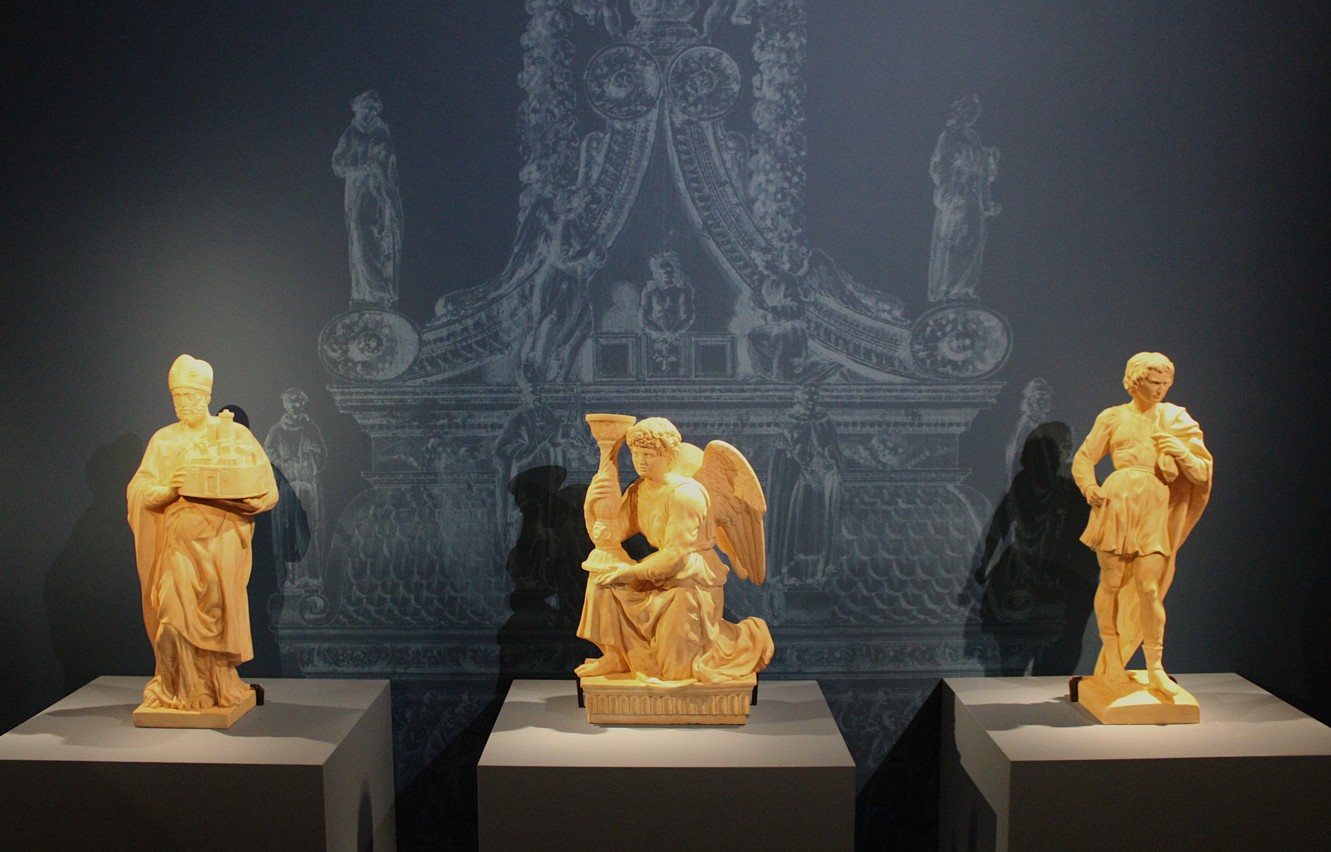
Mi salvò da quell’impiccio Giovan Francesco Aldovrandi che pagò la multa e mi offrì ospitalità. Probabilmente sapeva o gli raccontai in quell’occasione di essere uno scultore cresciuto nel Giardino di Lorenzo de’ Medici: una garanzia. Gli altri che erano con me furono tolti dall’impiccio e rimandati a casa. Io rimasi a scolpire tre opere per l’Arca di San Domenico: l’Angelo Reggicandelabro, il San Procolo e il San Petronio.
Le tre opere sono in mostra mediante copie assai fedeli degli originali che possono essere apprezzati nella chiesa di San Domenico di Bologna. Il fulcro del percorso espositivo è la narrazione dei miei periodi bolognesi, messi in rapporto con le opere di chi in quel periodo lavorava a Bologna per riuscire a rintracciare eventuali influenze che ebbero sulla mia produzione.
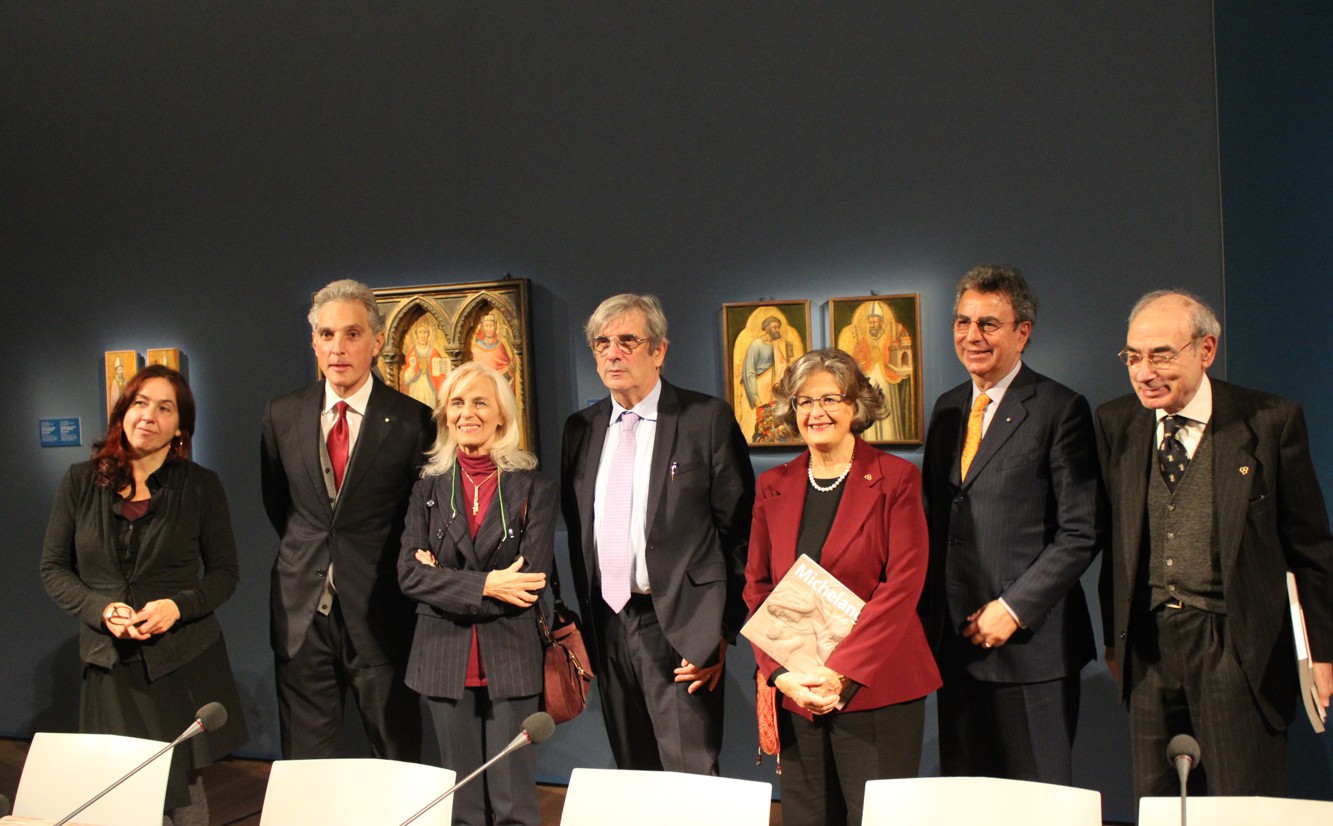
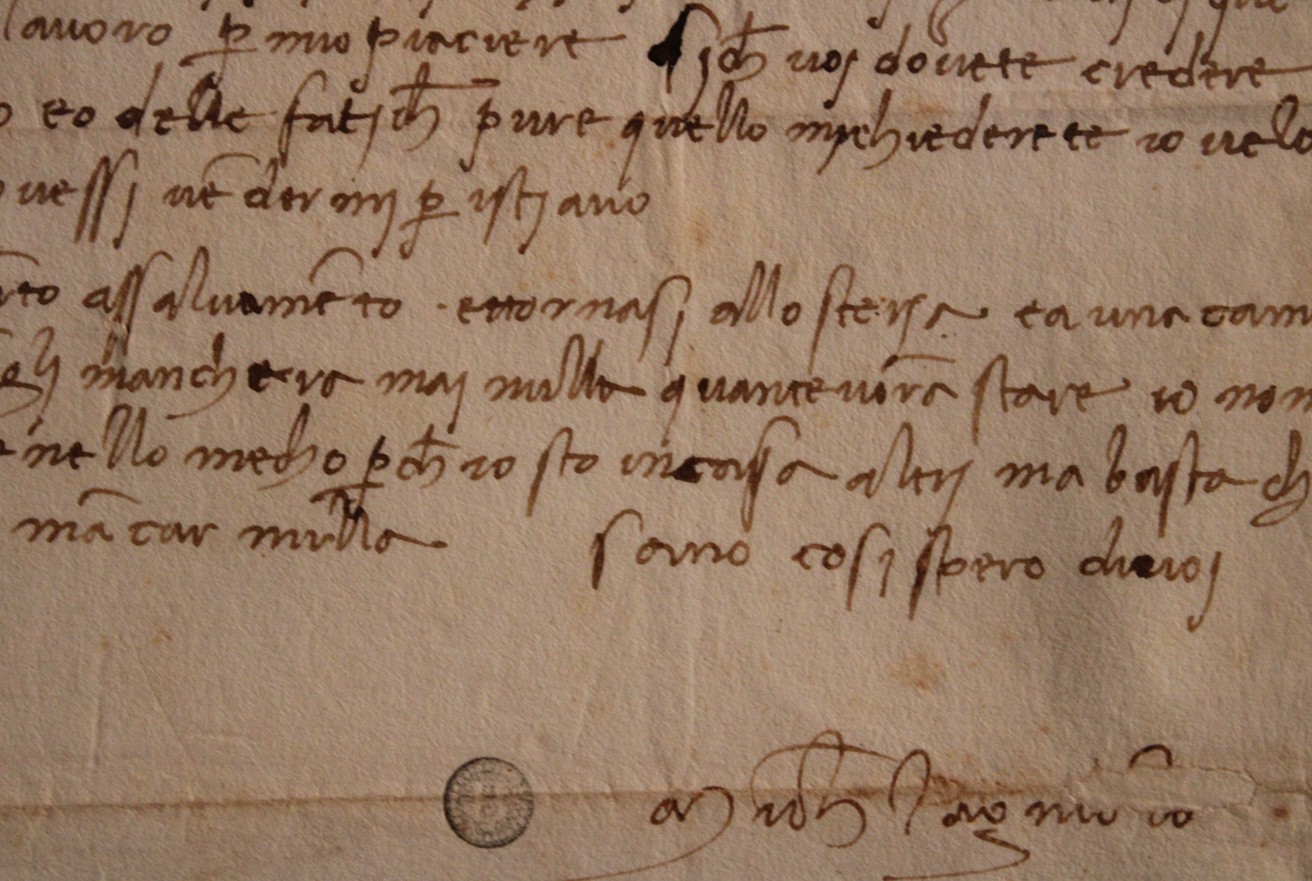
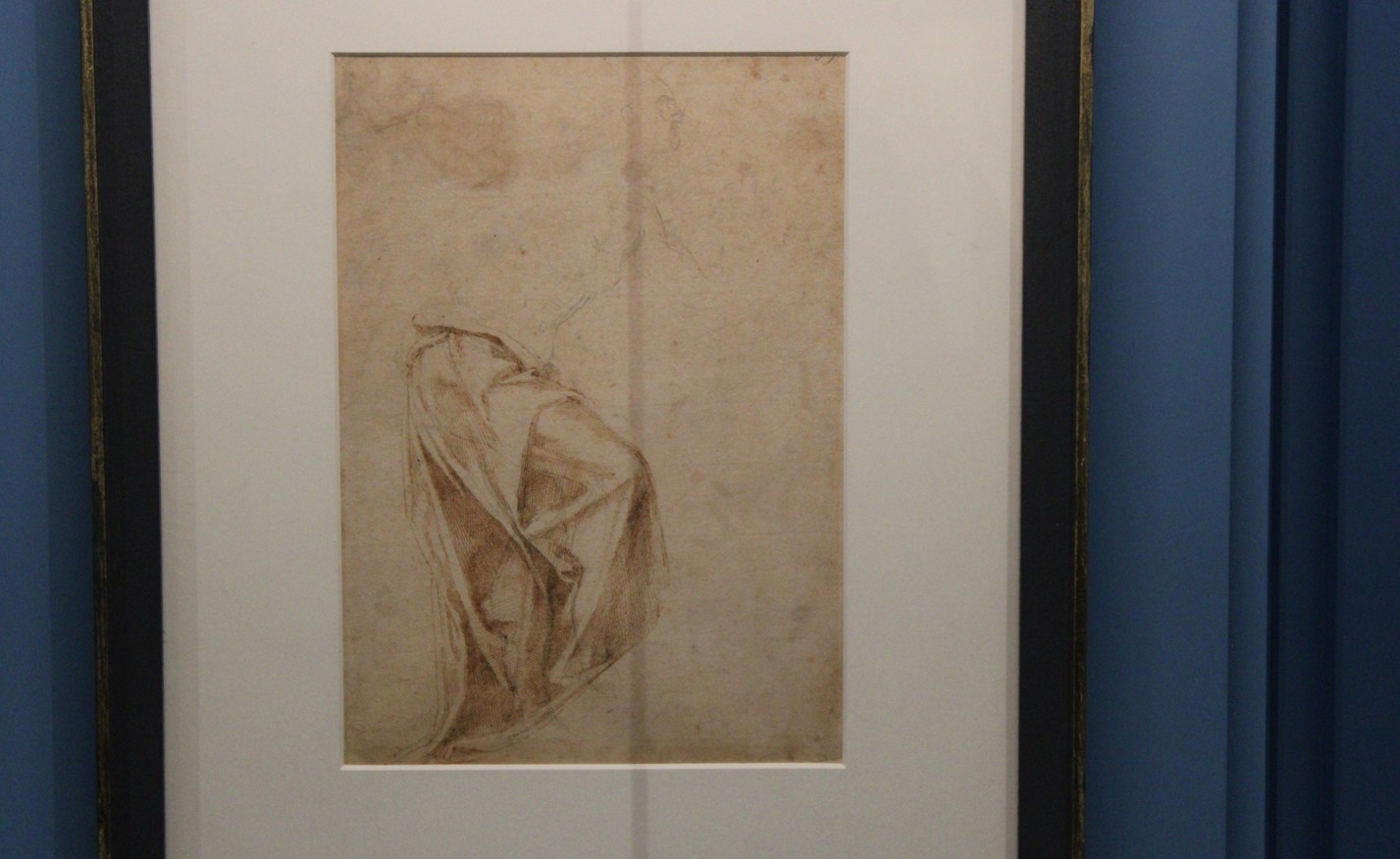
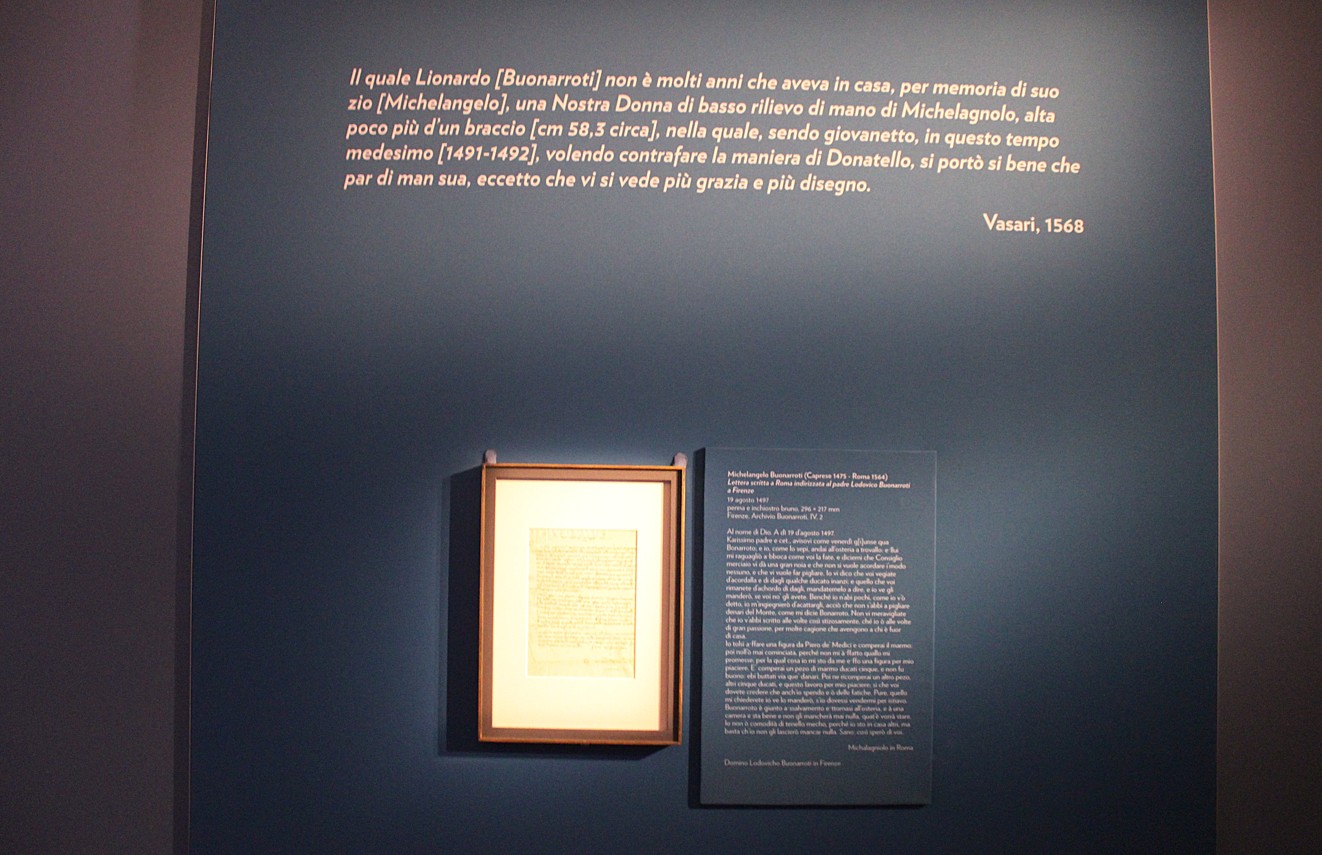
Come sapete sono poche le opere mie scultoree che possono viaggiare. In mostra è possibile apprezzare la Madonna della Scala arrivata direttamente da Casa Buonarroti. La scultura che realizzai attorno al 1490 nel celeberrimo Giardino di San Marco, è accompagnata da un mio studio di un panneggio e da una lettera che scrissi al mi babbo Lodovico, entrambe facenti parti del patrimonio di Casa Buonarroti.
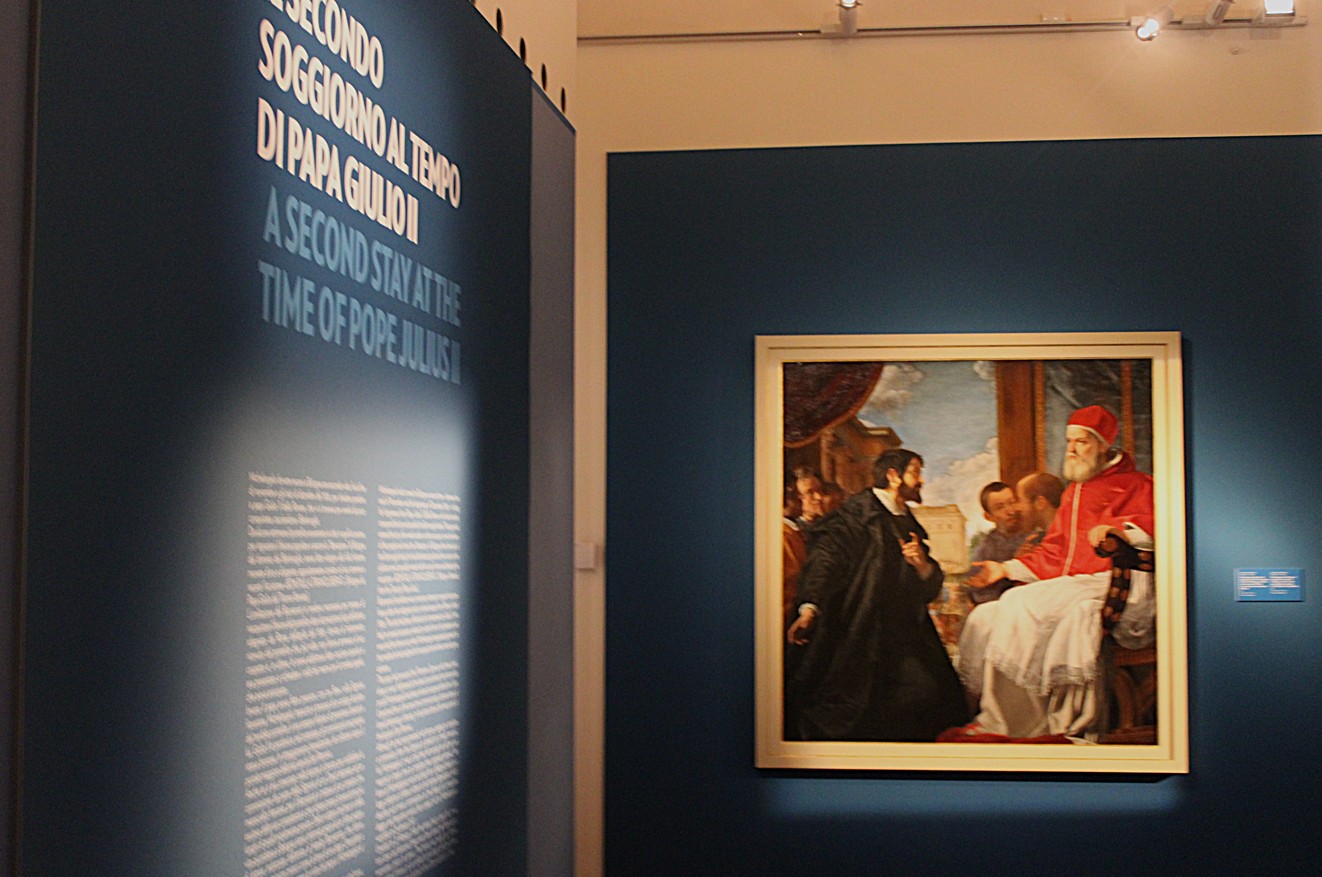
La seconda volta che arrivai a Bologna fu nel 1506,quando mi toccò andare a chiedere perdono a papa Giulio II per essere fuggito da Roma per colpa sua. Come vi ho raccontato più volte, quando lui mi fece mandar via dal palafreniere senza ricevermi per dare i soldi che mi doveva per i marmi fatti estrarre a Carrara per la sua tomba, scappai a Firenze. Quando poi il pontefice sottrasse Bologna ai Bentivoglio, su insistenza del Soderini mi toccò recarmi al cospetto del pontefice e lui mi commissionò una grande opera in bronzo a tutto tondo che lo ritraeva che venne installata sopra la facciata di San Petronio.
Opera che ebbe vita breve perché al ritorno dei Bentivoglio fu Abbattuta. La testa venne salvata e finì nelle collezioni di Alfonso d’Este mentre il corpo fu fatto a pezzi e lo stesso Alfonso ordinò ne venisse fatta una colubrina: la Giuliana per l’appunto.
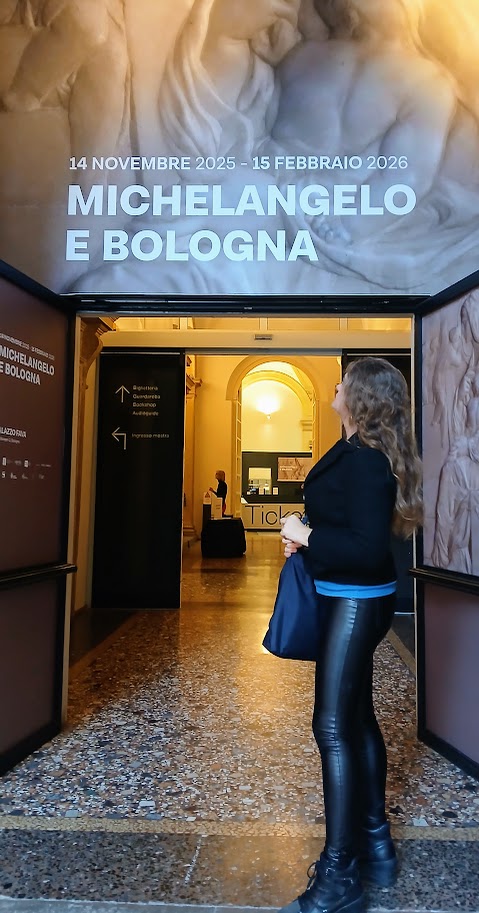
La mostra ‘Michelangelo e Bologna‘ apre al pubblico oggi 14 novembre 2025 fino al 15 febbraio 2026 a Palazzo Fava, e come vi ho narrato, analizza in maniera ricca e dettagliata il legame che ebbi con la città felsinea.
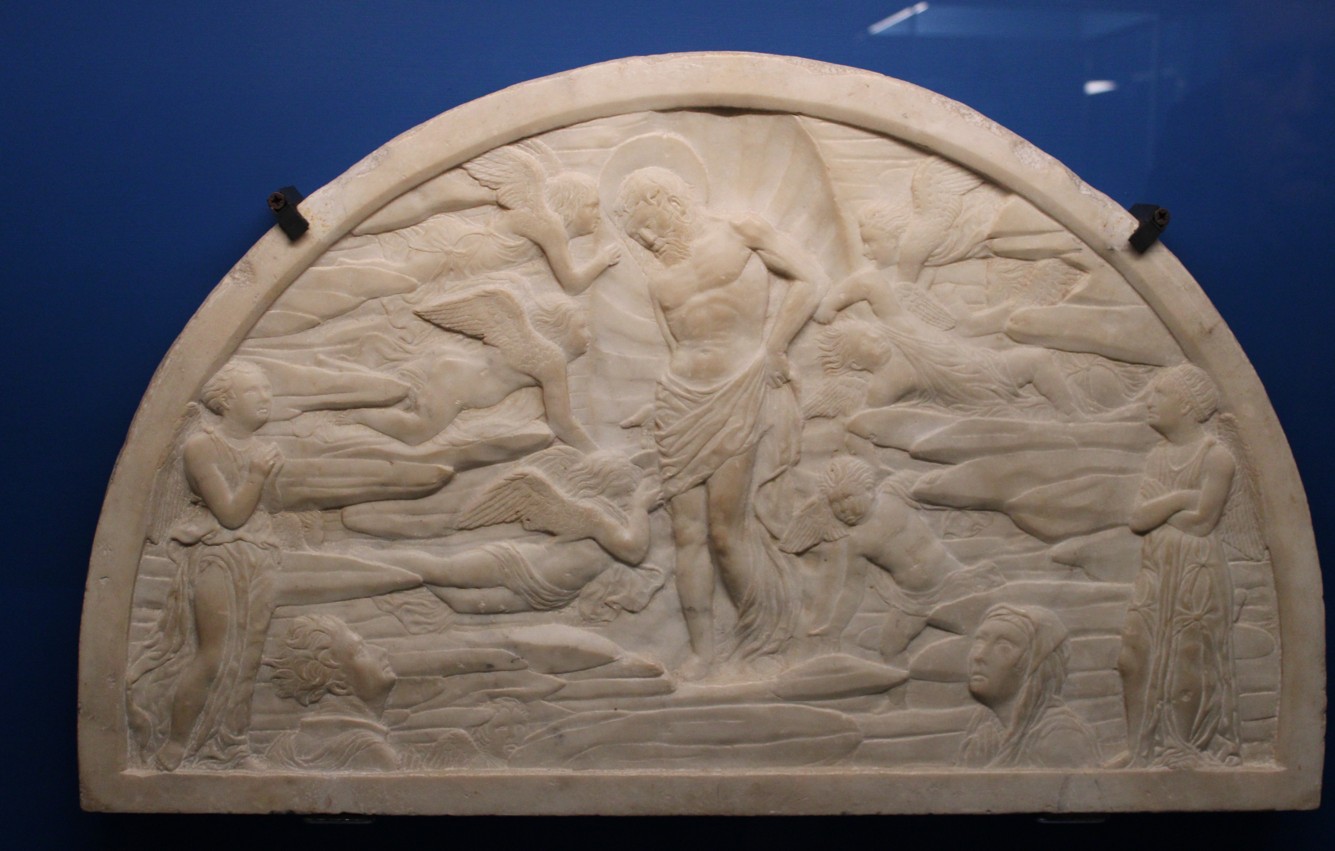
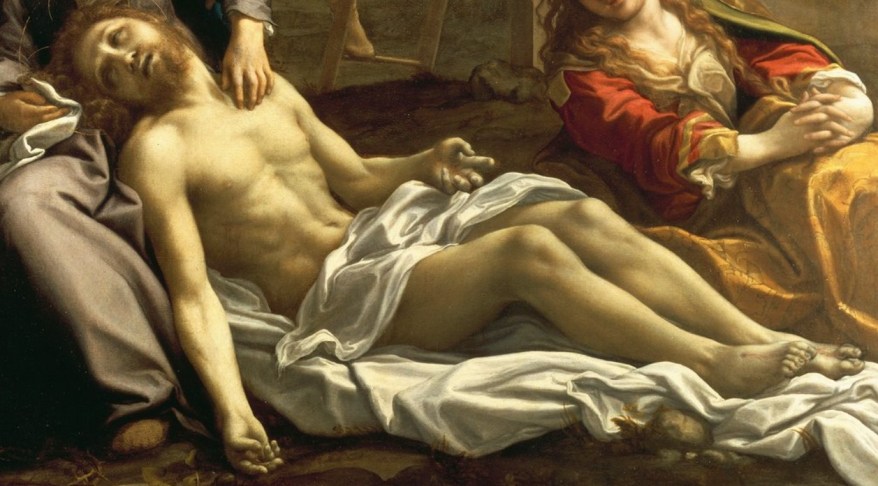
Tra le opere in mostra anche il mirabile stiacciato de ‘il Sangue del Redentore’ di Donatello, Ercole de’ Roberti, Francesco Francia, Lorenzo Costa e Amico Aspertini.
Promossa dalla Fondazione Cassa di Risparmio in Bologna e prodotta da Opera Laboratori, la mostra è curata da Cristina Acidini e Alessandro Cecchi, rispettivamente Presidente e Direttore della Fondazione Casa Buonarroti di Firenze, con il patrocinio della Regione Emilia-Romagna, del Comune di Bologna, dell’Alma Mater Studiorum – Università di Bologna e dell’Accademia di Belle Arti di Bologna. L’esposizione è stata possibile grazie al sostegno di Intesa Sanpaolo.
Il biglietto sospeso
Mi preme dire che in occasione della mostra ‘Michelangelo a Bologna’ è stata lanciata l’iniziativa “biglietto sospeso”.
Tutti i visitatori avranno la possibilità di acquistare un biglietto in più da lasciare in omaggio in reception, destinato a persone appartenenti ad associazioni del territorio che si occupano delle fasce deboli della popolazione.
Un gesto di generosità e condivisione che, nel periodo natalizio, vuole ribadire il valore dell’inclusione e dell’accoglienza, temi che risuonano anche nella mia storia personale: fuggito da Firenze venni infatti accolto a Bologna, trovando in terra straniera e a me sconosciuta un luogo di crescita e rinascita artistica.
Un’iniziativa lodevole che invito a sostenere a chi può farlo.
La mia opinione sulla mostra ‘Michelangelo a Bologna’
A mio avviso è una mostra che, come vi ho accennato prima, ancora mancava tra le tante che sono state organizzate su di me nel corso degli anni. Per assaporarne ogni aspetto ne migliore dei modi, vi invito a leggere le didascalie dei pannelli che raccontano bene la mia permanenza in città. Non aggiunge nuovi tasselli a quello che già è noto ma mette in luce le eventuali influenze che gli artisti dell’epoca possono aver avuto sulla mia successiva produzione artistica.
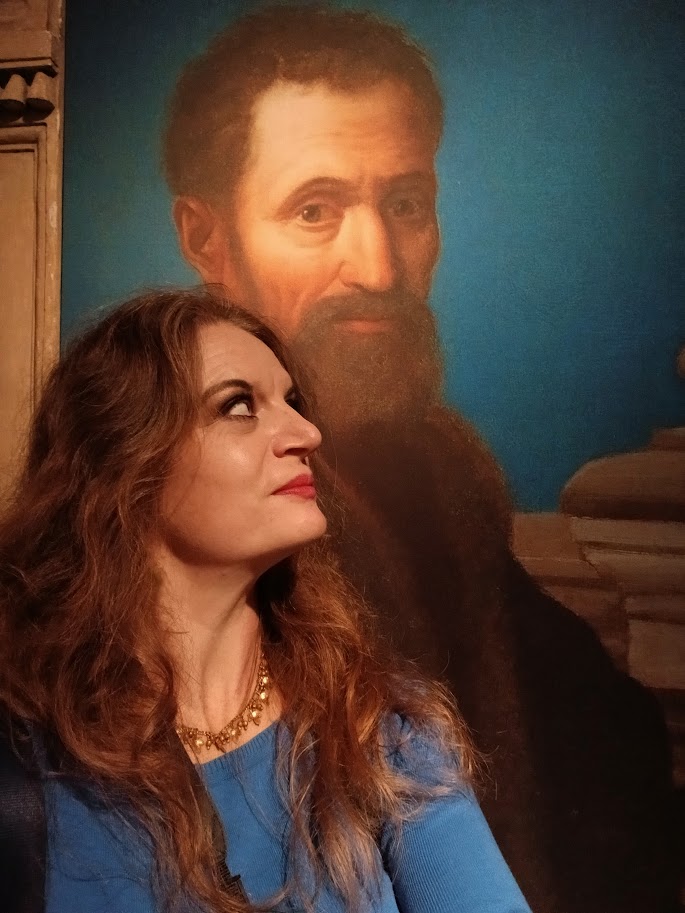
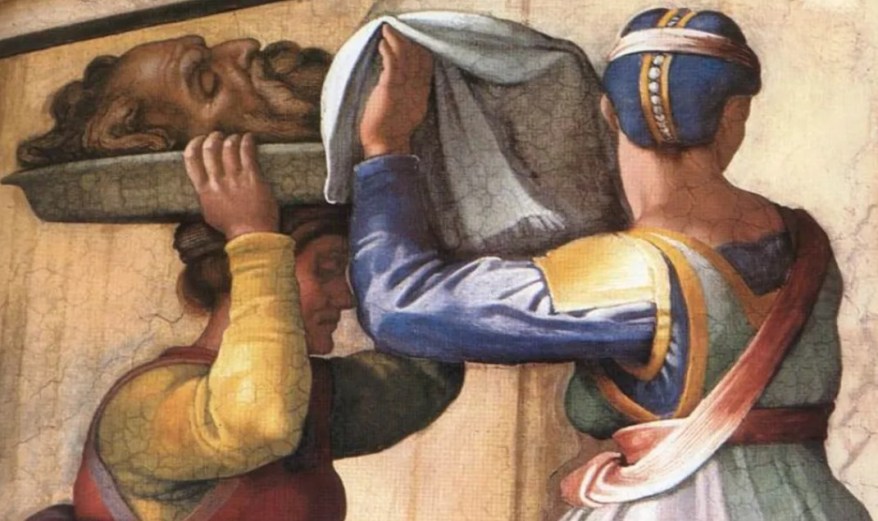
Non la consiglio a chi va esclusivamente per vedere opere mie ma la raccomando a chi ha voglia di approfondire due momenti essenziali della mia vita: quello immediatamente successivo all’uscita dal Giardino dei Medici curato da Lorenzo il Magnifico, prima di metter mano alle mie due prime sculture romane ovvero il Bacco e la Pietà Vaticana e quello che precede la realizzazione della volta della Cappella Sistina.
La visione della mostra è da completare col la lettura del catalogo che approfondisce ancora di più i temi proposti nel percorso espositivo. A me è piaciuta e la consiglio vivamente. Ho molto apprezzato anche il lancio del ‘biglietto sospeso’ che rimanda col pensiero alla tradizione del caffè sospeso a Napoli.
Per il momento il sempre vostro Michelangelo Buonarroti vi saluta dandovi appuntamento ai prossimi post e sui social.
Michelangelo in Bologna: the exhibition that was missing
The exhibition “Michelangelo in Bologna” opens to the public today. It focuses on the two periods in my life when I spent extended periods in the city, creating four works, three of which are still visible today.
This exhibition, in my opinion, was missing and provides an in-depth exploration of my time in Bologna, the relationship I had with the two patrons of the time, and also highlights how much I likely learned from the artists working in the city at the time.
The exhibition, curated by Cristina Acidini and Alessandro Cecchi, was held to mark the 550th anniversary of my birth, which occurred in Caprese on March 6, 1475, and is divided into six sections. Over fifty works are on display, including sculptures, documents, drawings, books, and archival records, which narrate my relationship with Bologna, the artists, and the personalities of the time.
I arrived in the city for the first time in 1494 with two friends whose identities remain unknown to this day. I took refuge here in anticipation of the expulsion of the Medici from Florence, but I immediately encountered a significant problem. I was 19 at the time and was unaware that foreigners were required to pay a tax to enter Bologna. After payment, a red wax seal was placed on the thumbnail: a seal that neither I nor the others had.
The authorities soon realized this and stopped us, demanding a fine of 50 bolognini from each of us. I was saved from that predicament by Giovan Francesco Aldovrandi, who paid the fine and offered me hospitality. He probably knew, or I told him at the time, that I was a sculptor who had grown up in Lorenzo de’ Medici’s garden: a guarantee. The others who were with me were saved from the predicament and sent home. I remained to sculpt three works for the San Domenico Ark: the Candle-Holding Angel, the Saint Proculus, and the Saint Petronius.
The three works are on display as faithful copies of the originals, which can be admired in the church of San Domenico in Bologna. The core of the exhibition is the narrative of my Bolognese periods, juxtaposed with the works of those working in Bologna at the time, to trace any influences they may have had on my production.
As you know, few of my sculptural works are eligible for travel. On display, you can admire the Madonna della Scala, which arrived directly from Casa Buonarroti. The sculpture, which I created around 1490 in the renowned Garden of San Marco, is accompanied by a study of a drapery and a letter I wrote to my father, Lodovico, both of which are part of the Casa Buonarroti collection.
The second time I came to Bologna was in 1506, when I had to go and ask Pope Julius II’s forgiveness for having fled Rome because of him. As I’ve told you many times, when he had me sent away by the groom without seeing me so he could pay me the money he owed me for the marble quarried in Carrara for his tomb, I fled to Florence. Then, when the pontiff took Bologna from the Bentivoglio family, at Soderini’s insistence, I had to appear before the pontiff, and he commissioned a large bronze work in the round depicting him, which was installed on the façade of San Petronio.
This work was short-lived because, upon the Bentivoglio’s return, it was demolished. The head was saved and ended up in the collections of Alfonso d’Este, while the body was chopped into pieces, and Alfonso himself ordered it made into a culverin: the Giuliana.
The exhibition “Michelangelo and Bologna” opens to the public today, November 14, 2025, and runs until February 15, 2026, at Palazzo Fava. As I mentioned, it offers a rich and detailed analysis of my connection with the city of Bologna.
The works on display include the wonderful stiacciato of “The Blood of the Redeemer” by Donatello, Ercole de’ Roberti, Francesco Francia, Lorenzo Costa, and Amico Aspertini.
Promoted by the Fondazione Cassa di Risparmio in Bologna and produced by Opera Laboratori, the exhibition is curated by Cristina Acidini and Alessandro Cecchi, President and Director, respectively, of the Fondazione Casa Buonarroti in Florence, with the patronage of the Emilia-Romagna Region, the Municipality of Bologna, the Alma Mater Studiorum – University of Bologna, and the Academy of Fine Arts of Bologna. The exhibition was made possible thanks to the support of Intesa Sanpaolo.
The suspended ticket
I’d like to point out that, in conjunction with the “Michelangelo in Bologna” exhibition, the “suspended ticket” initiative has been launched.
All visitors will have the opportunity to purchase an additional ticket to leave free of charge at reception. This ticket will be donated to members of local associations that serve vulnerable groups.
A gesture of generosity and sharing that, during the Christmas season, aims to reaffirm the value of inclusion and hospitality, themes that also resonate with my personal history: having fled Florence, I was welcomed in Bologna, finding in a foreign and unknown land a place of artistic growth and rebirth. A laudable initiative that I encourage everyone who can to support.
My opinion on the exhibition ‘Michelangelo in Bologna’
In my opinion, it is an exhibition that, as I mentioned before, was still missing from the many that have been organized about me over the years. To fully savor every aspect of it, I invite you to read the captions of the panels, which clearly describe my stay in the city. It doesn’t add new pieces to what is already known, but rather highlights the potential influences that the artists of the time may have had on my subsequent artistic production.
I don’t recommend it to those who come exclusively to see my works, but I do recommend it to those who want to delve deeper into two essential moments in my life: the moment immediately following my exit from the Medici Gardens, curated by Lorenzo the Magnificent, before I began working on my first two Roman sculptures, Bacchus and the Vatican Pietà, and the moment preceding the creation of the Sistine Chapel ceiling.
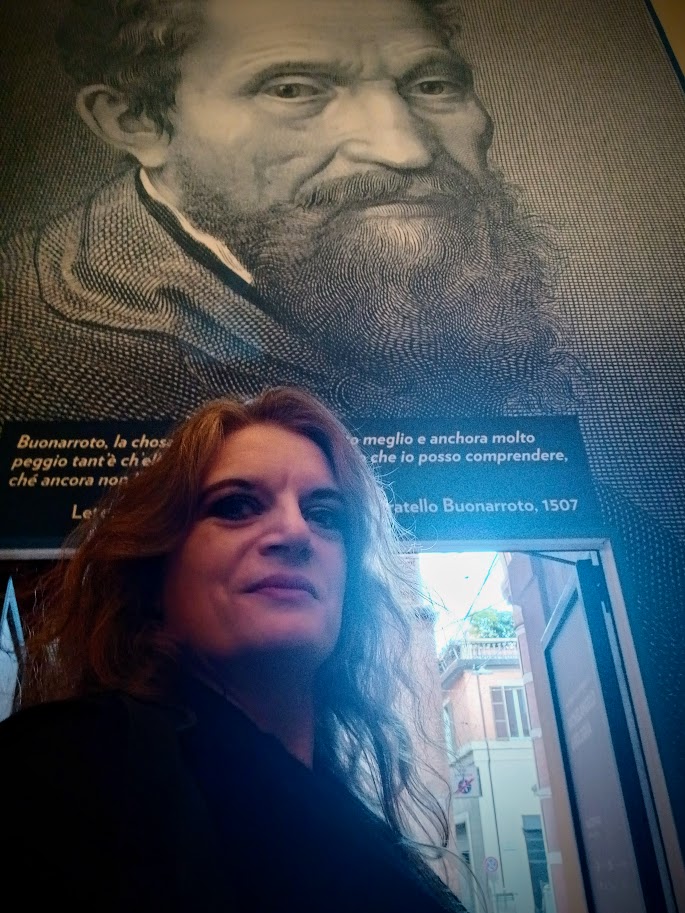
A visit to the exhibition should be complemented by reading the catalog, which delves even further into the themes presented in the exhibition. I enjoyed it and highly recommend it. I also really appreciated the launch of the “suspended ticket,” which evokes the tradition of the suspended coffee in Naples.
For now, yours truly, Michelangelo Buonarroti bids you farewell and says he’ll see you in future posts and on social media.

Sostienici – Support Us
Se questo blog ti piace e ti appassiona, puoi aiutarci a farlo crescere sempre più sostenendoci in modo concreto condividendo i post, seguendo le pagine social e con un contributo che ci aiuta ad andare avanti con il nostro lavoro di divulgazione. . ENGLISH: If you like and are passionate about this blog, you can help us make it grow more and more by supporting us in a concrete way by sharing posts, following social pages and with a contribution that helps us to move forward with our dissemination work.
10,00 €
Condividi:


Questo sono io





sostienici

Sostienici – Support Us
Se questo blog ti piace e ti appassiona, puoi aiutarci a farlo crescere sempre più sostenendoci in modo concreto condividendo i post, seguendo le pagine social e con un contributo che ci aiuta ad andare avanti con il nostro lavoro di divulgazione. . ENGLISH: If you like and are passionate about this blog, you can help us make it grow more and more by supporting us in a concrete way by sharing posts, following social pages and with a contribution that helps us to move forward with our dissemination work.
€10,00


1 commento »