
Quell’insolita Madonna con i capelli sciolti del Boccaccio Boccaccino
Se avete l’abitudine di andar per mostre o comunque di guardare dipinti attraverso foto di opere medievali o rinascimentali, vi sarete resi conto che quasi sempre le donne adulte hanno i capelli raccolti tranne alcune come per esempio la Maddalena.
Dietro questa scelta apparentemente trascurabile c’è invece una ragione ben precisa: la stessa per la quale Boccaccio Boccaccino dipinse la Madonna senza velo e con i capelli lunghi e fluenti, non raccolti sulla nuca.
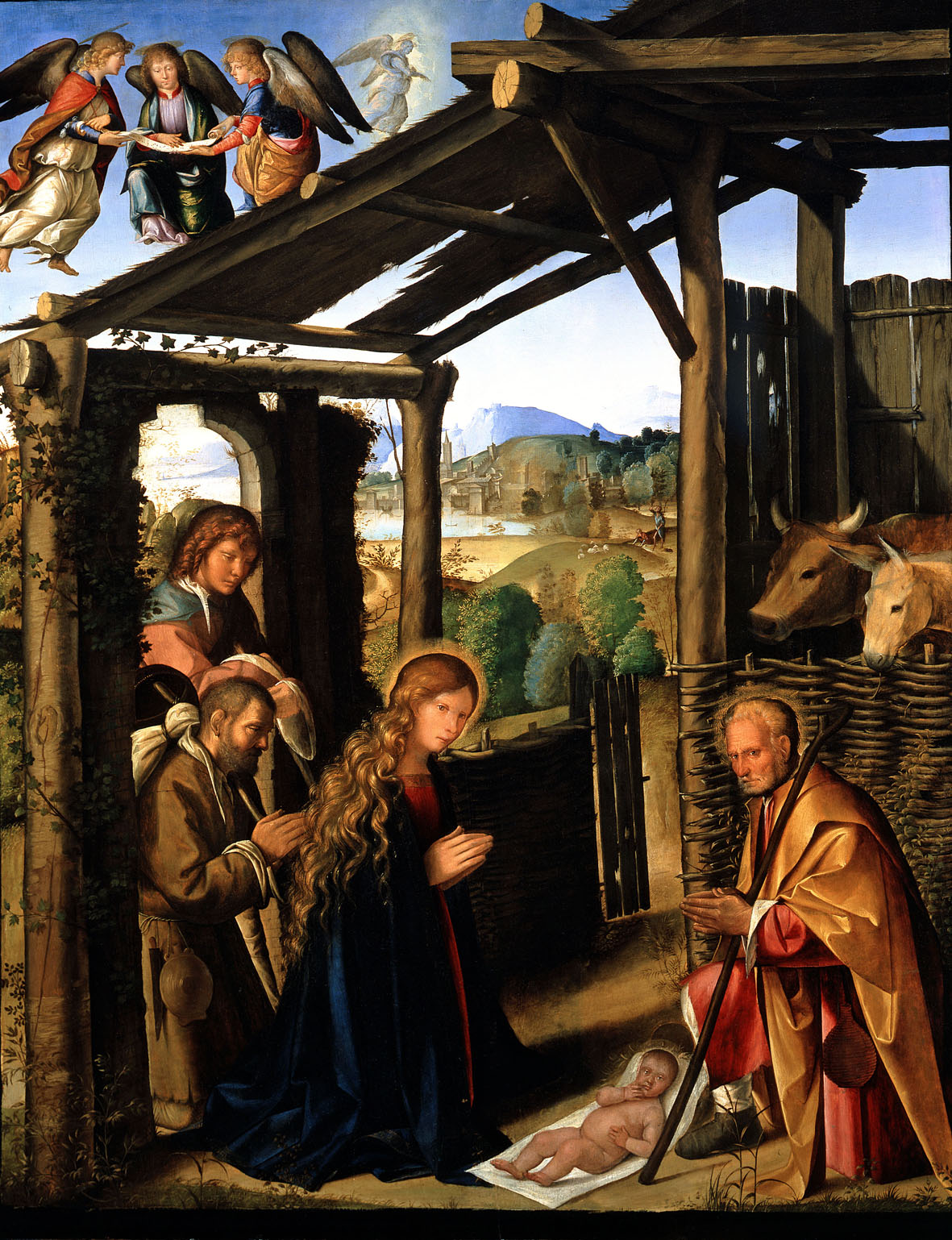
Nell’Adorazione dei Pastori realizzata a tempera e olio su tavola dell’artista, oggi custodita al Museo e Real Bosco di Capodimonte la Madonna sfoggia una folta capigliatura sciolta che le scivola sulle spalle.
Mentre i due pastori che si affacciano sulla scena osservano e adorano il Nuovo Nato, San Giuseppe, la Madonna e il Bambino stesso guardano lo spettatore dritto negli occhi come per indagare l’espressione di chi ha modo di vedere il dipinto, forse stupita proprio per i capelli sciolti.
Ebbene, un tempo i capelli delle signore dovevano essere sempre raccolti. Li potevano tenere sciolti solo le vergini e le prostitute.
In questo caso Boccaccio Boccaccino non voleva certo insultare la Madonna dandole della poco di buono ma voleva mettere in evidenza il fatto che fosse Vergine.

Così, insolitamente, in questa opera realizzata nel 1499, l’artista raffigurò un’insolita Madonna con i capelli lunghi e ben visibili.
Le figure sono collocate all’interno di una capanna rustica e un po’ pericolante. In alto a sinistra si vedono tre angeli mentre cantano gli inni verso il Nuovo Nato, con tanto di spartiti in mano. L’angelo evanescente che volta le spalle è l’Arcangelo Gabriele che ha annunciato alla Madonna la venuta di Cristo nove mesi prima.
Per il momento il sempre vostro Michelangelo Buonarroti vi saluta dandovi appuntamento ai prossimi post e sui social.

That Unusual Madonna with Loose Hair by Boccaccio Boccaccino
If you’re accustomed to visiting exhibitions or simply looking at paintings through photographs of medieval or Renaissance works, you’ll have noticed that almost all adult women have their hair tied up, except for a few, such as the Magdalene.
Behind this seemingly insignificant choice lies a very specific reason: the same one that led Boccaccio Boccaccino to paint the Madonna without a veil and with her long, flowing hair loosely tied at the nape of her neck.
While the two shepherds who appear on the scene observe and adore the Newborn, Saint Joseph, the Madonna, and the Child himself look the viewer straight in the eye, as if to gauge the expression of the viewer, perhaps surprised by the loose hair.
Well, once upon a time, women’s hair was always required to be tied up. Only virgins and prostitutes were allowed to wear it loose. In this case, Boccaccio Boccaccino certainly didn’t mean to insult the Madonna by calling her a bad girl, but rather to emphasize the fact that she was a Virgin.
Thus, unusually, in this work, created in 1499, the artist depicted an unusual Madonna with long, clearly visible hair.
The figures are placed inside a rustic, somewhat rickety hut. In the upper left, three angels are seen singing hymns to the Newborn, complete with sheet music in hand. The evanescent angel with his back turned is the Archangel Gabriel, who announced the coming of Christ to the Madonna nine months earlier.
For now, yours truly, Michelangelo Buonarroti bids you farewell and says he’ll see you in future posts and on social media.

Sostienici – Support Us
Se questo blog ti piace e ti appassiona, puoi aiutarci a farlo crescere sempre più sostenendoci in modo concreto condividendo i post, seguendo le pagine social e con un contributo che ci aiuta ad andare avanti con il nostro lavoro di divulgazione. . ENGLISH: If you like and are passionate about this blog, you can help us make it grow more and more by supporting us in a concrete way by sharing posts, following social pages and with a contribution that helps us to move forward with our dissemination work.
10,00 €
Condividi:


Questo sono io





sostienici

Sostienici – Support Us
Se questo blog ti piace e ti appassiona, puoi aiutarci a farlo crescere sempre più sostenendoci in modo concreto condividendo i post, seguendo le pagine social e con un contributo che ci aiuta ad andare avanti con il nostro lavoro di divulgazione. . ENGLISH: If you like and are passionate about this blog, you can help us make it grow more and more by supporting us in a concrete way by sharing posts, following social pages and with a contribution that helps us to move forward with our dissemination work.
€10,00


