

I Musei Reali di Torino acquisiscono due tele del Moncalvo
Da oggi, giovedì 11 settembre, i Musei Reali di Torino mostreranno ai visitatori le due nuove tele appena acquisite, realizzate dal Moncalvo, al secolo Guglielmo Caccia.
Le due opere, eseguite entrambe attorno al 1620, sono state collocate al primo piano della Galleria Sabauda, non lontano dal bookshop.
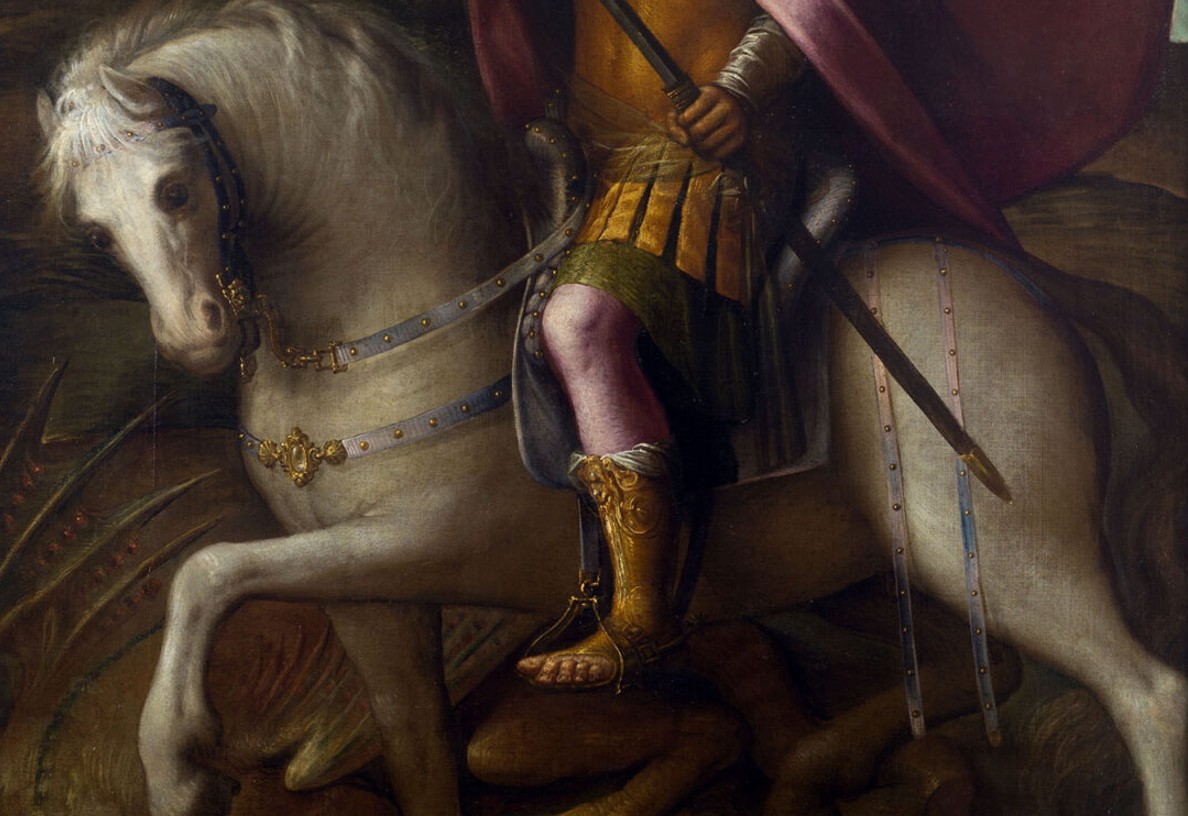
Il Moncalvo è stato uno dei più significativi artisti della cultura tardomanierista tra Piemonte e Lombardia e pittore per eccellenza della Controriforma. Nel 2025 si celebrano i 400 anni dalla sua morte e i Musei Reali di Torino hanno voluto celebrare quest’importante ricorrenza proprio col l’acquisizione delle sue due opere.
Le due tele, San Giorgio a cavallo e San Maurizio a cavallo provengono dalla chiesa dei Cappuccini di Chieri intitolata a San Maurizio. L’edificio sacro venne distrutto agli inizi dell’Ottocento, a causa delle famigerate soppressioni napoleoniche.
Esiste un prezioso del Settecento che riporta meticolosamente l’arredo dell’edificio descrivendo ai lati dell’altare maggiore “due quadri antichi di ottimo pennello, di S. Maurizio, e di S. Giorgio, vestiti alla militare con croce in petto montati su bei cavalli”.

Ai piedi di San Giorgio, patrono di Chieri, l’artista dipinse uno stemma bipartito per raffigurare l’unione tra i Quarini di Chieri e i Ranotto di Torino, rimandando alla committenza del dipinto. Sicuramente i rapporti di queste due famiglie sono legati alla committenza dell’opera.
Prima di essere esposti al pubblico, le due tele sono state restaurate dal Centro Conservazione Restauro “La Venaria Reale” (CCR). Gli interventi eseguiti hanno consentito di approfondire la conoscenza delle raffinate tecniche esecutive dell’artista.
Assieme alle due opere, nella sala, viene proiettato il filmato realizzato dal CCR per raccontare tutte le fasi dell’intervento. Sapete, il restauro sul San Maurizio ha rivelato che il soggetto principale, in origine, aveva dimensioni maggiori ma non solo. Nella parte più bassa dell’opera era presente uno stemma gentilizio che purtroppo oggi non è più leggibile.
Dopo il restauro e la rimozione di pesanti ridipinture, è tornata visibile anche la tessitura a losanghe, detta anche a diamantina, dell’armatura.
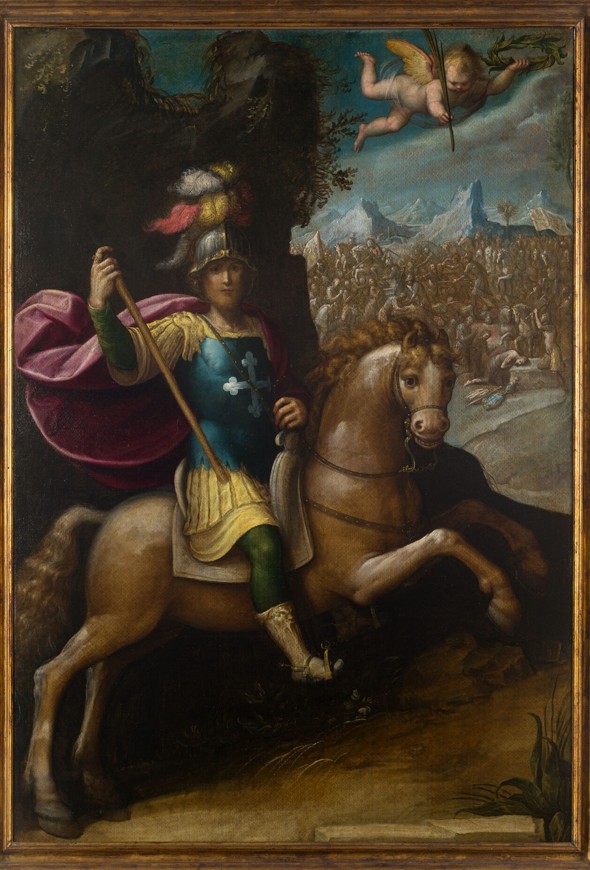
Anche la tela con il San Giorgio era stata sottoposta nei secoli a precedenti restauri invasivi che ne avevano modificato la cromia originale. Con la rimozione dei ritocchi, è stato possibile riportare alla luce particolari della tecnica esecutiva, come la pennellata fine e parallela, utilizzata dal Moncalvo per le lumeggiature.
Insomma, se volete vedere queste due opere appena restaurate, non vi rimane altro che visitare i Musei Reali di Torino.
Per il momento il sempre vostro Michelangelo Buonarroti vi saluta dandovi appuntamento ai prossimi post e sui social.
The Royal Museums of Turin acquire two paintings by Moncalvo
Starting today, Thursday, September 11, the Royal Museums of Turin will display two newly acquired paintings by Moncalvo, born Guglielmo Caccia.
The two works, both painted around 1620, are located on the first floor of the Galleria Sabauda, not far from the bookshop.
Moncalvo was one of the most significant artists of the late Mannerist culture between Piedmont and Lombardy and a painter par excellence of the Counter-Reformation. 2025 marks the 400th anniversary of his death, and the Royal Museums of Turin wished to mark this important anniversary by acquiring his two works.
The two paintings, Saint George on Horseback and Saint Maurice on Horseback, come from the Capuchin church of Chieri, dedicated to Saint Maurice. The church was destroyed in the early 19th century during the infamous Napoleonic suppressions.
A precious 18th-century manuscript meticulously describes the building’s furnishings, describing, on either side of the high altar, “two ancient paintings of excellent brushwork, of Saint Maurice and Saint George, dressed in military attire with a cross on their chest, mounted on fine horses.”
At the feet of Saint George, the patron saint of Chieri, the artist painted a bipartite coat of arms to represent the union between the Quarini family of Chieri and the Ranotto family of Turin, a reference to the painting’s patron. The relationship between these two families is undoubtedly linked to the commissioning of the work.
Before being displayed to the public, the two canvases were restored by the “La Venaria Reale” Conservation and Restoration Center (CCR). The restoration work has provided a deeper understanding of the artist’s refined techniques.
Along with the two works, a film produced by the CCR is shown in the room, illustrating all the stages of the restoration. You know, the restoration of the Saint Maurice revealed that the main subject was originally larger, but not only that. In the lower part of the work, there was a family coat of arms, which unfortunately is no longer legible today.
After the restoration and the removal of heavy overpainting, the diamond-shaped texture of the framework was also visible.
The canvas of Saint George had also undergone invasive restorations over the centuries, which had altered its original color scheme. By removing the retouching, it was possible to uncover details of the execution technique, such as the fine, parallel brushstrokes used by Moncalvo for the highlights.
In short, if you want to see these two newly restored works, all you have to do is visit the Royal Museums of Turin.
For now, yours truly, Michelangelo Buonarroti bids you farewell and says he’ll see you in future posts and on social media.

Sostienici – Support Us
Se questo blog ti piace e ti appassiona, puoi aiutarci a farlo crescere sempre più sostenendoci in modo concreto condividendo i post, seguendo le pagine social e con un contributo che ci aiuta ad andare avanti con il nostro lavoro di divulgazione. . ENGLISH: If you like and are passionate about this blog, you can help us make it grow more and more by supporting us in a concrete way by sharing posts, following social pages and with a contribution that helps us to move forward with our dissemination work.
10,00 €
Articoli
Condividi:


Questo sono io





sostienici

Sostienici – Support Us
Se questo blog ti piace e ti appassiona, puoi aiutarci a farlo crescere sempre più sostenendoci in modo concreto condividendo i post, seguendo le pagine social e con un contributo che ci aiuta ad andare avanti con il nostro lavoro di divulgazione. . ENGLISH: If you like and are passionate about this blog, you can help us make it grow more and more by supporting us in a concrete way by sharing posts, following social pages and with a contribution that helps us to move forward with our dissemination work.
€10,00


