
La Scultura di Flora Maggiore al Museo Archeologico di Napoli
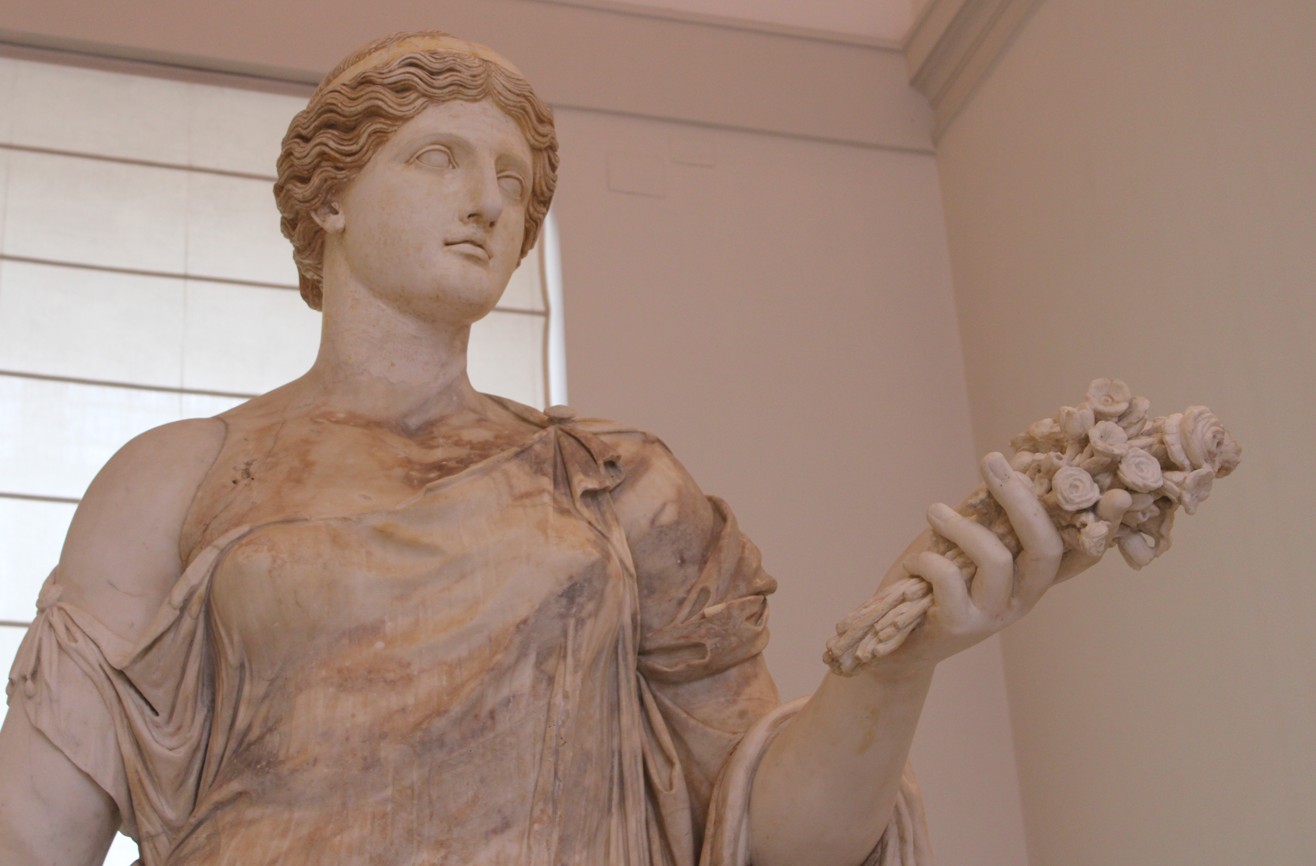
Al Museo Archeologico di Napoli, tra le tante opere custodite, è possibile ammirare a distanza ravvicinata la cosiddetta Flora Maggiore appartenente alla preziosa Collezione Farnese, ubicata nella quinta sala al piano terra.
È una scultura in marmo pentelico di colossali dimensioni che raffigura una divinità femminile abbigliata con un chitone leggero privo di maniche arricchito con un mantello.
Scolpita nel II secolo d.C., poco aveva a che fare con Flora. L’identificazione la dea romana della primavera e delle fioritura risale ai restauri cinquecenteschi ai quali fu sottoposta la scultura a opera di Guglielmo della Porta.

Non è dato sapere quale divinità rappresentasse originariamente ma da secoli oramai è nota con l’attribuzione di Flora, con quel mazzolino di rose che stringe con la mano destra, arricchito con tulipani e fiori a sei petali.
Il ritrovamento della scultura
La preziosa scultura venne ritrovata durante le operazioni di scavo promosse dalla potente famiglia Farnese nella prima metà del Cinquecento alle Terme di Caracalla.
L’artista tedesco Maarten van Heemskerck ebbe modo di vederla così come fu rinvenuta, senza braccia, senza testa e senza i piedi tra il 1532 e il 1536.

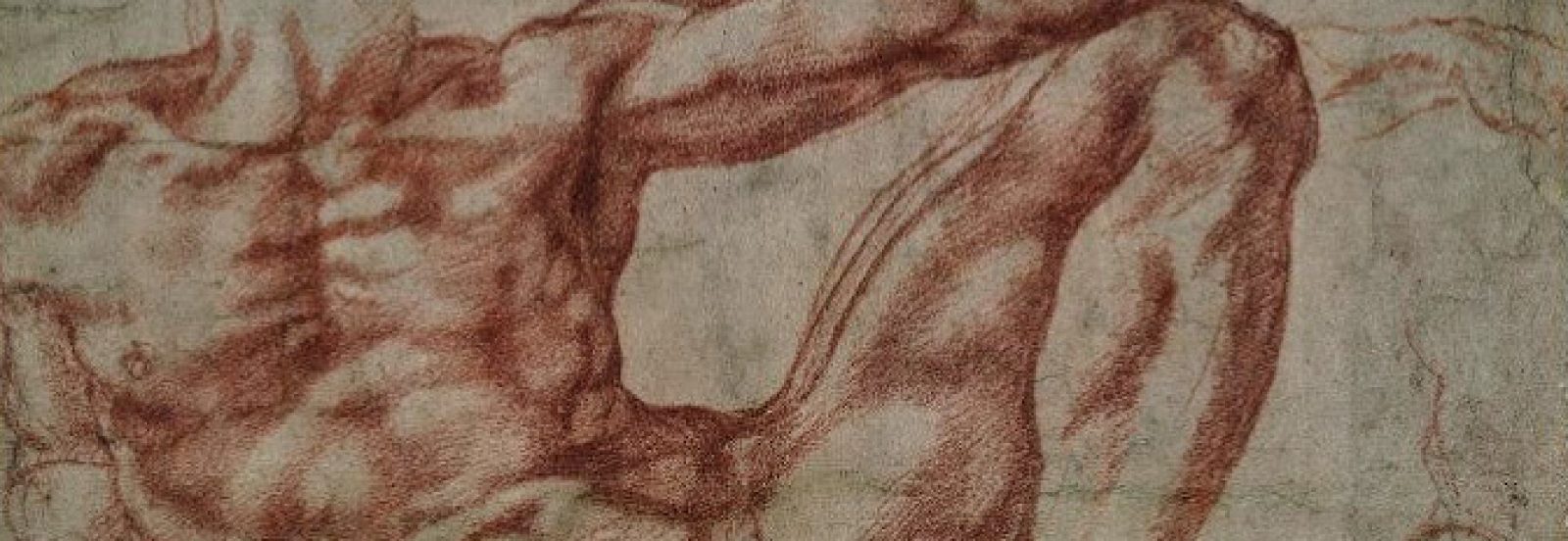
Anche Girolamo da Carpi attorno al 1550 vide l’opera non ancora integrata e volle disegnarla per studiare quell’affascinante panneggio del chitone.
Al tempo le opere rinvenute con parti mancante si preferiva sottoporle a restauri invasivi che comprendevano l’aggiunta di tutto ciò che il tempo non aveva saputo custodire al meglio.
Scrisse il mio caro amico Giorgio Vasari nelle Vite: “Et innanzi a ogni osa gli fece restaurare alcune cose antiche in casa Farnese, nelle quali si portò di maniera, che Michelagnolo lo mise al servigio del papa”

Non fui io a metter mano a quel restauro ma non è da escludere avessi avuto modo di dare qualche prezioso consiglio in merito. Fu Della Porta ad aggiungere il capo e gli arti alla scultura, trasformandola così in Flora. Dopo le varie aggiunte l’opera venne esposta nel vestibolo di Palazzo Farnese, a Roma, assieme all’Ercole.
Quando poi Ferdinando IV di Borbone entrato in possesso della collezione, decise di trasferire tutti i marmi in suo possesso nel 1786 a Napoli, la Flora Maggiore confluì nelle collezioni di quello che oggi è il Museo Nazionale arrivando nella città partenopea nel 1800.
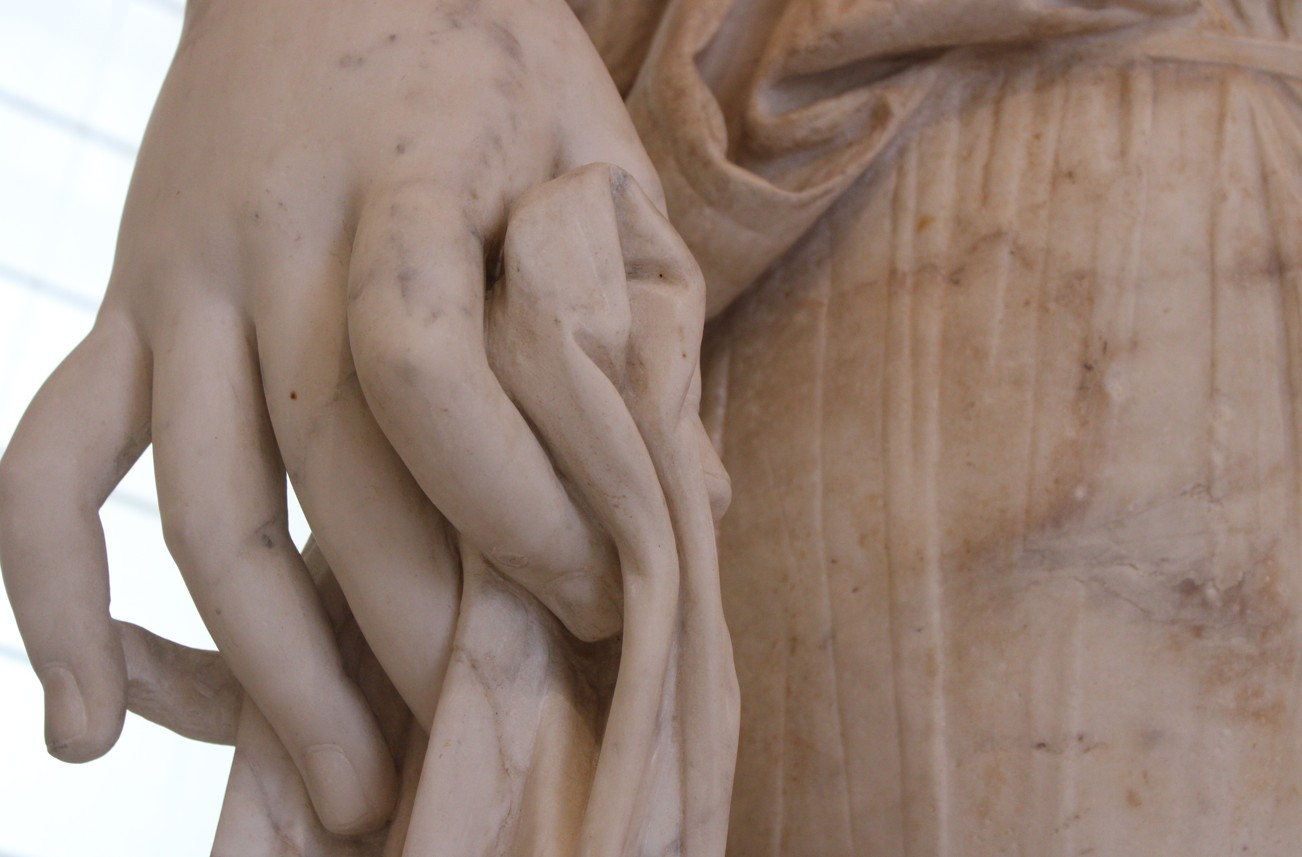
La mano che sorregge il mazzolino di fiori però non è nemmeno più quella cinquecentesca realizzata da Dalla Porta ma venne rifatta nello studio di Albacini nell’Ottocento. Per quanto riguarda la testa, all’Albacini fu portata una con tanto di diadema nel 1786 che poteva essere adattata all’opera.
Probabilmente quella cinquecentesca poco piaceva all’epoca e così fu sostituita fino a quando Filippo Tagliolini, nel 1806, ottenne dal Museo Archeologico di Napoli il permesso di realizzare parti in gesso delle opere.
Da allora il capo della Flora è ancora quello in gesso modellato dal Tagliolini.
Per il momento il sempre vostro Michelangelo Buonarroti vi saluta dandovi appuntamento ai prossimi post e sui social.
The Sculpture of Flora Maggiore at the Archaeological Museum of Naples
At the Archaeological Museum of Naples, among the many works housed there, you can admire up close the so-called Flora Maggiore, part of the precious Farnese Collection, located in the fifth room on the ground floor.
It is a colossal Pentelic marble sculpture depicting a female deity dressed in a light, sleeveless chiton embellished with a cloak. Sculpted in the 2nd century AD, it had little to do with Flora. The identification as the Roman goddess of spring and blossoms dates back to the 16th-century restorations to which the sculpture was subjected by Guglielmo della Porta.
It is unknown which deity it originally represented, but for centuries it has been known as Flora, with the bouquet of roses she holds in her right hand, embellished with tulips and six-petalled flowers.
The Discovery of the Sculpture
The precious sculpture was discovered during excavations sponsored by the powerful Farnese family in the first half of the 16th century at the Baths of Caracalla.
The German artist Maarten van Heemskerck saw it as it was found, without arms, head, and feet, between 1532 and 1536.
Girolamo da Carpi also saw the work incomplete around 1550 and wanted to draw it to study the fascinating drapery of the chiton.
At the time, works found with missing parts were preferred to undergo invasive restorations, which included the addition of everything that time had not preserved to its full potential.
My dear friend Giorgio Vasari wrote in his Lives: “And before anything else, he had some antiques restored in the Farnese house, in which he performed so well that Michelangelo placed him in the service of the Pope.”
I wasn’t the one who had a hand in that restoration, but it’s possible I might have had the opportunity to offer some valuable advice. It was Della Porta who added the head and limbs to the sculpture, thus transforming it into Flora. After various additions, the work was displayed in the vestibule of the Palazzo Farnese in Rome, alongside the Hercules.
When Ferdinand IV of Bourbon came into possession of the collection and decided to transfer all the marbles in his possession to Naples in 1786, the Flora Maggiore became part of the collections of what is now the National Museum, arriving in Naples in 1800.
The hand holding the bouquet of flowers, however, is no longer the 16th-century one created by Dalla Porta but was remade in Albacini’s studio in the 19th century. As for the head, Albacini was brought a diadem-clad one in 1786 that could be adapted to the work. The sixteenth-century one was likely not popular at the time, so it was replaced until Filippo Tagliolini, in 1806, obtained permission from the Archaeological Museum of Naples to create plaster parts of the works. Since then, Flora’s head has remained the plaster modeled by Tagliolini.
For now, yours truly, Michelangelo Buonarroti bids farewell, saying he’ll see you in future posts and on social media.

Sostienici – Support Us
Se questo blog ti piace e ti appassiona, puoi aiutarci a farlo crescere sempre più sostenendoci in modo concreto condividendo i post, seguendo le pagine social e con un contributo che ci aiuta ad andare avanti con il nostro lavoro di divulgazione. . ENGLISH: If you like and are passionate about this blog, you can help us make it grow more and more by supporting us in a concrete way by sharing posts, following social pages and with a contribution that helps us to move forward with our dissemination work.
10,00 €
Condividi:


Questo sono io





sostienici

Sostienici – Support Us
Se questo blog ti piace e ti appassiona, puoi aiutarci a farlo crescere sempre più sostenendoci in modo concreto condividendo i post, seguendo le pagine social e con un contributo che ci aiuta ad andare avanti con il nostro lavoro di divulgazione. . ENGLISH: If you like and are passionate about this blog, you can help us make it grow more and more by supporting us in a concrete way by sharing posts, following social pages and with a contribution that helps us to move forward with our dissemination work.
€10,00


