
La Loggia degli Eroi affrescata da Perin del Vaga, a Genova
La Loggia degli Eroi, affrescata da Perin del Vaga, si trova all’interno della Villa del Principe, nota anche come Palazzo Doria Pamphilj, a Genova.

Era il 1529 quando Andrea Doria, ammiraglio e uomo d’armi leggendario, volle iniziare i lavori che avrebbero portato alla costruzione di questo straordinario palazzo che si affaccia sul Golfo di Genova.
Il ciclo pittorico che decora la loggia, un tempo aperta sul mare e oggi chiusa dalle vetrate, venne realizzata da Pietro Bonaccorsi, più noto come Perin del Vaga, tra l 1529 e il 1533.
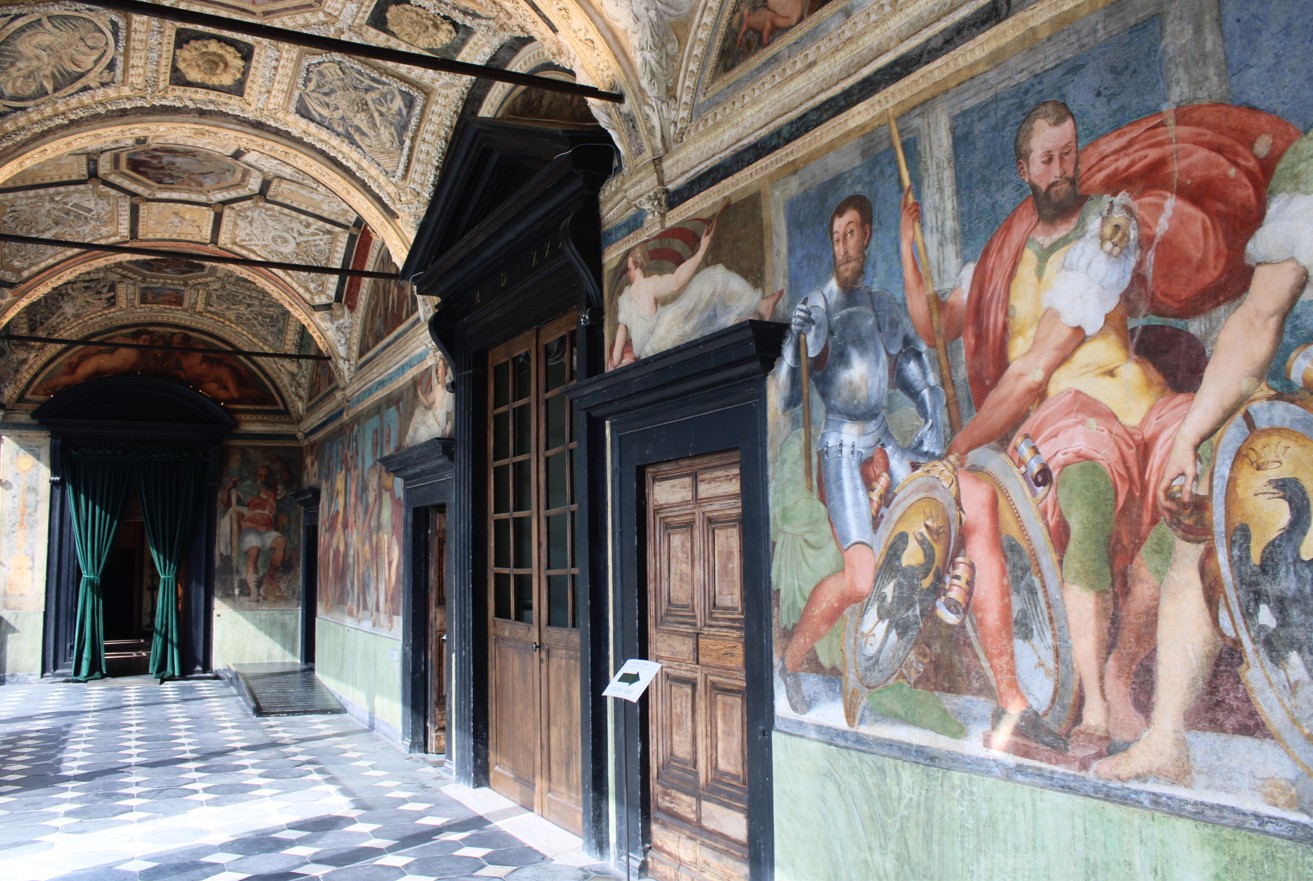
Si tratta di uno degli esempi più importanti del Rinascimento in Liguria e testimonia il talento dell’artista, allievo di Raffaello e protagonista della scena artistica romana prima del Sacco di Roma avvenuto nel 1527.
La loggia affrescata che si affaccia su giardino del Palazzo venne pensata come un tributo agli illustri avi della Casata Doria.

Sulle pareti sono raffigurati dodici guerrieri, tutti riconoscibili come membri della famiglia Doria grazie alla presenza degli scudi con l’aquila nera su campo oro e argento e identificati da un’iscrizione che recita: “PRAECLARAE FAMILIAE MAGNI VIRI MAXIMI DUCES OPTIMA FECERE PRO PATRIA”, ovvero ‘I grandi uomini dell’illustre famiglia, capi supremi, fecero cose ottime per la patria’.
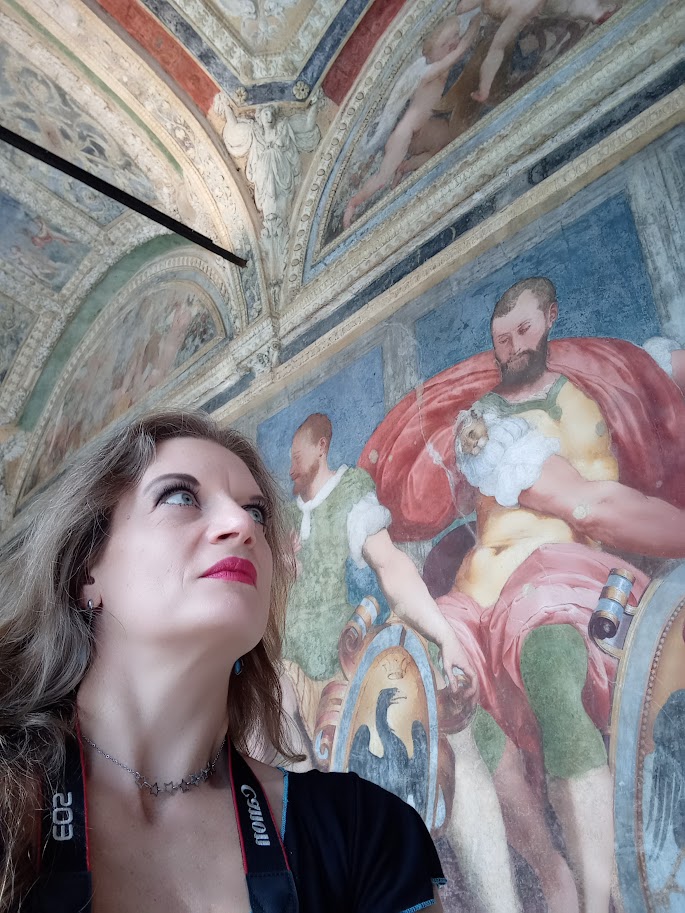
Nelle cinque volte della loggia decorate con ottagoni circondati da stucchi finissimi ispirati alla Domus Aurea di Nerone, Perin del Vaga volle raffigurare episodi di sacrificio per amor di patria che vedono protagonisti Orazio Coclite, Tito Manlio Torquato, Marco Curzio, Furio Camillo e Muzio Scevola.
Bisogna sottolineare il fato che la preziosa decorazione di Perin del Vaga marcò un momento fondamentale per la storia dell’arte genovese, introducendo in città il linguaggio artistico del Rinascimento.
Per il momento il sempre vostro Michelangelo Buonarroti vi saluta dandovi appuntamento ai prossimi post e sui social.
The Heroes’ Loggia, frescoed by Perin del Vaga, in Genoa
The Heroes’ Loggia, frescoed by Perin del Vaga, is located inside the Villa del Principe, also known as Palazzo Doria Pamphilj, in Genoa.
It was 1529 when Andrea Doria, admiral and legendary soldier, decided to begin the construction of this extraordinary palace overlooking the Gulf of Genoa.
The pictorial cycle decorating the loggia, once open to the sea and now enclosed by glass, was created by Pietro Bonaccorsi, better known as Perin del Vaga, between 1529 and 1533. It is one of the most important examples of the Renaissance in Liguria and demonstrates the artist’s talent, a pupil of Raphael and a key figure in the Roman art scene before the Sack of Rome in 1527.
The frescoed loggia overlooking the Palace garden was conceived as a tribute to the illustrious ancestors of the House of Doria.
The walls depict twelve warriors, all recognizable as members of the Doria family by their shields bearing the black eagle on a gold and silver field. They are identified by an inscription that reads: “PRAECLARAE FAMILIAE MAGNI VIRI MAXIMI DUCES OPTIMA FECERE PRO PATRIA,” or “The great men of the illustrious family, supreme leaders, did excellent things for their country.”
In the five vaults of the loggia, decorated with octagons surrounded by exquisite stucco inspired by Nero’s Domus Aurea, Perin del Vaga chose to depict episodes of sacrifice for the love of country, featuring Horatius Cocles, Titus Manlius Torquatus, Marcus Curtius, Furius Camillus, and Mucius Scaevola.
It is important to emphasize that Perin del Vaga’s exquisite decoration marked a pivotal moment in the history of Genoese art, introducing the artistic language of the Renaissance to the city.
For now, yours truly, Michelangelo Buonarroti bids you farewell and invites you to see him in future posts and on social media.

Sostienici – Support Us
Se questo blog ti piace e ti appassiona, puoi aiutarci a farlo crescere sempre più sostenendoci in modo concreto condividendo i post, seguendo le pagine social e con un contributo che ci aiuta ad andare avanti con il nostro lavoro di divulgazione. . ENGLISH: If you like and are passionate about this blog, you can help us make it grow more and more by supporting us in a concrete way by sharing posts, following social pages and with a contribution that helps us to move forward with our dissemination work.
10,00 €
Condividi:


Questo sono io





sostienici

Sostienici – Support Us
Se questo blog ti piace e ti appassiona, puoi aiutarci a farlo crescere sempre più sostenendoci in modo concreto condividendo i post, seguendo le pagine social e con un contributo che ci aiuta ad andare avanti con il nostro lavoro di divulgazione. . ENGLISH: If you like and are passionate about this blog, you can help us make it grow more and more by supporting us in a concrete way by sharing posts, following social pages and with a contribution that helps us to move forward with our dissemination work.
€10,00


