

Tommaso de’ Cavalieri come Ganimede, il più bello dei mortali
Ganimede, per Omero era il più bello dei mortali ma per me il coppiere degli dei era Tommaso de’ Cavalieri.
«Spero bene, se la fortuna non mi vuole di nuovo cominciare a tormentare, tra pochi giorni esser guarito et venire a fare il mio debito in visitarvi. In questo mezzo mi pigliarò almanco doi hore del giorno piacere in contemplare doi vostri desegni quali quanto più li miro, tanto più mi piacciono…»: così mi scriveva il primo di gennaio del 1533 il mio amato Tommaso de’ Cavalieri, che in quel momento non stava proprio benissimo di salute.
In quel momento Tommaso aveva tra le mani due miei disegni che contemplava come se volesse da quelli estrapolarne l’animo con il quale l’avevo realizzati per lui.
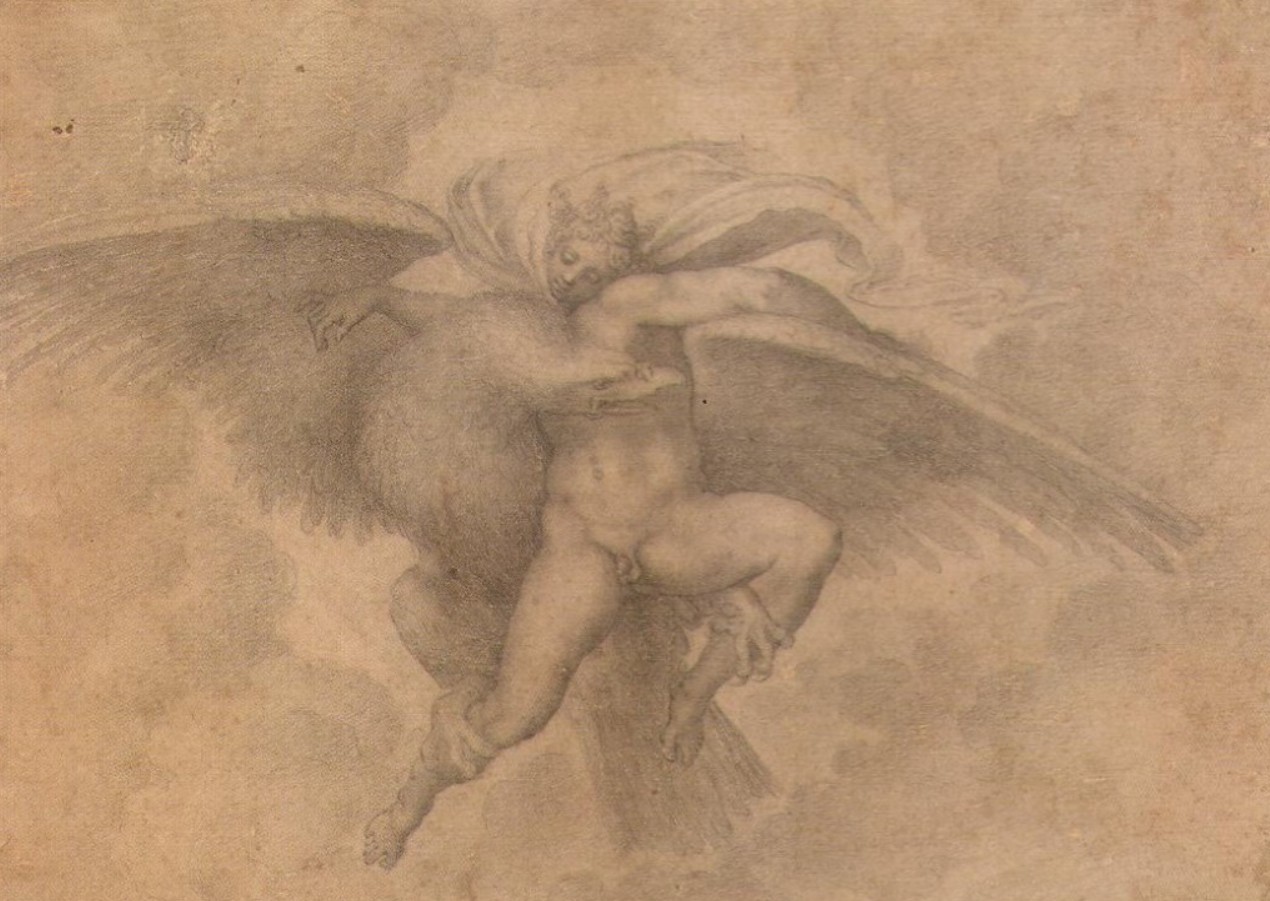
Quali erano? La Caduta di Fetonte e il Ratto di Ganimede.
Per lui ero un libro aperto: mi conosceva a menadito e sapeva esattamente cosa mi passasse per il capo quando disegnavo, dipingevo, scolpito o quando prendevo carta e penna per scrivergli.
Nel disegno di Ganimede, lo stesso viene sollevato da Zeus sottoforma di aquila. Lo stringe saldamente fra i suoi artigli senza ghermirlo né ferirlo. La loro unione genera estasi e non c’è alcuna resistenza da parte del giovane ma un abbandono totale.
Il parallelismo tra il disegno e il rapporto che avevo con Tommaso è evidente in quest’opera che realizzai solo per lui.
Se volete avere un’idea di chi fosse Tommaso de’ Cavalieri, il letterato Benedetto Varchi ne fece una descrizione calzante nelle ‘Due Lezzioni’: “M. Tommaso Cavalieri giovane Romano nobilissimo, nel quale io conobbi già in Roma (oltra l’incomparabile bellezza del corpo) tanta leggiadria di costumi, e cosi eccellente ingegno, et graziosa maniera, che ben meritò, e merita ancora, che più l’amasse chi maggiormente il conosceva“.
Difficile non innamorarsi di una personalità del genere che oltre alla sua bellezza, ammaliava con la sua straordinaria cultura che arricchiva giorno dopo giorno, come se il suo nutrimento più che il pane fosse il sapere.

Vero è che Tommaso a un certo punto della sua vita si sposò, ebbe dei figli e purtroppo rimase presto vedovo. Mai però si allontanò da me e mi rimase accanto fino all’ultimo respiro, quando in quel 19 febbraio del 1564 morii nel mio letto a Macel de Corvi, a Roma.
Per il momento il sempre vostro Michelangelo Buonarroti vi saluta dandovi appuntamento ai prossimi post e sui social.
Tommaso de’ Cavalieri as Ganymede, the most beautiful of mortals
For Homer, Ganymede was the most beautiful of mortals, but for me, he was Tommaso de’ Cavalieri.
“I truly hope, if fortune doesn’t want to torment me again, that in a few days I will be healed and come to fulfill my duty of visiting you. In the meantime, I will take at least two hours a day to enjoy contemplating two of your drawings, which the more I look at them, the more I like them…”: this is what my beloved Tommaso de’ Cavalieri, who at that moment was not in the best of health, wrote to me on January 1, 1533.
At that moment, Tommaso had in his hands two of my drawings, which he contemplated as if he wanted to extrapolate from them the spirit with which I had created them for him.
Which were they? The Fall of Phaeton and the Rape of Ganymede.
To him, I was an open book: he knew me inside out and knew exactly what was going through my mind when I drew, painted, sculpted, or took pen and paper to write to him.
In the drawing of Ganymede, Zeus lifts him up in the form of an eagle. He holds him firmly in his talons, without grasping or harming him. Their union generates ecstasy, and there is no resistance from the young man, but total abandon.
The parallel between the drawing and the relationship I had with Tommaso is evident in this work, which I created especially for him.
If you want to get an idea of who Tommaso de’ Cavalieri was, the scholar Benedetto Varchi gave a fitting description of him in his “Two Lessons”: “Mr. Tommaso Cavalieri, a young, noble Roman, in whom I already recognized in Rome (besides his incomparable physical beauty) such graceful manners, such excellent intellect, and such gracious manners, that he deserved, and still deserves, that those who knew him best should love him more.”
It’s hard not to fall in love with such a personality, who, in addition to his beauty, captivated with his extraordinary culture, which he enriched day after day, as if knowledge were his nourishment, more than bread.
It’s true that Tommaso married at a certain point in his life, had children, and sadly became a widower early in life. However, he never left my side and remained by my side until his last breath, when on that February 19, 1564, I died in my bed at Macel de Corvi, in Rome.
For now, yours truly, Michelangelo Buonarroti bids you farewell and invites you to join him in future posts and on social media.

Sostienici – Support Us
Se questo blog ti piace e ti appassiona, puoi aiutarci a farlo crescere sempre più sostenendoci in modo concreto condividendo i post, seguendo le pagine social e con un contributo che ci aiuta ad andare avanti con il nostro lavoro di divulgazione. . ENGLISH: If you like and are passionate about this blog, you can help us make it grow more and more by supporting us in a concrete way by sharing posts, following social pages and with a contribution that helps us to move forward with our dissemination work.
10,00 €
Articoli
Condividi:


Questo sono io





sostienici

Sostienici – Support Us
Se questo blog ti piace e ti appassiona, puoi aiutarci a farlo crescere sempre più sostenendoci in modo concreto condividendo i post, seguendo le pagine social e con un contributo che ci aiuta ad andare avanti con il nostro lavoro di divulgazione. . ENGLISH: If you like and are passionate about this blog, you can help us make it grow more and more by supporting us in a concrete way by sharing posts, following social pages and with a contribution that helps us to move forward with our dissemination work.
€10,00


