

Il dipinto del giorno: l’intensa Cattura di Cristo di Caravaggio
L’opera del giorno che voglio proporvi oggi è la Cattura di Cristo, dipinta a olio su tela di Caravaggio a Roma nel 1602.
Caravaggio raffigurò il momento in cui Cristo, come narrato nei Vangeli di Matteo e Marco, viene catturato dai soldati dopo il tradimento.
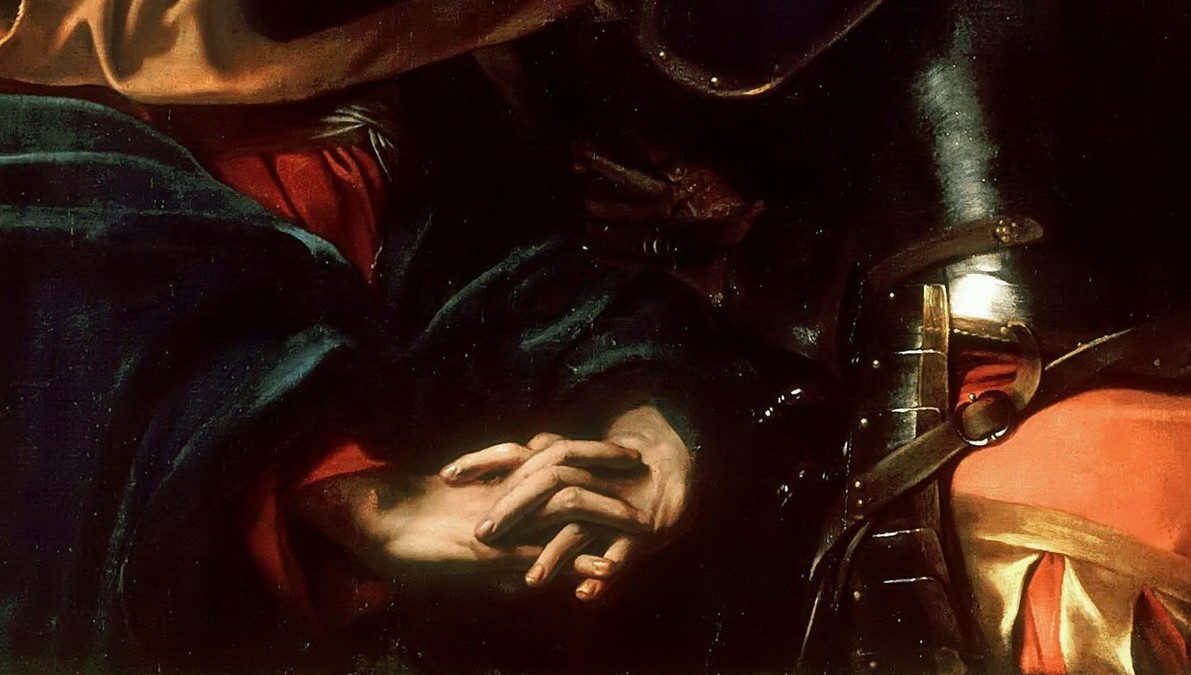
In primo piano dipinse Cristo con le mani intrecciate tenute in basso che, con un atteggiamento di resa, riceve il bacio traditore del suo discepolo Giuda.

In contemporanea al momento del tradimento, arrivano sul posto i soldati con tanto di armature indosso per catturare Dio fattosi Uomo.
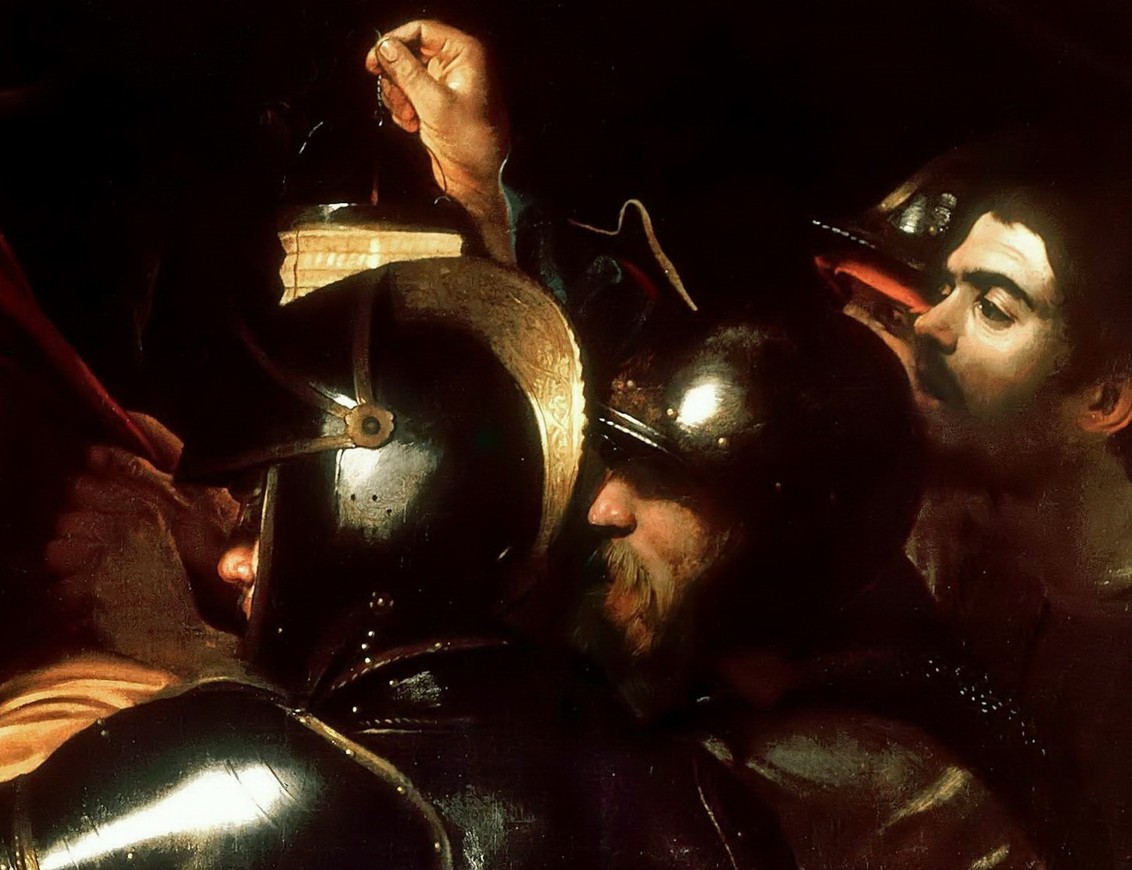
La scena si sviluppa tutta in senso orizzontale. Nella parte destra dell’opera si vedono quattro armigeri anche se dell’ultimo si intravede solamente parte dell’elmo.
Alle spalle di Cristo si vede San Giovanni che, urlando, leva le mani al cielo esprimendo così tutto il suo terrore. L’uomo che si trova ad assistere a quella scena e che mantiene alta la lanterna, si pensa possa essere un autoritratto dello stesso Caravaggio.
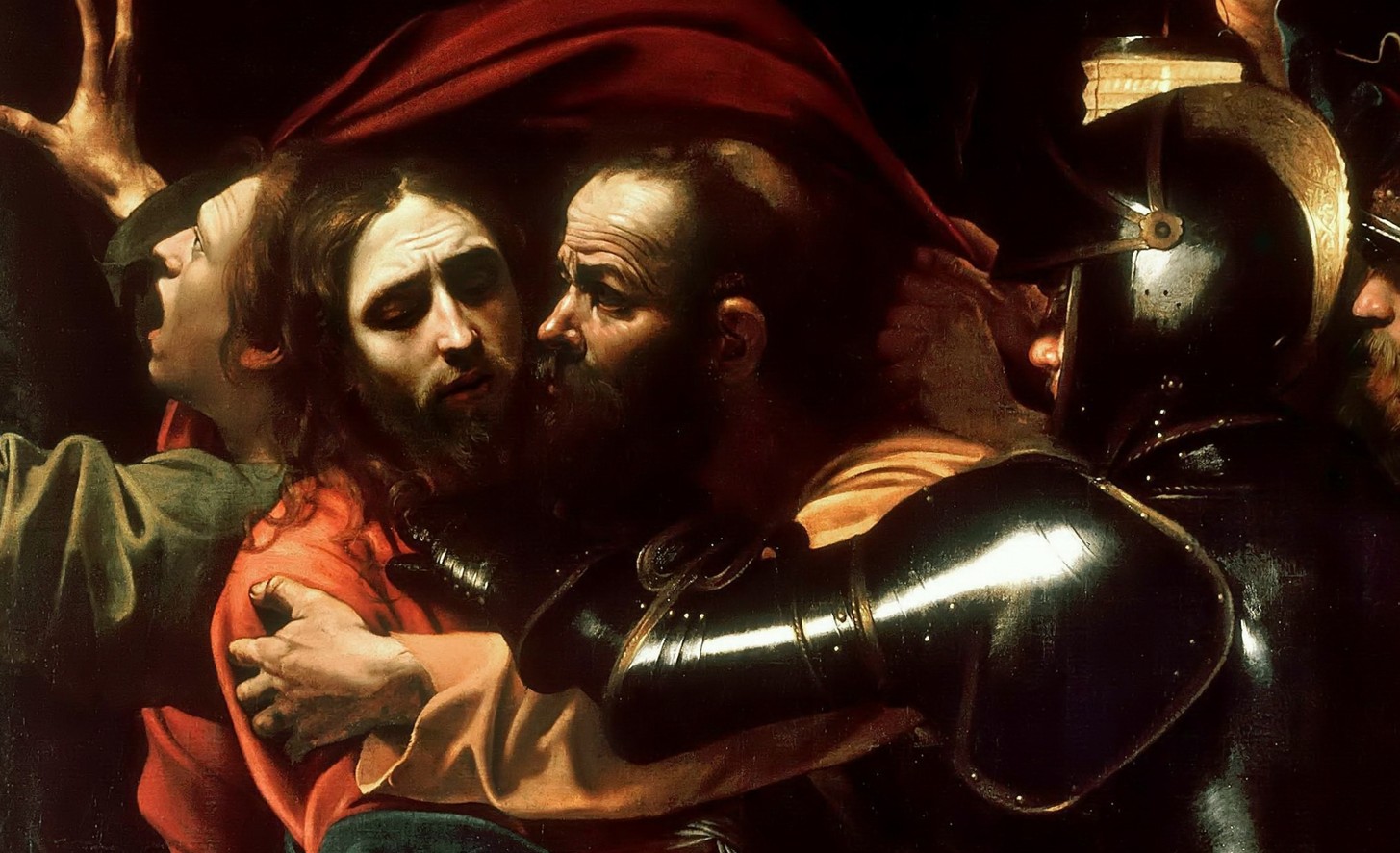
La scena è assai concitata e frenetica. Osservando bene l’espressione di Giuda sembra ravvisare una certa irrequietezza nel suo animo. Che si fosse già pentito di quel gesto rivelatore? Cristo invece è ormai rassegnato e fortemente addolorato.
Come di consueto Caravaggio aggiunge un elemento rosso, in questo caso un mantello, attorno alle figure principali di Cristo e Giuda.
Fateci caso: accade un po’ in tutte le sue opere. Quando vuole porre l’accento su una figura in particolare, l’artista lo abbina al colore rosso.
Il dipinto fu retribuito all’artista il 2 gennaio del 1603 dal committente Ciriaco Mattei 125 scudi e nel documento pagamento si legge “per un quadro con la sua cornice dipinta d’un Cristo preso all’orto”.
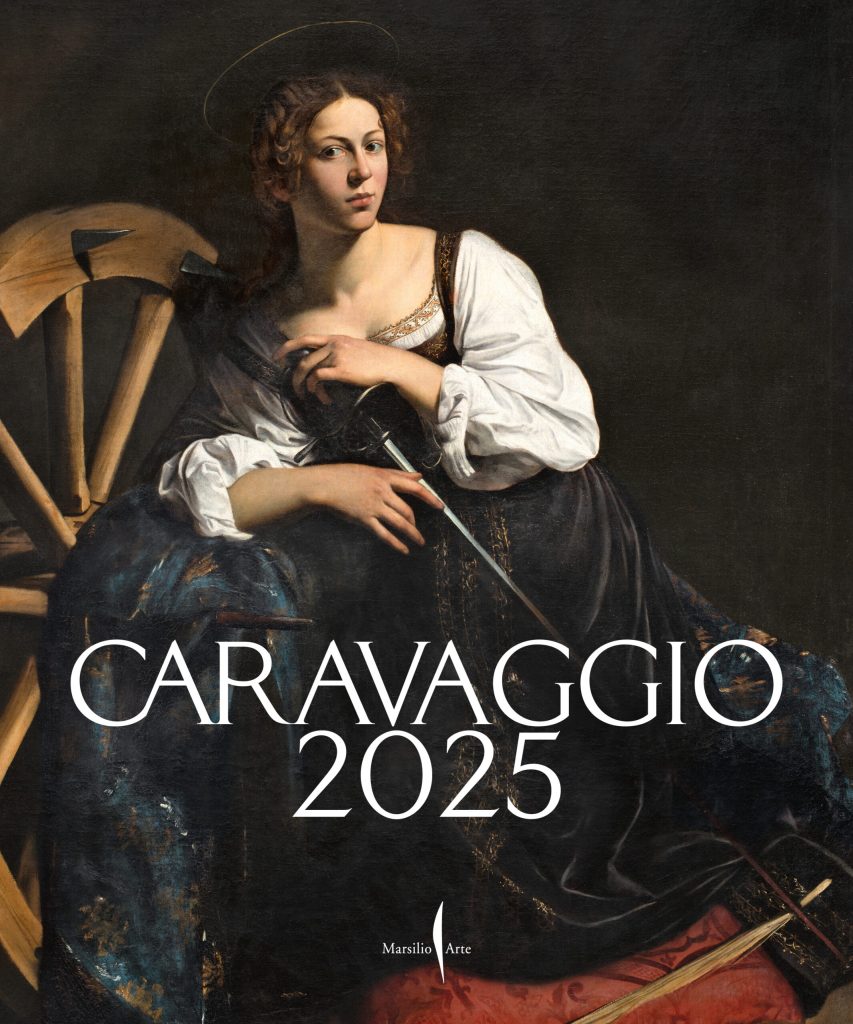
L’opera abitualmente è custodita alla National Gallery of Ireland, a Dublino ma al momento si trova a Roma nel percorso espositivo di Caravaggio 2025.
Per il momento il sempre vostro Michelangelo Buonarroti vi saluta dandovi appuntamento ai prossimi post e sui social.
Painting of the day: the intense Capture of Christ by Caravaggio
The work of the day that I want to propose to you today is the Capture of Christ, painted in oil on canvas by Caravaggio in Rome in 1602.
Caravaggio depicted the moment in which Christ, as narrated in the Gospels of Matthew and Mark, is captured by soldiers after the betrayal.
In the foreground he painted Christ with his hands clasped and held low, who, with an attitude of surrender, receives the treacherous kiss of his disciple Judas.
At the same time as the betrayal, soldiers arrive on the scene wearing full armor to capture God made Man.
The scene develops entirely horizontally. On the right side of the work you can see four men-at-arms, although only part of the helmet of the last one can be seen.
Behind Christ you can see Saint John who, screaming, raises his hands to the sky, thus expressing all his terror. The man who witnesses that scene and who holds the lantern high, is thought to be a self-portrait of Caravaggio himself.
The scene is very hectic and frenetic. Looking closely at Judas’ expression, one seems to detect a certain restlessness in his soul. Had he already regretted that revealing gesture? Christ, on the other hand, is now resigned and deeply saddened.
As usual, Caravaggio adds a red element, in this case a cloak, around the main figures of Christ and Judas. Notice: it happens a bit in all his works. When he wants to emphasize a particular figure, the artist combines it with the color red.
The painting was paid to the artist on January 2, 1603 by the client 125 scudi and in the payment document it says “for a painting with its painted frame of a Christ taken from the garden”.
The work is usually kept at the National Gallery of Ireland, in Dublin but is currently in Rome in the exhibition itinerary of Caravaggio 2025.
For the moment, your ever Michelangelo Buonarroti bids you farewell, making an appointment with you in the next posts and on social media.

Sostienici – Support Us
Se questo blog ti piace e ti appassiona, puoi aiutarci a farlo crescere sempre più sostenendoci in modo concreto condividendo i post, seguendo le pagine social e con un contributo che ci aiuta ad andare avanti con il nostro lavoro di divulgazione. . ENGLISH: If you like and are passionate about this blog, you can help us make it grow more and more by supporting us in a concrete way by sharing posts, following social pages and with a contribution that helps us to move forward with our dissemination work.
10,00 €
Condividi:


Questo sono io





sostienici

Sostienici – Support Us
Se questo blog ti piace e ti appassiona, puoi aiutarci a farlo crescere sempre più sostenendoci in modo concreto condividendo i post, seguendo le pagine social e con un contributo che ci aiuta ad andare avanti con il nostro lavoro di divulgazione. . ENGLISH: If you like and are passionate about this blog, you can help us make it grow more and more by supporting us in a concrete way by sharing posts, following social pages and with a contribution that helps us to move forward with our dissemination work.
€10,00


