

20 maggio: le api nel mondo dell’arte
Il 20 maggio si celebra la Giornata Internazionale delle Api, istituita dalle Nazioni Unite nel 2017 per sensibilizzare l’opinione pubblica sull’importanza delle api e degli altri impollinatori per l’ecosistema.
Le api senza dubbio svolgono un ruolo cruciale nell’impollinazione di numerose colture alimentari e piante selvatiche, contribuendo in modo significativo alla biodiversità e alla sicurezza alimentare globale.
Senza le api sarebbe a rischio la nostra alimentazione e l’intero ecosistema globale.
La data del 20 maggio venne scelta in onore di Anton Janša, pioniere dell’apicoltura moderna nato in Slovenia nel XVIII secolo.
Ma come sono state raffigurate le api nella storia dell’arte e quali simbologie hanno?
Le tante api di Roma
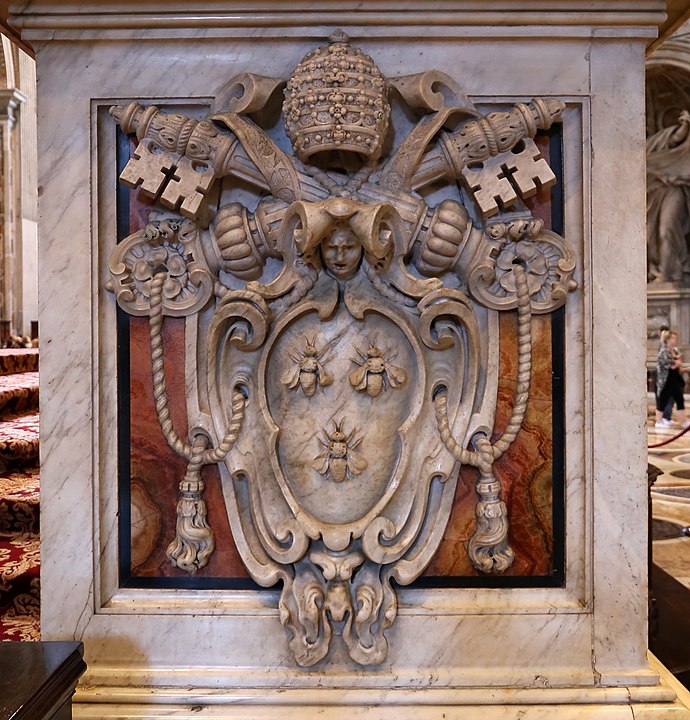
Senza dubbio Roma è la città che ha più api nelle sue opere d’arte ma c’è un motivo ben preciso. Tre api dorate su sfondo azzurro erano l’emblema della potente famiglia Barberini. Tra i suoi esponenti si annovera niente meno che papa Urbano VIII al quale si devono prestigiose commissioni.
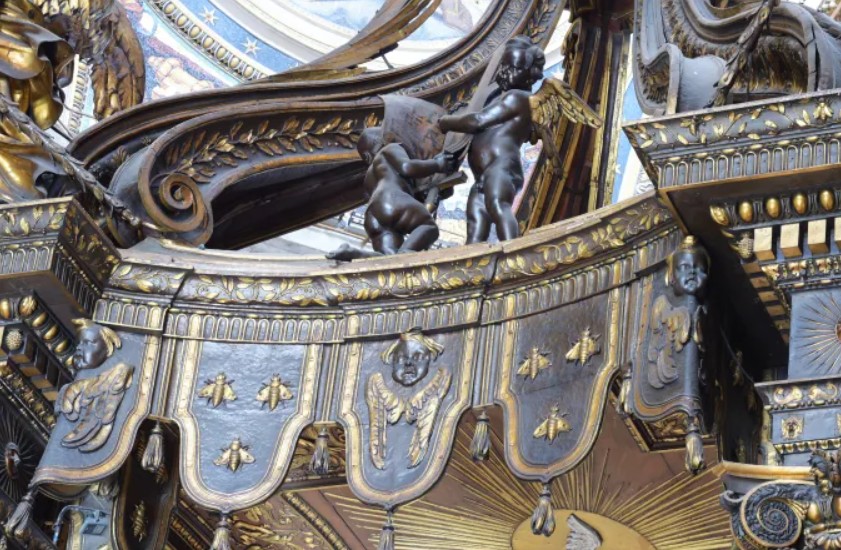
All’interno delle opere fatte realizzare dal pontefice, spesso si trovano le sue tre api. Qualche esempio? Il Baldacchino del Bernini, il soffitto affrescato di Palazzo Barberini e l’emblematica Fontana delle Api.
L’affresco di Pietro da Cortona a Palazzo Barberini
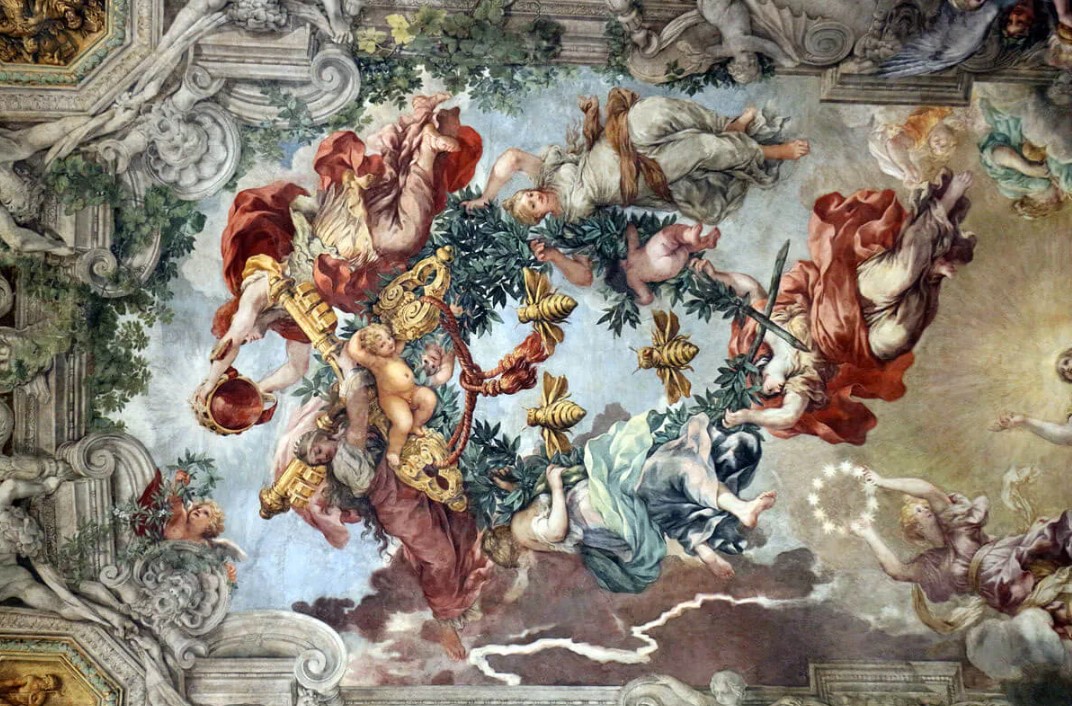
Sempre Urbano VIII commissionò a Pietro da Cortona il grande affresco sulla volta del salone di Palazzo Barberini, a Roma.
Nell’affresco l’artista rappresentò il piano che la Divina Provvidenza ebbe per far eleggere al soglio pontificio Urbano VIII e gli effetti benefici che tale elezione ebbe sulla Chiesa tutta.
Mitologia ed epica, storia romana, leggenda e favola diventano un tutt’uno per proiettando la storia antica su quella presente.
La Fontana delle Api del Bernini
Il 6 aprile del 1644 papa Urbano VIII Barberini chiese a a Gian Lorenzo Bernini di realizzare una fontana pubblica di piccole dimensioni a uso pubblico che sarebbe servita anche come abbeveratoio per cavalli.

La fontana prende il nome proprio dalle api, simbolo della famiglia Barberini. L’artista scolpì gli insetti calla base della valva sollevata mentre si stanno abbeverando ai tre getti che fuoriescono da quel punto.

Per il momento il sempre vostro Michelangelo Buonarroti vi saluta dandovi appuntamento ai prossimi post e sui social.
May 20: Bees in the World of Art
May 20 is International Bee Day, established by the United Nations in 2017 to raise public awareness of the importance of bees and other pollinators for the ecosystem.
Bees undoubtedly play a crucial role in the pollination of numerous food crops and wild plants, contributing significantly to biodiversity and global food security.
Without bees, our food supply and the entire global ecosystem would be at risk.
The date of May 20 was chosen in honor of Anton Janša, a pioneer of modern beekeeping born in Slovenia in the 18th century.
But how have bees been depicted in the history of art and what symbolism do they have?
The many bees of Rome
Without a doubt, Rome is the city that has the most bees in its works of art, but there is a very specific reason. Three golden bees on a blue background were the emblem of the powerful Barberini family. Among its members was none other than Pope Urban VIII, who was responsible for prestigious commissions.
His three bees are often found in the works commissioned by the pontiff. Some examples? Bernini’s Baldachin, the frescoed ceiling of Palazzo Barberini and the emblematic Fountain of the Bees.
The fresco by Pietro da Cortona in Palazzo Barberini
Urban VIII also commissioned Pietro da Cortona to paint the large fresco on the vault of the hall of Palazzo Barberini, in Rome.
In the fresco, the artist depicted the plan that Divine Providence had to elect Urban VIII to the papal throne and the beneficial effects that this election had on the entire Church.
Mythology and epic, Roman history, legend and fable become one, projecting ancient history onto the present.
Bernini’s Fountain of the Bees
On April 6, 1644, Pope Urban VIII Barberini asked Gian Lorenzo Bernini to create a small public fountain for public use that would also serve as a watering hole for horses.
The fountain takes its name from bees, the symbol of the Barberini family. The artist sculpted the insects at the base of the raised valve while they are drinking from the three jets that come out from that point.
For the moment, yours truly Michelangelo Buonarroti bids you farewell, making an appointment to see you in the next posts and on social media.

Sostienici – Support Us
Se questo blog ti piace e ti appassiona, puoi aiutarci a farlo crescere sempre più sostenendoci in modo concreto condividendo i post, seguendo le pagine social e con un contributo che ci aiuta ad andare avanti con il nostro lavoro di divulgazione. . ENGLISH: If you like and are passionate about this blog, you can help us make it grow more and more by supporting us in a concrete way by sharing posts, following social pages and with a contribution that helps us to move forward with our dissemination work.
10,00 €
Condividi:


Questo sono io





sostienici

Sostienici – Support Us
Se questo blog ti piace e ti appassiona, puoi aiutarci a farlo crescere sempre più sostenendoci in modo concreto condividendo i post, seguendo le pagine social e con un contributo che ci aiuta ad andare avanti con il nostro lavoro di divulgazione. . ENGLISH: If you like and are passionate about this blog, you can help us make it grow more and more by supporting us in a concrete way by sharing posts, following social pages and with a contribution that helps us to move forward with our dissemination work.
€10,00


