
Michelangelo 550: Papa Giulio II in visita al mio studio
In occasione dei 550 anni dalla mia nascita, vi propongo una cromolitografia della seconda metà dell’Ottocento in cui papa Giulio II entra con la sua corte nel mio laboratorio di Macel de’ Corvi per osservare a che punto sia la lavorazione della sua tomba.
La cromolitografia è una stampa litografica a colori che consente di riprodurre immagini con una vasta gamma di tonalità, spesso a imitazione della pittura. Si basa sull’utilizzo di matrici di pietra calcarea e inchiostri grassi.
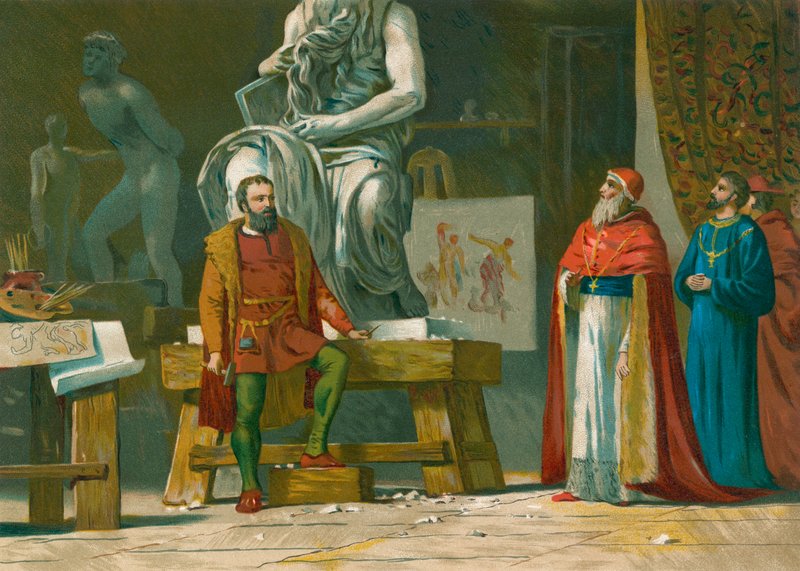
La cromolitografia si sviluppò intorno al 1837. Prevede l’uso di una matrice di pietra per ogni colore da stampare. L’immagine viene disegnata sulla pietra con una matita grassa che successivamente viene trattata con acidi per fissare il disegno. Per la stampa, si utilizza un torchio litografico che trasferisce l’inchiostro dalla pietra al foglio di carta. Il processo viene ripetuto per ogni colore, sovrapponendo le diverse stampe fino ad ottenere l’immagine finale, proprio come quella che vi propongo oggi, con effetti pittorici.
E’ un’immagine assai singolare questa, completamente fuori dal tempo. Papa Giulio II non ebbe modo di vedere ultimato il Mosè e tantomeno lo vide già voltato dalla parte opposta dei Vincoli di San Pietro.
Anche perché fino a quando il pontefice visse, l’opera era ancora destinata alla Basilica di San Pietro in Vaticano.

Strano il modo in cui la rappresentazione tagli letteralmente il capo al Mosè: che sia stato troppo difficile da raffigurare per chi realizzò la cromolitografia? Penso di si.
Avete notato come spesso in queste rappresentazioni che mi vedono protagonista sia proprio il Mosè a essere rappresentato e non le altre opere che scolpii durante la mia esistenza?
Guardate il panchetto in legno che sorregge la grande scultura: non avrebbe mai potuto sostenere il notevole peso della scultura.
Per il momento il sempre vostro Michelangelo Buonarroti vi saluta dandovi appuntamento ai prossimi post e sui social.
Michelangelo 550: Pope Julius II visits my studio
On the occasion of the 550th anniversary of my birth, I propose a chromolithograph from the second half of the 19th century in which Pope Julius II enters my laboratory in Macel de’ Corvi with his court to observe the progress of the work on his tomb.
Chromolithography is a color lithographic print that allows images to be reproduced with a wide range of tones, often imitating painting. It is based on the use of limestone matrices and greasy inks.
Chromolithography was developed around 1837. It involves the use of a stone matrix for each color to be printed. The image is drawn on the stone with a greasy pencil that is then treated with acids to fix the design. For printing, a lithographic press is used that transfers the ink from the stone to the sheet of paper. The process is repeated for each color, overlapping the different prints until obtaining the final image, just like the one I am proposing today, with pictorial effects.
This is a very unique image, completely out of time. Pope Julius II did not have the opportunity to see the Moses completed, much less saw it already turned away from the Bonds of St. Peter.
Also because until the pontiff lived, the work was still destined for St. Peter’s Basilica in the Vatican.
Strange the way in which the representation literally cuts off Moses’ head: was it too difficult to depict for whoever created the chromolithograph? I think so.
Have you noticed how often in these representations that see me as the protagonist, it is Moses himself who is represented and not the other works that I sculpted during my existence?
Look at the wooden bench that supports the large sculpture: it could never have supported the considerable weight of the sculpture.
For now, yours ever Michelangelo Buonarroti bids you farewell, making an appointment to see you in the next posts and on social media.

Sostienici – Support Us
Se questo blog ti piace e ti appassiona, puoi aiutarci a farlo crescere sempre più sostenendoci in modo concreto condividendo i post, seguendo le pagine social e con un contributo che ci aiuta ad andare avanti con il nostro lavoro di divulgazione. . ENGLISH: If you like and are passionate about this blog, you can help us make it grow more and more by supporting us in a concrete way by sharing posts, following social pages and with a contribution that helps us to move forward with our dissemination work.
10,00 €
Condividi:


Questo sono io





sostienici

Sostienici – Support Us
Se questo blog ti piace e ti appassiona, puoi aiutarci a farlo crescere sempre più sostenendoci in modo concreto condividendo i post, seguendo le pagine social e con un contributo che ci aiuta ad andare avanti con il nostro lavoro di divulgazione. . ENGLISH: If you like and are passionate about this blog, you can help us make it grow more and more by supporting us in a concrete way by sharing posts, following social pages and with a contribution that helps us to move forward with our dissemination work.
€10,00


