

Il Leone di Thorvaldsen: il pezzo di pietra più triste e commovente del mondo
Bertel Thorvaldsen ha scolpito opere memorabili e di grande fascino. Basti pensare alle Tre Grazie o al sensuale gruppo di Ganimede e l’aquila giusto per avere un’idea del suo modo di scolpire, della raffinatezza delle composizione.
Tra le opere più affascinanti e dense di significato che Thorvaldsen ha scolpito, vale la pena menzionare e raccontare la storia del Leone di Lucerna, “il pezzo di pietra più triste e commovente del mondo” come scrisse Mark Twain.
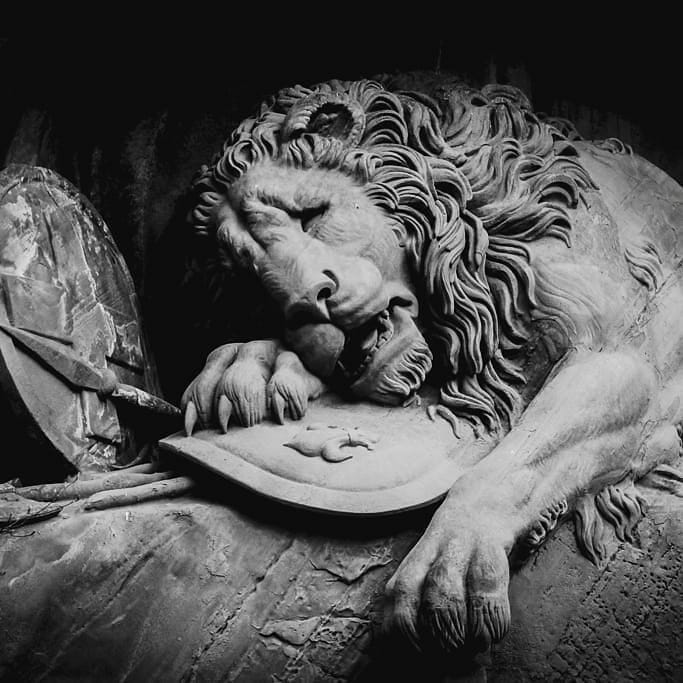
Situato nella città svizzera di Lucerna, il grande leone dormiente è il monumento dedicato alle Guardie Svizzere che persero la vita difendendo la famiglia reale francese durante la Rivoluzione Francese.
Le origini del Leone di Lucerna
Era il 1792 quando i rivoluzionari assaltarono a Parigi il Palazzo delle Tuileries e le Guardie Svizzere tentarono l’impossibile per difenderlo ma non ci fu nulla da fare. Il 10 agosto la monarchia di Luigi XVI cadde.
L’idea di dedicare un’opera che potesse rendere onore alle Guardie Svizzere che persero la vita durante quei tumulti fu del maggiore svizzero Pfyffer von Altishofen, sopravvissuto all’uccisione dei suoi commilitoni.
Aveva in mente di far realizzare la grande opera nel giardino della sua casa, non lontano da Lucerna. Qualche tempo dopo, Vincenz Ruttiman, ambasciatore svizzero a Roma, volle chiedere a Thorvaldsen di metter mano a quell’opera. L’artista accettò nonostante non stesse molto bene in quel frangente.

Lo scultore preparò un bozzetto e successivamente Bienaimé, uno dei più talentuosi allievi di Thorvaldsen, fu incaricato di iniziare a scolpire il leone nel marmo.
Ora dovete sapere che Thorvaldsen mai aveva visto un leone dal vero ma prese ispirazione dalla statuaria antica per poterne realizzare uno molto somigliante a un esemplare reale. Lo scultore diverse volte ritoccò il lavoro di Bienaimé per renderlo ancora più realistico.
Fu poi lo scultore Luca Ahorn a scolpire il modello in marmo di Thorvaldsen e Bienaimé nella nicchia scavata nella roccia di arenaria che terminò nel 1821.
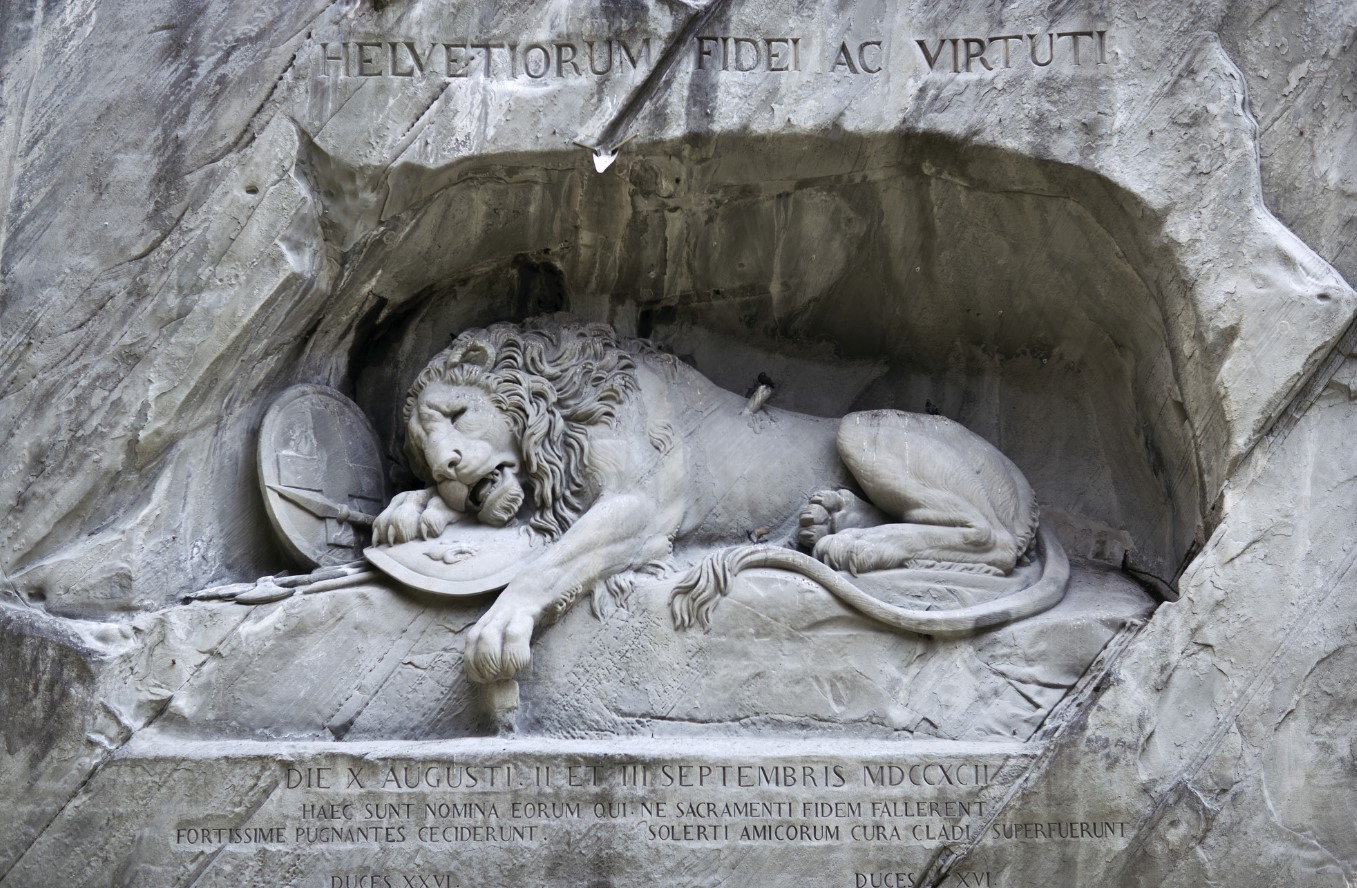
Al di sopra del leone si legge l’iscrizione latina helvetiorum fidei ac virtuti ovvero ‘alla lealtà e al coraggio degli svizzeri’.
Il Leone di Lucerna
Ferito a morte, il leone con la bocca aperta e gli occhi semi dischiusi, è disteso su un letto fatto di lance e scudi. Forte e ardito come lo furono le Guardie Svizzere, perde la vita sul campo di battaglia alla stregua dei combattenti che commemora.
Il Thorvaldsen ebbe un talento e delle aspirazioni di un ordine superiore. […] egli mira per lo più alla grandezza, e raggiunge talvolta il suo alto scopo. Il suo Leone di Lucerna, il suo Trionfo di Alessandro e molte altre figure allegoriche portano la impronta dell’immaginazione e della forza.»
Henri Delaborde
Per il momento il sempre vostro Michelangelo Buonarroti vi saluta dandovi appuntamento ai prossimi post e sui social.

Thorvaldsen’s Lion: The World’s Saddest and Most Moving Piece of Stone
Thorvaldsen sculpted memorable and fascinating works. Just think of the Three Graces or the sensual group of Ganymede and the Eagle to get an idea of his way of sculpting, of the refinement of the composition.
Among the most fascinating and meaningful works that Thorvaldsen sculpted, it is worth mentioning and talking about the Lion of Lucerne, “the saddest and most moving piece of stone in the world” as Mark Twain wrote.
Located in the Swiss city of Lucerne, the great sleeping lion is a monument dedicated to the Swiss Guards who lost their lives defending the French royal family during the French Revolution.
The origins of the Lion of Lucerne
It was 1792 when the revolutionaries stormed the Tuileries Palace in Paris and the Swiss Guards tried everything they could to defend it but there was nothing they could do. On August 10, the monarchy of Louis XVI fell.
The idea of dedicating a work that could honor the Swiss Guards who lost their lives during those riots was the idea of the Swiss major Pfyffer von Altishofen, who survived the killing of his comrades.
He had in mind to have the great work made in the garden of his house, not far from Lucerne. Some time later, Vincenz Ruttiman, Swiss ambassador in Rome, wanted to ask Thorvaldsen to start that work. The artist accepted even though he was not feeling very well.
The sculptor prepared a sketch and subsequently Bienaimé, one of Thorvaldsen’s most talented students, was commissioned to begin sculpting the lion in marble.
Now you should know that Thorvaldsen had never seen a lion in real life but took inspiration from ancient statuary to be able to create one that was very similar to a real specimen. The sculptor retouched Bienaimé’s work several times to make the animal even more realistic.
Then it was the sculptor Luca Ahorn who carved the marble model of Thorvaldsen and Bienaimé in the niche carved into the sandstone rock that he finished in 1821.
Above the lion is the Latin inscription helvetiorum fidei ac virtuti or ‘to the loyalty and courage of the Swiss’.
The Lion of Lucerne
Mortally wounded, the lion with its mouth open and eyes half-closed, is stretched out on a bed made of spears and shields. Strong and bold as were the Swiss Guards, he loses his life on the battlefield like the fighters he commemorates.
Thorvaldsen had talent and aspirations of a higher order. […] he aims mostly at greatness, and sometimes achieves his high goal. His Lion of Lucerne, his Triumph of Alexander and many other allegorical figures bear the imprint of imagination and strength.»
Henri Delaborde
For the moment, yours ever Michelangelo Buonarroti bids you farewell, making an appointment with you in the next posts and on social media.

Sostienici – Support Us
Se questo blog ti piace e ti appassiona, puoi aiutarci a farlo crescere sempre più sostenendoci in modo concreto condividendo i post, seguendo le pagine social e con un contributo che ci aiuta ad andare avanti con il nostro lavoro di divulgazione. . ENGLISH: If you like and are passionate about this blog, you can help us make it grow more and more by supporting us in a concrete way by sharing posts, following social pages and with a contribution that helps us to move forward with our dissemination work.
10,00 €
Articoli
Condividi:


Questo sono io





sostienici

Sostienici – Support Us
Se questo blog ti piace e ti appassiona, puoi aiutarci a farlo crescere sempre più sostenendoci in modo concreto condividendo i post, seguendo le pagine social e con un contributo che ci aiuta ad andare avanti con il nostro lavoro di divulgazione. . ENGLISH: If you like and are passionate about this blog, you can help us make it grow more and more by supporting us in a concrete way by sharing posts, following social pages and with a contribution that helps us to move forward with our dissemination work.
€10,00


