
L’opera di Ognissanti: la Glorificazione di Maria del Beato Angelico
Oggi, 1° novembre, è il giorno dedicato a Tutti i Santi, celebrazione comunemente conosciuta come Ognissanti.
La nascita di Ognissanti
Questa giornata festiva fu istituita nel VII secolo quando, papa Bonifacio IV, nel 609, volle trasformare il Pantheon in un santuario cristiano, consacrandolo alla Madre di Dio e a tutti i Santi martiri.
In quei primi anni, la festa di Ognissanti veniva celebrata il 13 maggio. Solo con l’arrivo di papa Gregorio III, nel 741, le celebrazioni furono spostate al 1° novembre, anniversario della consacrazione di una cappella a San Pietro che custodiva reliquie dei Santi Apostoli, dedicata a Tutti i Santi, martiri, confessori e a tutti i giusti.
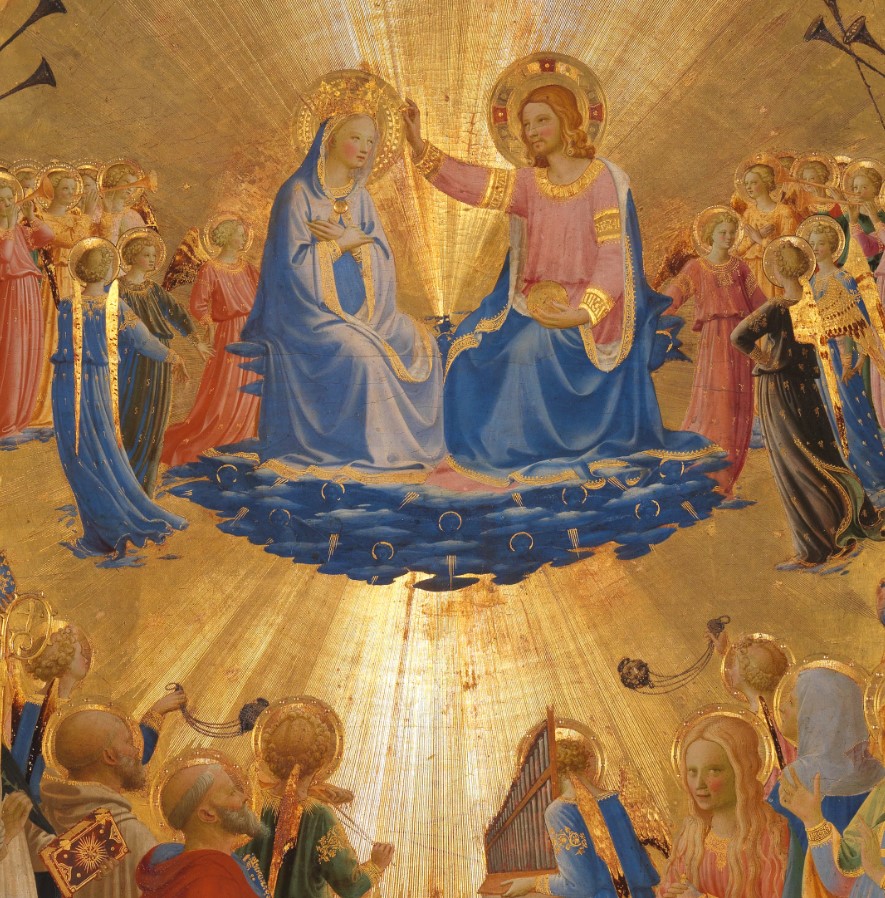
La Glorificazione di Maria del Beato Angelico
Se c’è un’opera che riconduce nell’immediato col pensiero alle celebrazioni di Ognissanti è il dipinto a tempera su tavola con fondo oro della Glorificazione della Vergine del Beato Angelico, realizzata tra il 1431 e il 1435.
Il fulcro dell’opera è la Vergine assunta in cielo, assisa in trono dinanzi a Suo Figlio, Cristo redentore. Attorno una cerchia di angeli suona e canta mentre in basso una schiera di Santi prega.
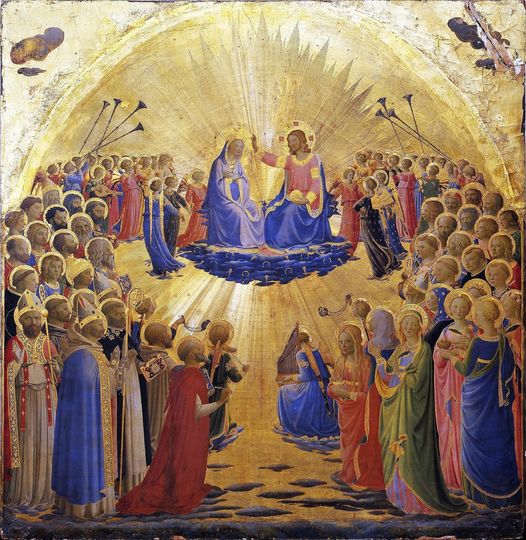
La Madonna appare con la corona sul capo. Non esiste alcun riferimento nella Bibbia alla coronazione della Vergine ma questo tipo di rappresentazione era frequente nel Medioevo e simboleggiava il trionfo della Madre Chiesa.
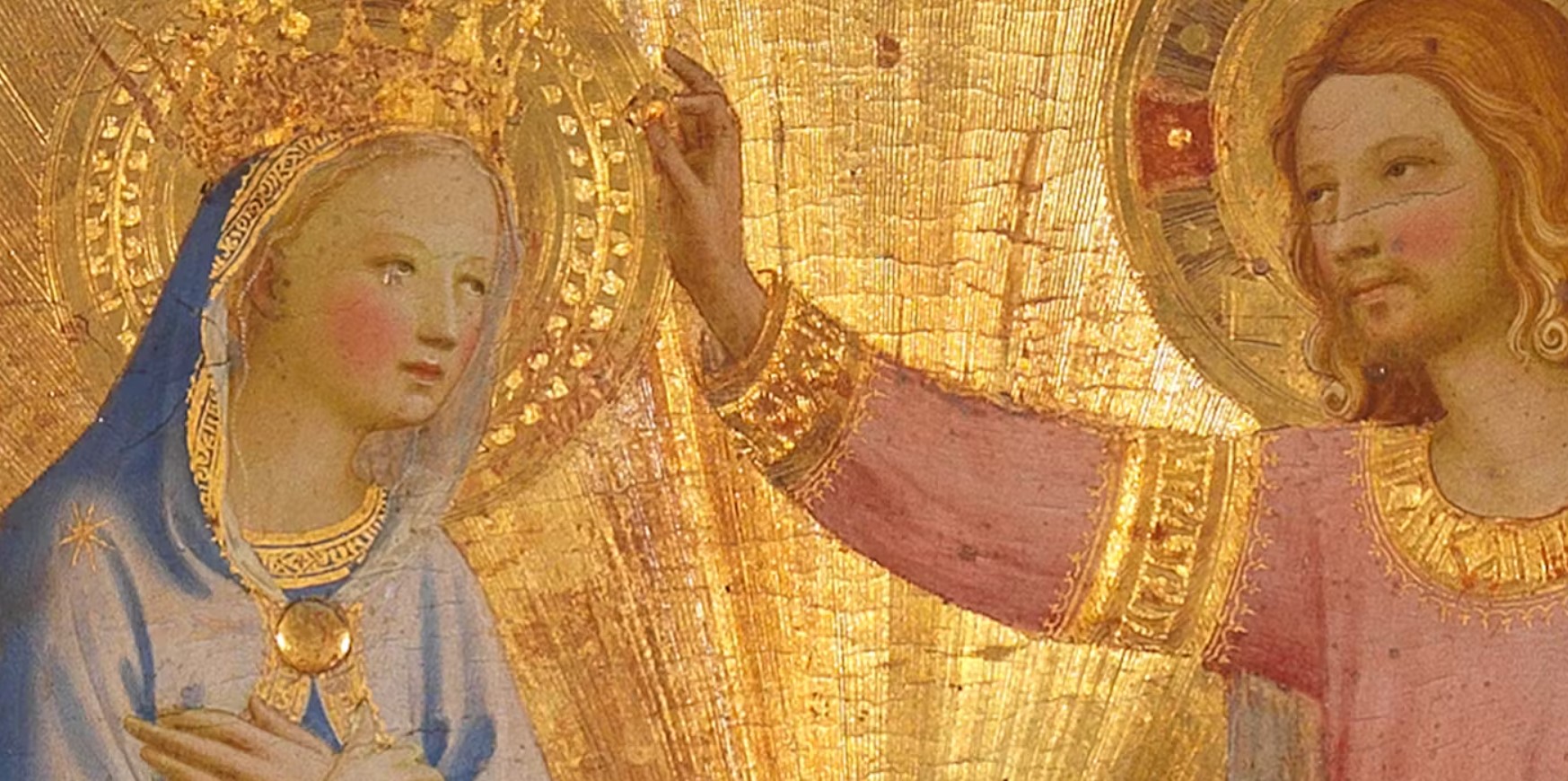
Osservate con attenzione un particolare di non poco valore: non è Cristo che incorona la Madre.
Lui infatti si protende con il braccio solo per aggiungere a quel diadema una pietra preziosa. Probabilmente il Beato Angelico traduce in immagine la visione di Brigida di Svezia, una mistica vissuta nel Trecento che vide Cristo aggiungere gigli bianchi e pietre alla corona della Madonna.
I Santi dipinti sulla tavola sono oltre quaranta e ciascuno ha un volto e una posa differente.
Tra i Santi riconoscibili si nota la presenza di Maria Maddalena inginocchiata con i capelli sciolti mentre dall’altro lato, inginocchiato, compare San Girolamo con l’abito da cardinale. A seguire si vede San Domenico vestito di bianco e il Vescovo Egidio che porta sul colletto il suo nome.
L’importanza data a questo Santo dal Beato Angelico ha una motivazione ben precisa strettamente connessa con la committenza. Infatti la tavola era destinata a essere posizionata su un altare del tramezzo della chiesa dello spedale di Santa Maria Nuova a Firenze, dedicata proprio a Sant’Egidio.
L’opera in questione appartiene alla Galleria degli Uffizi.
Per il momento il sempre vostro Michelangelo Buonarroti vi saluta dandovi appuntamento ai prossimi post e sui social.
The Work of All Saints: The Glorification of Mary by Beato Angelico
Today, November 1st, is the day dedicated to All Saints, a celebration commonly known as All Saints.
The Birth of All Saints
This holiday was established in the 7th century when, in 609, Pope Boniface IV wanted to transform the Pantheon into a Christian sanctuary, consecrating it to the Mother of God and all the Holy Martyrs.
In those early years, the feast of All Saints was celebrated on May 13th. Only with the arrival of Pope Gregory III, in 741, were the celebrations moved to November 1st, the anniversary of the consecration of a chapel to St. Peter that housed relics of the Holy Apostles, dedicated to All the Saints, martyrs, confessors and all the righteous.
The Glorification of Mary by Beato Angelico
If there is a work that immediately brings to mind the celebrations of All Saints, it is the tempera painting on wood with a gold background of the Glorification of the Virgin by Beato Angelico, created between 1431 and 1435.
The fulcrum of the work is the Virgin assumed into heaven, seated on a throne before Her Son, Christ the Redeemer. Around her, a circle of angels play and sing while below a group of Saints pray.
The Madonna appears with a crown on her head. There is no reference in the Bible to the coronation of the Virgin, but this type of representation was frequent in the Middle Ages and symbolized the triumph of Mother Church.
Observe carefully a detail of no small value: it is not Christ who crowns the Mother.
In fact, he reaches out with only his arm to add a precious stone to that diadem. Beato Angelico probably translates into an image the vision of Bridget of Sweden, a mystic who lived in the fourteenth century who saw Christ add white lilies and stones to the crown of the Madonna.
There are over forty Saints painted on the panel and each has a different face and pose.
Among the recognizable Saints, we note the presence of Mary Magdalene kneeling with her hair loose while on the other side, kneeling, appears Saint Jerome in a cardinal’s robe. Following is Saint Dominic dressed in white and Bishop Egidio who wears his name on his collar.
The importance given to this Saint by Beato Angelico has a very specific motivation closely connected to the commission. In fact, the panel was intended to be placed on an altar of the partition wall of the church of the hospital of Santa Maria Nuova in Florence, dedicated to Sant’Egidio.
The work in question belongs to the Uffizi Gallery.
For the moment, the ever-yours Michelangelo Buonarroti bids you farewell, making an appointment with you in the next posts and on social media.

Sostienici – Support Us
Se questo blog ti piace e ti appassiona, puoi aiutarci a farlo crescere sempre più sostenendoci in modo concreto condividendo i post, seguendo le pagine social e con un contributo che ci aiuta ad andare avanti con il nostro lavoro di divulgazione. . ENGLISH: If you like and are passionate about this blog, you can help us make it grow more and more by supporting us in a concrete way by sharing posts, following social pages and with a contribution that helps us to move forward with our dissemination work.
10,00 €
Condividi:


Questo sono io





sostienici

Sostienici – Support Us
Se questo blog ti piace e ti appassiona, puoi aiutarci a farlo crescere sempre più sostenendoci in modo concreto condividendo i post, seguendo le pagine social e con un contributo che ci aiuta ad andare avanti con il nostro lavoro di divulgazione. . ENGLISH: If you like and are passionate about this blog, you can help us make it grow more and more by supporting us in a concrete way by sharing posts, following social pages and with a contribution that helps us to move forward with our dissemination work.
€10,00


