
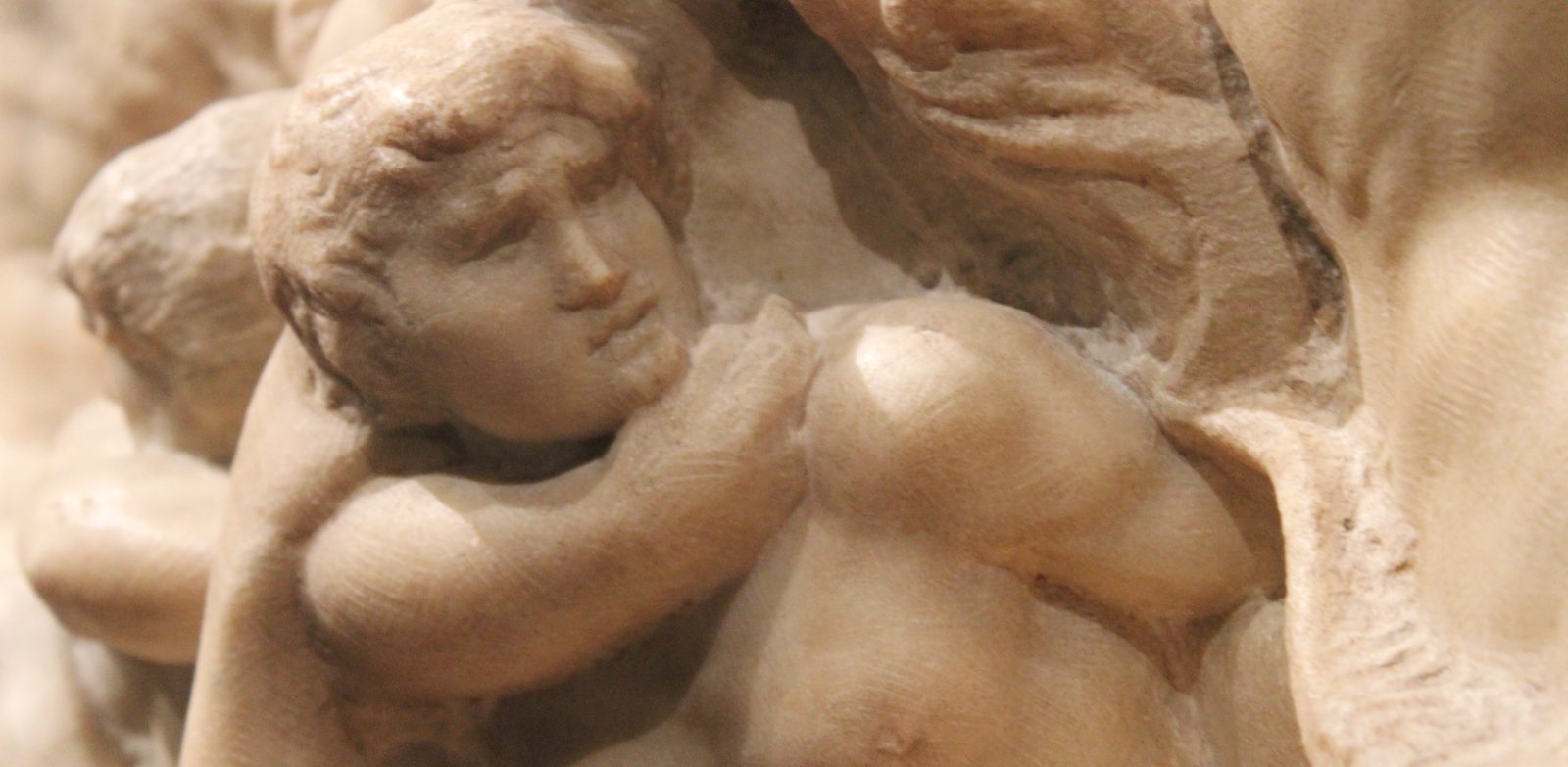
La Scultura del giorno: le Tre Grazie di Pradier
La scultura del giorno che vi propongo oggi è il gruppo delle Tre Grazie ideato da Jean Jacques Pradier nel 1825, oggi custoditi nel Museo del Louvre, a Parigi.
Pradier, scultore nato a Ginevra nel 1790, realizzò il modello in gesso di quest’opera attorno al 1825 e propose la scultura in marmo di Carrara al Salone di Parigi del 1831. Fu acquistata subito dal Ministero della Casa del Re e gli valse la Legion d’onore.
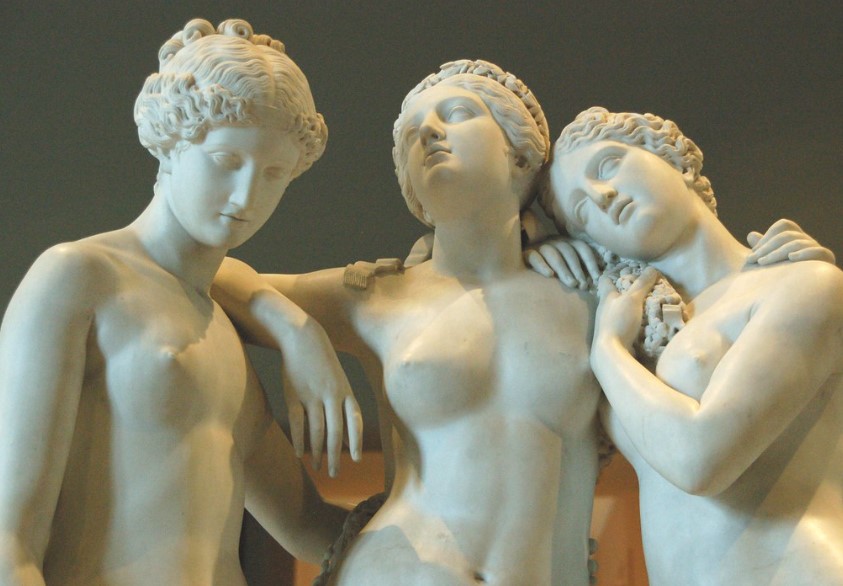
Le tre Grazie rimasero al Castello di Versailles fino al maggio del 1928, quando furono definitivamente trasferite al Louvre.
Il tema ripreso da Pradier è quello delle tre figlie di Zeus ed Eurinone: Aglaia, Eufrosine e Talia. Non era certo una novità la composizione delle Tre Grazie, già trattata in precedenza con enorme successo da Canova e successivamente dallo scultore danese Thorvaldsen.
Le donne stanti sono posizionate l’una di fianco all’altra e mostrano un senso di stanchezza. Probabilmente hanno appena terminato di danzare e si riposano sostenendosi a vicenda, cercando una posizione che possa farle sentire comode.

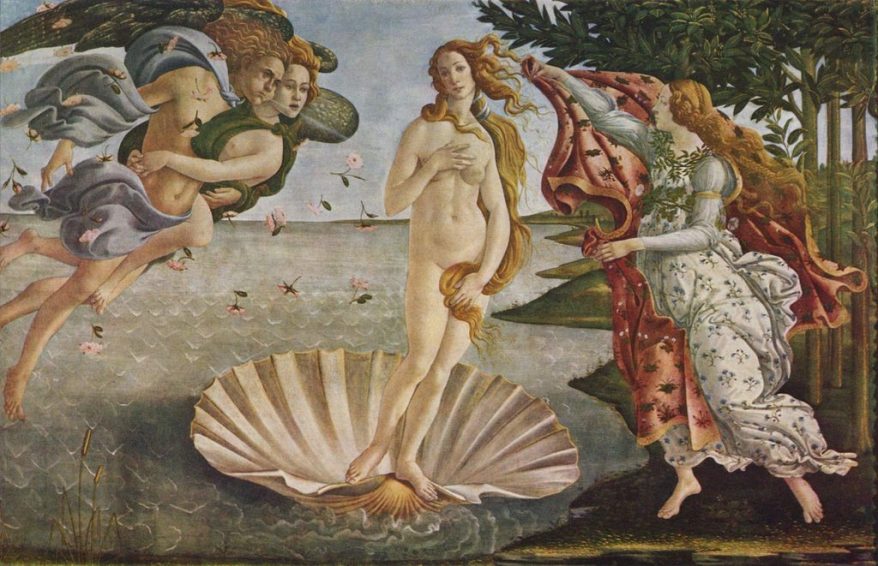
Pradier sceglie di rivolgere i corpi delle giovani verso lo spettatore mentre in precedenza, sia in pittura come fece Botticelli o in scultura, almeno una delle giovani si mostrava le spalle.
La grazia posizionata al centro appoggia il piede sinistro sopra uno scrigno dal quale fuoriescono filze di perle e altre gioie. Le altre due giovani invece hanno ghirlande di fiori.
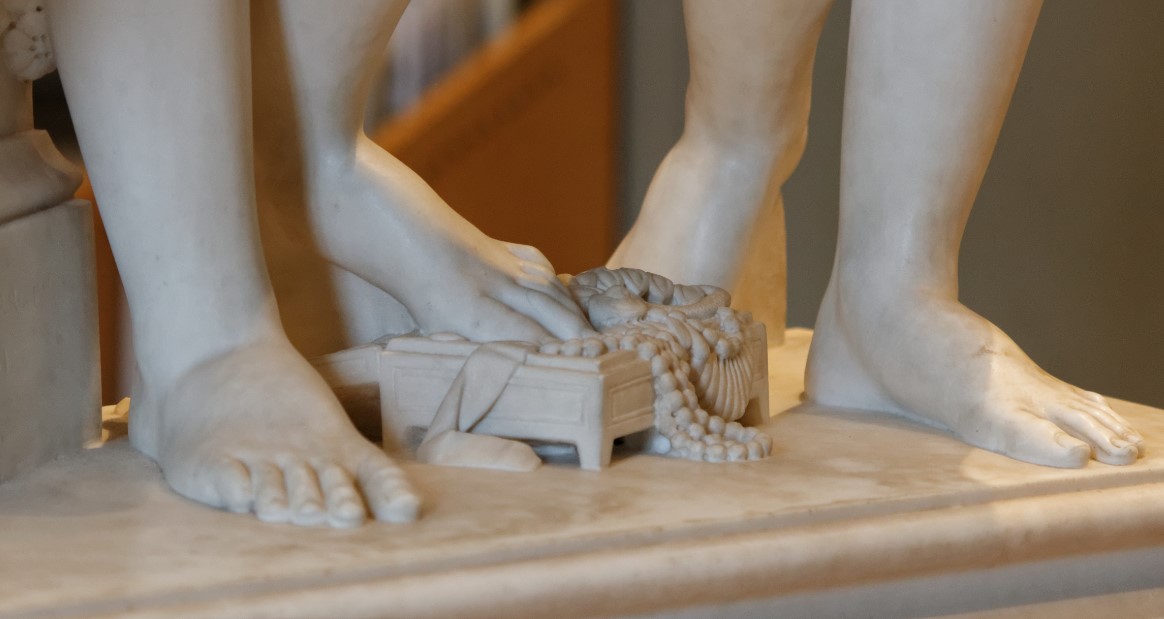
Nelle Tre Grazie è evidente l’abilità dell’artista nel riprodurre nel marmo i dettagli più minuti anche se a mio avviso mancano della leggiadria tipica di Canova.
Per il momento il vostro Michelangelo Buonarroti vi saluta dandovi appuntamento ai prossimi post e sui social.

Sculpture of the day: Pradier’s Three Graces
The sculpture of the day that I propose to you today is the group of the Three Graces created by Jean Jacques Pradier in 1825, today kept in the Louvre Museum in Paris.
Pradier, a sculptor born in Geneva in 1790, created the plaster model of this work around 1825 and proposed the sculpture in Carrara marble at the Paris Salon of 1831. It was immediately purchased by the Ministry of the King’s Household and was awarded the Legion of ‘honor.
The Three Graces remained at the Castle of Versailles until May 1928, when they were definitively transferred to the Louvre.
The theme taken up by Pradier is that of the three daughters of Zeus and Eurynon: Aglaia, Euphrosyne and Thalia. The composition of the Three Graces was certainly not new, having already been treated previously with enormous success by Canova and subsequently by the Danish sculptor Thorvaldsen.
The standing women are positioned next to each other and show a sense of tiredness. They have probably just finished dancing and are resting, supporting each other, looking for a position that makes them feel comfortable.
Pradier chooses to turn the bodies of the young women towards the viewer while previously, whether in painting as Botticelli did or in sculpture, at least one of the young women showed her back.
Grace positioned in the center of her places her left foot on a casket from which strings of pearls and other jewels emerge. The other two young women instead have garlands of flowers.
In the Three Graces the artist’s ability to reproduce the most minute details in marble is evident, even if in my opinion they lack the gracefulness typical of Canova.
For the moment, your Michelangelo Buonarroti greets you and will meet you in future posts and on social media.

Sostienici – Support Us
Se questo blog ti piace e ti appassiona, puoi aiutarci a farlo crescere sempre più sostenendoci in modo concreto condividendo i post, seguendo le pagine social e con un contributo che ci aiuta ad andare avanti con il nostro lavoro di divulgazione. . ENGLISH: If you like and are passionate about this blog, you can help us make it grow more and more by supporting us in a concrete way by sharing posts, following social pages and with a contribution that helps us to move forward with our dissemination work.
8,00 €
-
Venerdì Santo: gli “Ecce Homo” più intensi della storia dell’arte
🇮🇹Ecce Homo. Da Antonello da Messina a Tintoretto, fino al sorprendente capolavoro di Antonio Ciseri, questo soggetto ha attraversato i secoli raccontando dolore, umanità e coscienza… 🇬🇧Ecce Homo. From Antonello da Messina to Tintoretto, to Antonio Ciseri’s astonishing masterpiece, this subject has spanned the centuries, recounting pain, humanity, and conscience…
-
Attacco hacker agli Uffizi: rubati dati sensibili, mappe e codici di sicurezza
🇮🇹Attacco hacker alle Gallerie degli Uffizi: rubati dati sensibili, mappe e sistemi di sicurezza. A rischio opere, archivi e cybersicurezza del patrimonio artistico… 🇬🇧Hacker attack on the Uffizi Galleries: sensitive data, maps, and security systems stolen. Works of art, archives, and the cybersecurity of the artistic heritage are at risk…
-
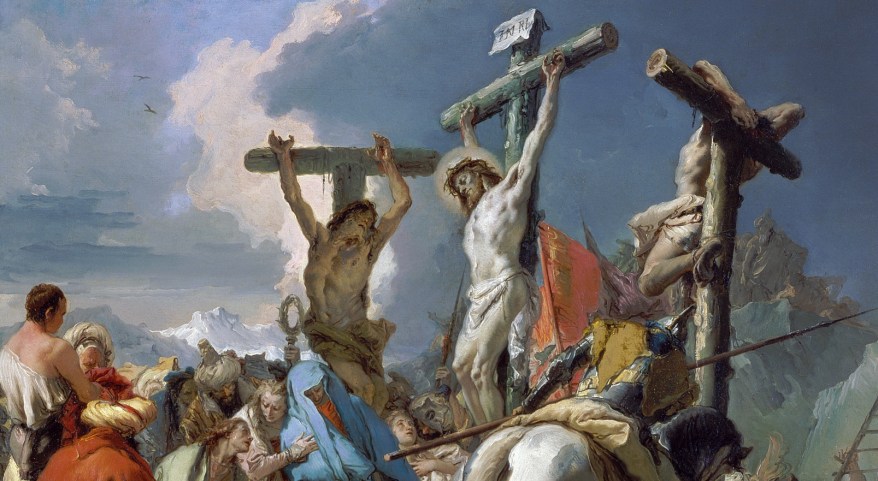
Venerdì Santo: la Crocifissione secondo Tiepolo
🇮🇹Nel giorno del Venerdì Santo, c’è un’opera che riesce ancora a scuotere lo sguardo. La Crocifissione di Giambattista Tiepolo non è come le altre: niente simmetrie perfette, niente distanza. Qui si entra dentro la scena, da un punto di vista obliquo, tra movimento, tensione e umanità… 🇬🇧On Good Friday, there’s a work that still manages…
Condividi:


Questo sono io





sostienici

Sostienici – Support Us
Se questo blog ti piace e ti appassiona, puoi aiutarci a farlo crescere sempre più sostenendoci in modo concreto condividendo i post, seguendo le pagine social e con un contributo che ci aiuta ad andare avanti con il nostro lavoro di divulgazione. . ENGLISH: If you like and are passionate about this blog, you can help us make it grow more and more by supporting us in a concrete way by sharing posts, following social pages and with a contribution that helps us to move forward with our dissemination work.
€10,00


