

La diffusione delle stampe con gli affreschi della Cappella Paolina
Gli affreschi della Cappella Paolina mi tennero occupato per parecchi anni. Faticavo ad andare avanti sia per l’età che non era più quella di un ragazzino che per i calcoli renali che non mi lasciavano tregua.
La Cappella Paolina, cappella parva del pontefice, era stata edificata a partire dal 1537 da Antonio da Sangallo il giovane fra la Sala Regia e la più celebre Cappella Sistina.
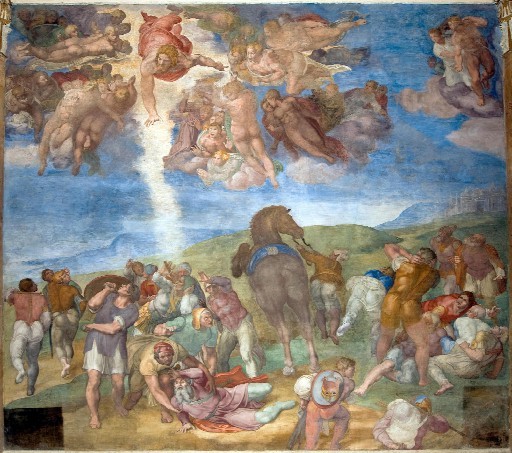
Quella nuova cappella era stata commissionata da Papa Paolo III Farnese e sempre lui volle affidare a me la sua decorazione pittorica con due grandi affreschi: quello della Conversione di San Paolo che realizzai fra il 1542 e il 1545 e quello della Crocifissione di San Pietro, affrescata fra il 1546 e il 1550.
Sebbene la Cappella sia chiusa al pubblico perchè riservata al papa e alla sua corte, a partire dalla seconda metà del Cinquecento conobbe una discreta fortuna grazie alla diffusione di riproduzione sia di parte degli affreschi che delle tavole più complesse che ne proponevano porzioni più grandi.

Pensate che già l’umanista Domenico Lampsonio ne parla nell’aprile del 1656 a Liegi, scrivendo al Vasari a Firenze: “Io non ho ancora ricevuto i disegni in stampa, i quali mi manda Maestro Niccolò Florentino, ma spero di averli a breve; fra i quali sarà, come ei mi scrive, la conversione di San Paulo di Michelangelo, intagliata da detto Enea [Vico].
[…] Pur vedremo quel che ne sarà, almeno dovrà esser manco disdicevole di quella baia, che non so chi cinque o sei anni passati ha intagliato la detta conversione, che è una vergogna a vederlo; como anco ultimamente ha fatto un certo Luchese della Crucifissione di San Pietro e del Giudicio Universale: dove non è nulla che pur accenni una minima particella della maestà e perfezzione delle cose di Michelangelo»

La riproduzione contro la quale si scaglia l’umanista è evidentemente la stampa a bulino di Beatrizet che riproduce assai fedelmente la scena della Conversione di San Paolo, realizzata fra il 1559 e il 1560 circa.
Per il momento il vostro Michelangelo Buonarroti vi saluta dandovi appuntamento ai prossimi post e sui social.
The diffusion of prints with the frescoes of the Pauline Chapel
The frescoes in the Pauline Chapel kept me busy for several years. I struggled to move forward both because of my age, which was no longer that of a child, and because of the kidney stones that left me with no respite.
The Pauline Chapel, the pontiff’s parva chapel, had been built starting in 1537 by Antonio da Sangallo the younger between the Sala Regia and the more famous Sistine Chapel.
That new chapel had been commissioned by Pope Paul III Farnese and he always wanted to entrust me with its pictorial decoration with two large frescoes: that of the Conversion of Saint Paul which I painted between 1542 and 1545 and that of the Crucifixion of Saint Peter, frescoed between 1546 and 1550.
Although the Chapel is closed to the public because it was reserved for the Pope and his court, starting from the second half of the sixteenth century it enjoyed considerable success thanks to the diffusion of reproductions of both part of the frescoes and the more complex panels which featured larger portions.
Consider that the humanist Domenico Lampsonio already spoke about it in April 1656 in Liège, writing to Vasari in Florence: “I have not yet received the printed drawings, which Maestro Niccolò Florentino sends me, but I hope to have them shortly; among which will be, as he writes to me, Michelangelo’s Conversion of Saint Paul, carved by the said Enea [Vico].
[…] Although we will see what will happen, at least it will have to be less disgraceful than that bay, which I don’t know who, five or six years ago, has carved the said conversion, which is a shame to see; as a certain Luchese recently did for the Crucifixion of St. Peter and the Last Judge: where there is nothing that even hints at the slightest particle of the majesty and perfection of Michelangelo’s works”
The reproduction against which the humanist rails is evidently Beatrizet’s burin print which very faithfully reproduces the scene of the Conversion of Saint Paul, created between approximately 1559 and 1560.
For the moment, your Michelangelo Buonarroti greets you and will meet you in future posts and on social media.

Sostienici – Support Us
Se questo blog ti piace e ti appassiona, puoi aiutarci a farlo crescere sempre più sostenendoci in modo concreto condividendo i post, seguendo le pagine social e con un contributo che ci aiuta ad andare avanti con il nostro lavoro di divulgazione. . ENGLISH: If you like and are passionate about this blog, you can help us make it grow more and more by supporting us in a concrete way by sharing posts, following social pages and with a contribution that helps us to move forward with our dissemination work.
8,00 €
-
Giovedì Santo: l’Ultima Cena di Allori che pochi conoscono a Firenze
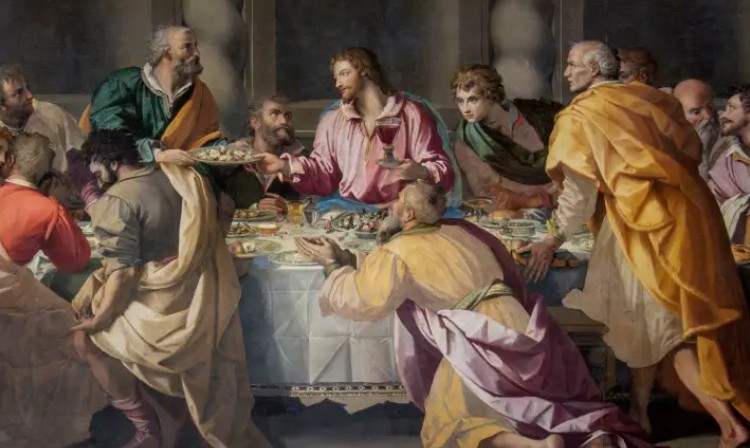
🇮🇹Nel cuore di Museo di Santa Maria Novella, a Firenze, si conserva una delle interpretazioni più affascinanti e meno note dell’Ultima Cena: quella realizzata da Alessandro Allori nel 1584… 🇬🇧In the heart of the Santa Maria Novella Museum in Florence, one of the most fascinating and least-known interpretations of the Last Supper is preserved: the…
-
Cenacolo di Leonardo: i dettagli che raccontano il tradimento
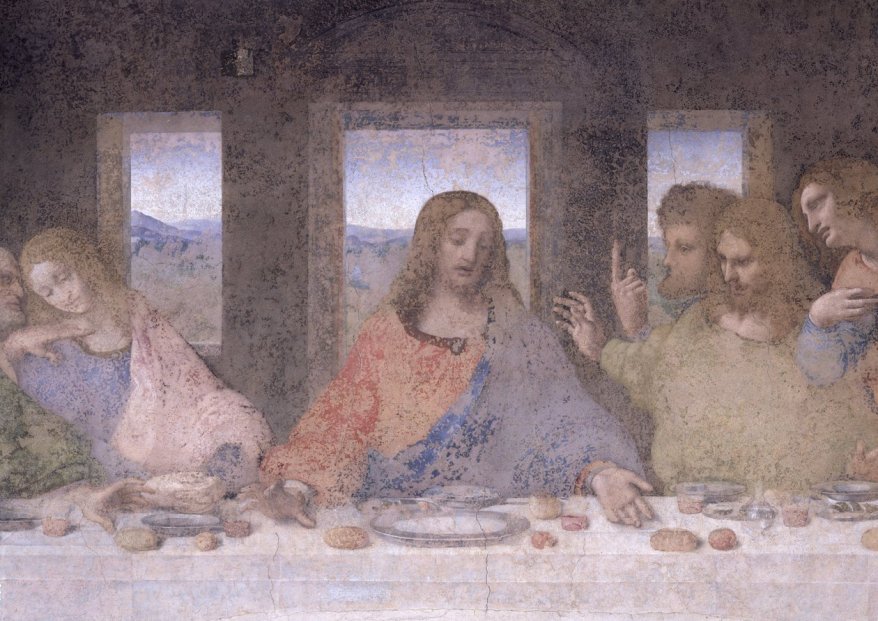
🇮🇹Nel Cenacolo di Leonardo da Vinci, custodito a Santa Maria delle Grazie, Cristo annuncia il tradimento e il tempo si ferma… 🇬🇧In Leonardo da Vinci’s Last Supper, housed in Santa Maria delle Grazie, Christ announces the betrayal and time stands still…
-
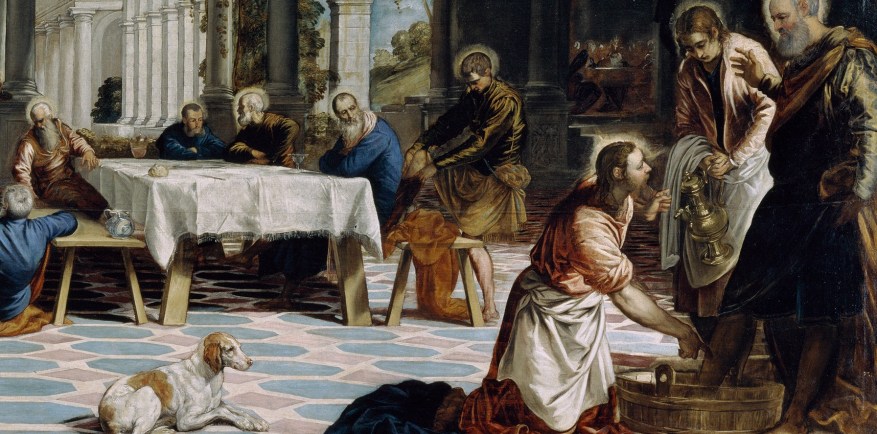
La Lavanda dei Piedi di Tintoretto: Il Capolavoro Veneziano al Prado
🇮🇹Tra i capolavori più affascinanti del Rinascimento veneziano, “La Lavanda dei Piedi” di Jacopo Tintoretto rappresenta un perfetto equilibrio tra spiritualità, innovazione compositiva e straordinaria forza narrativa… 🇬🇧Among the most fascinating masterpieces of the Venetian Renaissance, Jacopo Tintoretto’s “The Washing of the Feet” represents a perfect balance between spirituality, compositional innovation, and extraordinary narrative force…
Condividi:


Questo sono io





sostienici

Sostienici – Support Us
Se questo blog ti piace e ti appassiona, puoi aiutarci a farlo crescere sempre più sostenendoci in modo concreto condividendo i post, seguendo le pagine social e con un contributo che ci aiuta ad andare avanti con il nostro lavoro di divulgazione. . ENGLISH: If you like and are passionate about this blog, you can help us make it grow more and more by supporting us in a concrete way by sharing posts, following social pages and with a contribution that helps us to move forward with our dissemination work.
€10,00


