

La Scultura del giorno: Amore che realizza un arco di Bouchardon
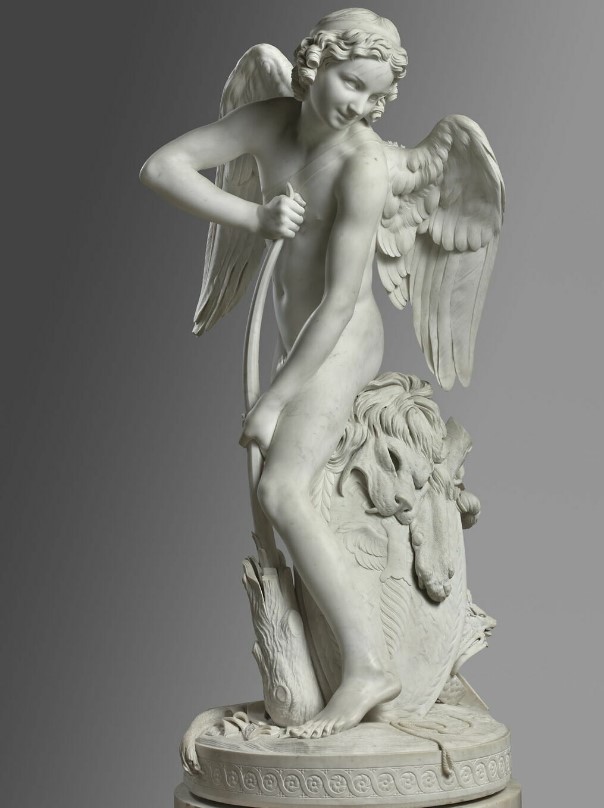
La scultura del giorno di cui voglio parlarvi oggi ha come soggetto Amore che ricava il suo arco dalla clava di Ercole adoperando le armi di Marte. L’opera fu scolpita da Edmé Bouchardon nel 1750 e oggi è esposta nel dipartimento delle sculture del Louvre.
Amore fu commissionato all’artista nel 1740 da Philibert Orry, direttore generale degli edifici del re.
Edmé Bouchardon fu uno dei più celebri e apprezzati artisti francesi del Settecento. Dapprima lavorò assieme al padre architetto e scultore Giovan Battista e successivamente, nel 1722, andò a Parigi, dove divenne allievo di Coustou.
Nel 1723 conquistò il primo premio dell’Accademia ed ebbe modo di venire a studiare in Italia, a Roma. Rimase dieci anni nella città eterna e in poco tempo divenne noto per le sue copie dall’antico.
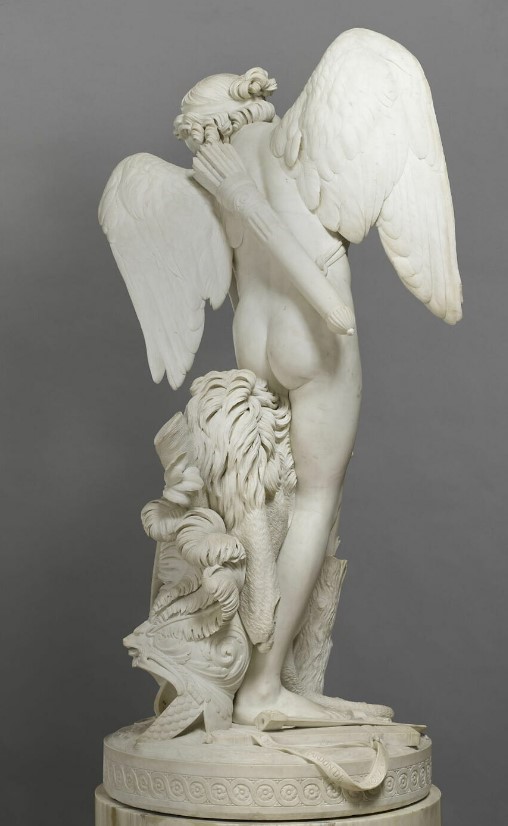
Bouchardon impiegò cinque anni per portare a termine Amore che ricava il suo arco dalla clava di Ercole. Pensò di dar forma a un dio ragazzino circondato da diversi oggetti fra i quali si nota la presenza della pelle di leone appoggiata dietro le sue natiche: riferimento diretto a Ercole.
Con un’espressione sorridente sul volto che sembra più maliziosa che felice, Amore è appena riuscito ad intagliare un arco con gli attrezzi sottratti a Marte che si vedono posati a terra. Anche l’elmo ai piedi del giovane è quello del dio della guerra.
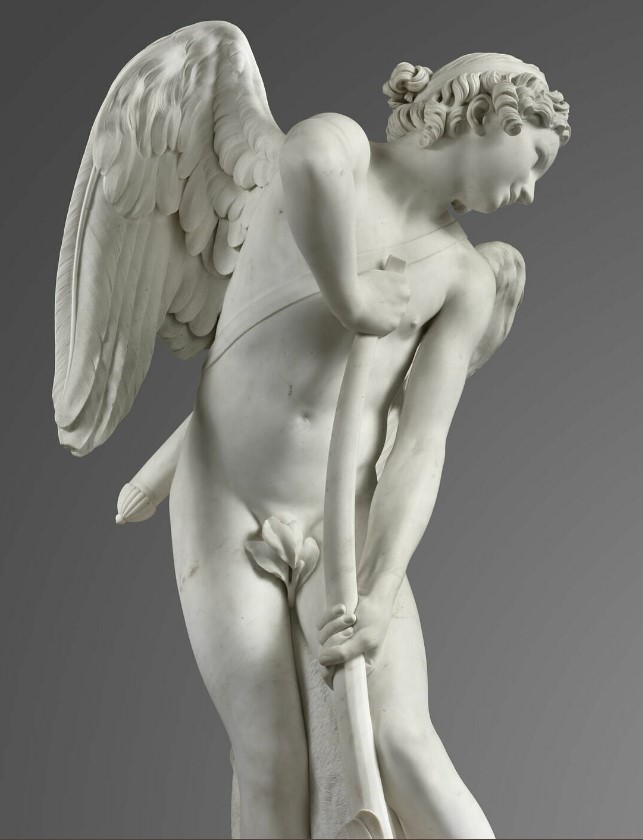
Così dalla potente clava di Ercole, simbolo di forza virile, modellata da un malizioso Amore adoperando le armi di Marte, poco a poco prende forma l’arco le cui frecce scagliate faranno innamorare senza rimedio un gran numero di dei e mortali.
Buchardon volle mostrare Amore nel momento in cui, a metà lavoro, prova l’elasticità della parte di arco che ha appena realizzato.

Lo scultore terminò di lavorare alla sua opera il 12 maggio 1750 e, dopo averla consegnata alla Reggia di Versailles, nell’agosto dello stesso anno fu collocata nel Salon de la Guerre.
Amore che ricava il suo arco dalla clava di Ercole adoperando le armi di Marte subì numerosi spostamenti negli anni a seguire fino ad arrivare in via definitiva al Louvre nel 1824.
Per il momento il vostro Michelangelo Buonarroti vi saluta dandovi appuntamento ai prossimi post e sui social.

Sculpture of the day: Love making an arch by Bouchardon
The sculpture of the day that I want to tell you about today has as its subject Cupid who draws his bow from the club of Hercules using the weapons of Mars. The work was sculpted by Edmé Bouchardon in 1750 and is now exhibited in the sculpture department of the Louvre.
Love was commissioned from the artist in 1740 by Philibert Orry, general manager of the King’s Buildings.
Edmé Bouchardon was one of the most famous and appreciated French artists of the eighteenth century. He first worked together with his architect and sculptor father Giovan Battista and later, in 1722, he went to Paris, where he became a pupil of Coustou.
In 1723 he won the first prize of the Academy and was able to come to study in Italy, in Rome. He remained ten years in the Eternal City and in a short time he became known for his copies of the ancient.
It took Bouchardon five years to complete Love who draws his bow from the club of Hercules. He thought of giving shape to a boy god surrounded by various objects among which we note the presence of the lion skin resting behind his buttocks: a direct reference to Hercules.
With a smiling expression on his face that seems more mischievous than happy, Love has just managed to carve a bow with the tools stolen from Mars that can be seen lying on the ground. Even the helmet at the young man’s feet is that of the god of war.
Thus from the powerful club of Hercules, symbol of virile strength, modeled by a mischievous Cupid using the weapons of Mars, little by little the bow takes shape whose arrows hurled will make a large number of gods and mortals fall in love without remedy.
Buchardon wanted to show Love in the moment in which, halfway through the work, he tests the elasticity of the part of the bow that he has just made.
The sculptor finished working on his work on May 12, 1750 and, after having delivered it to the Palace of Versailles, in August of the same year it was placed in the Salon de la Guerre.
Cupid who draws his bow from the club of Hercules using the weapons of Mars underwent numerous movements in the following years until finally arriving in the Louvre in 1824.
For the moment, your Michelangelo Buonarroti greets you by making an appointment for the next posts and on social media.

Sostienici – Support Us
Se questo blog ti piace e ti appassiona, puoi aiutarci a farlo crescere sempre più sostenendoci in modo concreto condividendo i post, seguendo le pagine social e con un contributo che ci aiuta ad andare avanti con il nostro lavoro di divulgazione. . ENGLISH: If you like and are passionate about this blog, you can help us make it grow more and more by supporting us in a concrete way by sharing posts, following social pages and with a contribution that helps us to move forward with our dissemination work.
8,00 €
-
Venerdì Santo: gli “Ecce Homo” più intensi della storia dell’arte
🇮🇹Ecce Homo. Da Antonello da Messina a Tintoretto, fino al sorprendente capolavoro di Antonio Ciseri, questo soggetto ha attraversato i secoli raccontando dolore, umanità e coscienza… 🇬🇧Ecce Homo. From Antonello da Messina to Tintoretto, to Antonio Ciseri’s astonishing masterpiece, this subject has spanned the centuries, recounting pain, humanity, and conscience…
-
Attacco hacker agli Uffizi: rubati dati sensibili, mappe e codici di sicurezza
🇮🇹Attacco hacker alle Gallerie degli Uffizi: rubati dati sensibili, mappe e sistemi di sicurezza. A rischio opere, archivi e cybersicurezza del patrimonio artistico… 🇬🇧Hacker attack on the Uffizi Galleries: sensitive data, maps, and security systems stolen. Works of art, archives, and the cybersecurity of the artistic heritage are at risk…
-
Venerdì Santo: la Crocifissione secondo Tiepolo
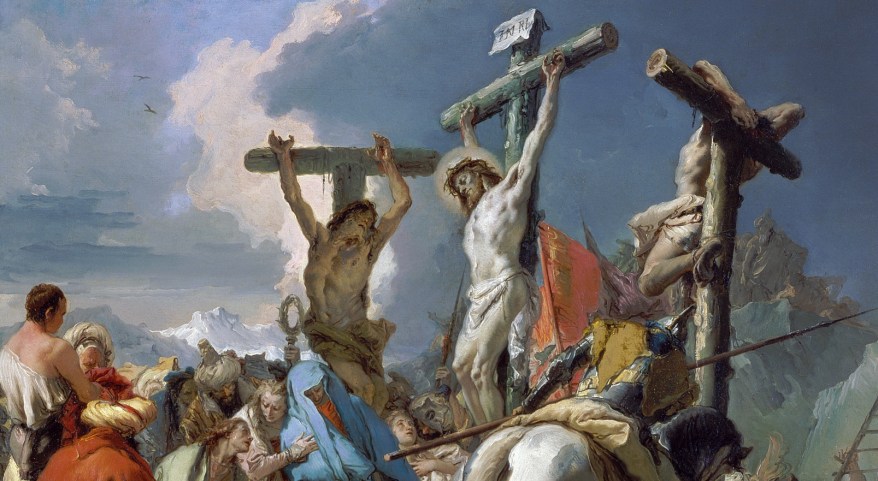
🇮🇹Nel giorno del Venerdì Santo, c’è un’opera che riesce ancora a scuotere lo sguardo. La Crocifissione di Giambattista Tiepolo non è come le altre: niente simmetrie perfette, niente distanza. Qui si entra dentro la scena, da un punto di vista obliquo, tra movimento, tensione e umanità… 🇬🇧On Good Friday, there’s a work that still manages…
Condividi:


Questo sono io





sostienici

Sostienici – Support Us
Se questo blog ti piace e ti appassiona, puoi aiutarci a farlo crescere sempre più sostenendoci in modo concreto condividendo i post, seguendo le pagine social e con un contributo che ci aiuta ad andare avanti con il nostro lavoro di divulgazione. . ENGLISH: If you like and are passionate about this blog, you can help us make it grow more and more by supporting us in a concrete way by sharing posts, following social pages and with a contribution that helps us to move forward with our dissemination work.
€10,00


