

La Scultura del giorno: la Donna morsa da un serpente di Auguste Clésinger
La scultura del giorno che vi propongo oggi è la Donna morsa da un serpente scolpita da Auguste Clésinger nel 1847.
L’opera fu commissionata all’artista da Alfred Mosselman, un industriale che voleva rendere omaggio alla sua amante sedicenne Apollonie Sabatier.
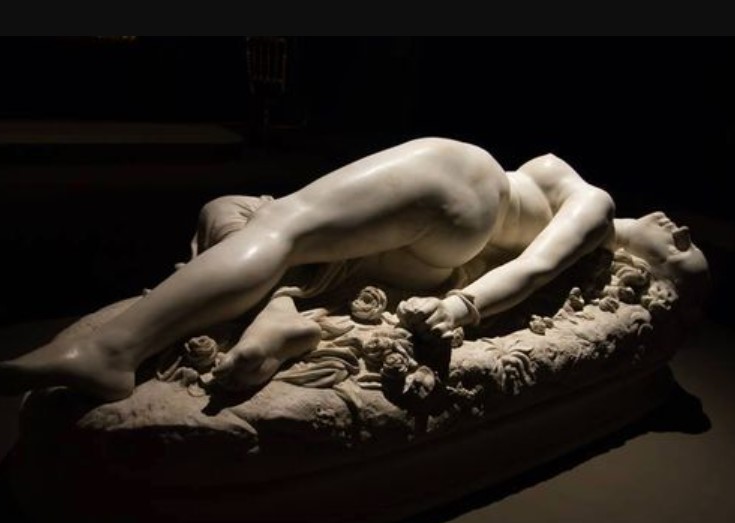
La scultura venne mostrata per la prima volta al pubblico nel 1847, al Salone di Parigi e fu l’opera più discussa di quell’anno.
Suscitò un enorme scandalo già che quella donna priva di vesti sdraiata a terra mossa da quella contorsione provocata dal morso del serpente che gli si attorciglia al polso, sembrava la raffigurazione di un orgasmo.
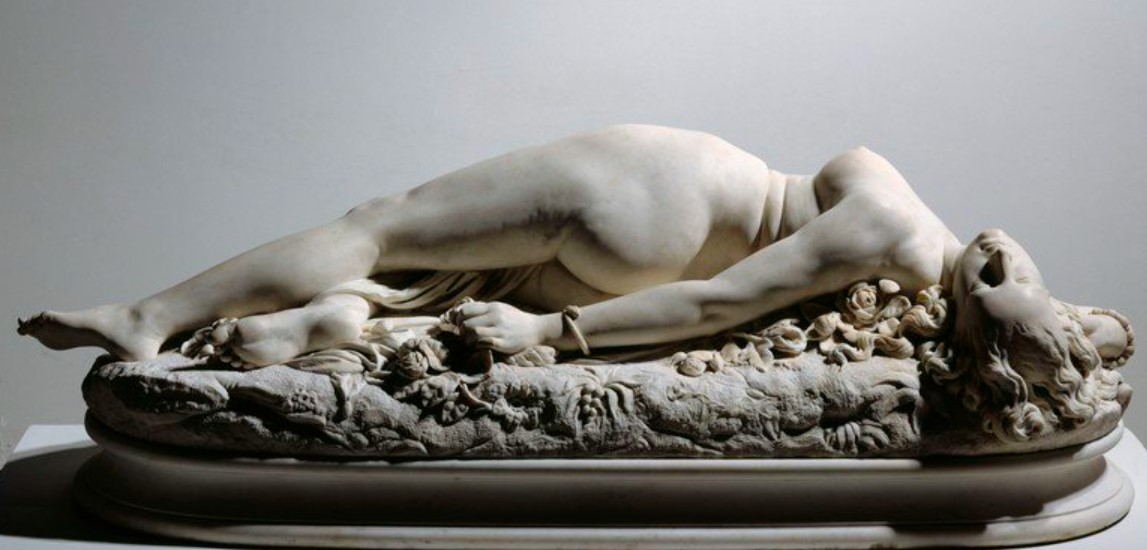
La cosa fu notata anche dai critici e sulla Revue deux Mond venne pubblicato un articolo che scrisse sul’opera di Clésinger: “Il titolo e il serpente sono delle concessioni fatte alla giuria! Chi vogliamo prendere in giro! Questa donna non soffre, ma gioisce!”
Auguste Clésinger aveva scolpito una donna completamente nuda con un drappo utile a coprirle solo una coscia. Il serpente avvolto al polso alla stregua di un bracciale l’ha appena morsa e lei si contorce dal dolore.
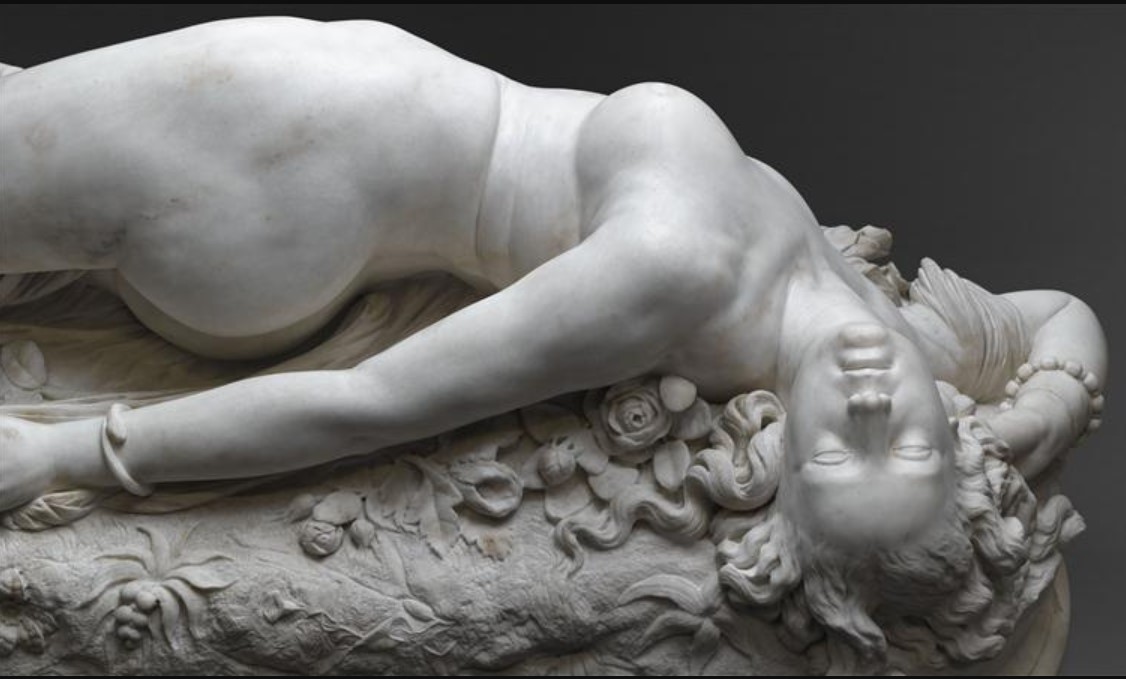
Il corpo della giovane sopra la roccia è contornato di fiori e petali e, se osservate bene il suo volto, vi renderete conto che è tutt’altro che idealizzato: è il ritratto di un viso reale.
Infatti l’artista scolpì la Donna morsa dal serpente partendo da uno stampo dal vero proprio di Apollonie Sabatier, amante di Mosselman.
L’uso di uno stampo dal vero del corpo faceva scuramente risparmiare tempo e permetteva all’artista di riprodurlo in modo realistico.
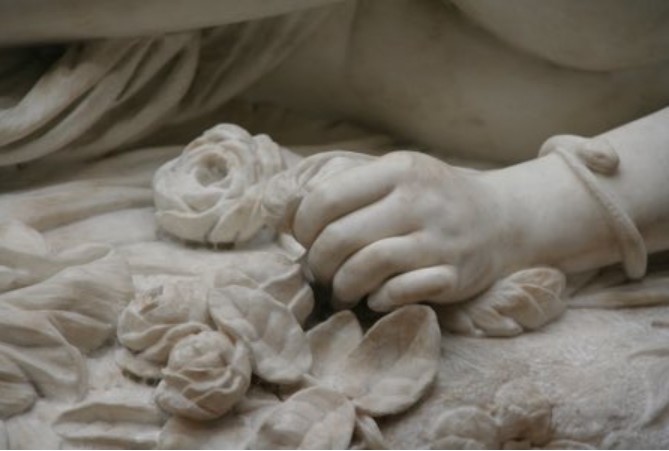
Se volete ammirare con i vostro occhi questa opera, non vi rimane che andare al Musee d’Orsay a Parigi.
Per il momento il vostro Michelangelo Buonarroti vi saluta dandovi appuntamento ai prossimi post e sui social.
Sculpture of the day: Woman bitten by a snake by Auguste Clésinger
The sculpture of the day that I propose to you today is the Woman bitten by a snake sculpted by Auguste Clésinger in 1847.
The work was commissioned from the artist by Alfred Mosselman, an industrialist who wanted to pay homage to his sixteen-year-old lover Apollonie Sabatier.
The sculpture was shown to the public for the first time in 1847, at the Paris Salon and was the most discussed work of that year. It caused a huge scandal since that woman without clothes lying on the ground moved by that contortion caused by the bite of the snake that twists around her wrist, seemed the representation of an orgasm.
This was also noticed by the critics and an article was published in the Revue deux Mond which wrote about Clésinger’s work: “The title and the snake are concessions made to the jury! Who are we kidding! This woman does not suffer, but she rejoices! ”
Auguste Clésinger had sculpted a completely naked woman with a drape covering only one thigh. The snake wrapped around her wrist like her bracelet has just bitten her and she writhes in her pain. The body of the young woman on the rock is surrounded by flowers and petals and, if you look closely at her face, you will realize that it is far from idealized: it is the portrait of a real face.
In fact, the artist sculpted the Woman bitten by the snake starting from a real mold of Apollonie Sabatier, Mosselman’s lover. The use of a life mold of her body certainly saved time and allowed the artist to reproduce it realistically.
If you want to admire this work with your own eyes, all you have to do is go to the Musee d’Orsay in Paris.
For the moment, your Michelangelo Buonarroti greets you by making an appointment for the next posts and on social media.

Sostienici – Support Us
Se questo blog ti piace e ti appassiona, puoi aiutarci a farlo crescere sempre più sostenendoci in modo concreto condividendo i post, seguendo le pagine social e con un contributo che ci aiuta ad andare avanti con il nostro lavoro di divulgazione. . ENGLISH: If you like and are passionate about this blog, you can help us make it grow more and more by supporting us in a concrete way by sharing posts, following social pages and with a contribution that helps us to move forward with our dissemination work.
8,00 €
-
Festival La Versiliana 2026: tra musica, teatro e grandi narrazioni
Dal 17 luglio al 23 agosto 2026, la pineta di Marina di Pietrasanta ospiterà la 47ª edizione del Festival La Versiliana. Una kermesse aperta a tutti nella quale linguaggi diversi dialogano tra loro in un equilibrio tra tradizione e contemporaneità.
-
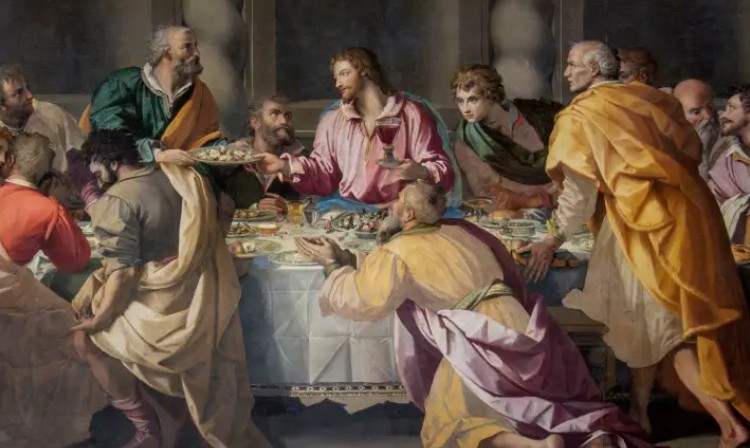
Giovedì Santo: l’Ultima Cena di Allori che pochi conoscono a Firenze
🇮🇹Nel cuore di Museo di Santa Maria Novella, a Firenze, si conserva una delle interpretazioni più affascinanti e meno note dell’Ultima Cena: quella realizzata da Alessandro Allori nel 1584… 🇬🇧In the heart of the Santa Maria Novella Museum in Florence, one of the most fascinating and least-known interpretations of the Last Supper is preserved: the…
-
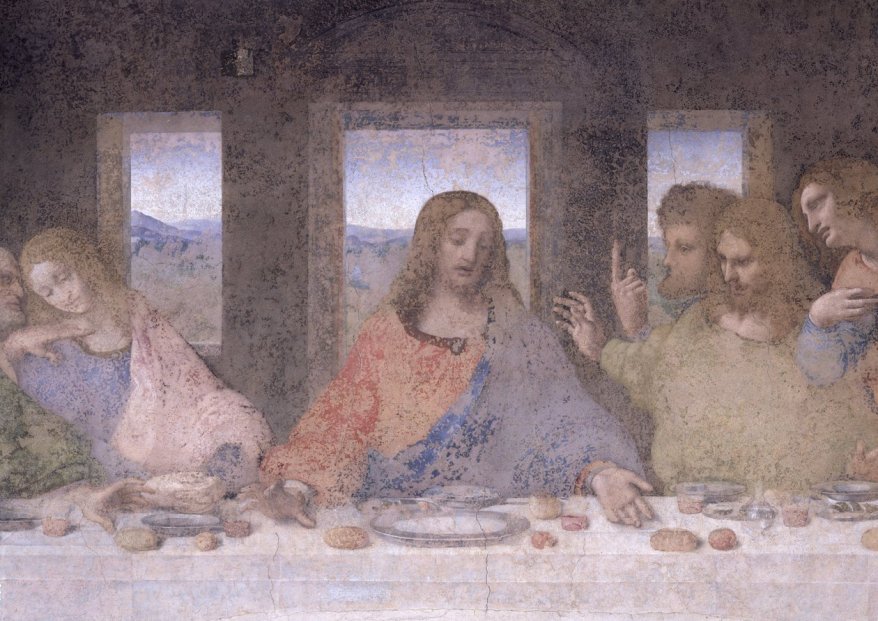
Cenacolo di Leonardo: i dettagli che raccontano il tradimento
🇮🇹Nel Cenacolo di Leonardo da Vinci, custodito a Santa Maria delle Grazie, Cristo annuncia il tradimento e il tempo si ferma… 🇬🇧In Leonardo da Vinci’s Last Supper, housed in Santa Maria delle Grazie, Christ announces the betrayal and time stands still…
Condividi:


Questo sono io





sostienici

Sostienici – Support Us
Se questo blog ti piace e ti appassiona, puoi aiutarci a farlo crescere sempre più sostenendoci in modo concreto condividendo i post, seguendo le pagine social e con un contributo che ci aiuta ad andare avanti con il nostro lavoro di divulgazione. . ENGLISH: If you like and are passionate about this blog, you can help us make it grow more and more by supporting us in a concrete way by sharing posts, following social pages and with a contribution that helps us to move forward with our dissemination work.
€10,00


1 commento »