
La Testa Ideale del British Museum: no, non è Vittoria Colonna
Quella che vi propongo oggi è una delle teste ideali più note che disegnai. È il volto di profilo di una donna, caratterizzato da una tanto intricata quanto stravagante acconciatura che disegnai con il carboncino nero fra il 1525 e il 1528.
Spesso viene scambiato con un probabile ritratto della Marchesa di Pescara, l’amata Vittoria Colonna ma è una sorta di leggenda nata da un’incisione di Antonio Tempesta del 1613.
Il Tempesta scrisse sotto l’incisione del disegno la dicitura “Marchesa di Pescara” ignorando totalmente il fatto che ebbi modo di conoscerla ben dopo aver tracciato questo volto ideale, quando stavo lavorando al Giudizio Universale. Insomma, un equivoco ancora oggi duro a morire che resiste al tempo nonostante sia un palese errore assai semplice da smentire.
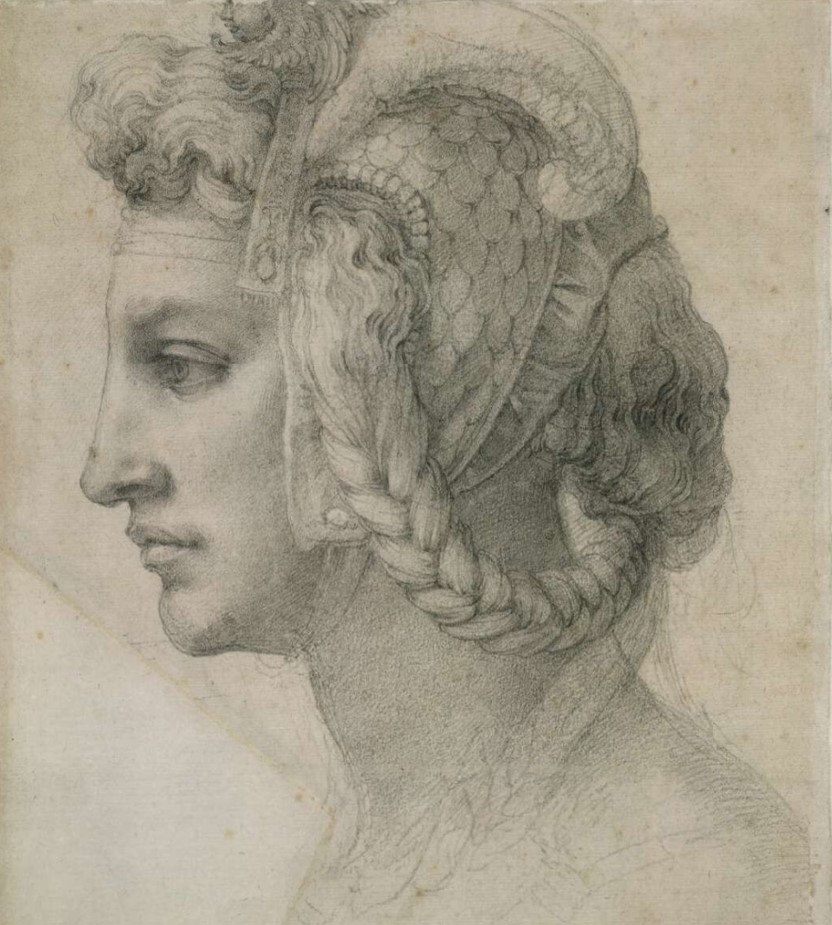
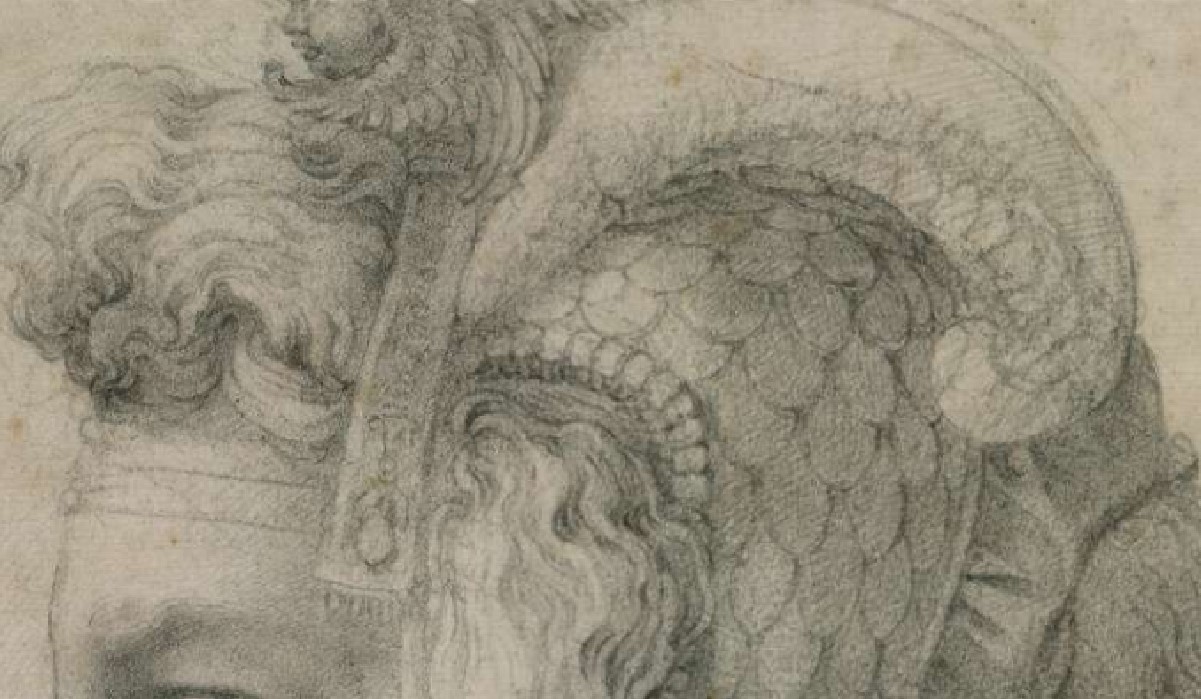
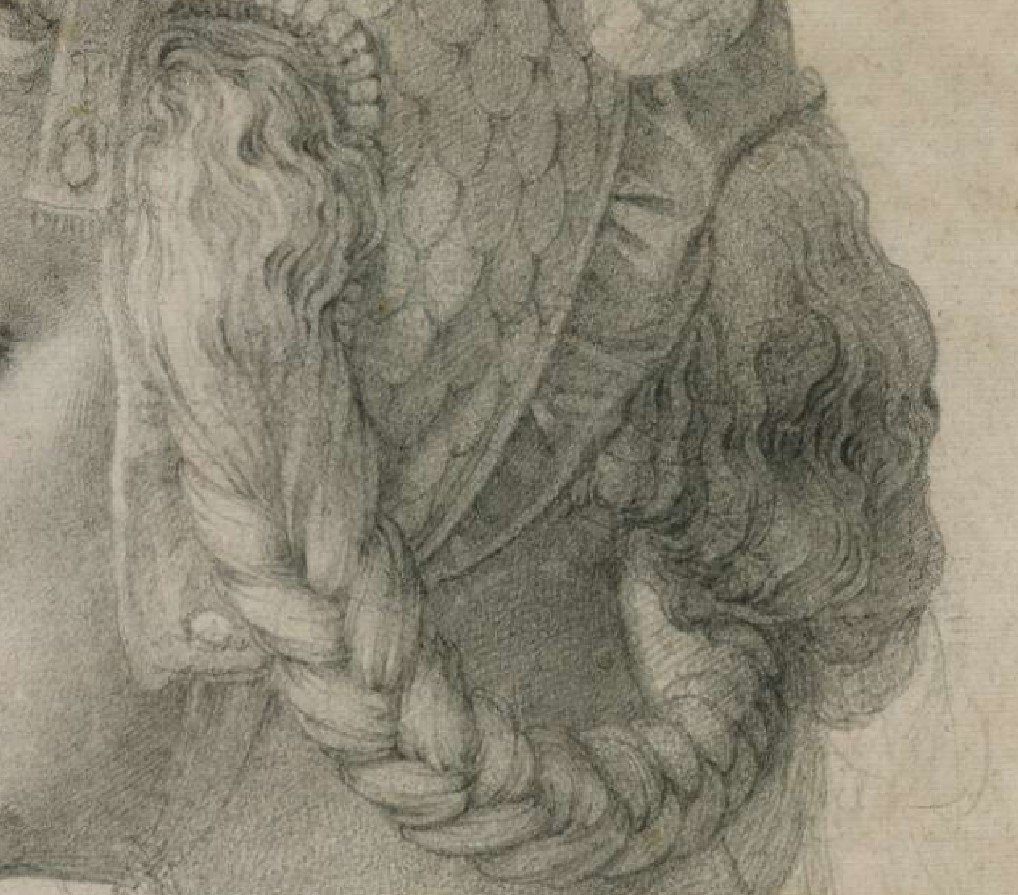
Sulla testa della donna si nota la presenza di un copricapo con piuma, coperto di scaglie e culminante con la testa di un cherubino. Al di sotto di questo accessorio si intravede un velo sottile e trasparente che lascia intravedere i capelli acconciati in una treccia.
Osservate con attenzione i tratteggi e le punteggiature che riescono a dare tridimensionalità al disegno con un’ampia gamma di toni. Addirittura sono ancora visibili i contorni appena accennati dello schizzo preliminare in alcune porzioni del foglio.
L’opera fa parte dei cosiddetti presentation drawing, come li definì il Wilde per indicare i disegni molto rifiniti che realizzai per regalare agli amici più cari.
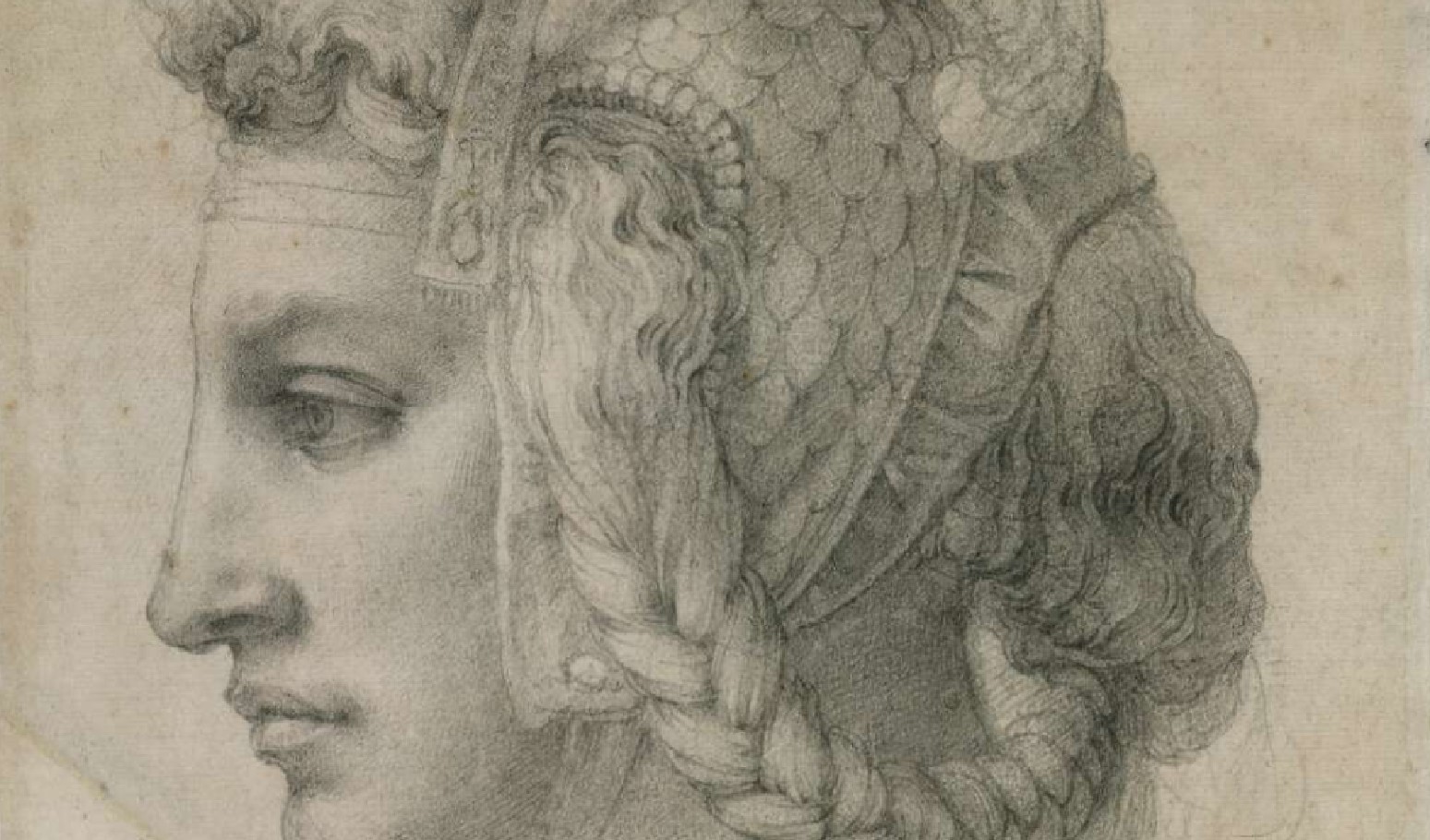
L’abilità di Michelangelo nel creare disegni che combinano la caricatura e l’ideale, che a volte sono sia sciocchi che sofisticati, testimonia la sua immaginazione e destrezza come disegnatore.
Wallace
Sapete come ha fatto questo capolavoro grafico a finire nelle collezioni del British Museum, in Inghilterra?
Nessun mistero.
Fu uno di quei mirabili disegni che apparteneva a Casa Buonarroti e che quel disgraziato di Filippo Buonarroti vendette senza troppe remore al collezionista francese Jean Baptiste Wicar. Che colpa ne ho io se quel rivoluzionario aveva più a cuore le palanche che i capolavori che aveva avuto in eredità?
Da quel momento in poi il disegno fu rivenduto più volte fino a essere acquistato nel 1895 dal prestigioso museo inglese.
Per il momento il vostro Michelangelo Buonarroti vi saluta dandovi appuntamento ai prossimi post e sui social.

The Ideal Head of the British Museum: no, it’s not Vittoria Colonna
What I am proposing to you today is one of the best-known ideal heads that I drew. It portrays the face in profile of a woman, characterized by an intricate and extravagant hairstyle that I drew with black charcoal between 1525 and 1528.
It is often mistaken for a probable portrait of the Marquise of Pescara, the beloved Vittoria Colonna but it is a sort of legend born from an engraving by Antonio Tempesta of 1613.
Tempesta wrote the words “Marquise of Pescara” under the engraving of the drawing, totally ignoring the fact that I got to know her well after having drawn this ideal face, or when I was working on the Last Judgement. In short, a misunderstanding still hard to die that resists time despite being a clear mistake that is very easy to deny.
On the woman’s head we note the presence of a feather headdress, covered with scales and culminating with the head of a cherub. Below this accessory you can see a thin and transparent veil that reveals the hair styled in a braid.
Look carefully at the hatches and punctuations that manage to give three-dimensionality to the drawing with a wide range of tones. Even the barely hinted contours of the preliminary sketch are still visible in some points.
The work is part of the so-called presentation drawings, as Wilde defined them to indicate the very refined drawings that I made to give to my closest friends.
Michelangelo’s ability to create drawings that combine the caricature and the ideal, which are at times both silly and sophisticated, testifies to his imagination and dexterity as a draftsman.
Wallace
Perhaps some of you will wonder how he managed to finish this precious masterpiece of mine in England, in the British Museum. No mystery.
It was one of those admirable drawings that belonged to Casa Buonarroti and that the unfortunate Filippo Buonarroti sold without too much hesitation to the French collector Jean Baptiste Wicar. What is my fault if that revolutionary cared more about the palanchas than the masterpieces he had inherited?
From that moment on, the drawing was resold several times until it was purchased in 1895 by the prestigious English museum.
For the moment, your Michelangelo Buonarroti greets you by making an appointment for the next posts and on social media.

Sostienici – Support Us
Se questo blog ti piace e ti appassiona, puoi aiutarci a farlo crescere sempre più sostenendoci in modo concreto condividendo i post, seguendo le pagine social e con un contributo che ci aiuta ad andare avanti con il nostro lavoro di divulgazione. . ENGLISH: If you like and are passionate about this blog, you can help us make it grow more and more by supporting us in a concrete way by sharing posts, following social pages and with a contribution that helps us to move forward with our dissemination work.
8,00 €
-
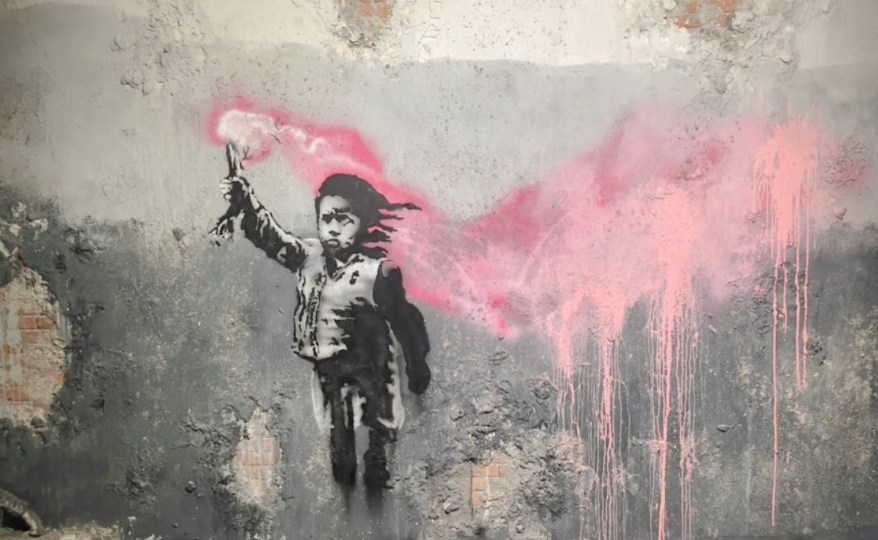
Chi è davvero Banksy? Reuters svela l’identità segreta del re della street art
🇮🇹Reuters svela l’identità di Banksy: secondo l’inchiesta, il celebre artista di graffiti sarebbe Robin Gunningham, il volto nascosto dietro il mito della street art.. 🇬🇧Reuters reveals Banksy’s identity: according to the investigation, the famous graffiti artist is Robin Gunningham, the hidden face behind the myth of street art..
-
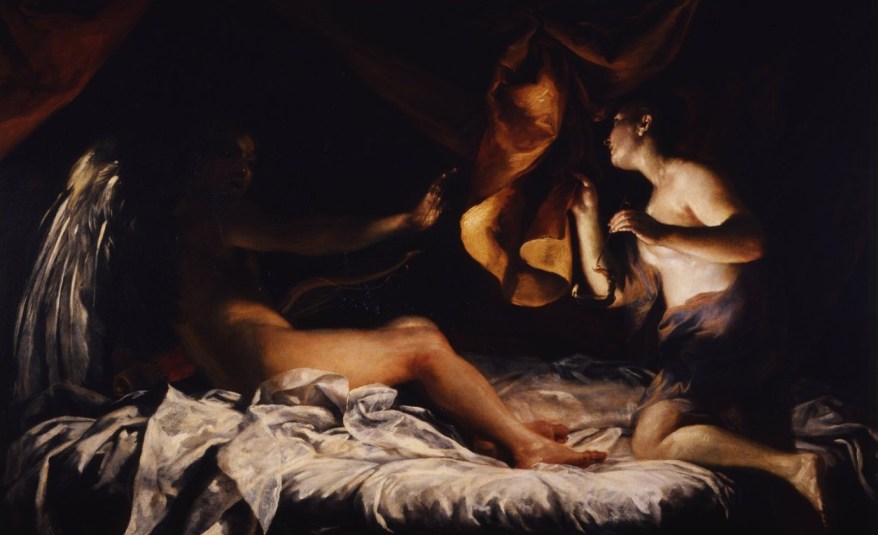
14 marzo 1665: nasce Giuseppe Maria Crespi, lo Spagnoletto che rese moderna la pittura del quotidiano
🇮🇹Il 14 marzo 1665 nasce a Bologna Giuseppe Maria Crespi, detto lo Spagnoletto: il pittore che portò nella pittura barocca scene di vita quotidiana e una sorprendente modernità… 🇬🇧Giuseppe Maria Crespi, known as lo Spagnoletto, was born in Bologna on March 14, 1665: the painter who brought scenes of everyday life and a surprising modernity…
-
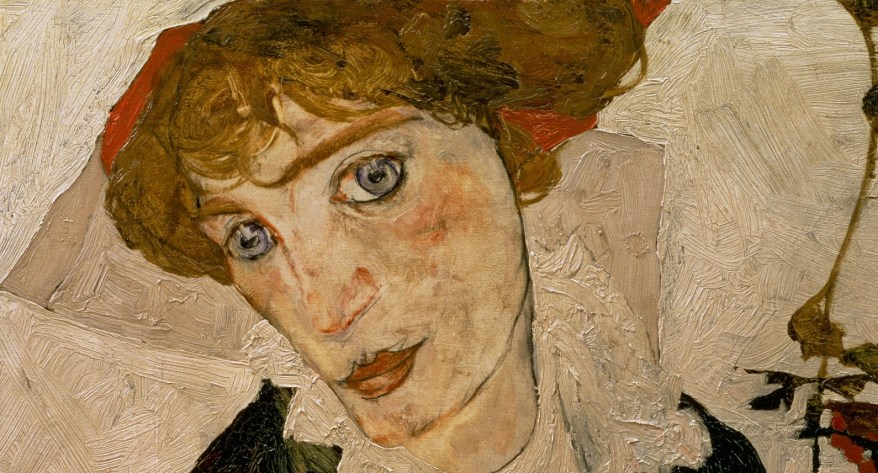
Egon Schiele, genio e scandalo: al cinema il docufilm evento sulla Vienna ribelle del Novecento
TABÙ. Egon Schiele arriva al cinema il 20, 21 e 22 aprile con La Grande Arte al Cinema: un docufilm evento sulla vita e l’arte del genio ribelle della Vienna del Novecento…
Condividi:


Questo sono io





sostienici

Sostienici – Support Us
Se questo blog ti piace e ti appassiona, puoi aiutarci a farlo crescere sempre più sostenendoci in modo concreto condividendo i post, seguendo le pagine social e con un contributo che ci aiuta ad andare avanti con il nostro lavoro di divulgazione. . ENGLISH: If you like and are passionate about this blog, you can help us make it grow more and more by supporting us in a concrete way by sharing posts, following social pages and with a contribution that helps us to move forward with our dissemination work.
€10,00


