
Non ero così spilorcio come si racconta
Come sapete nel corso dei secoli sono in diversi quelli che mi hanno additato accusandomi di essere tirchio e scorbutico. Sì, scorbutico e scontroso lo sono stato ma solo con coloro che con me non avevano affinità di nessun tipo. Sulla faccenda della taccagneria però avrei qualcosuccia da ridire.
È una diceria quella. Certo volevo essere pagato quanto sapevo di valere, su questo non ci piove. Ma con gli amici miei e pure con i parenti sono stato più che generoso.
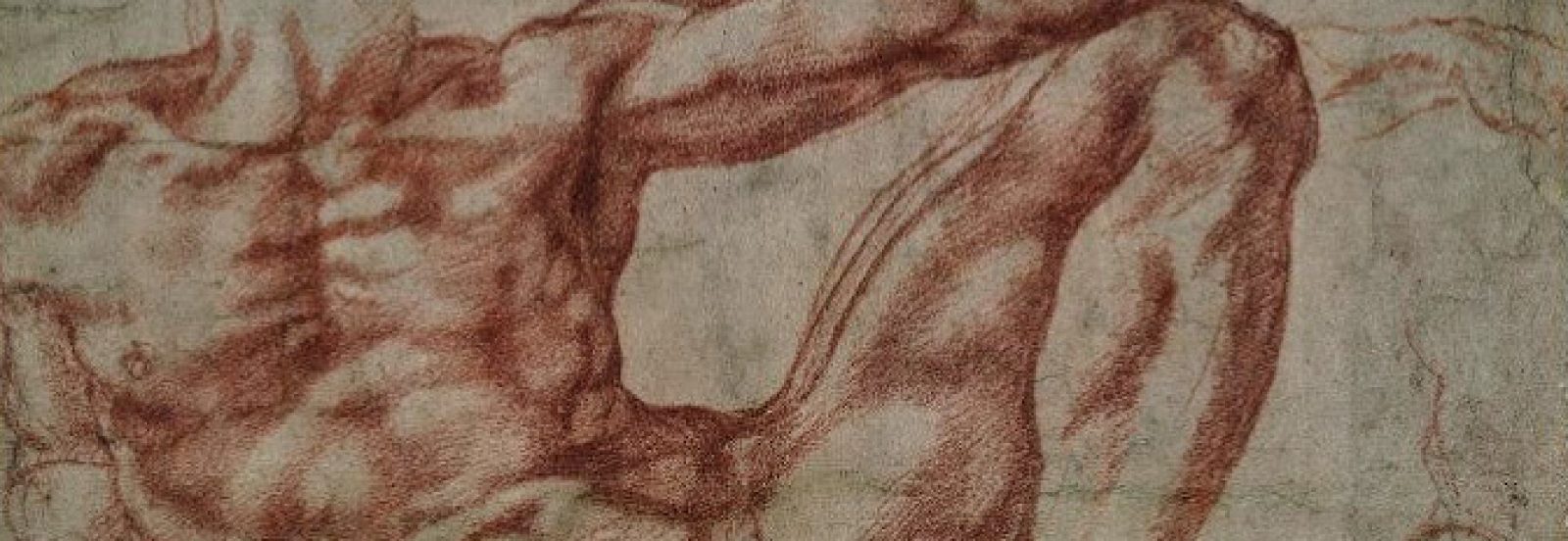
Sapete che durante tutto il corso della vita disegnai cartoni e fornii modelli sia a artisti noti che a perfetti sconosciuti ma comunque a me cari? Se sono assai conosciuti i cartoni che passai a Sebastiano del Piombo, lo sono un po’ meno quelli che realizzai nei miei primi anni di carriera lavorativa all’artista ferrarese Piero d’Argenta.
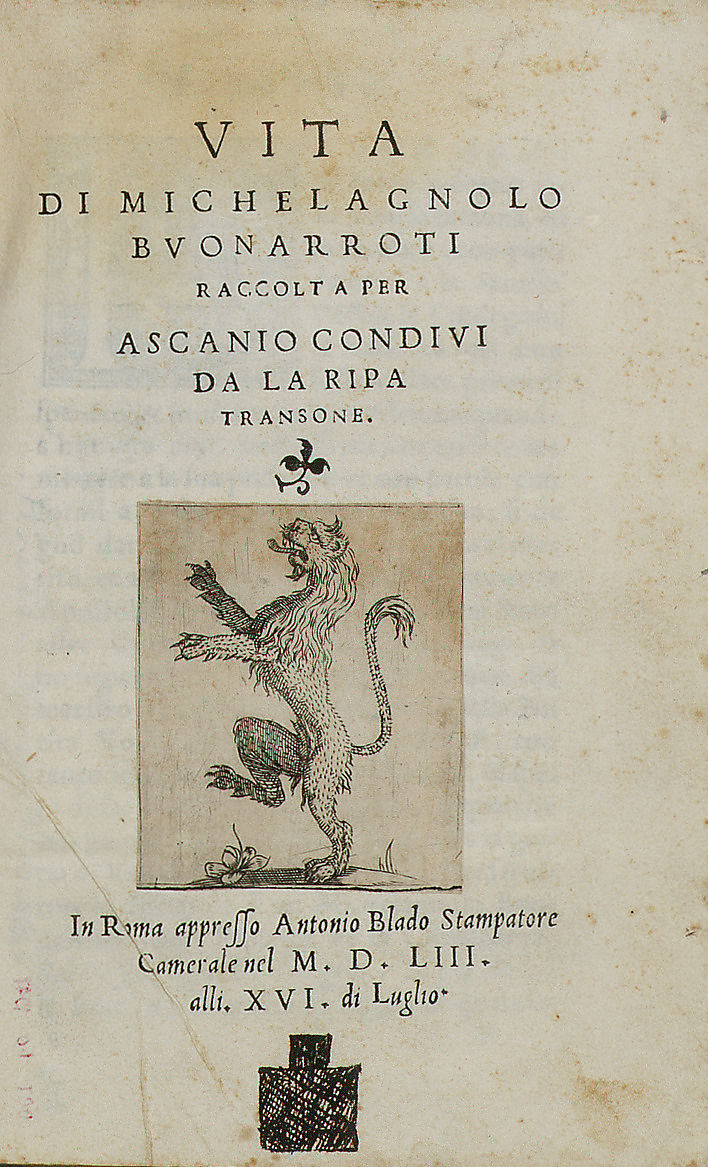
Il Condivi non era certo talento di primo livello nella pittura e, a dirla tutta, aveva poca dimestichezza con i pennelli. Attorno a quella tavola dipinta ci tribolò parecchio e il risultato non fu dei migliori.
La cosa buffa però è che il mio pronipote Michelangelo Buonarroti il Giovane acquistò il dipinto del Condivi pagandolo profumatamente, scambiandolo per mio.
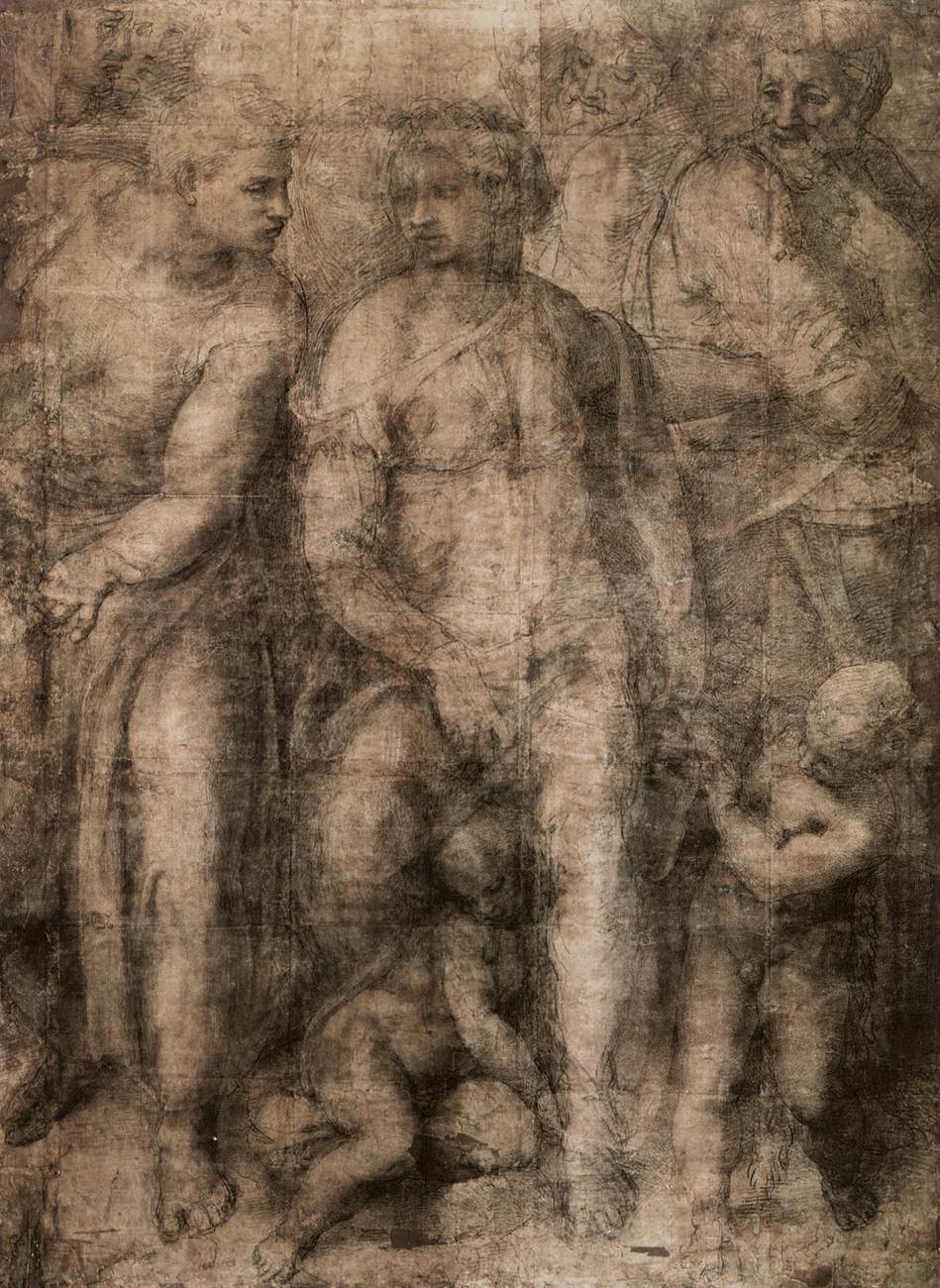
Ancora oggi quella sua opera la potete ammirare a Casa Buonarroti a Firenze mentre il cartone originale dell’Epifania al quale vengono attribuiti significati diversi e talvolta contrastanti, appartiene alle collezioni del British Mueum.
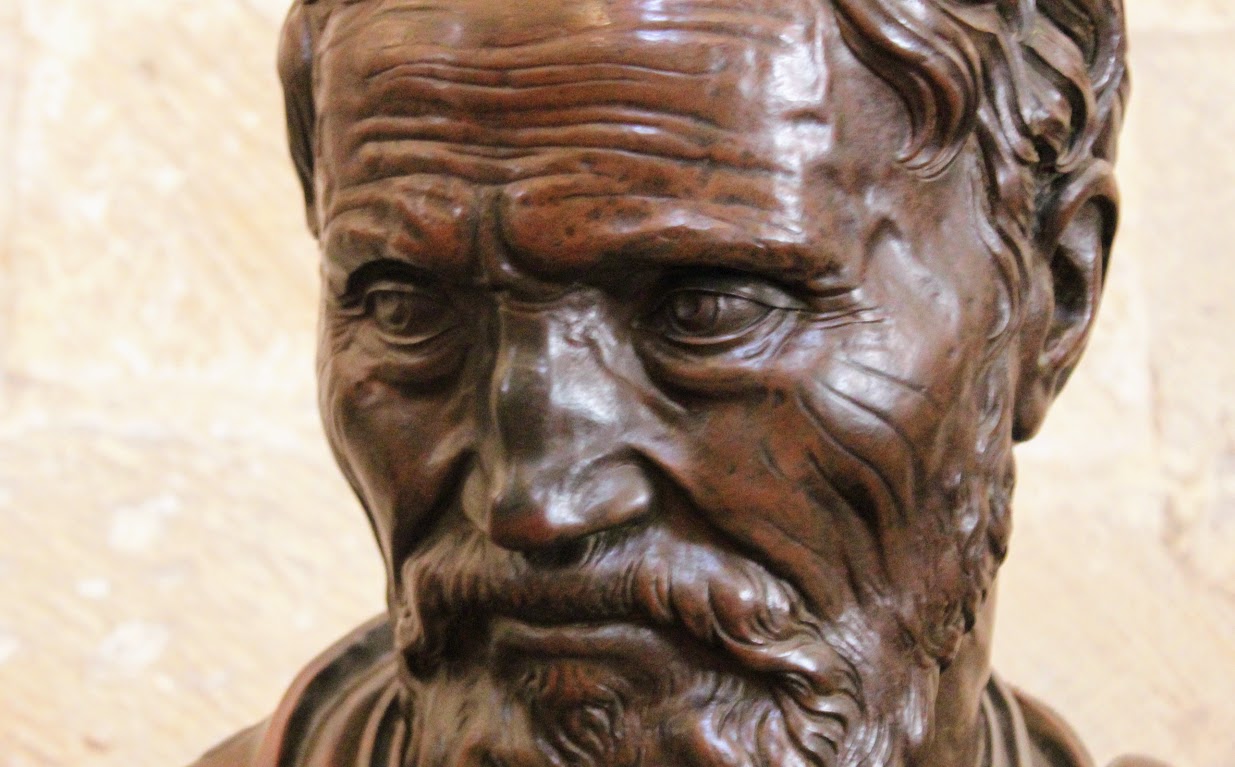
Creatore di forme nuove che furon ben presto mondiali, veggente nei campi dello spirito con una profondità che nessun artista italiano ebbe prima o dopo di lui, Michelangelo giganteggia tra i geni della Rinascita. Aveva la scultura del Quattrocento cercata la grazia, il Buonarroti la sprezzò; aveva prodigato fiori, corone, sorrisi ai simulacri marmorei, ed egli vi scavò i solchi del dolore umano; aveva assottigliata e ingentilita ogni cosa, ed egli, sopra un mondo ingigantito scatenò le tempeste-
Questo è quanto scrisse di me Adolfo Venturi nel 1923. E’ una sorta di brevissimo ritratto che in qualche modo riesce a delineare alcune caratteristiche che davvero mi appartenevano.
Il sempre vostro Michelangelo Buonarroti per il momento vi saluta dandovi appuntamento ai prossimi post e sui social.

I was not as stingy as they say
As you know over the centuries there are several who have pointed to me accusing me of being stingy and grumpy. Yes, I was grumpy and grumpy but only with those who had no affinity whatsoever with me. On the matter of stinginess, however, I would have something to complain about.
That is a rumor. Of course I wanted to be paid what I knew I was worth, this is not raining. But with my friends and also with relatives I have been more than generous.
Do you know that throughout my life I drew cartoons and provided models to both well-known artists and to complete strangers but still dear to me? If the cartoons I passed to Sebastiano del Piombo are well known, the ones I made in my first years of working career for the Ferrara-based artist Piero d’Argenta are a little less so.
Instead, I entrusted the famous cartoon of the Epiphany to the hands of my friend, student and later biographer Ascanio Condivi.
Condivi was certainly not a first level talent in painting and, to be honest, he was not very familiar with brushes. Around that painted table there was a lot of trouble and the result was not the best.
The funny thing, however, is that my great-grandson Michelangelo Buonarroti the Younger bought the painting by Condivi paying for it handsomely, exchanging it for mine.
You can still admire that work by him today at Casa Buonarroti in Florence while the original cartoon of the Epiphany to which different and sometimes conflicting meanings are attributed, belongs to the collections of the British Mueum.
“Creator of new forms that soon became global, a seer in the fields of the spirit with a depth that no Italian artist had before or after him, Michelangelo looms large among the geniuses of the Renaissance. He had the sculpture of the fifteenth century sought grace, Buonarroti despised it; he had lavished flowers, crowns, smiles on the marble simulacra, and he dug the furrows of human pain; he had thinned and softened everything, and he, upon a magnified world, unleashed storms“.
This is what Adolfo Venturi wrote of me in 1923. It is a sort of very short portrait that somehow manages to outline some characteristics that really belonged to me.
Always your Michelangelo Buonarroti greets you for the moment by giving you an appointment to the next posts and on social networks.

Sostienici – Support Us
Se questo blog ti piace e ti appassiona, puoi aiutarci a farlo crescere sempre più sostenendoci in modo concreto condividendo i post, seguendo le pagine social e con un contributo che ci aiuta ad andare avanti con il nostro lavoro di divulgazione. . ENGLISH: If you like and are passionate about this blog, you can help us make it grow more and more by supporting us in a concrete way by sharing posts, following social pages and with a contribution that helps us to move forward with our dissemination work.
5,00 €
-
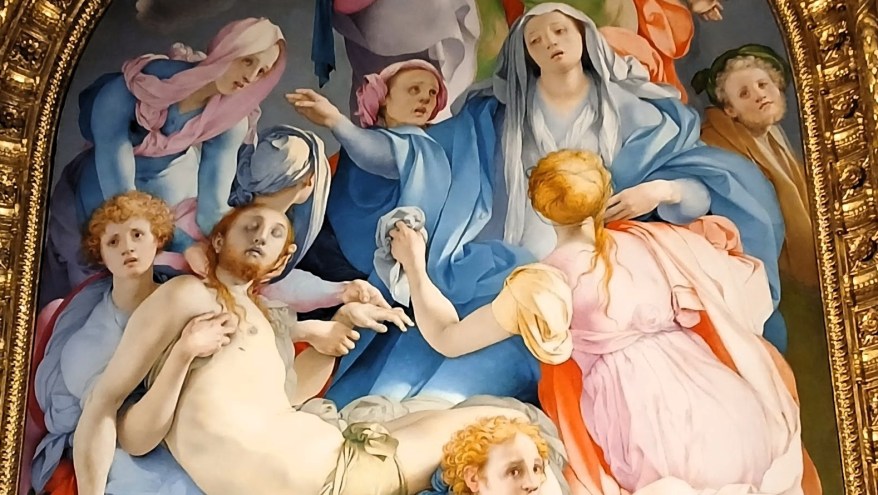
La Deposizione del Pontormo: il capolavoro dell’artista
🇮🇹Ti coinvolge. Ti mette a disagio. Ti costringe a sentire. E’ la Deposizione dalla Croce, dipinta da Jacopo Pontormo tra il 1525 e il 1528 per la Cappella Capponi… 🇬🇧It draws you in. It makes you uncomfortable. It forces you to feel. It’s the Deposition from the Cross, painted by Jacopo Pontormo between 1525 and…
-
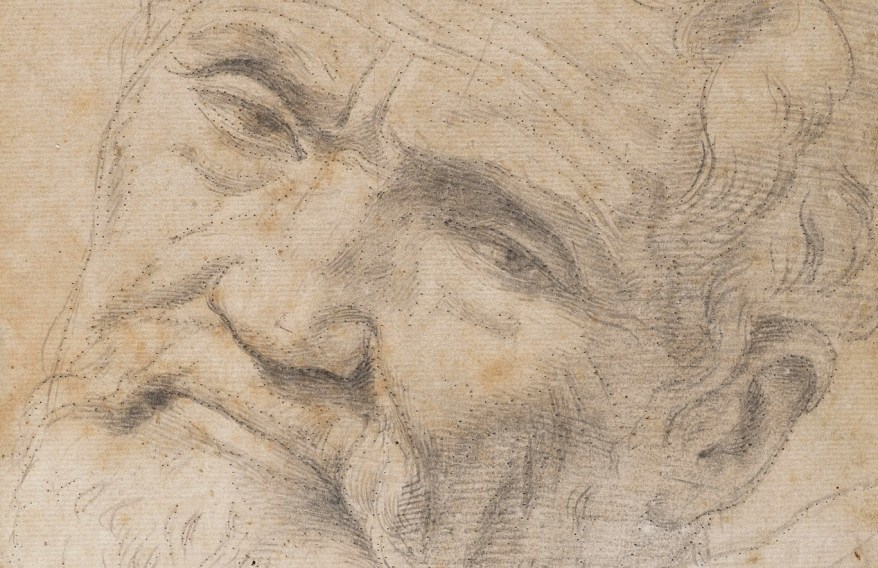
Non chiamatelo Braghettone: il 4 aprile del 1566 muore Daniele da Volterra, l’artista che salvò il Giudizio Universale
🇮🇹Braghettone? No, molto di più. Il 4 aprile 1566 moriva Daniele da Volterra, il mio allievo più fedele, l’uomo che mi rimase accanto fino all’ultimo respiro e che salvò il mio Giudizio Universale dalla distruzione… 🇬🇧Braghettone? No, much more. On April 4, 1566, Daniele da Volterra died, my most faithful student, the man who remained…
-
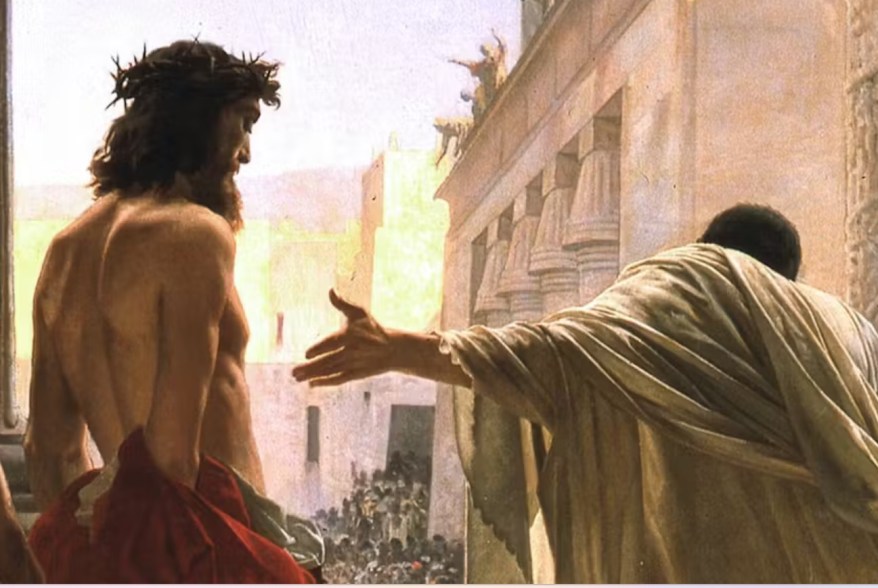
Venerdì Santo: gli “Ecce Homo” più intensi della storia dell’arte
🇮🇹Ecce Homo. Da Antonello da Messina a Tintoretto, fino al sorprendente capolavoro di Antonio Ciseri, questo soggetto ha attraversato i secoli raccontando dolore, umanità e coscienza… 🇬🇧Ecce Homo. From Antonello da Messina to Tintoretto, to Antonio Ciseri’s astonishing masterpiece, this subject has spanned the centuries, recounting pain, humanity, and conscience…
Condividi:


Questo sono io





sostienici

Sostienici – Support Us
Se questo blog ti piace e ti appassiona, puoi aiutarci a farlo crescere sempre più sostenendoci in modo concreto condividendo i post, seguendo le pagine social e con un contributo che ci aiuta ad andare avanti con il nostro lavoro di divulgazione. . ENGLISH: If you like and are passionate about this blog, you can help us make it grow more and more by supporting us in a concrete way by sharing posts, following social pages and with a contribution that helps us to move forward with our dissemination work.
€10,00


1 commento »