

Gioele: nella Cappella Sistina il profeta delle calamità
Ogni figura affrescata nella volta della Cappella Sistina racconta storie pur senza proferir parola. Parla all’anima attraverso gli occhi di chi osserva: non ha la necessità di elaborare discorsi.
Tra i sette profeti che affrescai, scelsi di metterci anche Gioele, voce antica e severa, portatore di visioni che tremano come il cielo prima della tempesta.
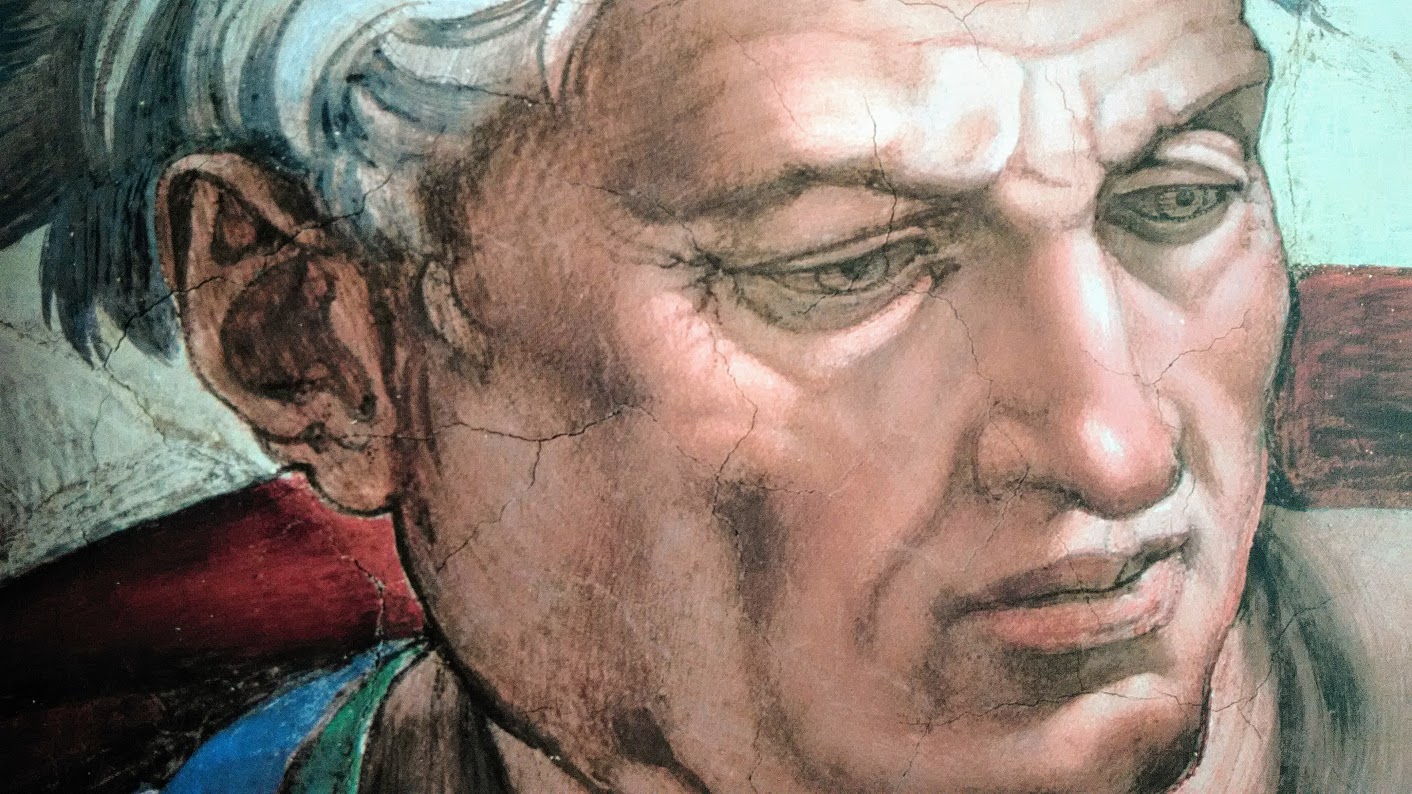
Lo collocai accanto alla scena dell’Ebbrezza di Noè, proprio sotto il grande tino, e dalla parte opposta della Sibilla Delfica. Non fu un capriccio, né un semplice gioco di composizione. Gioele aveva profetizzato: “Le aie saran piene di frumento e i tini traboccheranno di vino e di olio”. Così lo volli vicino a quel tino dipinto, come se le sue parole si fossero fatte immagine e colore.
Il volto dell’intelligenza divina
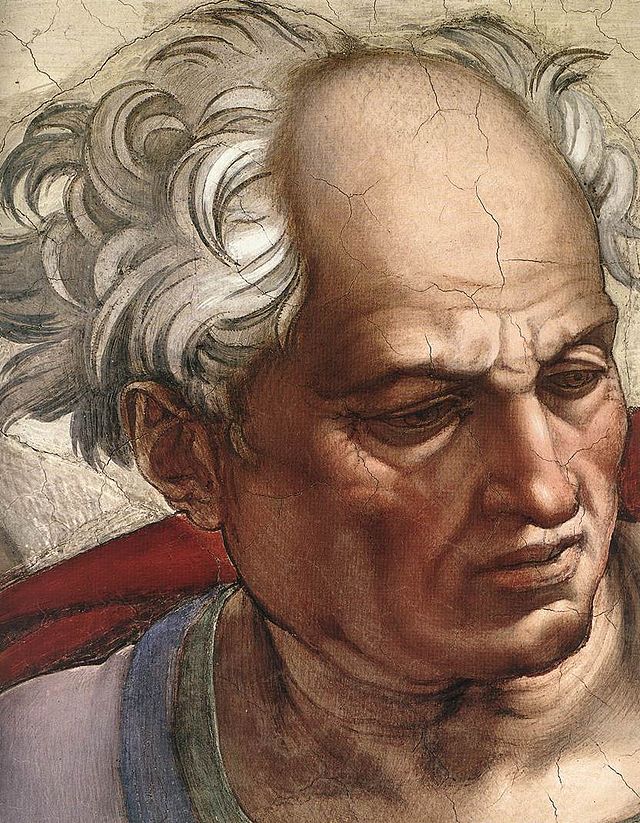
Gioele, tra i profeti, rappresenta l’intelligenza, uno dei doni concessi dallo Spirito Santo. Non lo dipinsi in gesto violento né in posa drammatica. Lo volli raccolto, assorto, quasi silenzioso, perché l‘intelligenza non urla: medita, comprende, attende.
Indossa una tunica morbida, della stessa tonalità di quella che diedi a Dio nella scena della Creazione. Non è una scelta casuale: quel colore suggerisce un legame tra la parola divina e la mente dell’uomo che la riceve. Dalla spalla destra scende una fascia blu che attraversa il petto, mentre una stola verde cinge la vita. Il mantello rosso abbraccia la figura e ricade sulle gambe, come un fuoco domato dalla sapienza.
Il profeta assorto nella parola
Lo ritrassi mentre legge con entrambe le mani una pergamena. Tutto in lui è concentrazione: il volto, la curva delle spalle, il gesto attento delle dita. Non guarda lo spettatore, non cerca l’ammirazione. Egli ascolta la parola che porta, e questo basta.
Alle sue spalle due putti si muovono, come distratti da qualche discorso segreto. Non partecipano alla sua meditazione, eppure ne sono parte. Essi rappresentano il mondo degli uomini: inquieto, curioso, sempre in movimento. Gioele, invece, è fermo, saldo nella sua visione.
Il profeta delle calamità e della speranza
Gioele è ricordato come il profeta delle calamità, colui che annunciò eventi terribili: l’oscuramento della terra e del cielo, i disastri che scuotono il mondo. Ma non fu soltanto voce di rovina. Egli parlò anche di uno spirito nuovo, diffuso su ogni carne.
“E avverrà, dopo queste cose, che io spanderò il mio Spirito sopra ogni carne, e i vostri figliuoli e le vostre figliuole profetizzeranno; i vostri vecchi sogneranno de’ sogni, i vostri giovani vedranno delle visioni” (Gioele 2,28).
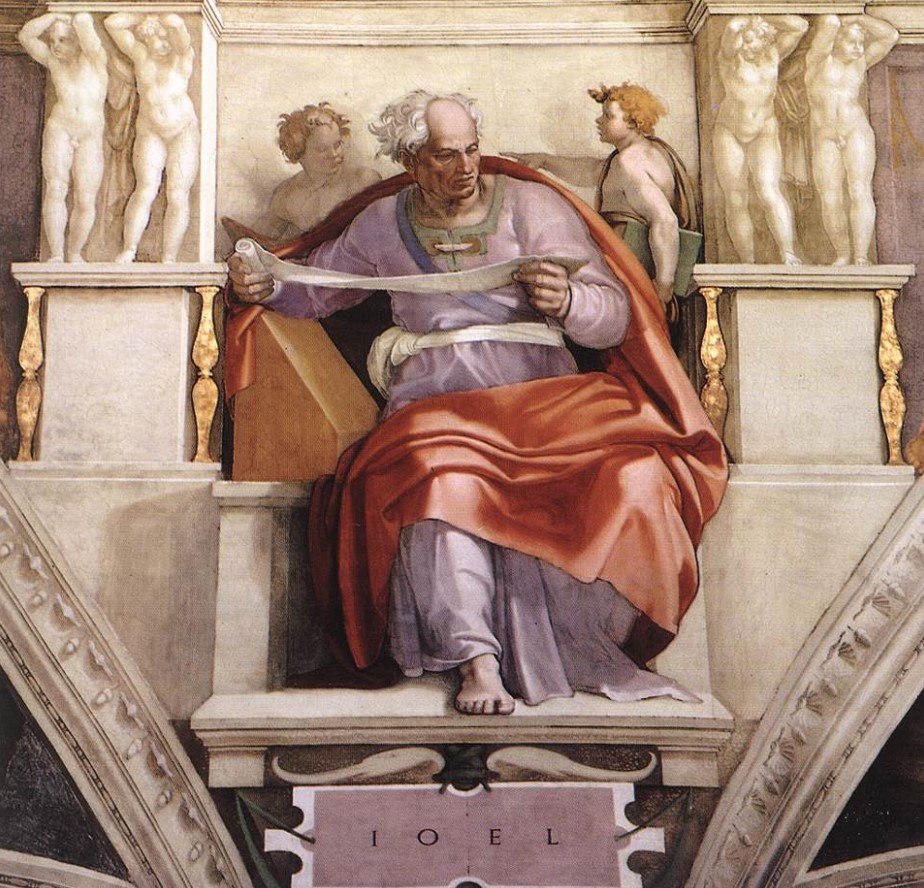
In queste parole non vi è solo timore, ma promessa. Per questo non lo dipinsi disperato, ma pensoso. In lui convivono il presagio della rovina e la certezza della rinascita.
Un posto scelto con intenzione
Tutto nella volta della Cappella Sistina è dialogo tra immagini e significati. Gioele non poteva stare altrove. Il tino sopra di lui non è soltanto un elemento della scena: è un richiamo diretto alla sua profezia.
Così, mentre lo spettatore alza gli occhi, vede l’uomo che legge e, poco sopra, la scena che richiama le sue parole. Pittura e profezia si uniscono, come se il colore stesso diventasse voce.
Cercai di dipingere il tempo, la parola divina, la storia dell’uomo. E Gioele, seduto con la sua pergamena, continua a leggere anche oggi, secoli dopo, per chiunque alzi lo sguardo verso quella volta.
Per il momento il sempre vostro Michelangelo Buonarroti vi saluta dandovi appuntamento ai prossimi post e sui social.

Joel: the prophet of calamities in the Sistine Chapel
Each figure frescoed on the Sistine Chapel ceiling tells stories without uttering a word. They speak to the soul through the eyes of the beholder: they have no need for elaborate discourse.
Among the seven prophets I frescoed, I chose to include Joel, an ancient and stern voice, bearer of visions that tremble like the sky before a storm.
I placed him next to the scene of Noah’s Drunkenness, directly beneath the great winepress, and opposite the Delphic Sibyl. It wasn’t a whim, nor a simple play on composition. Joel had prophesied: “The threshing floors will be full of grain, and the vats will overflow with wine and oil.” So I wanted him near that painted winepress, as if his words had become image and color.
The Face of Divine Intelligence
Among the prophets, Joel represents intelligence, one of the gifts granted by the Holy Spirit. I didn’t paint him with a violent gesture or a dramatic pose. I wanted him to be collected, absorbed, almost silent, because intelligence doesn’t scream: it meditates, understands, waits.
He wears a soft tunic, the same shade as the one I gave to God in the Creation scene. It’s not a random choice: that color suggests a connection between the divine word and the mind of the man who receives it. From his right shoulder, a blue sash descends across his chest, while a green stole cinches his waist. The red cloak embraces the figure and falls over his legs, like a fire tamed by wisdom.
The prophet absorbed in his word
I portrayed him reading a parchment with both hands. Everything about him is concentrated: his face, the curve of his shoulders, the attentive gesture of his fingers. He doesn’t look at the viewer, he doesn’t seek admiration. He listens to the word he brings, and that’s enough.
Behind him, two cherubs move, as if distracted by some secret conversation. They don’t participate in his meditation, yet they are part of it. They represent the world of men: restless, curious, ever-changing. Joel, on the other hand, is steadfast, firm in his vision.
The prophet of calamities and of hope
Joel is remembered as the prophet of calamities, the one who foretold terrible events: the darkening of the earth and sky, the disasters that shake the world. But he was not only a voice of doom. He also spoke of a new spirit, poured out upon all flesh.
“And it shall come to pass afterward, that I will pour out my Spirit on all flesh; and your sons and your daughters shall prophesy, your old men shall dream dreams, and your young men shall see visions” (Joel 2:28).
These words contain not only fear, but also promise. That is why I depicted him not as desperate, but thoughtful. The foreboding of ruin and the certainty of rebirth coexist in him.
A Place Chosen with Intention
Everything in the Sistine Chapel vault is a dialogue between images and meanings. Joel could not have been anywhere else. The vat above him is not just a feature of the scene: it is a direct reference to his prophecy.
So, as the viewer raises their eyes, they see the man reading and, just above, the scene that recalls his words. Painting and prophecy unite, as if color itself became a voice.
I tried to paint time, the divine word, the history of man. And Joel, seated with his parchment, continues to read even today, centuries later, for anyone who raises their gaze to that vault.
For now, yours truly, Michelangelo Buonarroti bids you farewell, promising to see you in future posts and on social media.

Sostienici – Support Us
Se questo blog ti piace e ti appassiona, puoi aiutarci a farlo crescere sempre più sostenendoci in modo concreto condividendo i post, seguendo le pagine social e con un contributo che ci aiuta ad andare avanti con il nostro lavoro di divulgazione. . ENGLISH: If you like and are passionate about this blog, you can help us make it grow more and more by supporting us in a concrete way by sharing posts, following social pages and with a contribution that helps us to move forward with our dissemination work.
10,00 €
Condividi:


Questo sono io





sostienici

Sostienici – Support Us
Se questo blog ti piace e ti appassiona, puoi aiutarci a farlo crescere sempre più sostenendoci in modo concreto condividendo i post, seguendo le pagine social e con un contributo che ci aiuta ad andare avanti con il nostro lavoro di divulgazione. . ENGLISH: If you like and are passionate about this blog, you can help us make it grow more and more by supporting us in a concrete way by sharing posts, following social pages and with a contribution that helps us to move forward with our dissemination work.
€10,00


Bello
"Mi piace"Piace a 1 persona
opere meravigliose 👏👏👏👏👏👏👍👍👍👍👍👍
"Mi piace"Piace a 1 persona