
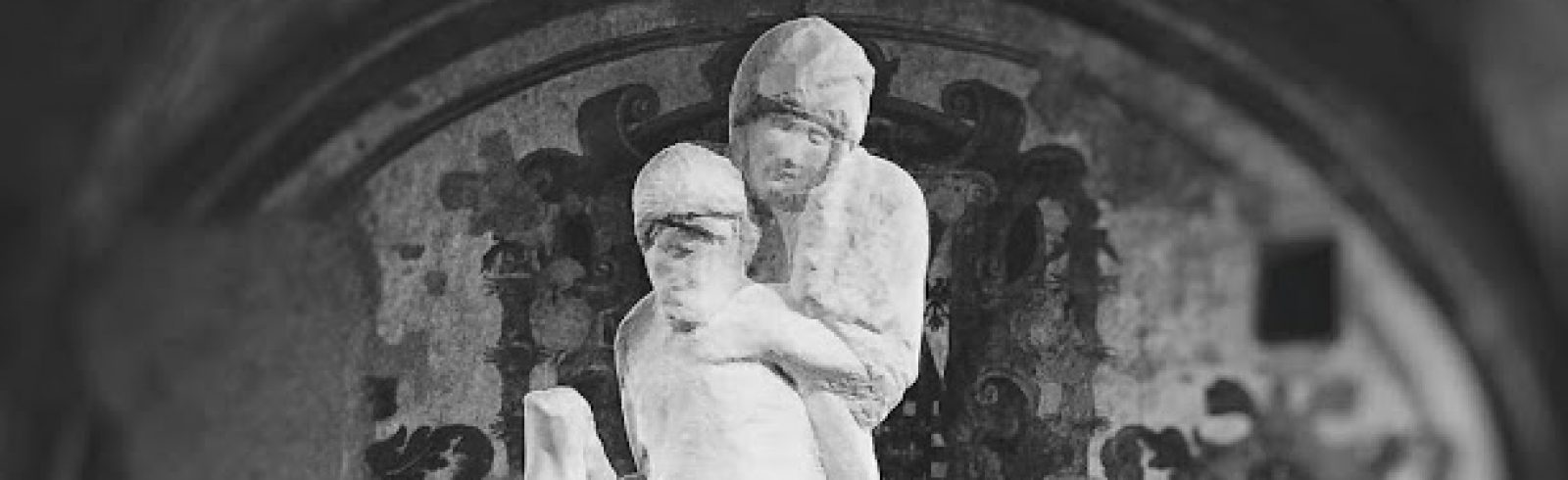
13 febbraio 1895: muore Giovanni Spertini, scultore del Risorgimento
Il 13 febbraio 1895 si spegneva a Milano lo scultore Giovanni Spertini, artista profondamente legato agli ideali del Risorgimento e tra i ritrattisti più sensibili dell’Italia postunitaria. Nato a Pavia nel 1821, Spertini visse in prima persona il clima politico e culturale dell’Ottocento, trasformando la scultura in uno strumento di memoria civile e identità nazionale.
La sua produzione, ampia e variegata, attraversa tutto il secondo Ottocento e racconta un’Italia in trasformazione: dai protagonisti della politica ai sentimenti della nuova borghesia urbana, dalle sculture religiose ai monumenti funerari.
Dalla formazione all’Accademia di Brera agli ideali patriottici
Il giovane Spertini si trasferì a Milano negli anni Trenta dell’Ottocento, dove entrò all’Accademia di Brera, uno dei centri più importanti per la formazione artistica in Italia. Qui si avvicinò alla scultura accademica, ma soprattutto agli ambienti patriottici e democratici che animavano la città.
Convinto sostenitore delle idee repubblicane, fu vicino al pensiero di Giuseppe Mazzini. La sua attività artistica si intrecciò spesso con quella politica: realizzò busti e statuette dedicate ai protagonisti del Risorgimento, destinando parte dei guadagni a iniziative patriottiche. In questo modo, la scultura divenne per lui non solo espressione estetica, ma anche strumento di impegno civile.
La Fanciulla intenta a scrivere e il successo nelle esposizioni
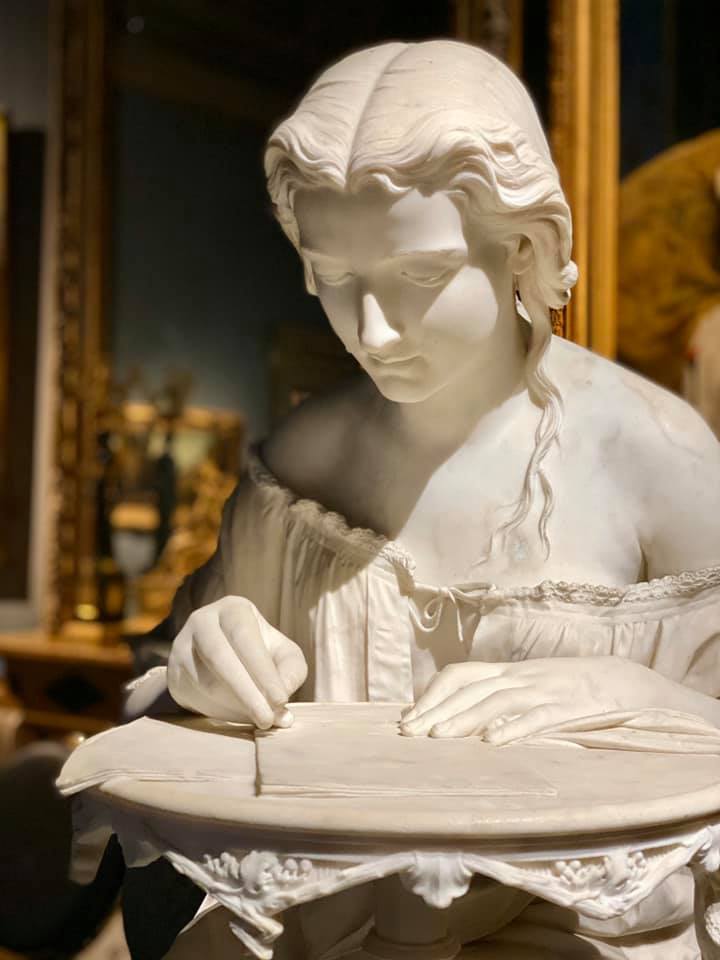
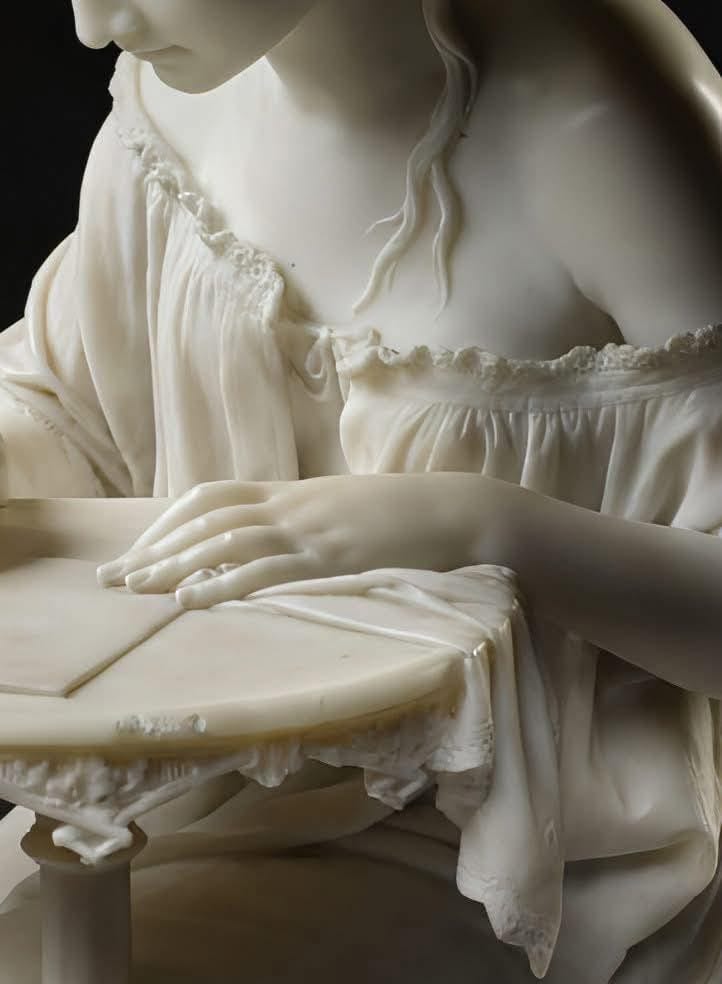
Il nome di Spertini si impose nelle esposizioni nazionali grazie a una scultura divenuta simbolo della sua sensibilità: la “Fanciulla intenta a scrivere”, realizzata nel 1866. L’opera raffigura una giovane donna seduta, colta in un momento di concentrazione, mentre scrive una lettera.
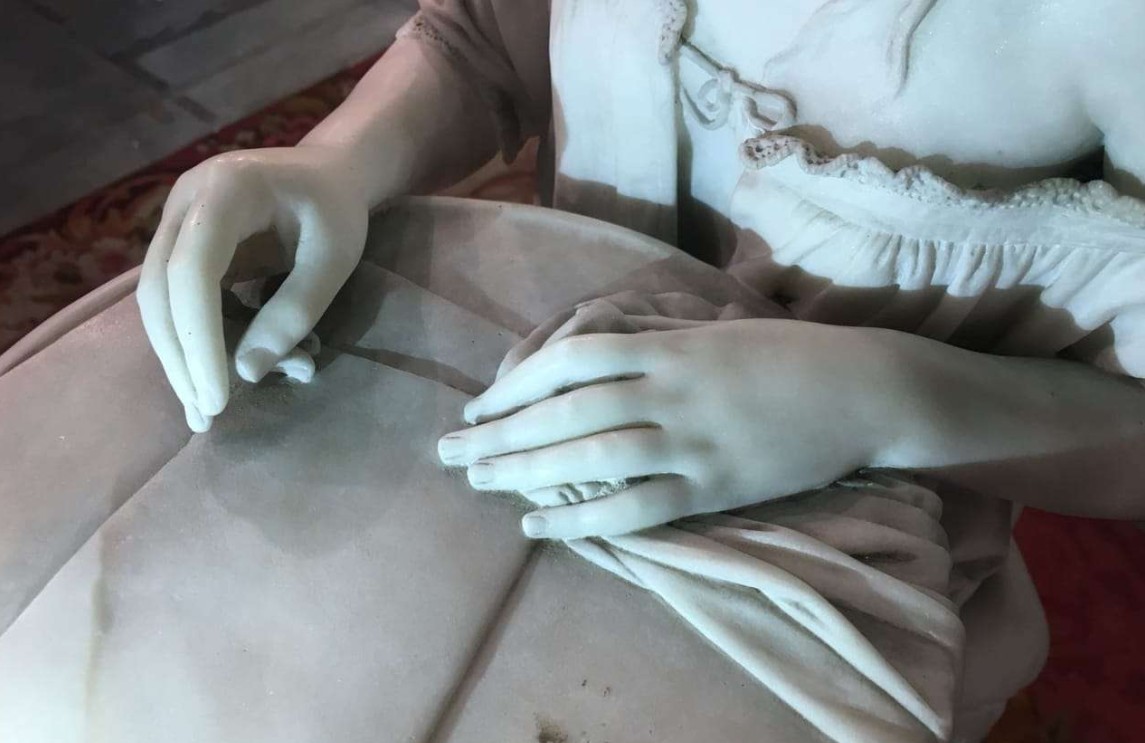
Il marmo colpì pubblico e critica per la naturalezza della posa e la finezza del modellato. Non si trattava di un soggetto storico o mitologico, ma di una scena intima e borghese, capace di parlare direttamente allo spettatore. Questa scelta segnò uno degli aspetti più moderni della scultura di Spertini, attenta alla vita quotidiana e ai sentimenti privati.
L’opera ottenne un importante riconoscimento istituzionale quando venne acquistata dal Ministero della Pubblica Istruzione, confermando la fama ormai consolidata dell’artista.
Il ritrattista del Risorgimento e della borghesia milanese
La parte più consistente della produzione di Spertini è costituita dai ritratti. L’artista lavorò per aristocratici, imprenditori, intellettuali e politici, diventando uno dei ritrattisti più richiesti nella Milano della seconda metà dell’Ottocento.
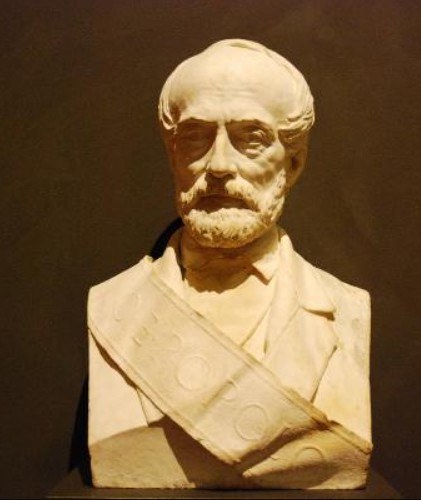
Tra le sue opere più intense spicca il busto di Mazzini, realizzato pochi anni dopo la morte del patriota. Il volto è trattato con grande realismo, ma senza perdere la tensione morale e l’intensità espressiva che l’artista voleva trasmettere. Il ritratto non è solo una rappresentazione fisica, ma un omaggio ideale a una figura simbolo della nazione.
Attraverso questi lavori, Spertini contribuì a costruire l’immagine pubblica dei protagonisti dell’Italia unita, fissandone i tratti in una forma destinata a durare nel tempo.
Sculture religiose e monumenti a Milano
Oltre alla ritrattistica, Spertini fu impegnato anche in importanti commissioni religiose e monumentali. Lavorò al cantiere del Duomo di Milano, realizzando statue di santi che ancora oggi fanno parte dell’apparato decorativo della cattedrale.
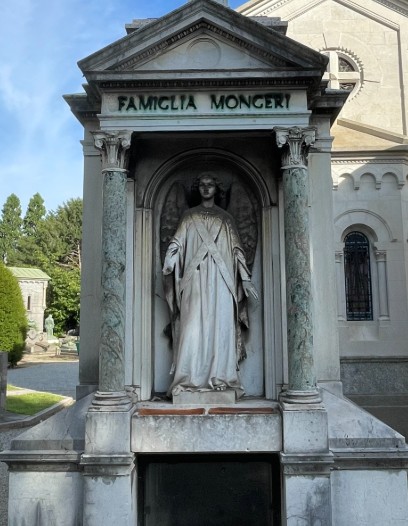
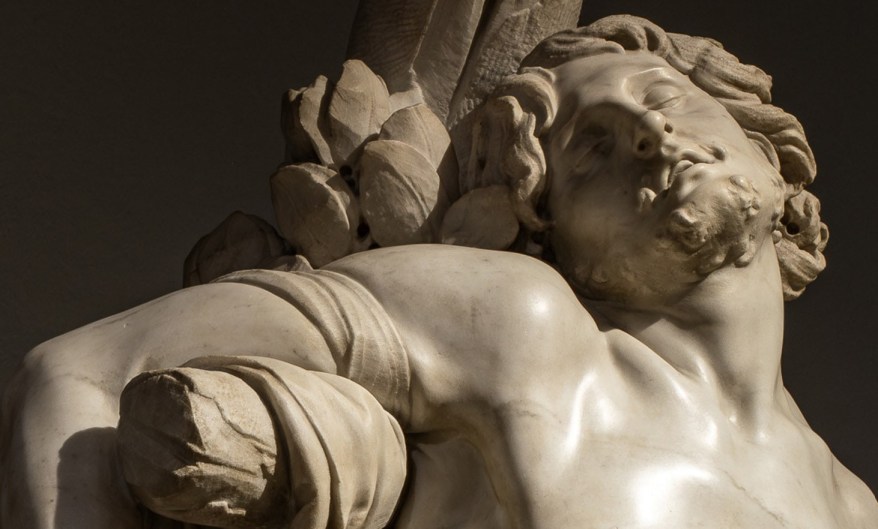
La sua presenza è visibile anche al Cimitero Monumentale di Milano, dove scolpì figure funerarie di grande intensità espressiva, tra cui l’angelo dell’edicola Mongeri. Queste opere mostrano la capacità dello scultore di unire sentimento romantico e precisione anatomica, qualità che resero la sua arte particolarmente apprezzata nella scultura funeraria ottocentesca.
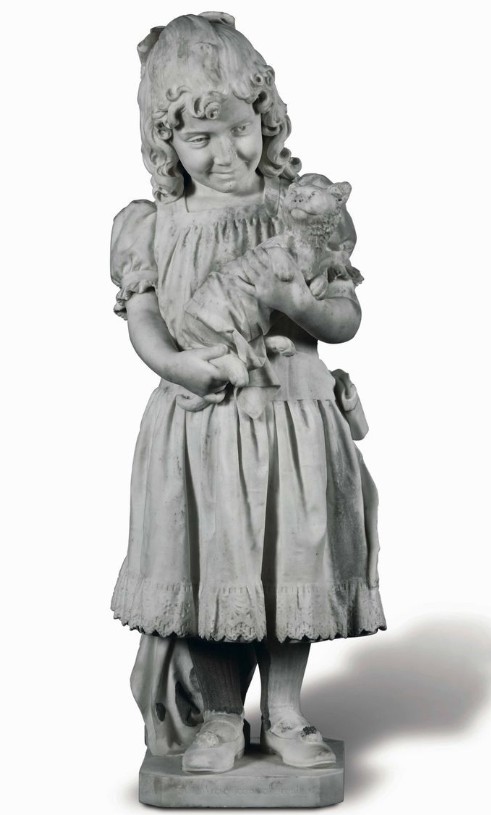
Negli ultimi anni continuò a realizzare opere di soggetto domestico e sentimentale, come “Il micio convalescente”, testimonianza della sua attenzione ai dettagli della vita quotidiana.
L’eredità artistica di Giovanni Spertini
Giovanni Spertini attraversò un’epoca cruciale per la storia italiana, e la sua scultura ne riflette i valori, le aspirazioni e i cambiamenti sociali. I suoi ritratti raccontano i volti dell’Italia risorgimentale e borghese, mentre le sculture di genere rivelano una sensibilità narrativa rara nella scultura del tempo.
A oltre un secolo dalla sua morte, le sue opere restano diffuse tra musei, monumenti pubblici e collezioni, soprattutto tra Milano e Pavia. La sua figura continua a rappresentare un punto di riferimento per comprendere il passaggio dalla scultura romantica a quella più realistica e civile della fine dell’Ottocento.
Per il momento il sempre vostro Michelangelo Buonarroti vi saluta dandovi appuntamento ai prossimi post e sui social.
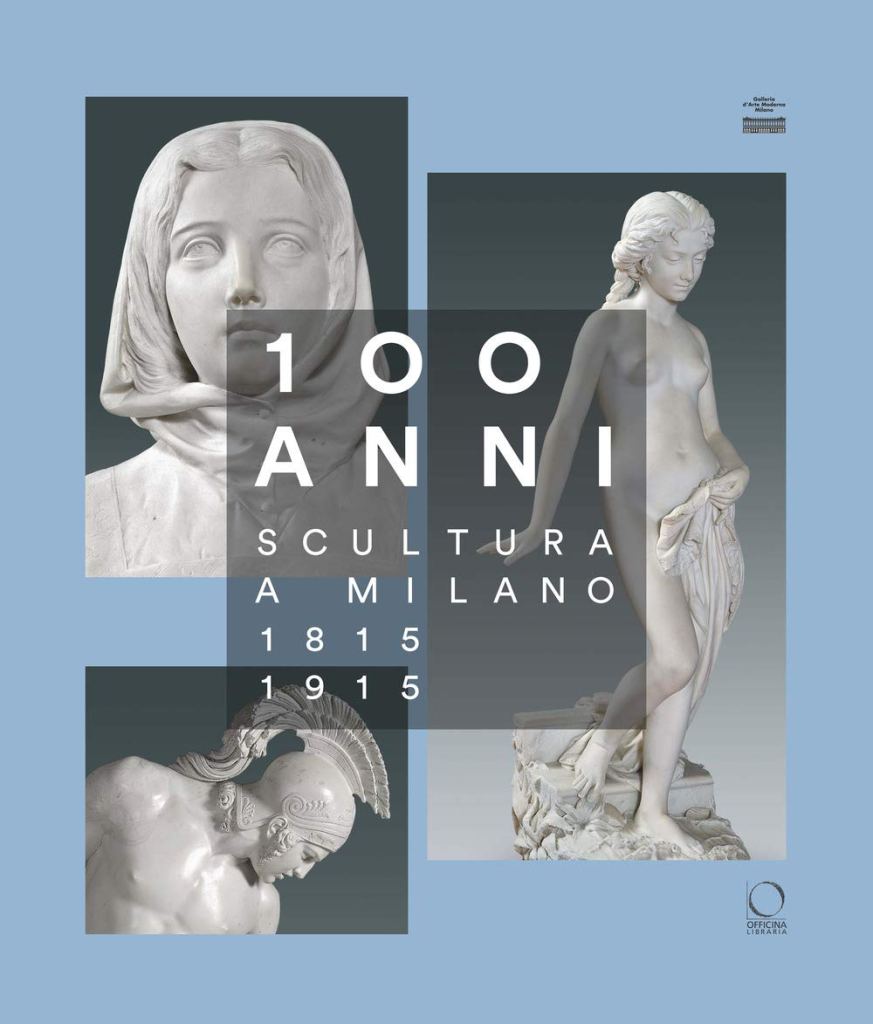
February 13, 1895: Giovanni Spertini, Sculptor of the Risorgimento, Dies
On February 13, 1895, sculptor Giovanni Spertini, an artist deeply rooted in the ideals of the Risorgimento and one of the most sensitive portraitists of post-unification Italy, died in Milan. Born in Pavia in 1821, Spertini experienced the political and cultural climate of the 19th century firsthand, transforming sculpture into a tool of civic memory and national identity.
His vast and varied production spans the entire second half of the 19th century and depicts a changing Italy: from political figures to the sentiments of the new urban bourgeoisie, from religious sculptures to funerary monuments.
From his education at the Brera Academy to his patriotic ideals
The young Spertini moved to Milan in the 1830s, where he entered the Brera Academy, one of the most important centers for artistic education in Italy. Here he became acquainted with academic sculpture, but above all with the patriotic and democratic circles that animated the city.
A staunch supporter of republican ideas, he was close to the thinking of Giuseppe Mazzini. His artistic activity often intertwined with politics: he created busts and statuettes dedicated to the protagonists of the Risorgimento, donating part of his earnings to patriotic initiatives. In this way, sculpture became for him not only an aesthetic expression, but also a tool of civic engagement.
The Girl Writing and Success at Exhibitions
Spertini’s name became a fixture at national exhibitions thanks to a sculpture that became a symbol of his sensibility: the “Girl Writing,” created in 1866. The work depicts a young woman seated, captured in a moment of concentration, writing a letter.
The marble struck audiences and critics alike with the naturalness of the pose and the finesse of the modeling. It was not a historical or mythological subject, but an intimate and bourgeois scene, capable of speaking directly to the viewer. This choice marked one of the most modern aspects of Spertini’s sculpture, attentive to everyday life and private feelings.
The work received significant institutional recognition when it was purchased by the Ministry of Education, confirming the artist’s consolidated fame.
The portraitist of the Risorgimento and the Milanese bourgeoisie
Portraits constitute the bulk of Spertini’s output. The artist worked for aristocrats, entrepreneurs, intellectuals, and politicians, becoming one of the most sought-after portraitists in Milan in the second half of the 19th century.
Among his most powerful works is the bust of Mazzini, created a few years after the patriot’s death. The face is treated with great realism, yet without losing the moral tension and expressive intensity the artist sought to convey. The portrait is not merely a physical representation, but an ideal tribute to a figure symbolic of the nation.
Through these works, Spertini helped shape the public image of the protagonists of unified Italy, capturing their features in a form destined to last over time.
Religious Sculptures and Monuments in Milan
In addition to portraiture, Spertini was also involved in important religious and monumental commissions. He worked on the construction site of Milan Cathedral, creating statues of saints that still form part of the cathedral’s decorative apparatus today.
His presence is also visible at Milan’s Monumental Cemetery, where he sculpted funerary figures of great expressive intensity, including the angel of the Mongeri Aedicule. These works demonstrate the sculptor’s ability to combine romantic sentiment and anatomical precision, qualities that made his art particularly appreciated in 19th-century funerary sculpture.
In his later years, he continued to create works with domestic and sentimental subjects, such as “The Convalescent Kitten,” a testament to his attention to the details of everyday life.
The Artistic Legacy of Giovanni Spertini
Giovanni Spertini lived through a crucial era in Italian history, and his sculpture reflects its values, aspirations, and social changes. His portraits depict the faces of the Italian Risorgimento and bourgeoisie, while his genre sculptures reveal a narrative sensibility rare in sculpture of the time.
Over a century after his death, his works remain widespread in museums, public monuments, and collections, especially in Milan and Pavia. He continues to represent a point of reference for understanding the transition from Romantic sculpture to the more realistic and civilized style of the late 19th century.
For now, Michelangelo Buonarroti bids you farewell and looks forward to seeing you in future posts and on social media.

Sostienici – Support Us
Se questo blog ti piace e ti appassiona, puoi aiutarci a farlo crescere sempre più sostenendoci in modo concreto condividendo i post, seguendo le pagine social e con un contributo che ci aiuta ad andare avanti con il nostro lavoro di divulgazione. . ENGLISH: If you like and are passionate about this blog, you can help us make it grow more and more by supporting us in a concrete way by sharing posts, following social pages and with a contribution that helps us to move forward with our dissemination work.
10,00 €
Articoli
Condividi:


Questo sono io





sostienici

Sostienici – Support Us
Se questo blog ti piace e ti appassiona, puoi aiutarci a farlo crescere sempre più sostenendoci in modo concreto condividendo i post, seguendo le pagine social e con un contributo che ci aiuta ad andare avanti con il nostro lavoro di divulgazione. . ENGLISH: If you like and are passionate about this blog, you can help us make it grow more and more by supporting us in a concrete way by sharing posts, following social pages and with a contribution that helps us to move forward with our dissemination work.
€10,00


