

Il trono del Palazzo Reale di Napoli torna a splendere: il restauro svela la vera origine sabauda
Dopo oltre sedici mesi di assenza, il trono della Sala del Trono del Palazzo Reale di Napoli è tornato al suo posto, restaurato e con una storia completamente riscritta.
L’intervento conservativo, realizzato nell’ambito della XX edizione del progetto “Restituzioni” di Intesa Sanpaolo in collaborazione con il Ministero della Cultura, ha restituito luce e significato a uno dei simboli più rappresentativi della reggia partenopea.
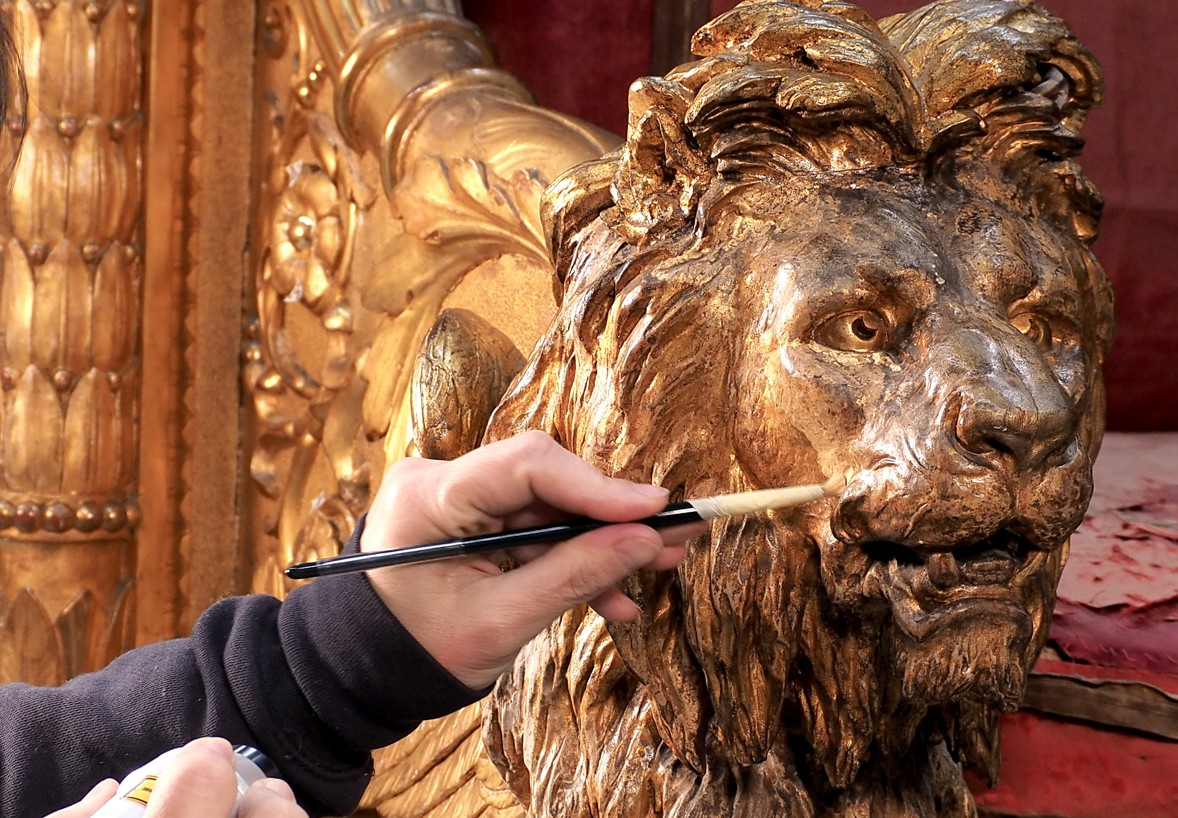
Un ritorno atteso dopo oltre un anno e mezzo
Il trono aveva lasciato Napoli il 12 settembre 2024 per essere trasferito al Centro Conservazione e Restauro “La Venaria Reale” di Torino. Qui è stato sottoposto a un intervento complesso, durato circa sette mesi, preceduto da indagini diagnostiche con tecnologie avanzate, tra cui analisi scientifiche realizzate con il supporto del CNR.
Durante il periodo di restauro, la Sala del Trono non è rimasta vuota: al suo posto è stata collocata una seduta borbonica settecentesca. Il rientro del trono originale segna ora la conclusione di un articolato progetto che ha coinvolto restauratori, storici dell’arte, scienziati e istituzioni pubbliche e private.
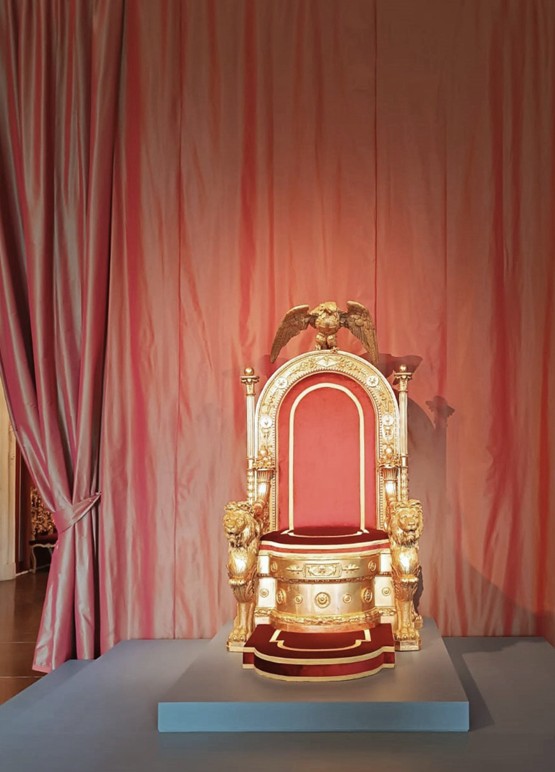
La scoperta che cambia la storia del trono
La sorpresa più importante è arrivata dalle ricerche archivistiche condotte parallelamente al restauro. Fino a oggi il trono era considerato un manufatto borbonico, databile tra il 1845 e il 1850. Gli studi hanno invece dimostrato che fu commissionato dai Savoia e pagato nel 1874.
Questa nuova attribuzione sposta la realizzazione di circa trent’anni e modifica la lettura storica dell’oggetto, inserendolo nel contesto della Napoli postunitaria.
Non cambia solo la biografia del trono, ma anche la cronologia delle trasformazioni del Palazzo Reale dopo l’Unità d’Italia.
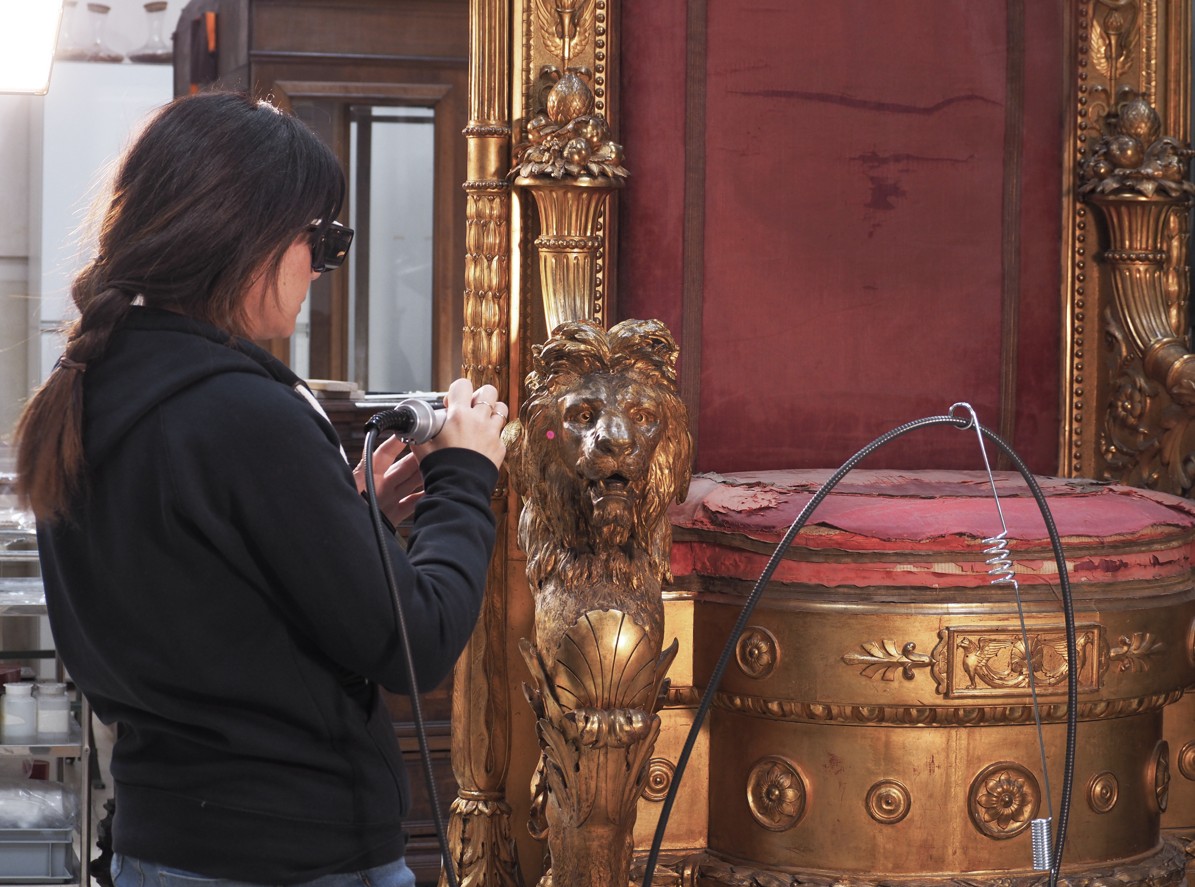
Tecnologie laser e restauro sostenibile
L’intervento conservativo è stato eseguito dai professionisti del Centro di Conservazione e Restauro “La Venaria Reale”, seguendo protocolli già applicati a manufatti analoghi, come il trono del Palazzo del Quirinale.
Le indagini radiografiche complete hanno permesso di comprendere la struttura interna del manufatto, mentre la pulitura della doratura è stata effettuata con tecnologia laser, senza l’utilizzo di agenti chimici aggressivi. L’approccio adottato ha privilegiato tecniche sostenibili ed eco-compatibili.
Il risultato è un trono nuovamente brillante, con dorature riportate a una condizione più vicina all’aspetto originario.
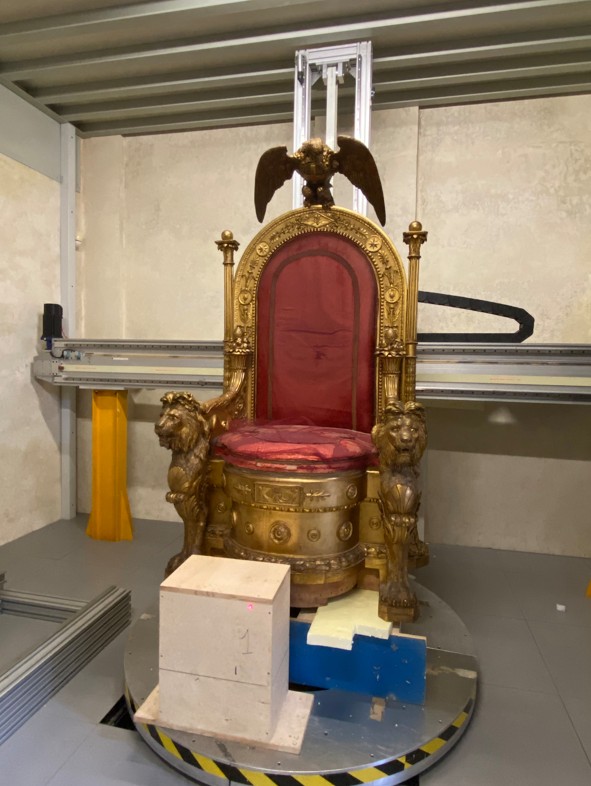
Restaurata anche la Sala del Trono
Per accogliere degnamente il suo elemento centrale, la Sala del Trono è stata oggetto di un intervento complessivo sui tessili. Nei tre mesi precedenti al rientro sono stati restaurati il tappeto su cui poggia la seduta, le fasce laterali della pedana, le mantovane delle tende e il baldacchino.
I lavori sono stati eseguiti direttamente nella sala, consentendo anche l’osservazione dal vivo delle delicate operazioni di restauro e restituendo unità visiva all’ambiente.
Dal tour espositivo al ritorno a Napoli
Dopo il restauro, nel maggio 2025, il trono è stato esposto alla Reggia di Venaria per una preview della mostra “Restituzioni”. Successivamente è stato presentato a Roma, al Palazzo delle Esposizioni, dal 28 ottobre 2025 al 18 gennaio 2026, all’interno della XX edizione dell’iniziativa culturale.
Solo al termine di questo percorso espositivo l’opera è tornata definitivamente a Napoli, nella sua collocazione originaria.
Un simbolo ritrovato per la reggia
Il ritorno del trono non rappresenta soltanto la conclusione di un restauro, ma l’esito di un lavoro di ricerca e valorizzazione che ha permesso di chiarire origine e datazione dell’opera. Con la nuova attribuzione sabauda e il recupero della Sala del Trono, uno degli ambienti più iconici del Palazzo Reale ritrova oggi la propria identità storica e scenografica, pronto ad accogliere nuovamente i visitatori.
Per il momento il sempre vostro Michelangelo Buonarroti vi saluta dandovi appuntamento ai prossimi post e sui social.
The throne of the Royal Palace of Naples returns to its former glory: restoration reveals its true Savoy origins
After more than sixteen months of absence, the throne in the Throne Room of the Royal Palace of Naples has returned to its former glory, restored and with a completely rewritten history.
The conservation project, carried out as part of the 20th edition of Intesa Sanpaolo’s “Restituzioni” project in collaboration with the Ministry of Culture, has restored light and meaning to one of the most iconic symbols of the Neapolitan palace.
A long-awaited return after more than a year and a half
The throne left Naples on September 12, 2024, to be transferred to the “La Venaria Reale” Conservation and Restoration Center in Turin. There, it underwent a complex restoration lasting approximately seven months, preceded by diagnostic tests using advanced technologies, including scientific analyses conducted with the support of the CNR (National Research Council).
During the restoration period, the Throne Room was not left empty: an 18th-century Bourbon seat was placed in its place. The return of the original throne marks the conclusion of a complex project involving restorers, art historians, scientists, and public and private institutions.
The discovery that changes the throne’s history
The most significant surprise came from archival research conducted in parallel with the restoration. Until now, the throne was considered a Bourbon artifact, dating between 1845 and 1850. Studies have instead shown that it was commissioned by the House of Savoy and paid for in 1874.
This new attribution shifts the throne’s production by approximately thirty years and alters the historical interpretation of the object, placing it in the context of post-unification Naples. It changes not only the throne’s biography, but also the chronology of the transformations of the Royal Palace after the unification of Italy.
Laser technologies and sustainable restoration
The conservation work was carried out by professionals from the “La Venaria Reale” Conservation and Restoration Center, following protocols already applied to similar artifacts, such as the throne at the Quirinale Palace.
Complete radiographic investigations allowed us to understand the internal structure of the artifact, while the gilding was cleaned using laser technology, without the use of harsh chemicals. The approach adopted favored sustainable and eco-friendly techniques.
The result is a throne that is once again lustrous, with gilding restored to a condition closer to its original appearance.
The Throne Room has also been restored.
To appropriately accommodate its central element, the Throne Room underwent a comprehensive textile restoration. In the three months prior to its return, the carpet supporting the seat, the side panels of the platform, the curtain valances, and the canopy were restored.
The work was carried out directly in the room, allowing for live observation of the delicate restoration work and restoring the visual unity of the space.
From the Exhibition Tour to the Return to Naples
After its restoration, in May 2025, the throne was exhibited at the Royal Palace of Venaria for a preview of the “Restitutions” exhibition. It was subsequently presented in Rome, at the Palazzo delle Esposizioni, from October 28, 2025, to January 18, 2026, as part of the 20th edition of the cultural initiative.
Only at the end of this exhibition tour did the work return permanently to Naples, to its original location.
A Rediscovered Symbol for the Palace
The return of the throne represents not only the completion of a restoration, but also the outcome of research and development that clarified the work’s origins and dating. With the new attribution to the Savoy family and the restoration of the Throne Room, one of the most iconic spaces of the Royal Palace now regains its historical and scenographic identity, ready to welcome visitors once again.
For now, yours truly, Michelangelo Buonarroti bids you farewell and invites you to join him in future posts and on social media.

Sostienici – Support Us
Se questo blog ti piace e ti appassiona, puoi aiutarci a farlo crescere sempre più sostenendoci in modo concreto condividendo i post, seguendo le pagine social e con un contributo che ci aiuta ad andare avanti con il nostro lavoro di divulgazione. . ENGLISH: If you like and are passionate about this blog, you can help us make it grow more and more by supporting us in a concrete way by sharing posts, following social pages and with a contribution that helps us to move forward with our dissemination work.
10,00 €
Articoli

Condividi:


Questo sono io





sostienici

Sostienici – Support Us
Se questo blog ti piace e ti appassiona, puoi aiutarci a farlo crescere sempre più sostenendoci in modo concreto condividendo i post, seguendo le pagine social e con un contributo che ci aiuta ad andare avanti con il nostro lavoro di divulgazione. . ENGLISH: If you like and are passionate about this blog, you can help us make it grow more and more by supporting us in a concrete way by sharing posts, following social pages and with a contribution that helps us to move forward with our dissemination work.
€10,00


Meraviglia
"Mi piace"Piace a 1 persona