
La luce della conoscenza: L’Astronomo alla luce di candela di Gerard Dou
Nel silenzio di una stanza illuminata da una sola candela prende forma uno dei dipinti più intensi del Seicento olandese. L’Astronomo alla luce di candela, realizzato da Gerard Dou è una riflessione visiva sul valore della conoscenza, dello studio e del tempo. Un’opera che, ancora oggi, parla con sorprendente attualità allo spettatore contemporaneo.
Gerard Dou e la pittura della luce nell’Olanda del Seicento
Gerard Dou, allievo diretto di Rembrandt e maestro dei fijnschilders di Leida, è celebre per una pittura estremamente raffinata, fatta di superfici lisce, dettagli minuziosi e un uso magistrale della luce. Nei suoi dipinti, spesso di piccolo formato, nulla è lasciato al caso. Ogni oggetto è osservato, studiato e restituito con una precisione quasi scientifica.
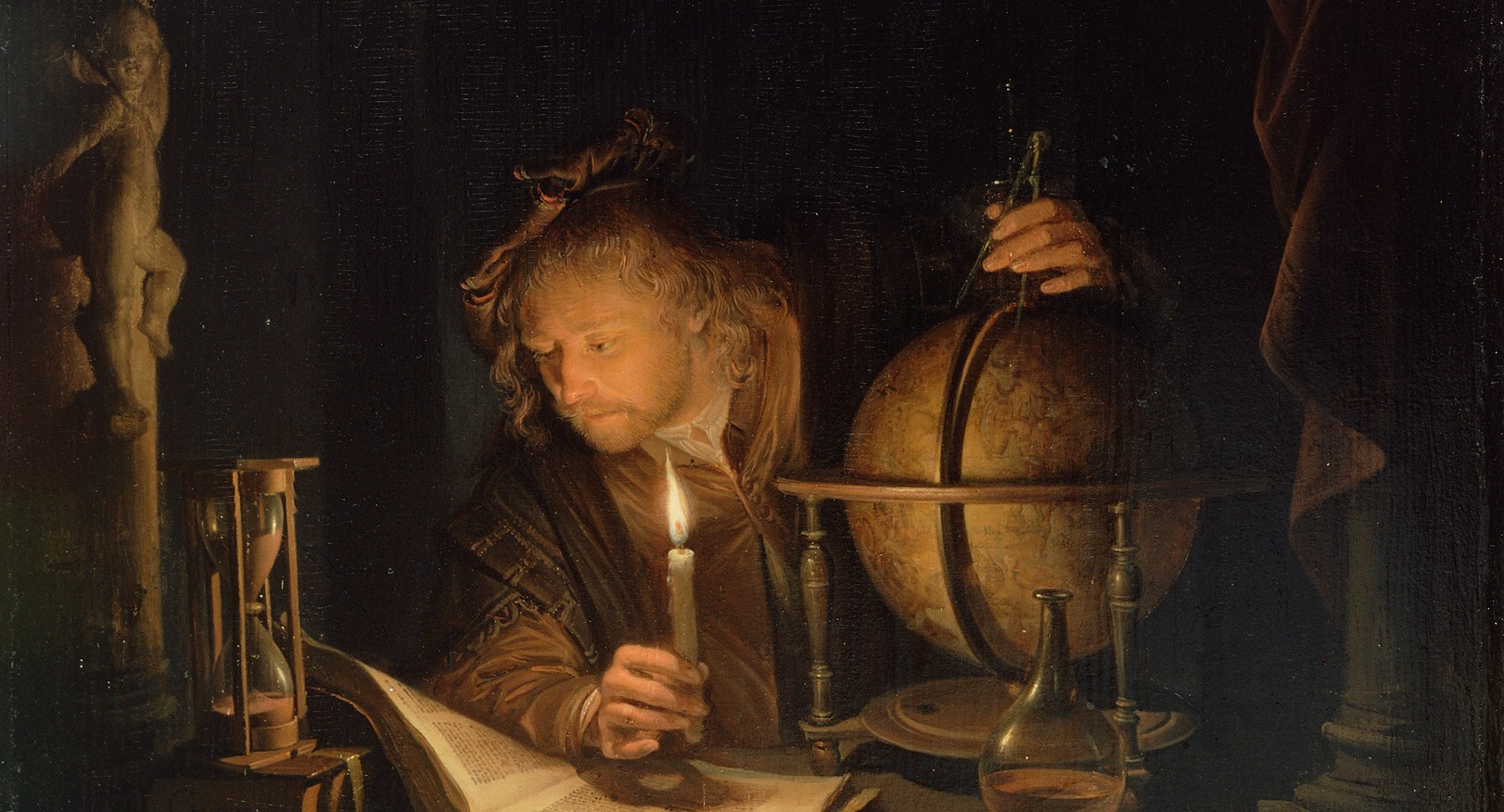
Nell’Astronomo alla luce di candela questa abilità tecnica raggiunge uno dei suoi vertici. La luce artificiale diventa il vero soggetto dell’opera, capace di modellare lo spazio, isolare il protagonista e guidare lo sguardo dello spettatore.
Descrizione del dipinto L’Astronomo alla luce di candela
Il dipinto raffigura un astronomo colto in un momento di profonda concentrazione. È notte. L’uomo si trova nel suo studio, circondato da libri e strumenti scientifici, mentre regge una candela che illumina le pagine di un volume aperto. Accanto a lui compare un globo celeste, riferimento diretto allo studio dell’universo.
La scena è costruita su un forte contrasto tra luce e ombra. Il volto dell’astronomo emerge lentamente dal buio, così come le mani, i fogli e gli oggetti più vicini alla fiamma. Tutto il resto resta immerso in una penombra densa e silenziosa, che amplifica il senso di intimità e isolamento.
Il significato simbolico dell’opera di Gerard Dou
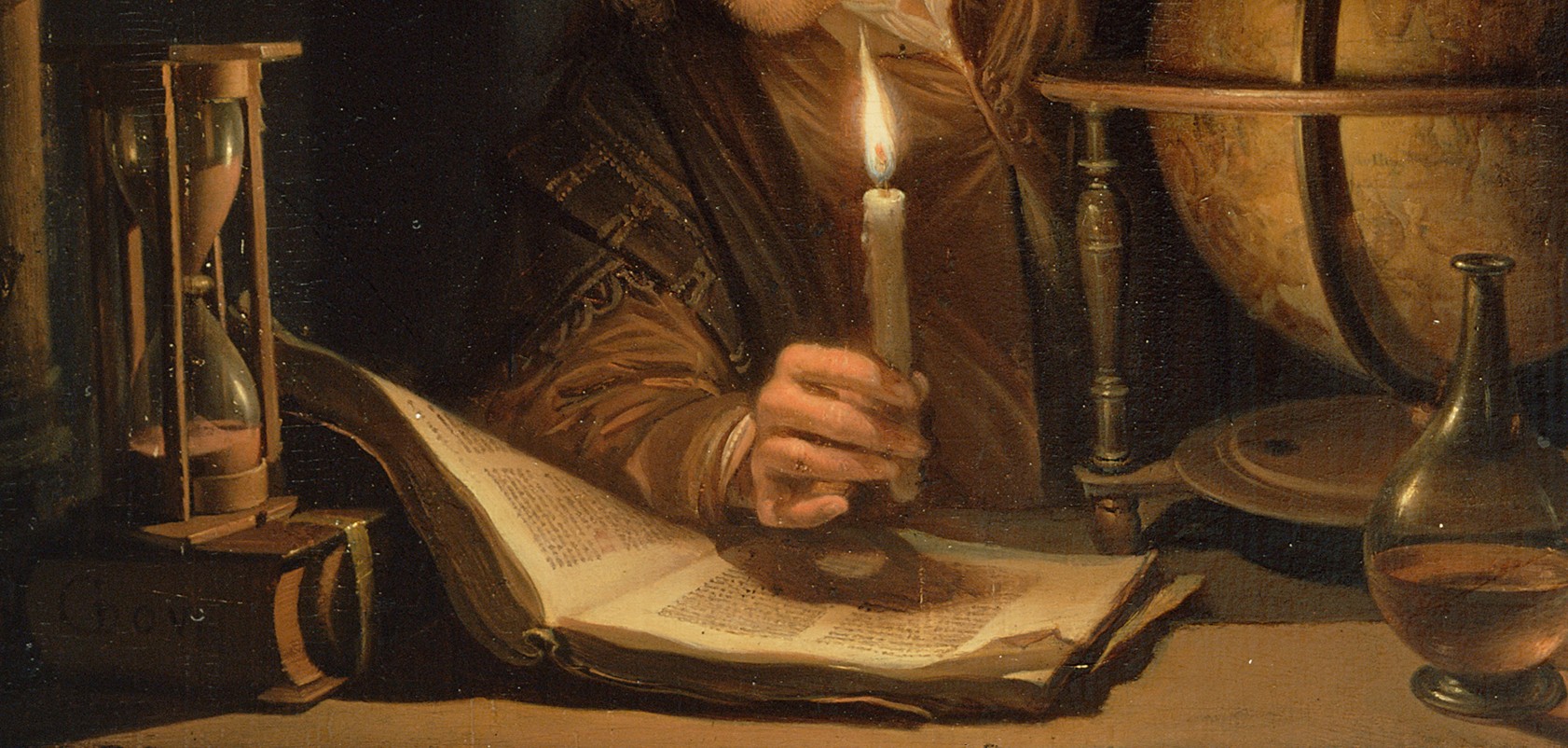
Come molte opere del Seicento olandese, L’Astronomo alla luce di candela è carico di simboli. La candela non è solo una fonte luminosa, ma rappresenta la conoscenza umana, fragile e temporanea, capace però di illuminare l’oscurità dell’ignoranza. Il globo celeste richiama il desiderio dell’uomo di comprendere l’ordine del cosmo, mentre il tempo, suggerito dalla notte e dagli strumenti scientifici, diventa una presenza silenziosa ma costante.
L’astronomo non osserva il cielo, ma studia sui libri. È un messaggio potente per l’epoca: la conoscenza non nasce solo dall’osservazione, ma dallo studio paziente e dalla riflessione.
La committenza e la destinazione dell’opera
Non esistono documenti che identifichino con certezza il committente dell’opera, ma il contesto è chiaro. Gerard Dou lavorava principalmente per collezionisti privati, appartenenti alla borghesia colta o all’aristocrazia europea. I suoi dipinti erano pensati per ambienti intimi, come studi e gabinetti di curiosità, e destinati a essere osservati da vicino.
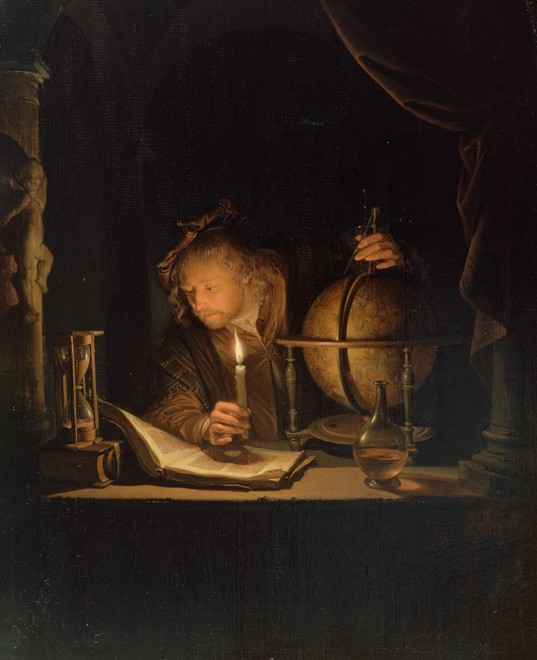
L’Astronomo alla luce di candela rientra perfettamente in questa tradizione. Non è un’opera monumentale né celebrativa, ma un dipinto da contemplare in silenzio, in uno spazio riservato. Oggi è conservato al Getty Museum di Los Angeles, dove continua a essere ammirato come uno dei capolavori della pittura di genere del Seicento.
In questo capolavoro Gerard Dou racconta il valore del tempo lungo dello studio, della concentrazione e della ricerca individuale.
La figura dell’astronomo diventa universale: non è solo uno scienziato del Seicento, ma l’emblema di chiunque cerchi risposte attraverso il sapere.
Per il momento il sempre vostro Michelangelo Buonarroti vi saluta dandovi appuntamento ai prossimi post e sui social.

The Light of Knowledge: Gerard Dou’s Astronomer by Candlelight
In the silence of a room lit by a single candle, one of the most intense paintings of 17th-century Holland takes shape. Gerard Dou’s Astronomer by Candlelight is a visual reflection on the value of knowledge, study, and time. A work that, even today, speaks with surprising relevance to contemporary viewers.
Gerard Dou and the Painting of Light in 17th-Century Holland
Gerard Dou, a direct pupil of Rembrandt and master of the Leiden fijnschilders, is renowned for his extremely refined painting style, characterized by smooth surfaces, meticulous details, and a masterful use of light. In his paintings, often small in format, nothing is left to chance. Each object is observed, studied, and rendered with almost scientific precision.
In Astronomer by Candlelight, this technical skill reaches its pinnacle. Artificial light becomes the true subject of the work, shaping the space, isolating the protagonist, and guiding the viewer’s gaze.
Description of the painting: The Astronomer by Candlelight
The painting depicts an astronomer caught in a moment of deep concentration. It is night. The man is in his study, surrounded by books and scientific instruments, holding a candle that illuminates the pages of an open volume. Next to him appears a celestial globe, a direct reference to the study of the universe.
The scene is built on a strong contrast between light and shadow. The astronomer’s face slowly emerges from the darkness, as do his hands, papers, and the objects closest to the flame. Everything else remains immersed in a dense, silent gloom, which amplifies the sense of intimacy and isolation.
The Symbolic Meaning of Gerard Dou’s Work
Like many 17th-century Dutch works, The Astronomer by Candlelight is charged with symbolism. The candle is not only a source of light, but also represents human knowledge, fragile and temporary, yet capable of illuminating the darkness of ignorance. The celestial globe evokes human desire to understand the order of the cosmos, while time, suggested by the night and scientific instruments, becomes a silent yet constant presence.
The astronomer does not observe the sky, but studies books. This is a powerful message for the time: knowledge is born not only from observation, but from patient study and reflection.
The Patronage and Destination of the Work
There are no documents that identify the work’s patron with certainty, but the context is clear. Gerard Dou worked primarily for private collectors, members of the educated bourgeoisie or the European aristocracy. His paintings were intended for intimate settings, such as studies and cabinets of curiosities, and intended to be observed up close.
The Astronomer by Candlelight fits perfectly into this tradition. It is neither a monumental nor celebratory work, but a painting to be contemplated in silence, in a private space. Today it is housed at the Getty Museum in Los Angeles, where it continues to be admired as one of the masterpieces of 17th-century genre painting.
In this masterpiece, Gerard Dou speaks of the value of long study, concentration, and individual research.
The figure of the astronomer becomes universal: he is not just a 17th-century scientist, but the emblem of anyone seeking answers through knowledge.
For now, yours truly, Michelangelo Buonarroti bids you farewell and invites you to join him in future posts and on social media.

Sostienici – Support Us
Se questo blog ti piace e ti appassiona, puoi aiutarci a farlo crescere sempre più sostenendoci in modo concreto condividendo i post, seguendo le pagine social e con un contributo che ci aiuta ad andare avanti con il nostro lavoro di divulgazione. . ENGLISH: If you like and are passionate about this blog, you can help us make it grow more and more by supporting us in a concrete way by sharing posts, following social pages and with a contribution that helps us to move forward with our dissemination work.
10,00 €


Condividi:


Questo sono io





sostienici

Sostienici – Support Us
Se questo blog ti piace e ti appassiona, puoi aiutarci a farlo crescere sempre più sostenendoci in modo concreto condividendo i post, seguendo le pagine social e con un contributo che ci aiuta ad andare avanti con il nostro lavoro di divulgazione. . ENGLISH: If you like and are passionate about this blog, you can help us make it grow more and more by supporting us in a concrete way by sharing posts, following social pages and with a contribution that helps us to move forward with our dissemination work.
€10,00


