

Madonna col Bambino di Jürgen Kriebel: capolavoro in avorio del Seicento tedesco
La Madonna col Bambino scolpita da Jürgen Kriebel tra il 1620 e il 1625 rappresenta uno dei più raffinati esempi di scultura in avorio del Nord Europa del primo Seicento.
Conservata oggi al Metropolitan Museum of Art di New York, mette assieme la maestria tecnica con sensibilità emotiva e la devozione religiosa.
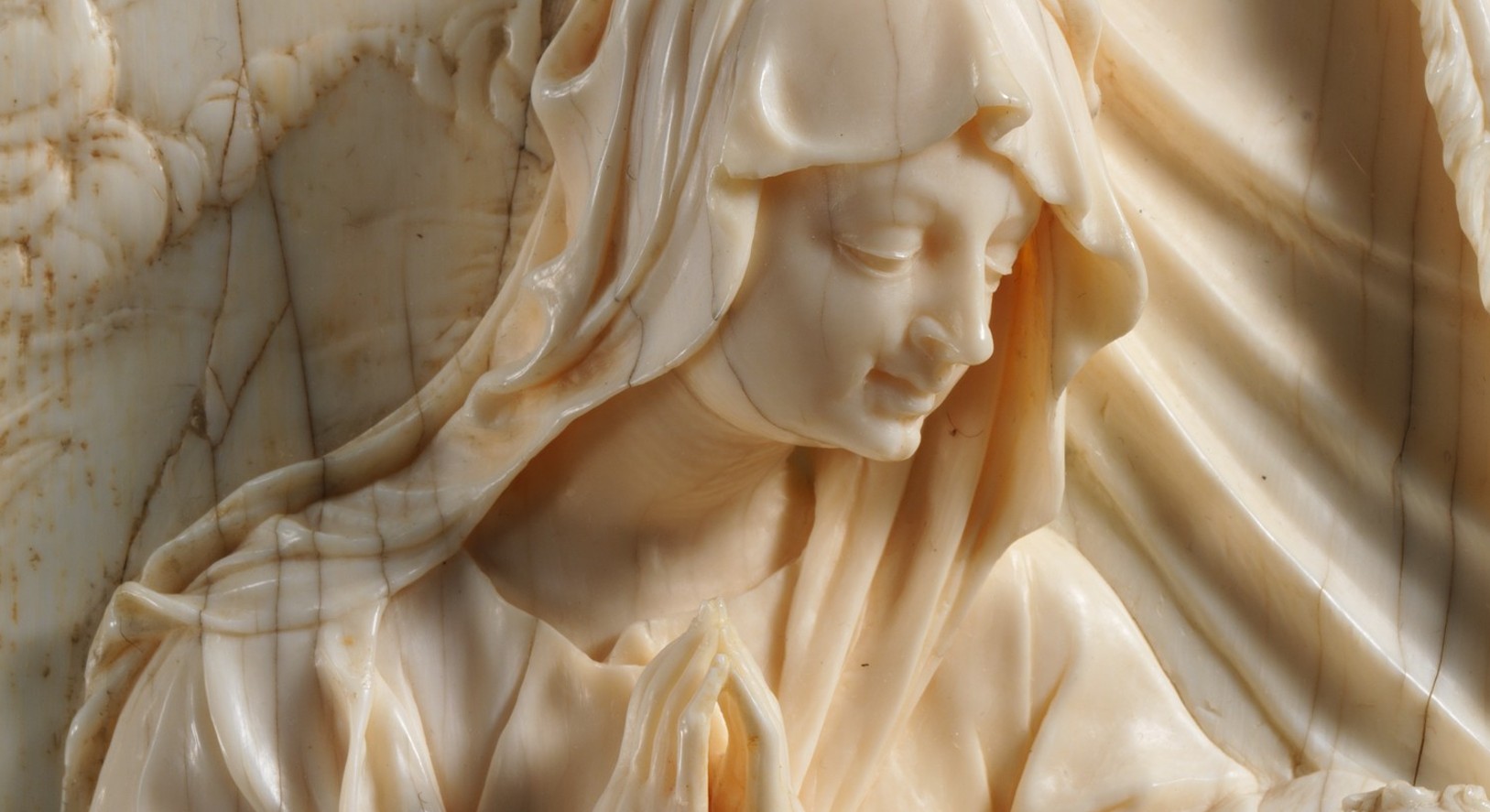
Un capolavoro di luce e delicatezza
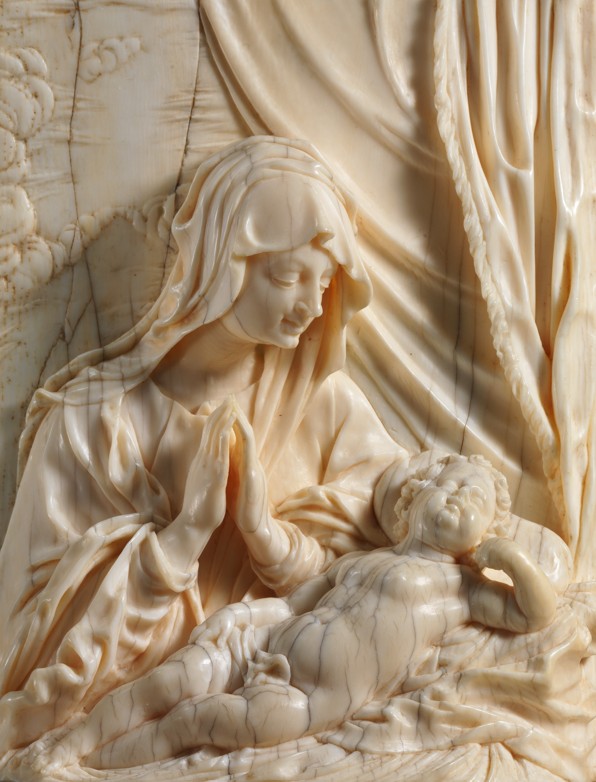
Realizzata da un unico blocco di pregiato avorio, l’opera sfrutta la traslucidità naturale del materiale per creare un effetto luminoso straordinario. La luce che filtra attraverso l’avorio illumina il volto sereno della Madonna, mentre a mani giunte contempla con dolcezza il Figlio addormentato.
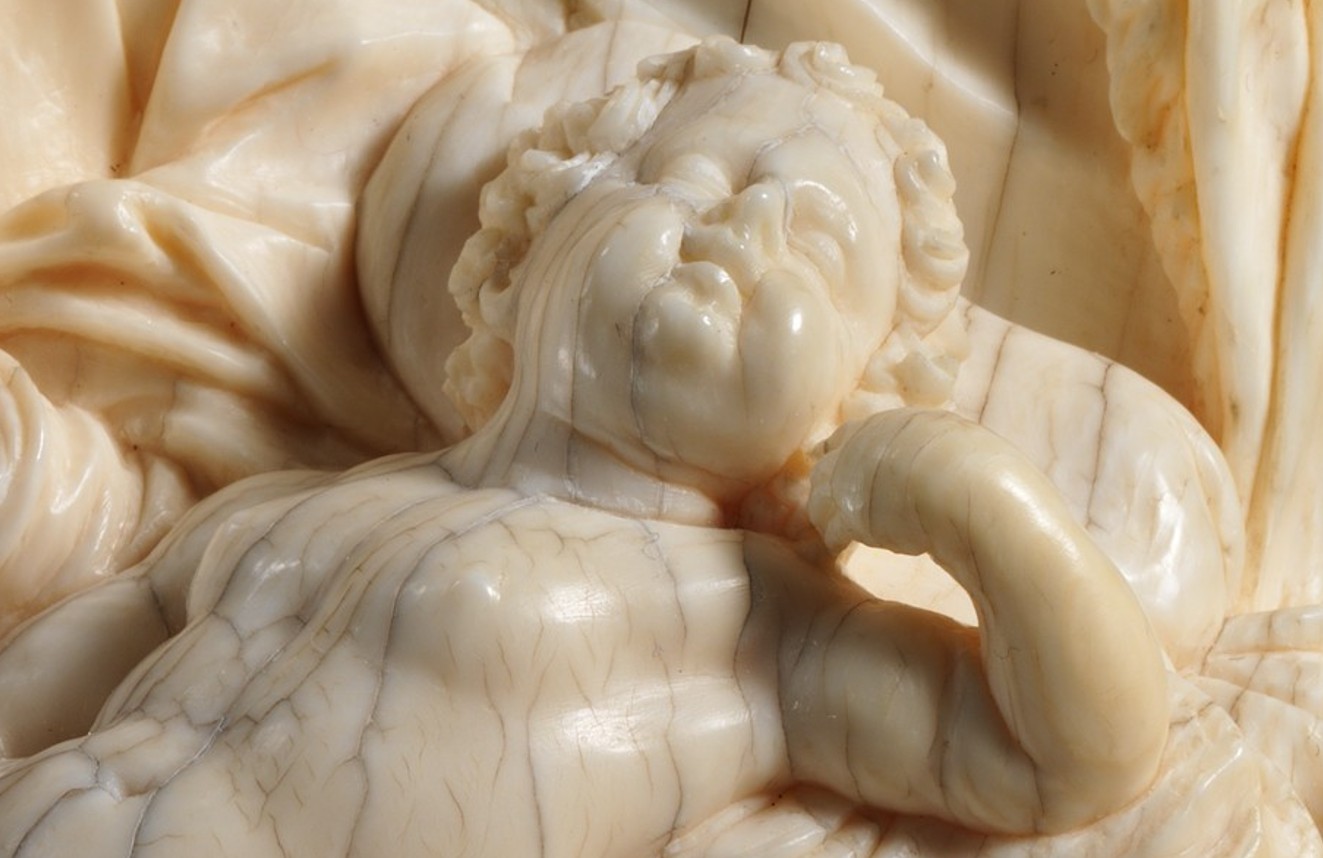
I drappeggi a strati delle vesti e le pieghe delle coperte sono scolpiti con incredibile dettaglio, mettendo in risalto la morbidezza della pelle e la profondità dei volumi.
Chi era Jürgen Kriebel
Jürgen Kriebel (1580‑1645 circa) è uno dei pochi scultori del Nord della Germania a distinguersi nella lavorazione dell’avorio.
Probabilmente attivo a Magdeburgo, Kriebel fonde influenze manieriste italiane e fiamminghe con la sobrietà nord-europea, realizzando sculture devozionali, altorilievi e figure per collezioni nobiliari. La sua abilità nel modellare materiali delicati come l’avorio e il legno lo ha fatto divenire un punto di riferimento per la scultura sacra del primo Seicento.

Contesto storico e artistico
Nel Seicento, l’avorio era un materiale di lusso, destinato a oggetti sacri di prestigio e devozione privata. La Madonna col Bambino di Kriebel è un esempio dell’arte religiosa che univa intimità spirituale e raffinatezza tecnica.
L’opera testimonia l’evoluzione della scultura nord-europea, a metà strada tra il Rinascimento e il Barocco emergente.
Per il momento il sempre vostro Michelangelo Buonarroti vi saluta dandovi appuntamento ai prossimi post e sui social.
Madonna and Child by Jürgen Kriebel: A 17th-Century German Ivory Masterpiece
The Madonna and Child, sculpted by Jürgen Kriebel between 1620 and 1625, represents one of the finest examples of early 17th-century Northern European ivory sculpture.
Now housed at the Metropolitan Museum of Art in New York, it combines technical mastery with emotional sensitivity and religious devotion.
A Masterpiece of Light and Delicacy
Crafted from a single block of precious ivory, the work exploits the material’s natural translucency to create an extraordinary luminous effect. The light filtering through the ivory illuminates the Madonna’s serene face, as she gently contemplates her sleeping Son with clasped hands.
The layered drapes of the robes and the folds of the blankets are sculpted with incredible detail, highlighting the softness of the skin and the depth of the volumes.
Who was Jürgen Kriebel?
Jürgen Kriebel (c. 1580–1645) is one of the few Northern German sculptors to distinguish himself in ivory.
Probably active in Magdeburg, Kriebel blended Italian and Flemish Mannerist influences with Northern European sobriety, creating devotional sculptures, high reliefs, and figures for noble collections. His skill in modeling delicate materials such as ivory and wood made him a point of reference for early 17th-century religious sculpture.
Historical and Artistic Context
In the 17th century, ivory was a luxurious material, destined for sacred objects of prestige and private devotion. Kriebel’s Madonna and Child is an example of religious art that combined spiritual intimacy and technical refinement.
The work testifies to the evolution of Northern European sculpture, midway between the Renaissance and the emerging Baroque.
For now, yours truly, Michelangelo Buonarroti, bids farewell and invites you to join him in future posts and on social media.

Sostienici – Support Us
Se questo blog ti piace e ti appassiona, puoi aiutarci a farlo crescere sempre più sostenendoci in modo concreto condividendo i post, seguendo le pagine social e con un contributo che ci aiuta ad andare avanti con il nostro lavoro di divulgazione. . ENGLISH: If you like and are passionate about this blog, you can help us make it grow more and more by supporting us in a concrete way by sharing posts, following social pages and with a contribution that helps us to move forward with our dissemination work.
10,00 €

Condividi:


Questo sono io





sostienici

Sostienici – Support Us
Se questo blog ti piace e ti appassiona, puoi aiutarci a farlo crescere sempre più sostenendoci in modo concreto condividendo i post, seguendo le pagine social e con un contributo che ci aiuta ad andare avanti con il nostro lavoro di divulgazione. . ENGLISH: If you like and are passionate about this blog, you can help us make it grow more and more by supporting us in a concrete way by sharing posts, following social pages and with a contribution that helps us to move forward with our dissemination work.
€10,00


Davvero incredibile questo lavoro!!! Mai visto nulla di simile!! 👏👏👏👏👏👏👏👏👏👏👏👏👏
"Mi piace"Piace a 1 persona
straordinario
"Mi piace"Piace a 1 persona