
Orazio Gentileschi e la Madonna con il Bambino: analisi dell’opera
La Madonna con il Bambino e i santi Sebastiano e Francesco è una delle opere più interessanti della fase giovanile di Orazio Gentileschi.
Databile tra il 1597 e il 1599, il dipinto rappresenta un momento cruciale nella formazione dell’artista, sospeso tra il linguaggio manierista di fine Cinquecento e la nuova ricerca tra luce e ombra di cui fu il massimo esponente Caravaggio.
Oggi conservata a Palazzo Blu di Pisa, grazie all’acquisto della Fondazione Cassa di Risparmio di Pisa, l’opera testimonia una fase di profonda trasformazione stilistica, immediatamente precedente all’incontro decisivo con Caravaggio.
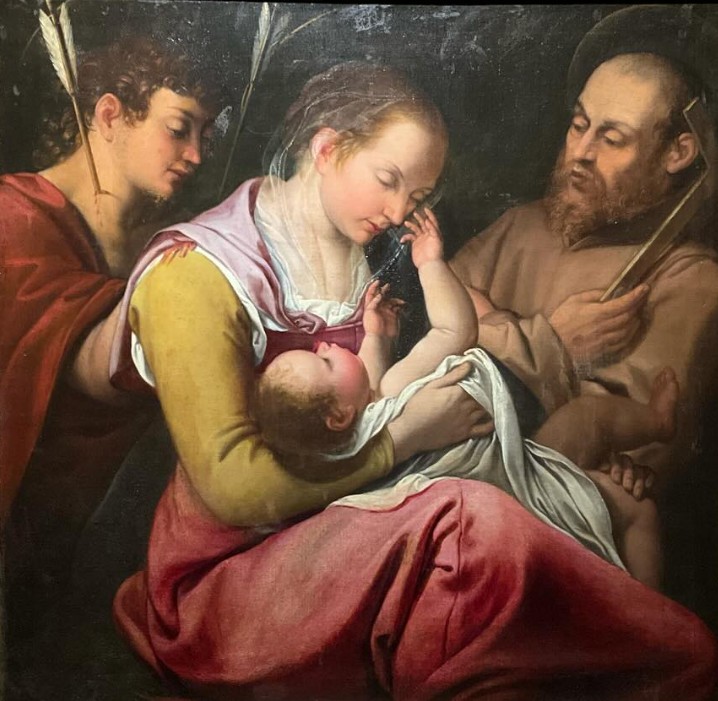
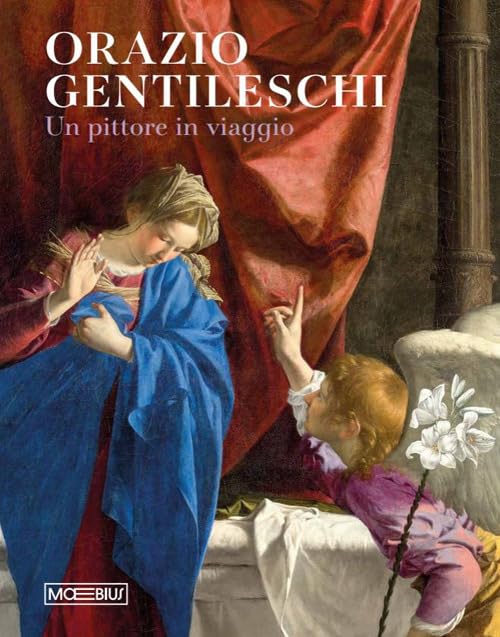
Al momento questo dipinto si trova esposto ai Musei Reali di Torino, in occasione della mostra ‘Orazio Gentileschi. Un pittore in viaggio’,
Un’opera di transizione nella carriera di Orazio Gentileschi
Negli ultimi anni del XVI secolo, Orazio Gentileschi stava progressivamente abbandonando l’attività di decoratore e frescante, predominante nei decenni precedenti, per dedicarsi alla pittura da cavalletto. Questo cambiamento coincide con una riflessione più ampia sul superamento del Manierismo, allora dominante a Roma.
Secondo gli studi più recenti, in particolare quelli di Keith Christiansen e Alessandro Zuccari, la tela pisana va collocata poco prima del 1600, quando Gentileschi non aveva ancora assimilato le novità caravaggesche. L’assenza di forti contrasti luministici e di realismo drammatico conferma una fase ancora legata ai modelli rinascimentali.
La composizione: centralità della Vergine e tensioni spaziali
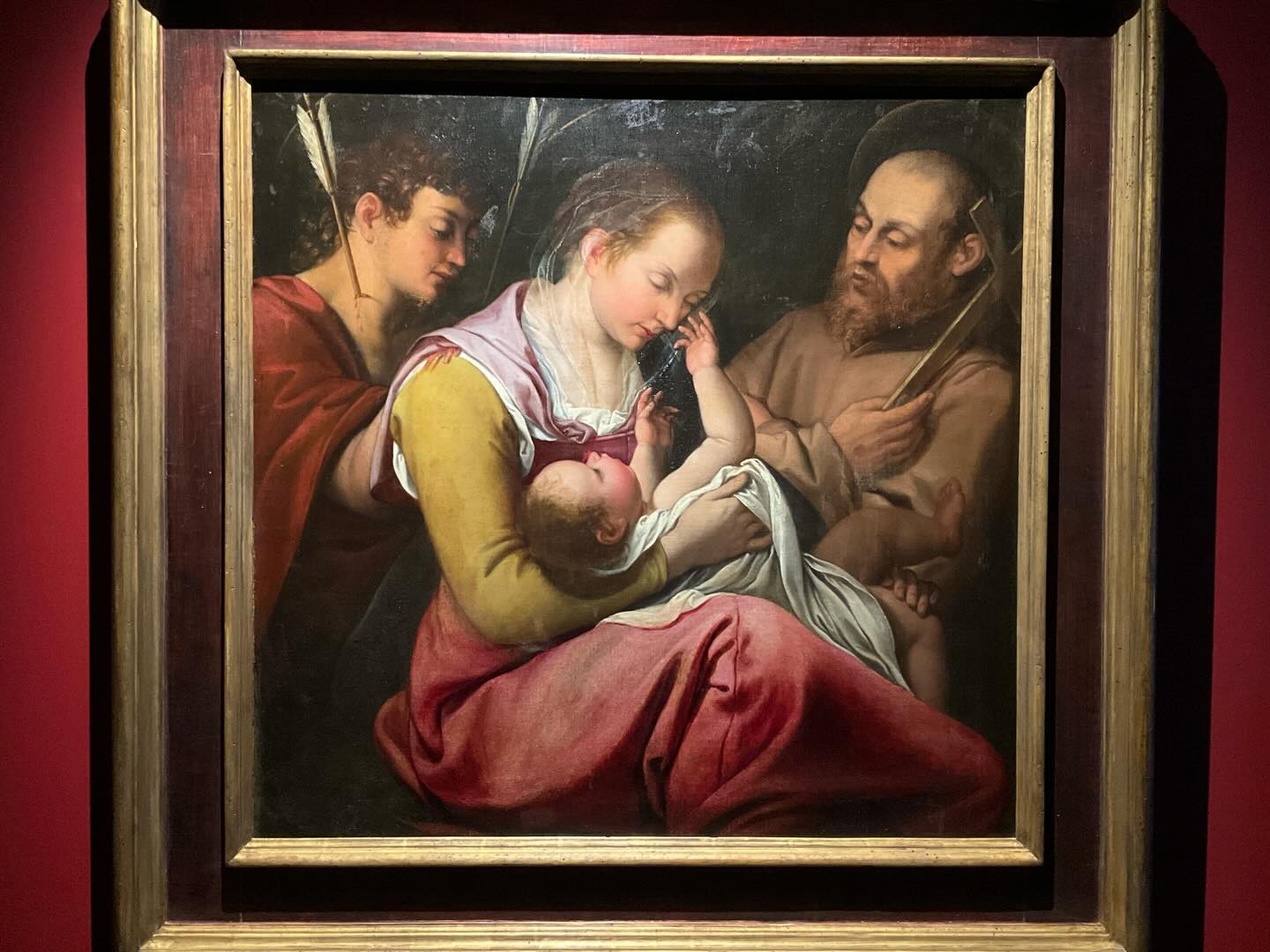
La scena è dominata dalla Vergine con il Bambino, collocata in primo piano secondo una composizione diagonale che ne enfatizza la monumentalità. La figura di Maria presenta un’impostazione solida, quasi michelangiolesca, mitigata però da una dolcezza formale che richiama Raffaello, soprattutto nelle Madonne romane e fiorentine.
Il gesto affettuoso del Bambino, che tende le mani verso il velo della madre, è stato messo in relazione con la celebre Madonna di Loreto di Raffaello, un modello molto diffuso tra i pittori di fine Cinquecento.
I santi Sebastiano e Francesco, posti ai lati, appaiono invece meno integrati nello spazio: la loro presenza risulta quasi accessoria, come se fossero stati aggiunti in un secondo momento. Questa difficoltà nella gestione dello spazio e delle proporzioni è uno dei limiti dell’opera, spesso segnalato dalla critica.
Influenze rinascimentali e prime cifre personali
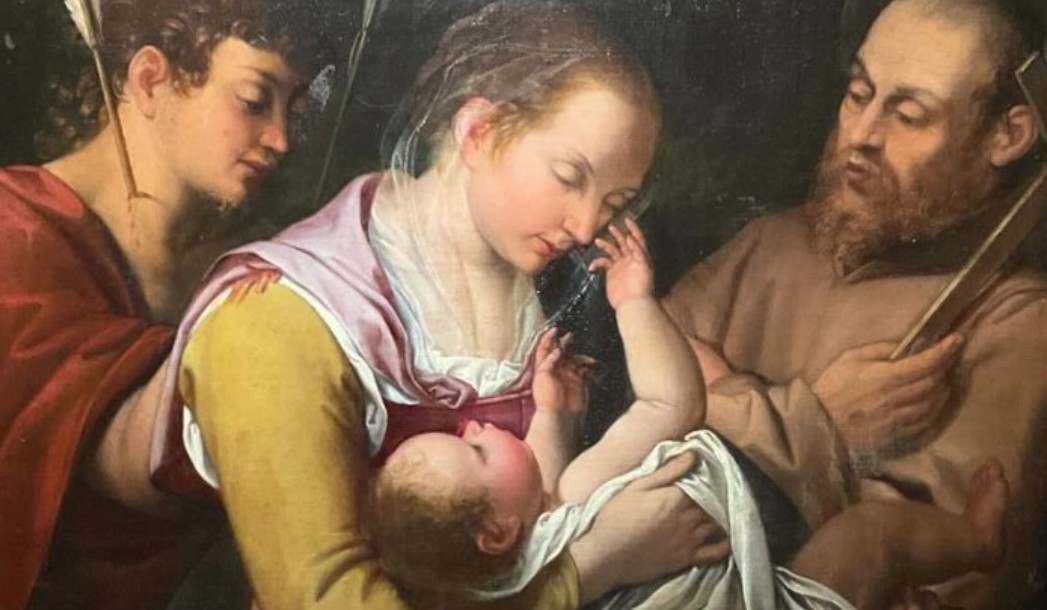
Nonostante alcune incertezze anatomiche e prospettiche, il dipinto rivela già tratti distintivi dello stile di Gentileschi come la cura minuziosa dei dettagli, come le cuciture e i tessuti e la resa materica degli abiti, in particolare la veste rossa della Vergine, con un effetto quasi feltroso.
Osservate anche la palette cromatica luminosa, con bianchi smaglianti e tonalità avana e quelle fisionomie affilate e guance arrossate del Bambino, elementi che ricorreranno anche in opere successive.
Opera acerba ma fondamentale
La Madonna con il Bambino e i santi Sebastiano e Francesco è spesso definita un’opera acerba, ma proprio per questo affascinante. Essa mostra un artista non ancora pienamente risolto, ma già consapevole della necessità di cambiare direzione.
Gentileschi non fu un enfant prodige, ma un pittore capace di rimettere in discussione il proprio linguaggio anche in età matura, scegliendo di confrontarsi con un collega più giovane e rivoluzionario come Caravaggio. Questa tela rappresenta quindi un documento prezioso del suo percorso umano e artistico.
Per il momento il sempre vostro Michelangelo Buonarroti vi saluta dandovi appuntamento ai prossimi post e sui social.
Orazio Gentileschi and the Madonna and Child: Analysis of the Work
The Madonna and Child with Saints Sebastian and Francis is one of the most interesting works from Orazio Gentileschi’s early period.
Dated between 1597 and 1599, the painting represents a crucial moment in the artist’s development, suspended between the Mannerist language of the late sixteenth century and the new exploration of light and shadow, of which Caravaggio was the greatest exponent.
Now housed in the Palazzo Blu in Pisa, thanks to its purchase by the Fondazione Cassa di Risparmio di Pisa, the work demonstrates a phase of profound stylistic transformation immediately preceding the decisive encounter with Caravaggio.
This painting is currently on display at the Musei Reali in Turin, as part of the exhibition “Orazio Gentileschi. A Traveling Painter,
A Transitional Work in Orazio Gentileschi’s Career
In the final years of the 16th century, Orazio Gentileschi was gradually abandoning the work of decorator and fresco painter, which had dominated the preceding decades, to devote himself to easel painting. This shift coincided with a broader reflection on the overcoming of Mannerism, then dominant in Rome.
According to the most recent studies, particularly those by Keith Christiansen and Alessandro Zuccari, the Pisan canvas dates to shortly before 1600, when Gentileschi had not yet assimilated Caravaggio’s innovations. The absence of strong contrasts of light and dramatic realism confirms a phase still rooted in Renaissance models.
The Composition: Centrality of the Virgin and Spatial Tensions
The scene is dominated by the Virgin and Child, placed in the foreground according to a diagonal composition that emphasizes its monumentality. The figure of Mary presents a solid, almost Michelangelo-like stance, tempered, however, by a formal softness reminiscent of Raphael, especially in his Roman and Florentine Madonnas.
The affectionate gesture of the Child, who extends his hands toward his mother’s veil, has been compared to Raphael’s famous Madonna of Loreto, a popular model among late-16th-century painters.
Saints Sebastian and Francis, placed at the sides, appear less integrated into the space: their presence is almost incidental, as if added later. This difficulty in managing space and proportion is one of the work’s limitations, often noted by critics.
Renaissance Influences and Early Personal Signature
Despite some anatomical and perspective uncertainties, the painting already reveals distinctive features of Gentileschi’s style, such as the meticulous attention to detail, such as the stitching and fabrics, and the textured rendering of the clothing, particularly the Virgin’s red robe, which has an almost felt-like effect.
Notice also the luminous color palette, with dazzling whites and Havana tones, and the Child’s sharp features and flushed cheeks, elements that will recur in later works.
An immature but fundamental work
The Madonna and Child with Saints Sebastian and Francis is often described as an immature work, but precisely for this reason it is fascinating. It shows an artist not yet fully developed, but already aware of the need to change direction.
Gentileschi was not a child prodigy, but a painter capable of questioning his own artistic language even in his mature years, choosing to engage with a younger and more revolutionary colleague like Caravaggio. This canvas therefore represents a precious document of his personal and artistic journey.
For now, yours truly, Michelangelo Buonarroti bids you farewell and invites you to join him in future posts and on social media.

Sostienici – Support Us
Se questo blog ti piace e ti appassiona, puoi aiutarci a farlo crescere sempre più sostenendoci in modo concreto condividendo i post, seguendo le pagine social e con un contributo che ci aiuta ad andare avanti con il nostro lavoro di divulgazione. . ENGLISH: If you like and are passionate about this blog, you can help us make it grow more and more by supporting us in a concrete way by sharing posts, following social pages and with a contribution that helps us to move forward with our dissemination work.
10,00 €
Condividi:


Questo sono io





sostienici

Sostienici – Support Us
Se questo blog ti piace e ti appassiona, puoi aiutarci a farlo crescere sempre più sostenendoci in modo concreto condividendo i post, seguendo le pagine social e con un contributo che ci aiuta ad andare avanti con il nostro lavoro di divulgazione. . ENGLISH: If you like and are passionate about this blog, you can help us make it grow more and more by supporting us in a concrete way by sharing posts, following social pages and with a contribution that helps us to move forward with our dissemination work.
€10,00


Felice Anno Nuovo! Grazie per i post sempre raffinati!❤🥂🍾🎄🌠
"Mi piace"Piace a 1 persona
grazie di cuore, buon anno nuovo e che sia prospero per tutti
"Mi piace"Piace a 1 persona