

13 dicembre: il Seppellimento di Santa Lucia del Caravaggio
Il Seppellimento di Santa Lucia è uno dei dipinti più intensi e drammatici di Caravaggio, realizzato nel 1608 durante il suo soggiorno in Sicilia. E’ uno dei vertici della fase finale dell’artista e regala una visione radicalmente nuova dell’arte sacra, basata su realismo, oscurità e profonda umanità.
La storia del dipinto
Caravaggio dipinge Il Seppellimento di Santa Lucia nel 1608, mentre è in fuga dopo l’evasione dal carcere di Malta. Il pittore arriva a Siracusa, dove riceve la commissione per la chiesa costruita sul luogo tradizionalmente indicato come la tomba della santa, martire cristiana del IV secolo.
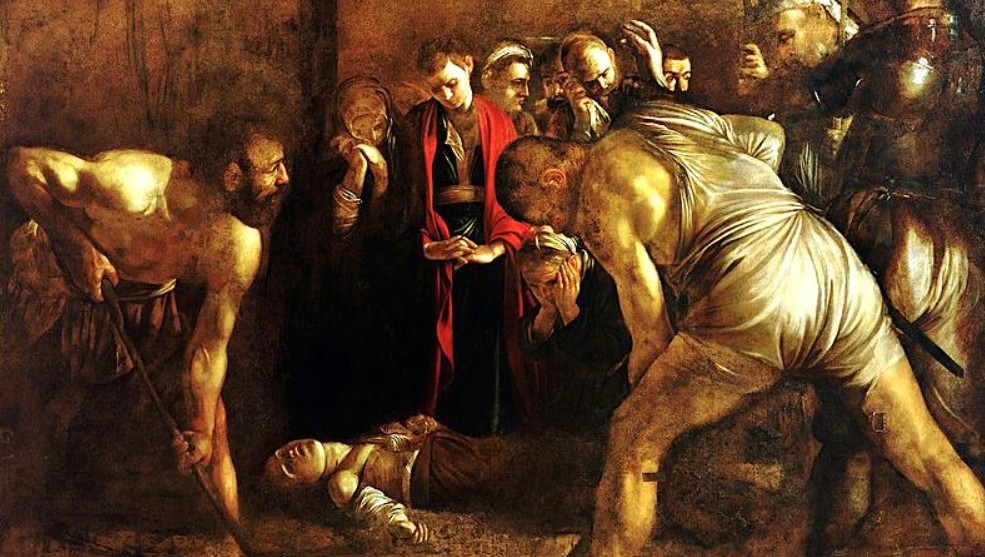
Caravaggio è un uomo braccato, segnato da violenza, colpa e paura della morte. Questa sua condizione esistenziale si riflette direttamente nel dipinto e abbandona completamente ogni idealizzazione per mostrare una scena cruda e silenziosa.
Inizialmente l’opera non fu apprezzata ma non è certo una novità per Caravaggio: gli era già successo. Appariva troppo cupa, priva di decoro e lontana dai canoni dell’arte sacra tradizionale. Solo in epoca moderna è stata riconosciuta come uno dei capolavori assoluti della maturità caravaggesca.
Il soggetto: la sepoltura della santa
A differenza di molte rappresentazioni, Caravaggio non raffigura il martirio di Santa Lucia né la sua gloria celeste, ma il momento della sepoltura.
La santa è già morta, distesa a terra, piccola e fragile. Due becchini scavano la fossa con gesti lenti e faticosi, mentre poche figure assistono alla scena in silenzio. Non ci sono angeli, miracoli o simboli trionfali: tutto è dominato dalla fisicità della morte.
Analisi e caratteristiche artistiche
Una composizione rivoluzionaria
La composizione è sbilanciata verso il basso. Santa Lucia occupa una porzione minima della tela, mentre sopra di lei si estende un grande spazio vuoto e oscuro. Questa scelta crea un senso di oppressione e sottolinea la solitudine della morte.
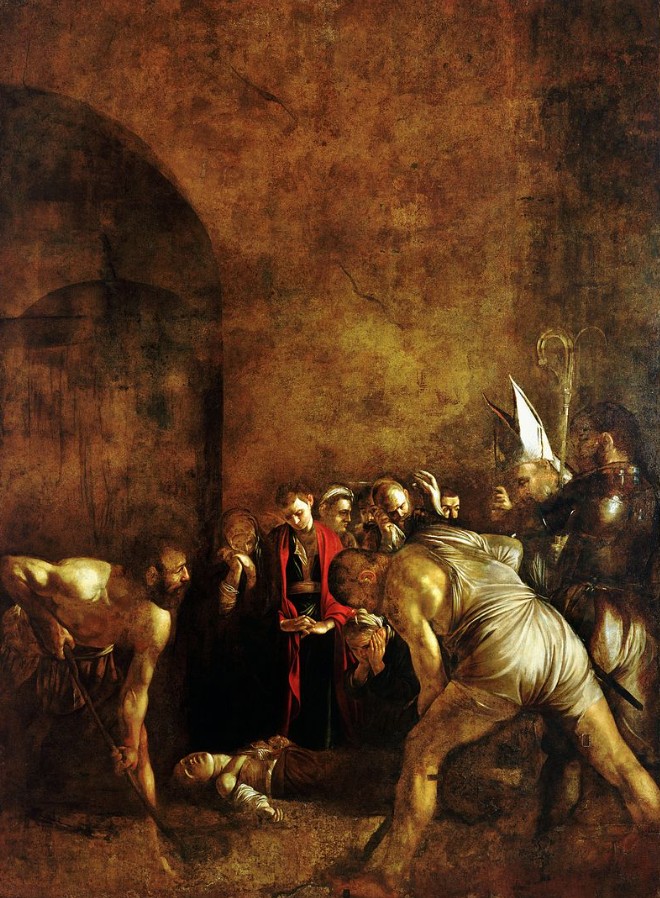
I becchini, uomini comuni e robusti, diventano protagonisti visivi dell’opera, incarnando il peso concreto della sepoltura.
La luce caravaggesca
La luce è radente e selettiva, tipica del Caravaggio maturo. Illumina i corpi e le mani, lasciando il resto immerso nel buio. Non è una luce divina e gloriosa, ma una luce terrena, fragile, quasi sul punto di spegnersi.
Il realismo estremo
I personaggi hanno volti segnati, mani sporche, posture realistiche. Santa Lucia non è idealizzata: è un corpo umano inerme, senza alcuna idealizzazione estetica. Questo realismo rende l’opera profondamente moderna e ancora oggi emotivamente potente.
Il significato dell’opera
Il Seppellimento di Santa Lucia è una meditazione sulla morte, sulla fede e sulla fragilità umana. Caravaggio elimina ogni retorica religiosa per mostrare una santità che passa attraverso la sofferenza e la carne.
Santa Lucia è la santa della luce, ma qui la luce non trionfa: resiste nell’oscurità. È un messaggio coerente con la visione spirituale di Caravaggio negli ultimi anni della sua vita.
La Santa Lucia di Caravaggio è espressione della fase più matura dell’artista. Unisce realismo estremo e profondità spirituale anticipando una sensibilità moderna, priva di illusioni.
Per il momento il sempre vostro Michelangelo Buonarroti vi saluta dandovi appuntamento ai prossimi post e sui social.
December 13: The Burial of Saint Lucy by Caravaggio
The Burial of Saint Lucy is one of Caravaggio’s most intense and dramatic paintings, created in 1608 during his stay in Sicily. It is one of the pinnacles of the artist’s final phase and offers a radically new vision of sacred art, based on realism, darkness, and profound humanity.
The History of the Painting
Caravaggio painted The Burial of Saint Lucy in 1608, while on the run after escaping from prison in Malta. The painter arrived in Syracuse, where he received the commission for the church built on the site traditionally considered the tomb of the saint, a 4th-century Christian martyr.
Caravaggio is a hunted man, marked by violence, guilt, and the fear of death. This existential condition is directly reflected in the painting, which completely abandons all idealization to depict a stark and silent scene.
The work was initially disliked, but this was certainly nothing new for Caravaggio: he had already been treated this way. It seemed too dark, lacking in decorum, and far from the canons of traditional sacred art. Only in modern times has it been recognized as one of the absolute masterpieces of Caravaggio’s mature period.
The Subject: The Burial of the Saint
Unlike many representations, Caravaggio does not depict the martyrdom of Saint Lucy or her heavenly glory, but the moment of her burial.
The saint is already dead, lying on the ground, small and fragile. Two gravediggers dig the grave with slow, laborious movements, while a few figures silently observe the scene. There are no angels, miracles, or triumphal symbols: everything is dominated by the physicality of death.
Analysis and Artistic Characteristics
A Revolutionary Composition
The composition is unbalanced downwards. Saint Lucy occupies a minimal portion of the canvas, while above her extends a large, empty, dark space. This choice creates a sense of oppression and emphasizes the loneliness of death.
The gravediggers, ordinary, robust men, become the visual protagonists of the work, embodying the concrete burden of burial.
Caravaggio’s Light
The light is grazing and selective, typical of Caravaggio’s mature years. It illuminates the bodies and hands, leaving the rest immersed in darkness. It is not a divine and glorious light, but an earthly, fragile light, almost on the verge of extinction.
Extreme Realism
The figures have lined faces, dirty hands, and realistic postures. Saint Lucy is not idealized: she is a defenseless human body, devoid of any aesthetic idealization. This realism makes the work profoundly modern and still emotionally powerful today.
The Meaning of the Work
The Burial of Saint Lucy is a meditation on death, faith, and human frailty. Caravaggio eliminates all religious rhetoric to demonstrate a sanctity that comes through suffering and the flesh.
Saint Lucy is the saint of light, but here the light does not triumph: it endures in the darkness. This message is consistent with Caravaggio’s spiritual vision in the final years of his life.
Caravaggio’s Saint Lucy is an expression of the artist’s most mature phase. It combines extreme realism and spiritual depth, anticipating a modern sensibility, free of illusions.
For now, yours truly, Michelangelo Buonarroti bids you farewell and invites you to join him in future posts and on social media.

Sostienici – Support Us
Se questo blog ti piace e ti appassiona, puoi aiutarci a farlo crescere sempre più sostenendoci in modo concreto condividendo i post, seguendo le pagine social e con un contributo che ci aiuta ad andare avanti con il nostro lavoro di divulgazione. . ENGLISH: If you like and are passionate about this blog, you can help us make it grow more and more by supporting us in a concrete way by sharing posts, following social pages and with a contribution that helps us to move forward with our dissemination work.
10,00 €
Condividi:


Questo sono io





sostienici

Sostienici – Support Us
Se questo blog ti piace e ti appassiona, puoi aiutarci a farlo crescere sempre più sostenendoci in modo concreto condividendo i post, seguendo le pagine social e con un contributo che ci aiuta ad andare avanti con il nostro lavoro di divulgazione. . ENGLISH: If you like and are passionate about this blog, you can help us make it grow more and more by supporting us in a concrete way by sharing posts, following social pages and with a contribution that helps us to move forward with our dissemination work.
€10,00


1 commento »