
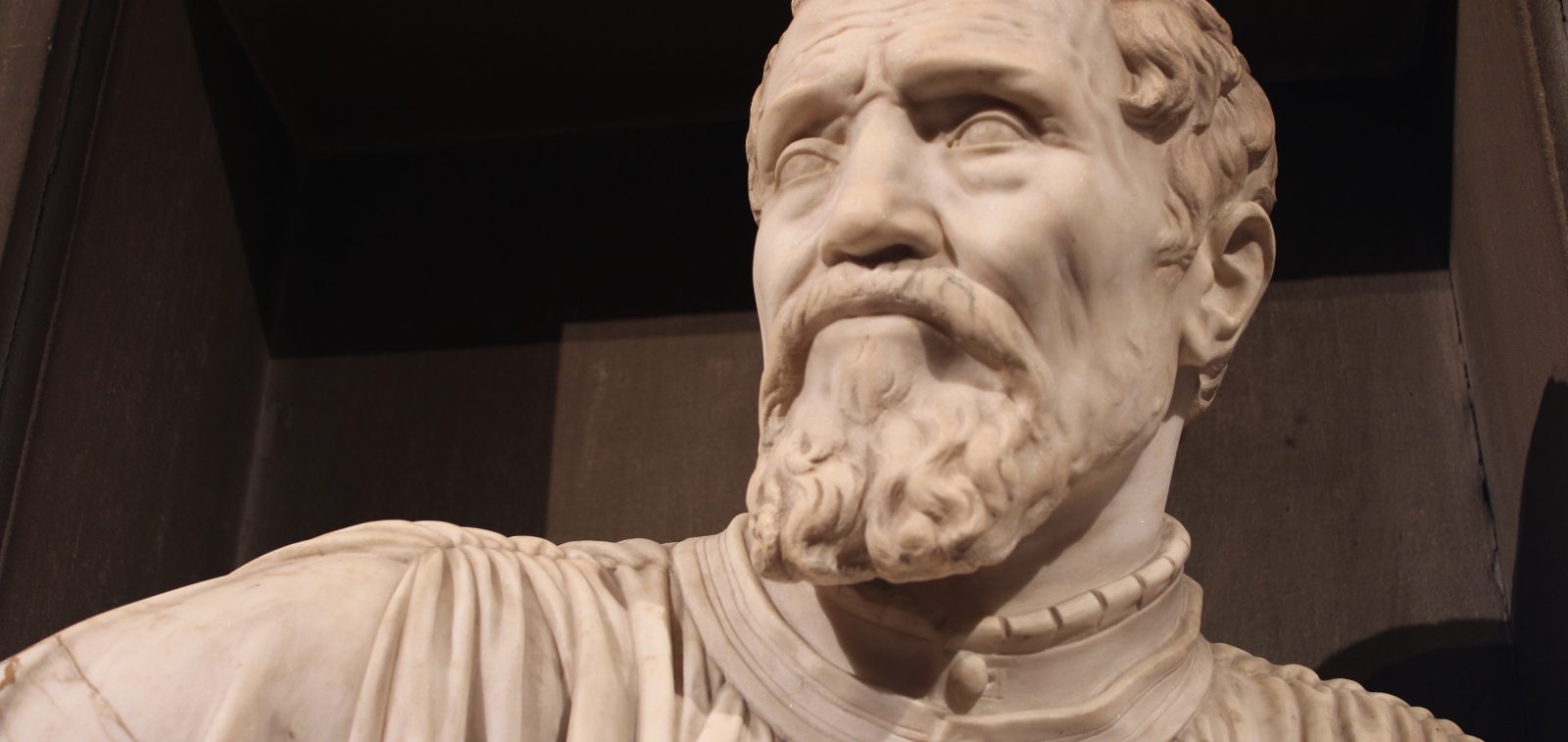
Farò ciò che io saprò, benché non sia la mia professione
Voi che leggete ciò che scrivo da tempo sapete bene che fui anche un eccellente architetto ma non è cosa così nota al grande pubblico. Quando si parla dei miei lavori, si fa quasi sempre riferimento solo alle sculture che vi lasciai in eredità e agli affreschi della volta e della parete d’altare della Cappella Sistina.
Ho fatto molto di più di tutto ciò e i miei progetti architettonici continuano a fare scuola ancora oggi.
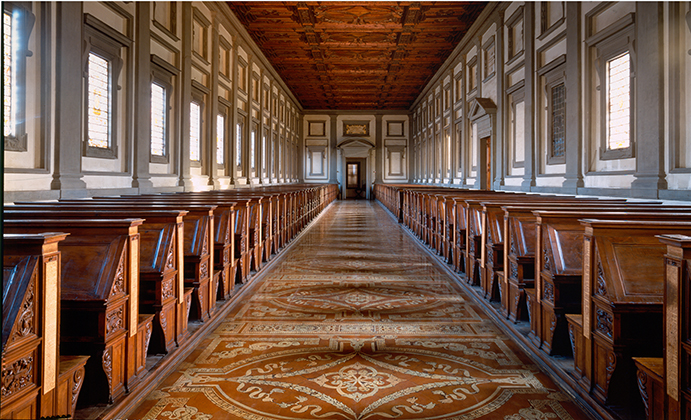
In una lettera che scrissi nel 1524 a Giovan Francesco Fattucci, durante le complesse trattative per la Biblioteca Laurenziana di Firenze, misi nero su bianco di aver accettato l’incarico affidatomi da papa Clemente VII de’ Medici: “farò ciò che io saprò, benché non sia la mia professione”.
Circa vent’anni dopo, in una minuta del 1545 scritta sul retro di un disegno preparatorio per la Crocifissione di San Pietro nella Cappella Paolina, volli ribadire il fatto di non essere architetto: “… e non mi basta l’animo perché non sono architector”
Non era falsa modestia la mia: conoscevo i miei limiti. Mi sentivo scultore in tutto quello che facevo e non mi andava di paventare ciò che non padroneggiavo quanto l’arte dello scolpire il marmo.
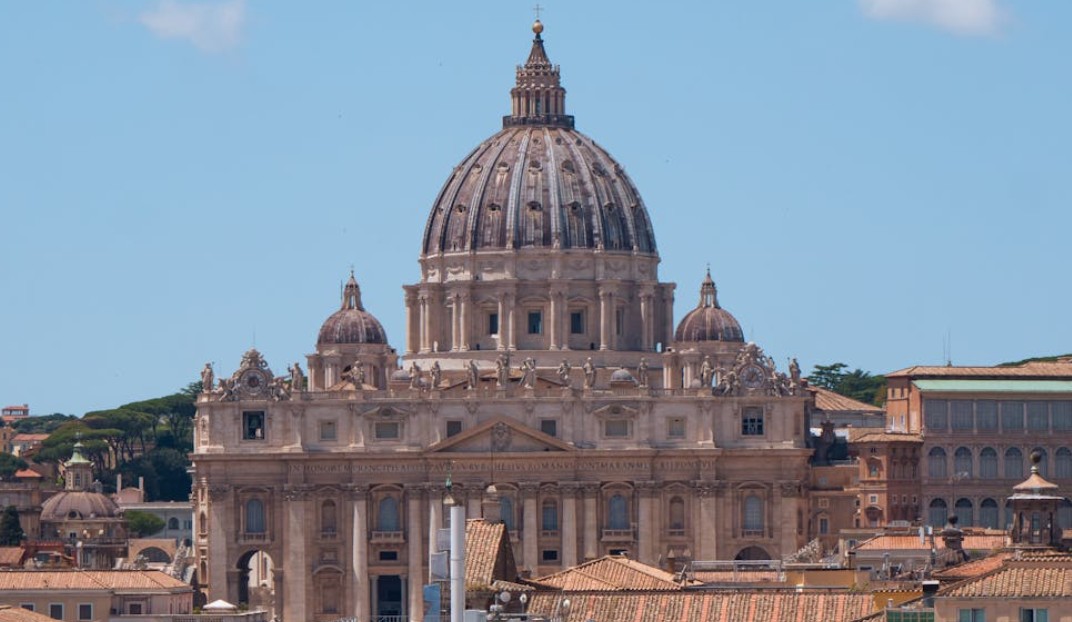
Non fui l’unico artista dei miei tempi a ritrovarmi a fare l’architetto con una formazione alle spalle assai diversa. Basti pensare al Brunelleschi, al Bramante, Raffaello o al Vignola. Tutti avviarono la loro carriera come scultori o pittori e poi riuscirono a creare straordinarie architetture. Sebbene Raffaello mai vide il suo progetto della Basilica di San Pietro messo in pratica, per un periodo della sua vita fu nominato architetto di quella nuova costruzione avviata per volere di papa Giulio II della Rovere.
E poi c’è il progetto del ponteggio che adoperai per affrescare la volta della Cappella Sistina. Era il 1508 quando feci buttare a terra quello del Bramante ricco di cordami per realizzarne uno che era molto più comodo da usare e meno complesso.
Quel ponteggio mi permise di lavorare in modo sicuro ed efficiente. Anche il mio caro amico Giorgio Vasari scrisse che questo progetto rivoluzionò il modo di armare le volte, diventando un modello per architetti e ingegneri contemporanei.
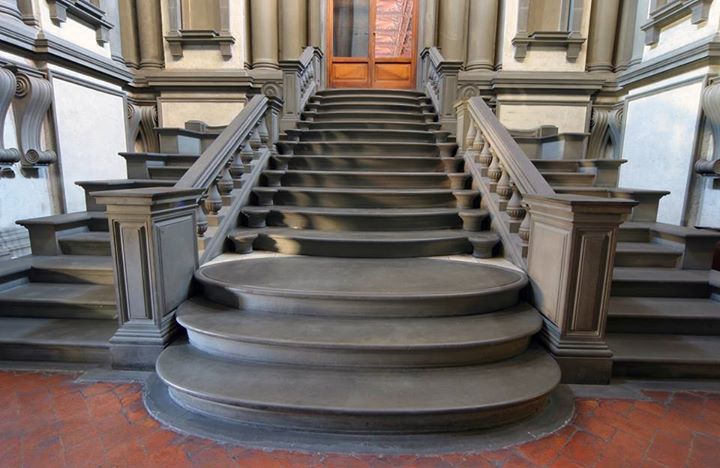
La Biblioteca Laurenziana è uno dei miei primi grandi incarichi architettonici. L’edificio avrebbe dovuto poi custodire i preziosi manoscritti della famiglia Medici, un patrimonio straordinario. Quel progetto divenne un esempio di maestosa opera rinascimentale con lo straordinario vestibolo e il salone di lettura, con i plutei sempre realizzati secondo la mia idea.
Per il momento il sempre vostro Michelangelo Buonarroti vi saluta dandovi appuntamento ai prossimi post e sui social.
I will do what I know, even though it is not my profession.
You who have been reading my writing for a long time know well that I was also an excellent architect, but this is not well known to the general public. When people talk about my works, they almost always refer only to the sculptures I left you as a legacy and the frescoes on the vault and altar wall of the Sistine Chapel.
I have done much more than this, and my architectural projects continue to inspire today.
In a letter I wrote in 1524 to Giovan Francesco Fattucci, during the complex negotiations for the Laurentian Library in Florence, I made it clear that I had accepted the assignment entrusted to me by Pope Clement VII de’ Medici: “I will do what I know, even though it is not my profession.”
About twenty years later, in a 1545 draft written on the back of a preparatory drawing for the Crucifixion of St. Peter in the Pauline Chapel, I wanted to reiterate that I was not an architect: “… and my spirit is not enough because I am not an architect.”
It wasn’t false modesty on my part, but I knew my limits. I felt like a sculptor in everything I did, and I didn’t want to fear what I didn’t master, like the art of sculpting marble.
I wasn’t the only artist of my time to find myself becoming an architect with a very different background. Just think of Brunelleschi, Bramante, Raphael, or Vignola. They all began their careers as sculptors or painters and went on to create extraordinary works of architecture. Although Raphael never saw his design for St. Peter’s Basilica realized, for a period of his life he was appointed architect of that new construction begun at the behest of Pope Julius II della Rovere.
And then there’s the design for the scaffolding I used to fresco the Sistine Chapel ceiling. It was 1508 when I had Bramante’s rigged scaffolding demolished to make way for one that was much more comfortable to use and less complex.
That scaffolding allowed me to work safely and efficiently. My dear friend Giorgio Vasari also wrote that this design revolutionized the way vaults were reinforced, becoming a model for contemporary architects and engineers.
The Laurentian Library is one of my first major architectural commissions. The building was to house the precious manuscripts of the Medici family, an extraordinary heritage. That project became an example of a majestic Renaissance work, with its extraordinary vestibule and reading room, with the plutei, also designed according to my ideas.
For now, yours truly, Michelangelo Buonarroti bids you farewell and looks forward to seeing you in future posts and on social media.

Sostienici – Support Us
Se questo blog ti piace e ti appassiona, puoi aiutarci a farlo crescere sempre più sostenendoci in modo concreto condividendo i post, seguendo le pagine social e con un contributo che ci aiuta ad andare avanti con il nostro lavoro di divulgazione. . ENGLISH: If you like and are passionate about this blog, you can help us make it grow more and more by supporting us in a concrete way by sharing posts, following social pages and with a contribution that helps us to move forward with our dissemination work.
10,00 €
Condividi:


Questo sono io





sostienici

Sostienici – Support Us
Se questo blog ti piace e ti appassiona, puoi aiutarci a farlo crescere sempre più sostenendoci in modo concreto condividendo i post, seguendo le pagine social e con un contributo che ci aiuta ad andare avanti con il nostro lavoro di divulgazione. . ENGLISH: If you like and are passionate about this blog, you can help us make it grow more and more by supporting us in a concrete way by sharing posts, following social pages and with a contribution that helps us to move forward with our dissemination work.
€10,00


