
La ninfa Ino con Bacco bambino del Bottinelli
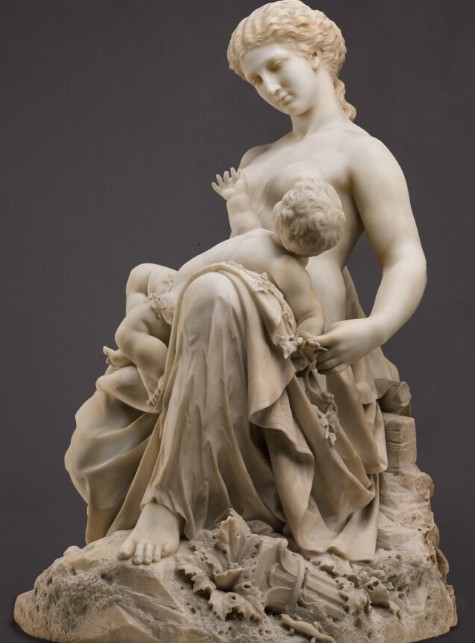
La ninfa Ino con il bambino Bacco è la più celebre scultura in marmo realizzata da Antonio Bottinelli, scolpita tra 1860 e il 1870.
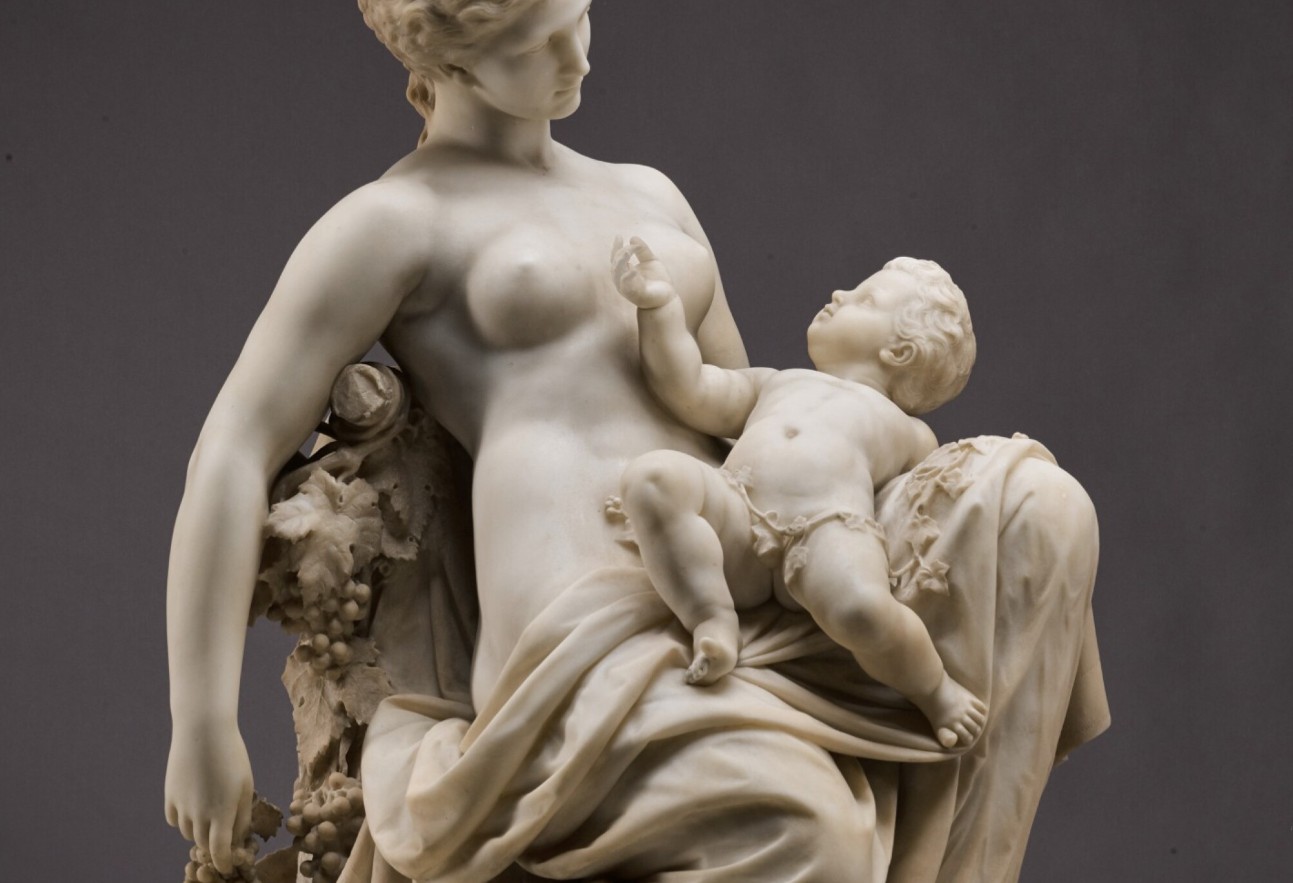
Rappresenta la ninfa Ino, figura della mitologia greca che tiene in braccio Bacco, il dio del vino e delle feste, alludendo così a una connessione simbolica tra la natura e il divino.

La scultura si distingue per la sua complessa composizione, che riflette un’accurata attenzione ai dettagli naturalistici.
Elementi come la corteccia, il fogliame e la lumaca che si arrampica sulla roccia, conferiscono all’opera una vivida sensazione di realismo e profondità scenica, enfatizzando il rapporto tra i personaggi e l’ambiente naturale circostante.

Dal punto di vista stilistico, le figure di Bottinelli presentano caratteristiche tipiche della scultura dell’Ottocento, con un forte richiamo al naturalismo e una preferenza per forme morbide e dettagliate. Senza dubbio, le forme della scultura, derivano dalla scuola di scultura milanese, dove l’attenzione ai particolari e l’espressione della vita attraverso il marmo erano pratiche comuni all’epoca.
Si possono notare anche dei paralleli con altre opere di Bottinelli, che anche se non firmate, mostrano un’impronta stilistica ben riconoscibile.
L’assenza di una firma sull’opera però solleva interrogativi riguardo all’attribuzione e non si può escludere che essa possa provenire da uno scultore appartenente alla cerchia di Bottinelli.
Questo aspetto rende la scultura non solo un’importante esempio della maestria artistica del periodo, ma anche un oggetto di studio per la ricerca sui legami tra artisti e le loro influenze.
In questo contesto, La ninfa Ino con il bambino Bacco rappresenta un’interessante fusione di mitologia, tecnica artistica e contesto storico.
Per il momento il sempre vostro Michelangelo Buonarroti vi saluta dandovi appuntamento ai prossimi post e sui social.

The Nymph Ino with the Infant Bacchus by Bottinelli
The Nymph Ino with the Infant Bacchus is Antonio Bottinelli’s most famous marble sculpture, sculpted between 1860 and 1870. It depicts the nymph Ino, a figure from Greek mythology, holding Bacchus, the god of wine and celebration, thus alluding to a symbolic connection between nature and the divine.
The sculpture is distinguished by its complex composition, which reflects meticulous attention to naturalistic detail. Elements such as bark, foliage, and a lizard climbing an ancient column lend the work a vivid sense of realism and scenic depth, emphasizing the relationship between the figures and the surrounding natural environment.
Stylistically, Bottinelli’s figures exhibit characteristics typical of 19th-century sculpture, with a strong reference to naturalism and a preference for soft, detailed forms. The sculpture’s forms undoubtedly derive from the Milanese school of sculpture, where attention to detail and the expression of life through marble were common practices of the time.
Parallels can also be noted with other works by Bottinelli, which, although unsigned, display a clearly recognizable stylistic imprint.
The absence of a signature on the work, however, raises questions regarding its attribution, and it cannot be ruled out that it may have come from a sculptor belonging to Bottinelli’s circle.
This aspect makes the sculpture not only an important example of the artistic mastery of the period, but also an object of study for research into the connections between artists and their influences.
In this context, The Nymph Ino with the Infant Bacchus represents an interesting fusion of mythology, artistic technique, and historical context.
For now, Michelangelo Buonarroti bids you farewell and invites you to join him in future posts and on social media.

Sostienici – Support Us
Se questo blog ti piace e ti appassiona, puoi aiutarci a farlo crescere sempre più sostenendoci in modo concreto condividendo i post, seguendo le pagine social e con un contributo che ci aiuta ad andare avanti con il nostro lavoro di divulgazione. . ENGLISH: If you like and are passionate about this blog, you can help us make it grow more and more by supporting us in a concrete way by sharing posts, following social pages and with a contribution that helps us to move forward with our dissemination work.
10,00 €
Condividi:


Questo sono io





sostienici

Sostienici – Support Us
Se questo blog ti piace e ti appassiona, puoi aiutarci a farlo crescere sempre più sostenendoci in modo concreto condividendo i post, seguendo le pagine social e con un contributo che ci aiuta ad andare avanti con il nostro lavoro di divulgazione. . ENGLISH: If you like and are passionate about this blog, you can help us make it grow more and more by supporting us in a concrete way by sharing posts, following social pages and with a contribution that helps us to move forward with our dissemination work.
€10,00


