
L’Adorazione del Bambino di Fra Bartolomeo
Il dipinto che vi propongo oggi è l’Adorazione del Bambino di Fra Bartolomeo, custodito nella preziosa Galleria Borghese di Roma.
Il tondo, formato tipico del Rinascimento fiorentino destinato alla devozione privata, venne realizzato realizzato dall’artista tra il 1490 e il 1495 circa.
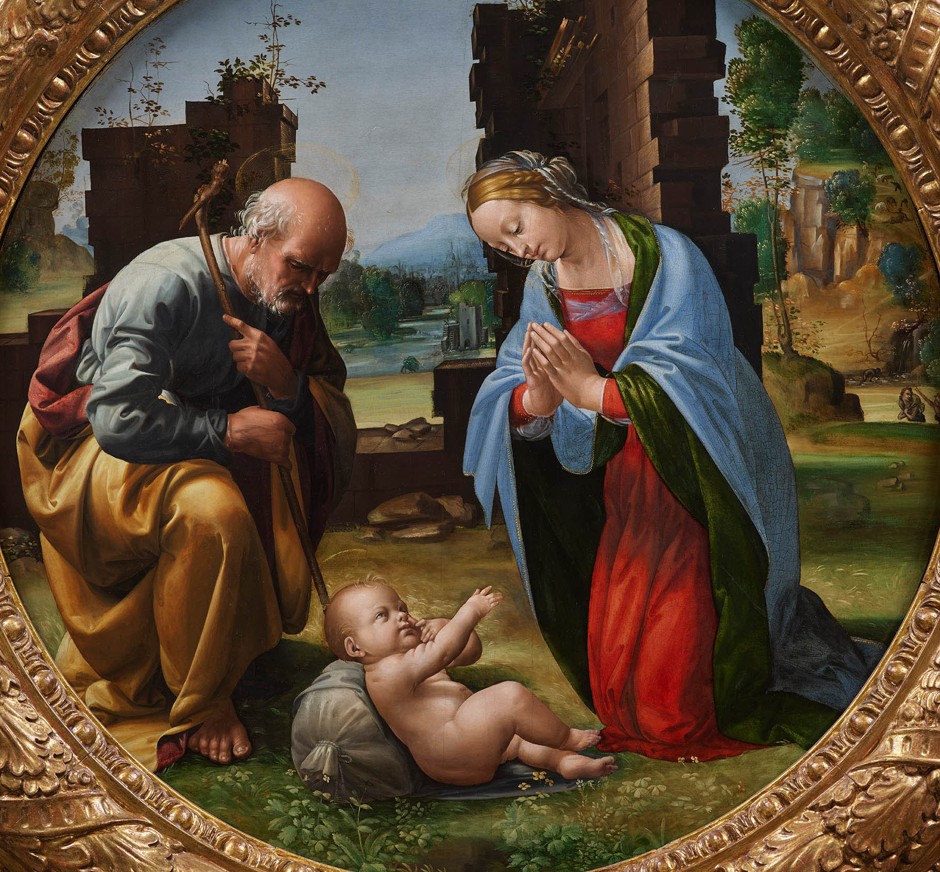
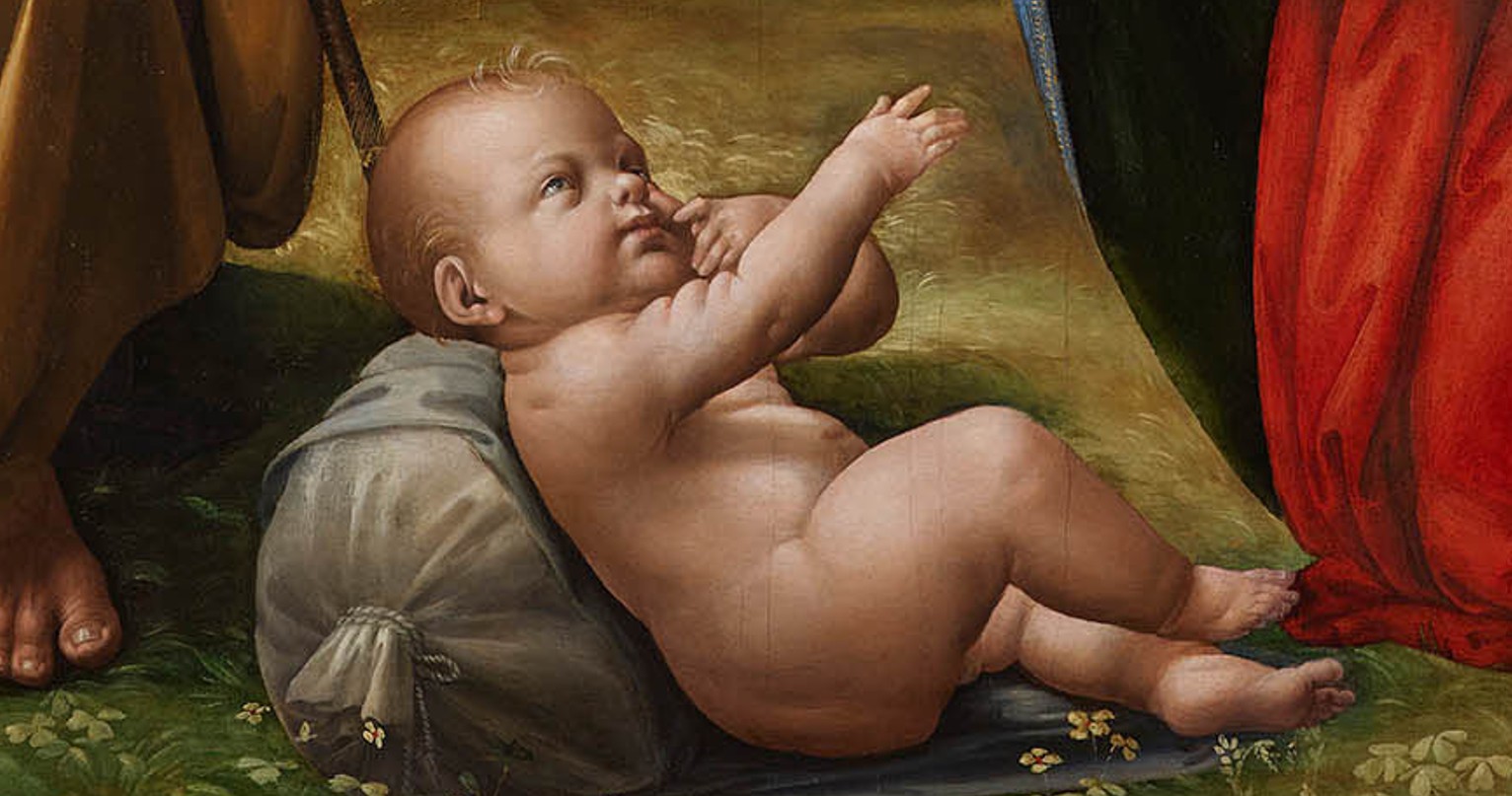
La scena si svolge in uno spazio aperto, con le figure dei protagonisti in primo piano che occupano gran parte dello spazio. Al centro Bambino Gesù è sdraiato su un cuscino, poggiato a sua volta su un sacco, e tende la mano destra verso la Vergine Maria.
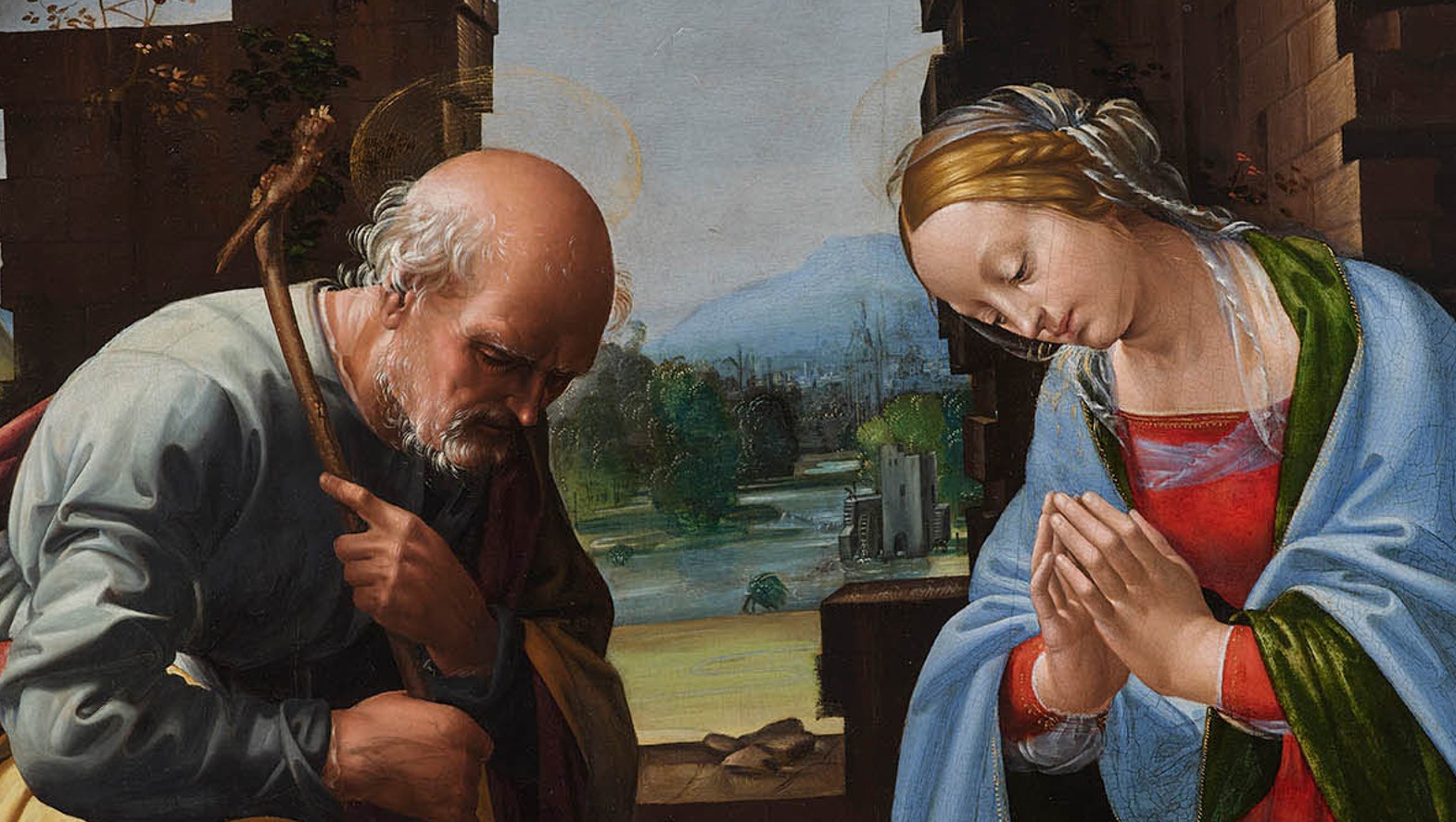
La Madonna, inginocchiata a destra, lo osserva con devozione a mani giunte. San Giuseppe è più defilato sulla destra, intento a reggere l’asinello. La disposizione dei personaggi crea una composizione simmetrica e armoniosa.
L’opera presenta alcuni dettagli di notevole fattura. Il Bambino che gioca con un Crocifisso che gli viene mostrato da un angelo è una premonizione del suo destino. Le fasce che lo avvolgono sono un’altra particolarità iconografica che riporta col pensiero al sudario he avvolgerà il suo corpo, dopo aver compiuto 33 anni d’età. Gli angeli che cantano in alto nel cielo aggiungono spiritualità e solennità alla composizione.
Fra Bartolomeo, al secolo Baccio della Porta, ha ambientato la Natività in un contesto bucolico ma con elementi di rovine che richiamano l’antica Roma, simboleggiando la fine del paganesimo e l’avvento della nuova era cristiana.
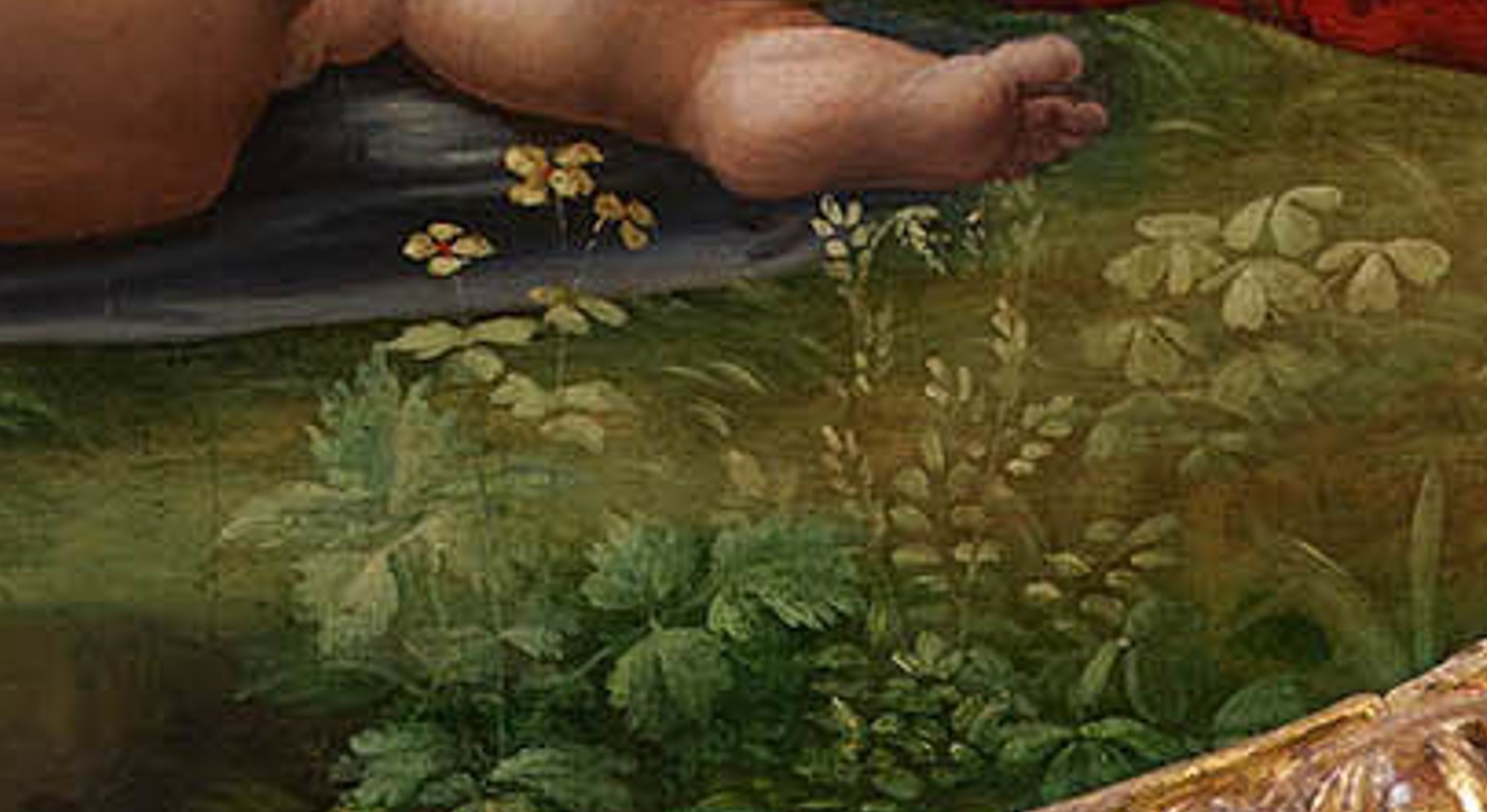
La vegetazione è resa con grande cura e dettaglio, mentre la prospettiva dello sfondo presenta alcune imprecisioni, tipiche del periodo giovanile dell’artista.
Il dipinto venne realizzato nel periodo giovanile di Fra Bartolomeo, quando l’artista stava ancora definendo il proprio stile. Si notano le influenze di importanti maestri fiorentini, come Leonardo da Vinci, in particolare nell’uso dello “sfumato” e nella resa degli effetti di luce e ombra, e di Lorenzo di Credi. Alcuni studiosi notano anche echi dello stile di Piero di Cosimo e del Perugino.
L’opera si distingue per la sua luminosità e per la stesura del colore a velature sottili. Il colore e la luce sono usati per creare un’atmosfera poetica e sacra.
Le figure sono caratterizzate da una morbidezza e una grazia che preannunciano la grandezza artistica di Fra Bartolomeo. I volti, in particolare quello della Vergine, esprimono una profonda spiritualità e un’intima tenerezza.
L’attribuzione del dipinto a Fra Bartolomeo è stata a lungo dibattuta, ma oggi è concordemente accettata, in particolare grazie agli studi di Roberto Longhi.
La datazione si colloca tra il 1490 e il 1495, un periodo cruciale nella formazione del pittore, appena terminato il suo apprendistato presso la bottega di Cosimo Rosselli.
Per il momento il sempre vostro Michelangelo Buonarroti vi saluta dandovi appuntamento ai prossimi post e sui social.
The Adoration of the Child by Fra Bartolomeo
The painting I’m featuring today is The Adoration of the Child by Fra Bartolomeo, housed in the precious Galleria Borghese in Rome.
The tondo, a typical Florentine Renaissance format intended for private devotion, was created by the artist between approximately 1490 and 1495.
The scene takes place in an open space, with the figures of the protagonists in the foreground occupying much of the space. In the center, Baby Jesus is lying on a cushion, which is in turn resting on a sack, and extends his right hand toward the Virgin Mary.
The Madonna, kneeling on the left, gazes at him devoutly with clasped hands. Saint Joseph is more discreet on the right, intent on holding the donkey. The arrangement of the figures creates a symmetrical and harmonious composition.
The work features some remarkable details. The Child playing with a crucifix shown to him by an angel is a premonition of his destiny. The swaddling clothes wrapping him are another iconographic detail that evokes the shroud that will wrap his body after he turns 33. The angels singing high in the sky add spirituality and solemnity to the composition.
Fra Bartolomeo, born Baccio della Porta, set the Nativity scene in a bucolic setting, yet with elements of ruins reminiscent of ancient Rome, symbolizing the end of paganism and the advent of the new Christian era.
The vegetation is rendered with great care and detail, while the perspective of the background presents some inaccuracies, typical of the artist’s early period.
The painting was created in Fra Bartolomeo’s youth, when he was still defining his style. The influences of important Florentine masters, such as Leonardo da Vinci, are evident, particularly in the use of sfumato and the rendering of light and shadow, and Lorenzo di Credi. Some scholars also note echoes of the style of Piero di Cosimo and Perugino.
The work is distinguished by its luminosity and the application of color in thin layers. Color and light are used to create a poetic and sacred atmosphere.
The figures are characterized by a softness and grace that foreshadow Fra Bartolomeo’s artistic greatness. The faces, particularly that of the Virgin, express profound spirituality and intimate tenderness.
The attribution of the painting to Fra Bartolomeo has long been debated, but is now widely accepted, particularly thanks to the studies of Roberto Longhi.
The painting dates to between 1490 and 1495, a crucial period in the painter’s development, just after completing his apprenticeship in Cosimo Rosselli’s workshop.
For now, Michelangelo Buonarroti bids you farewell and invites you to join him in future posts and on social media.

Sostienici – Support Us
Se questo blog ti piace e ti appassiona, puoi aiutarci a farlo crescere sempre più sostenendoci in modo concreto condividendo i post, seguendo le pagine social e con un contributo che ci aiuta ad andare avanti con il nostro lavoro di divulgazione. . ENGLISH: If you like and are passionate about this blog, you can help us make it grow more and more by supporting us in a concrete way by sharing posts, following social pages and with a contribution that helps us to move forward with our dissemination work.
10,00 €
Articoli
Sostienici – Support Us
Se questo blog ti piace e ti appassiona, puoi aiutarci a farlo crescere sempre più sostenendoci in modo concreto condividendo i post, seguendo le pagine social e con un contributo che ci aiuta ad andare avanti con il nostro lavoro di divulgazione. . ENGLISH: If you like and are passionate about this blog, you can help us make it grow more and more by supporting us in a concrete way by sharing posts, following social pages and with a contribution that helps us to move forward with our dissemination work.
10,00 €
Condividi:


Questo sono io





sostienici

Sostienici – Support Us
Se questo blog ti piace e ti appassiona, puoi aiutarci a farlo crescere sempre più sostenendoci in modo concreto condividendo i post, seguendo le pagine social e con un contributo che ci aiuta ad andare avanti con il nostro lavoro di divulgazione. . ENGLISH: If you like and are passionate about this blog, you can help us make it grow more and more by supporting us in a concrete way by sharing posts, following social pages and with a contribution that helps us to move forward with our dissemination work.
€10,00


