

Il Satiro Danzante di Galleria Borghese
Tra le sale di Galleria Borghese è custodito il Satiro Danzante che fu rinvenuto durante gli scavi effettuati a Monte Calvo in Sabina nel 1824.
La scultura realizzata in marmo pentelico risale al II secolo d. C. e rappresenta un satiro stante completamente privo di vesti, con tanto di coda di cavallo.
Sta compiendo un passo di danza portando avanti il piede sinistro mentre suona i cembali, levando le braccia verso l’alto.
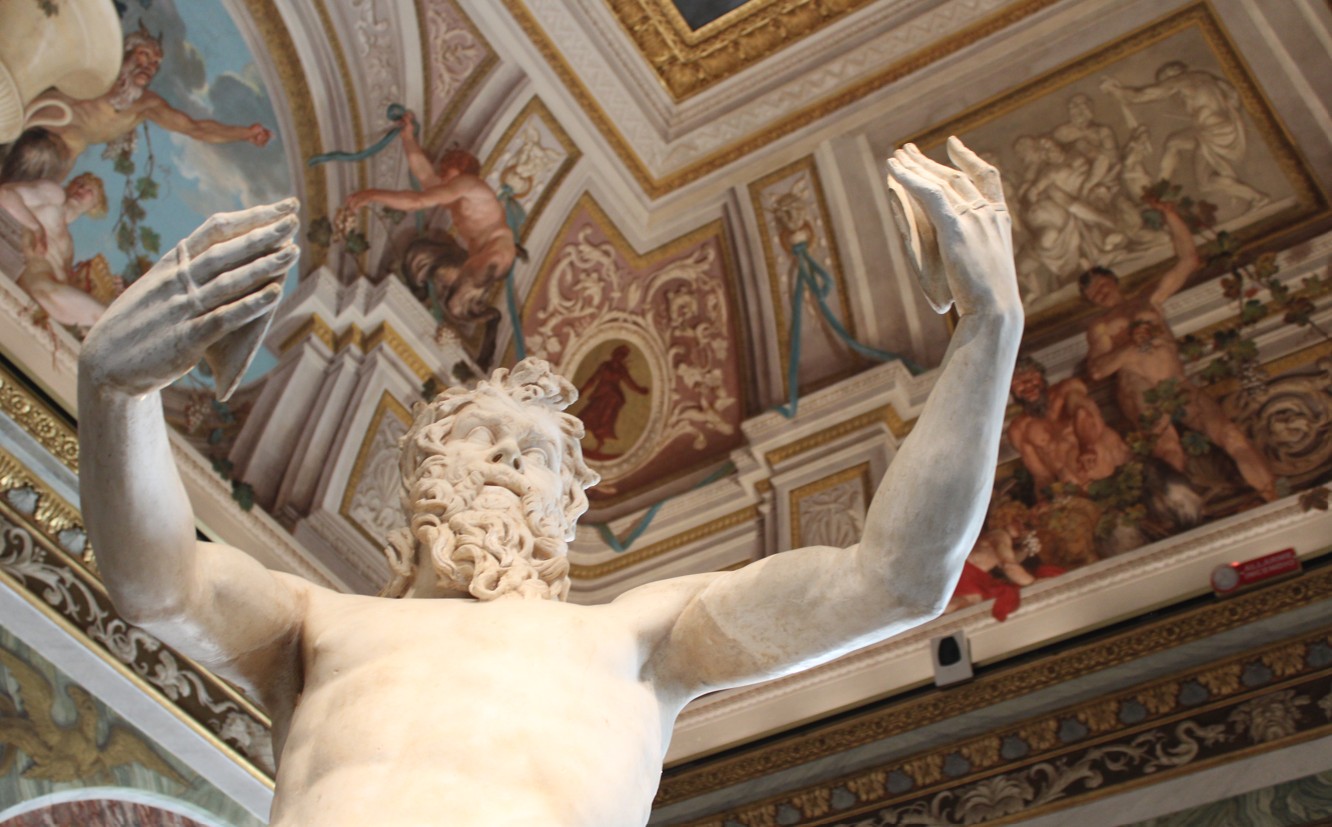
La scultura ritrae la figura di un Satiro nudo e con tanto di coda equina, impegnato in un passo di danza.
L’opera fu sottoposta a un intervento integrativo attorno al 1830, eseguito niente meno che dallo scultore danese Bertel Thorvaldsen. Ad essere aggiunte furono la parte inferiore del tronco, la gamba sinistra ricomposta da quattro frammenti e le braccia dall’attacco dei bicipiti.
Successivamente, nel 1834, il Satiro Danzante venne acquistato dalla famiglia Borghese e inserita nella nicchia che fino alle cessioni fatte a Napoleone, custodiva Sileno col piccolo Dioniso, oggi purtroppo appartenete al Museo del Louvre.
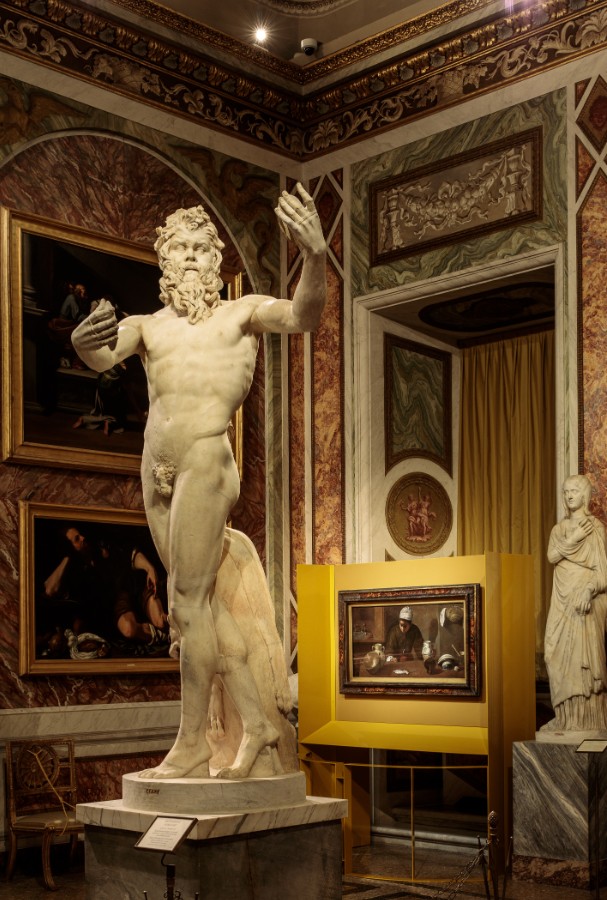
Non fu certo un caso quello di collocare il Satiro proprio lì. Infatti ben si adattava al soggetto dionisiaco degli affreschi che arricchivano la sala, realizzati su commissione di Marcantonio Borghese.
Sapete, prima dell’intervento di Thorvaldsen, il Satiro aveva molto probabilmente uno strumento a fiato tra le mani e aveva le braccia rivolte verso l’alto come suggerisce l’attaccamento originale delle braccia.
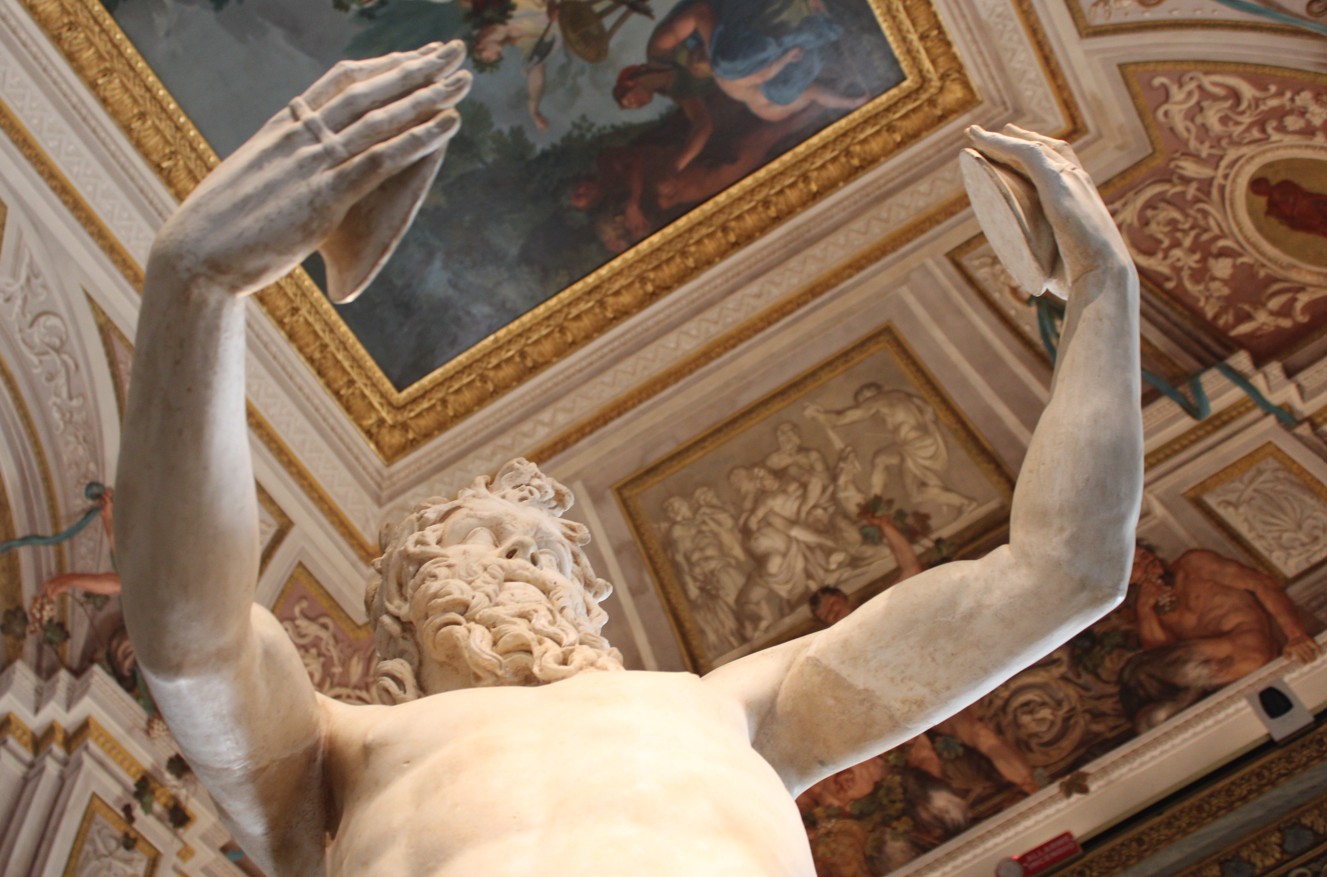
Osservate con attenzione con quanta cura lo scultore ebbe modo di definire la capigliatura scomposta del satiro, dalla quale fanno capolino le orecchie a punta.
Per il momento il sempre vostro Michelangelo Buonarroti vi saluta dandovi appuntamento ai prossimi post e sui social.
The Dancing Satyr of the Borghese Gallery
The Dancing Satyr, discovered during excavations at Monte Calvo in Sabina in 1824, is housed in the rooms of the Borghese Gallery.
The sculpture, made of Pentelic marble, dates back to the 2nd century AD and depicts a standing satyr completely naked, complete with a horse’s tail.
He is performing a dance step, bringing his left foot forward while playing cymbals and raising his arms.
The sculpture depicts the figure of a naked satyr, complete with a horse’s tail, engaged in a dance step.
The work underwent additional work around 1830, carried out by none other than Danish sculptor Bertel Thorvaldsen. The lower torso, the left leg reassembled from four fragments, and the arms from the biceps were added.
Subsequently, in 1834, the Dancing Satyr was purchased by the Borghese family and placed in the niche that, until it was sold to Napoleon, housed Silenus and the infant Dionysus. Unfortunately, today it belongs to the Louvre Museum.
The Satyr’s placement there was certainly no coincidence. In fact, it perfectly suited the Dionysian subject of the frescoes that adorned the room, commissioned by Marcantonio Borghese.
Before Thorvaldsen’s intervention, the Satyr most likely held a wind instrument in his hands and had his arms raised upward, as suggested by the original attachment of the arms.
Observe carefully how carefully the sculptor defined the satyr’s disheveled hair, from which his pointed ears peek out.
For now, yours truly, Michelangelo Buonarroti bids you farewell and says he’ll see you in future posts and on social media.

Sostienici – Support Us
Se questo blog ti piace e ti appassiona, puoi aiutarci a farlo crescere sempre più sostenendoci in modo concreto condividendo i post, seguendo le pagine social e con un contributo che ci aiuta ad andare avanti con il nostro lavoro di divulgazione. . ENGLISH: If you like and are passionate about this blog, you can help us make it grow more and more by supporting us in a concrete way by sharing posts, following social pages and with a contribution that helps us to move forward with our dissemination work.
10,00 €
Articoli
Condividi:


Questo sono io





sostienici

Sostienici – Support Us
Se questo blog ti piace e ti appassiona, puoi aiutarci a farlo crescere sempre più sostenendoci in modo concreto condividendo i post, seguendo le pagine social e con un contributo che ci aiuta ad andare avanti con il nostro lavoro di divulgazione. . ENGLISH: If you like and are passionate about this blog, you can help us make it grow more and more by supporting us in a concrete way by sharing posts, following social pages and with a contribution that helps us to move forward with our dissemination work.
€10,00


Un altro capolavoro d’inestimabile bellezza, il nostro Patrimonio italiano non ha nulla da invidiare al resto del mondo, ottime foto 👏👏👍👍👍👍👍👍👍😉😊
"Mi piace"Piace a 1 persona