
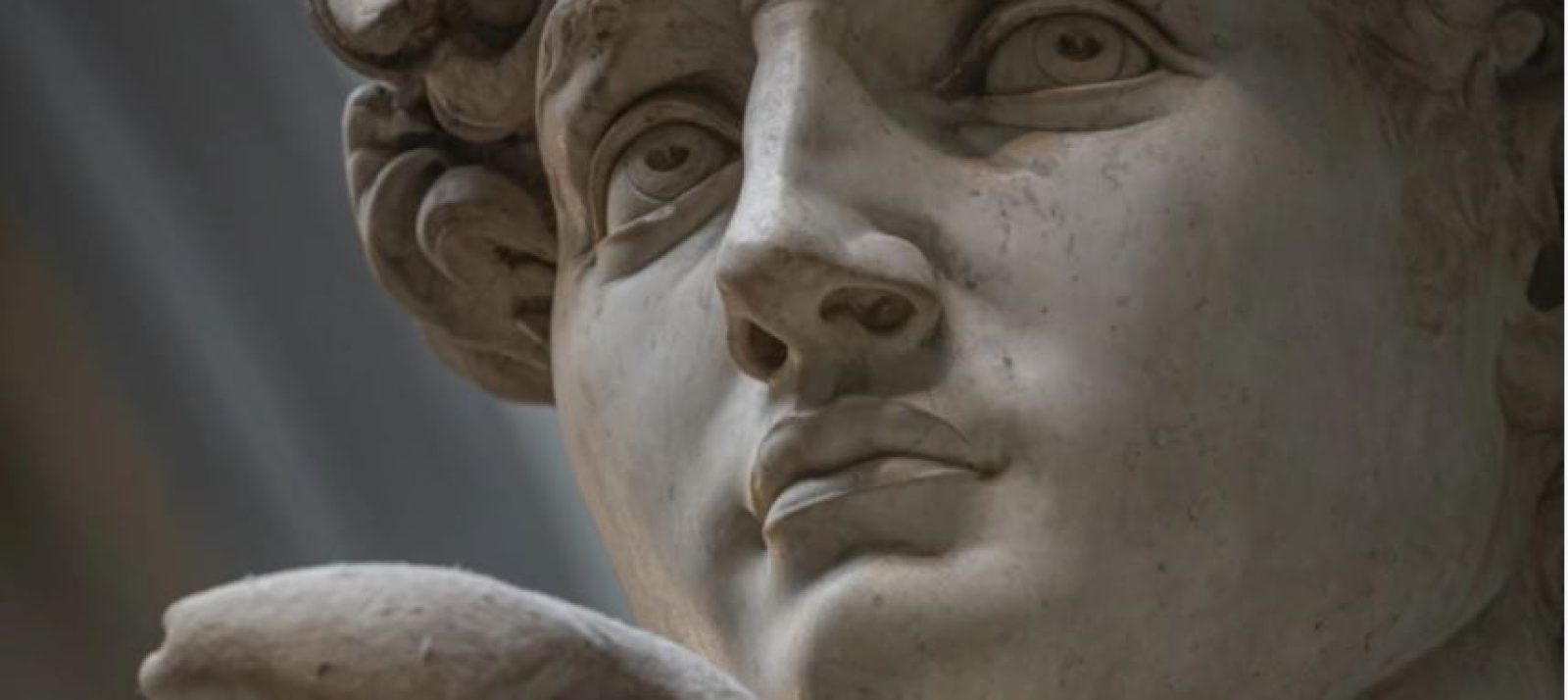
La scultura di Traiano da Minturno: Capolavoro dell’Arte Romana
La scultura che voglio proporvi oggi è uno dei capolavori di arte romana custodito al Museo Archeologico di Napoli: Traiano da Minturno.
E’ un’opera realizzata in marmo grechetto tra la fine del I e gli inizi del II secolo d.C. Fu rinvenuta a Minturno, attuale cittadina in provincia di Latina, vicino al fiume Liri-Garigliano. La testa come la vedete oggi, per metà è frutto di un rifacimento del Settecento e rappresenta l’imperatore Traiano.

Guardando con attenzione la scultura non vi sfuggirà il fatto che ci siano altre altre parti frutto di integrazioni settecentesche come per esempio la parte sinistra della corazza, l’impugnatura dell’arma e altri dettagli di non poco conto che si distinguono bene dall’originale per la tipologia differente di marmo usata.
La scultura infatti raffigura l’imperatore romano mentre leva la mano destra nel momento in cui parla ai suoi soldati. Nella mano sinistra invece tiene un cartiglio arrotolato che ricorda a chi lo guarda anche il suo ruolo di legislatore.

Traiano indossa la lorica ovvero la corazza militare riccamente decorata con raffinati rilievi che rappresentano scene mitologiche. In questo specifico caso Traiano sfoggia una lorica musculata che ne riproduce la muscolatura.
Sul braccio sinistro porta una clamide: il mantello corto e leggero spesso bordato d’oro.
Trattenuta da una fascia di cuoio, si nota la presenza del parazonio, una sorta di daga con la punta non acuminata sfoggiata dai latini non tanto come arma da offesa o difesa ma bensì come elemento distintivo dello status sociale.
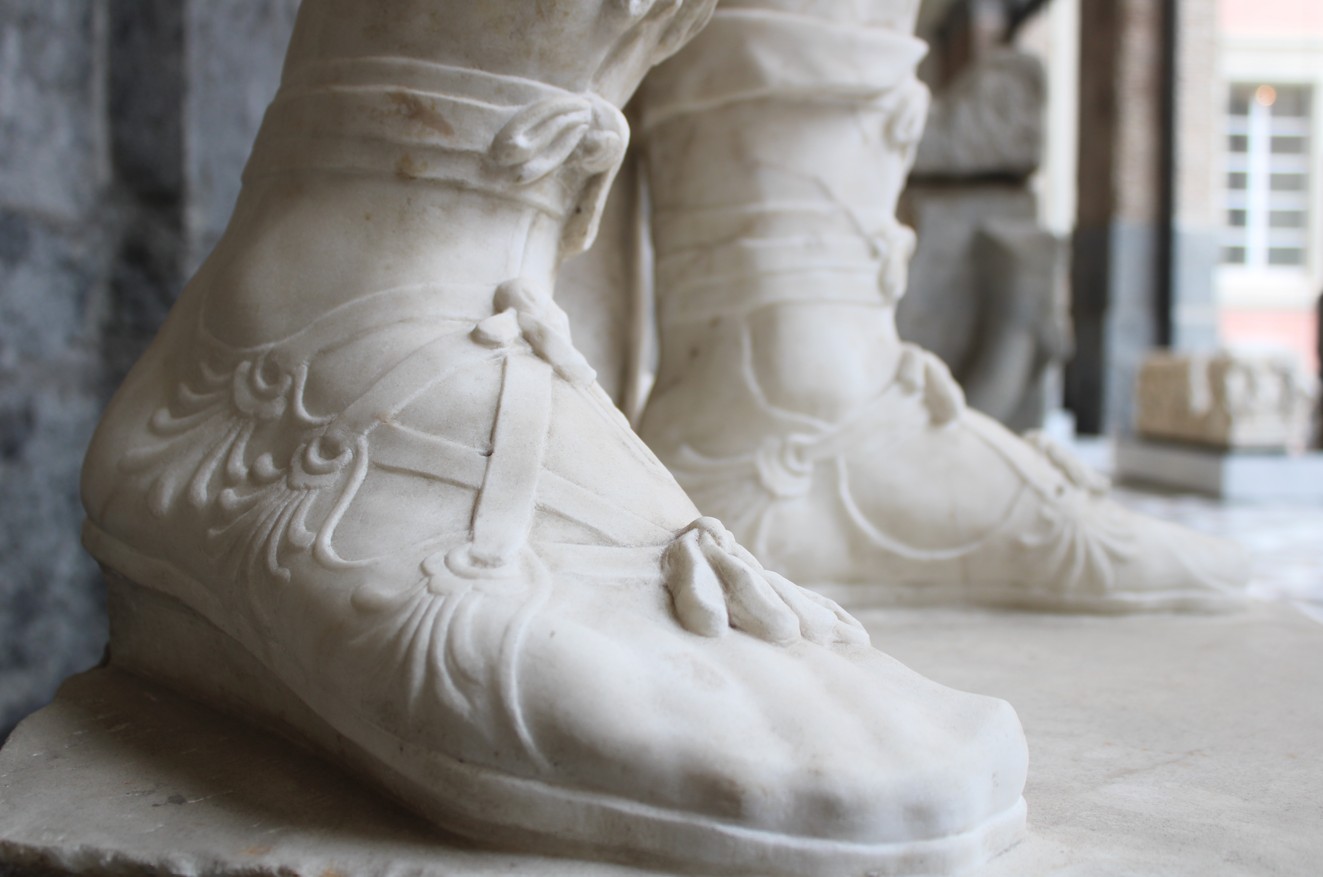
In questa scultura ci sono due elementi in particolare che mi affascinano: la corazza e i sandali.
La corazza
Meravigliose le squame istoriate che pendono dalla lorica musculata. All’altezza del petto si vede Minerva circondata da due leggiadre figure che danzano. Le due giovani hanno gli attributi di Nike, la dea della vittoria. Stanno eseguendo una danza sacra con gli scudi per evocare la sua protezione in battaglia.
Sulla lorica non mancano altre figure che richiamano diverse divinità come la civetta di Minerva, la testa di lupa che rimanda col pensiero alla dea Roma e il serpente, attributo tipico della dea Madre.

Guardate con attenzione la corazza. Nella parte più alta si vede la testa della Gorgone che fa riferimento allo scudo di Minerva.
Per il momento il sempre vostro Michelangelo Buonarroti vi saluta dandovi appuntamento ai prossimi post e sui social.
The Sculpture of Trajan of Minturno: A Masterpiece of Roman Art
The sculpture I want to feature today is one of the masterpieces of Roman art housed at the Archaeological Museum of Naples: Trajan of Minturno.
It is a work of art created in Greek marble between the late 1st and early 2nd century AD. It was discovered in Minturno, a modern-day town in the province of Latina, near the Liri-Garigliano River. Half of the head as you see it today is the result of an 18th-century remake and represents the Emperor Trajan.
If you look closely at the sculpture, you’ll notice that there are other parts resulting from 18th-century additions, such as the left side of the armor, the weapon hilt, and other notable details that are clearly distinguishable from the original due to the different type of marble used.
The sculpture depicts the Roman emperor raising his right hand as he speaks to his soldiers. In his left hand, he holds a rolled-up scroll, a reminder of his role as a legislator.
Trajan wears the lorica, a military armor richly decorated with refined reliefs depicting mythological scenes. In this specific case, Trajan sports a lorica musculata, which reproduces his musculature.
On his left arm, he wears a chlamys: a short, light cloak often edged with gold.
Held by a leather band, the parazonium is visible, a sort of blunt-tipped dagger worn by the Latins not so much as a weapon of offense or defense but rather as a sign of social status.
There are two elements in particular that fascinate me in this sculpture: the cuirass and the sandals.
The cuirass
The historiated scales hanging from the lorica musculata are marvelous. At chest height, Minerva is depicted surrounded by two graceful dancing figures. The two young women bear the attributes of Nike, the goddess of victory. They are performing a sacred dance with their shields to invoke her protection in battle.
The lorica also features other figures reminiscent of various deities, such as Minerva’s owl, the wolf’s head, reminiscent of the goddess Roma, and the serpent, a typical attribute of the Mother Goddess.
Look carefully at the armor. At the top, you can see the Gorgon’s head, a reference to Minerva’s shield.
For now, yours truly, Michelangelo Buonarroti bids you farewell and says he’ll see you in future posts and on social media.

Sostienici – Support Us
Se questo blog ti piace e ti appassiona, puoi aiutarci a farlo crescere sempre più sostenendoci in modo concreto condividendo i post, seguendo le pagine social e con un contributo che ci aiuta ad andare avanti con il nostro lavoro di divulgazione. . ENGLISH: If you like and are passionate about this blog, you can help us make it grow more and more by supporting us in a concrete way by sharing posts, following social pages and with a contribution that helps us to move forward with our dissemination work.
10,00 €
Sostienici – Support Us
Se questo blog ti piace e ti appassiona, puoi aiutarci a farlo crescere sempre più sostenendoci in modo concreto condividendo i post, seguendo le pagine social e con un contributo che ci aiuta ad andare avanti con il nostro lavoro di divulgazione. . ENGLISH: If you like and are passionate about this blog, you can help us make it grow more and more by supporting us in a concrete way by sharing posts, following social pages and with a contribution that helps us to move forward with our dissemination work.
10,00 €
Condividi:


Questo sono io




sostienici

Sostienici – Support Us
Se questo blog ti piace e ti appassiona, puoi aiutarci a farlo crescere sempre più sostenendoci in modo concreto condividendo i post, seguendo le pagine social e con un contributo che ci aiuta ad andare avanti con il nostro lavoro di divulgazione. . ENGLISH: If you like and are passionate about this blog, you can help us make it grow more and more by supporting us in a concrete way by sharing posts, following social pages and with a contribution that helps us to move forward with our dissemination work.
€10,00


Che opere incredibili!!! 👏👏👏👏👏👏👏👏👍👍👍👍👍👍👍👍
"Mi piace"Piace a 2 people
straordinaria
"Mi piace"Piace a 1 persona