

Il Castello di Sammezzano e la sua storia nella speranza presto torni visitabile
Il Castello di Sammezzano è stato acquisito dalla famiglia Moretti mediante la proposta di concordato fallimentare per 18milioni di euro.
I Moretti però non si sono limitati ad acquistare il meraviglioso castello ma sembra abbiano intenzione di investire almeno 50milioni di euro per la valorizzazione e il recupero dell’intero complesso.
Si tratta di un progetto complesso che prevede, oltre alla realizzazione di attività ricettive di lusso, anche l’apertura ai visitatori del piano nobile del Castello di Sammezzano con accessi regolamentati alla stregua di un vero e proprio museo.

Finalmente nel prossimo futuro ci sarà la possibilità di accedere a uno dei luoghi più suggestivi e particolari del Paese pensato e voluto da Ferdinando Panciatichi Ximenes d’Aragona.
Gli ambienti del Castello propongono un connubio di architetture e decorazioni che mettono assieme il gusto Occidentale con quello Orientale mentre all’esterno c’è il prezioso giardino all’inglese che si estende su 12 ettari che fu voluto dalla figlia di Ferdinando, Marianna Panciatichi Ximenes.
Il Castello di Sammezzano è un luogo fuori dal tempo che stupisce e affascina per la sua complessità.
La storia del Castello di Sammezzano
Le origini del Castello di Sammezzano sono remote tanto da risalire all’epoca romana anche se, le prime testimonianze scritte, risalgono al Medioevo. Nel corso dei secoli, la proprietà è passata attraverso diverse nobili famiglie fiorentine, tra cui si annoverano gli Altoviti e i Medici.
La sua trasformazione più sorprendente avvenne però nell’Ottocento grazie alla visionarietà di Ferdinando Panciatichi Ximenes d’Aragona. Eclettico intellettuale e architetto autodidatta, Ferdinando aveva ereditato la tenuta e volle dedicare gran parte della sua vita a riplasmare l’antica struttura per trasformarlo in un sontuoso palazzo in stile moresco.
Tra il 1853 e il 1889, Panciatichi Ximenes d’Aragona creò un’opera unica che mettesse assieme Oriente ed Occidente. Le sale del castello divennero un tripudio di colori, stucchi, mosaici e decorazioni ispirate all’architettura islamica di Spagna, India e Nord Africa.
Nomi come la Sala dei Pavoni, la Sala Spagnola, il Salone delle Stalattiti di per sé già evocano atmosfere da Mille e una Notte.
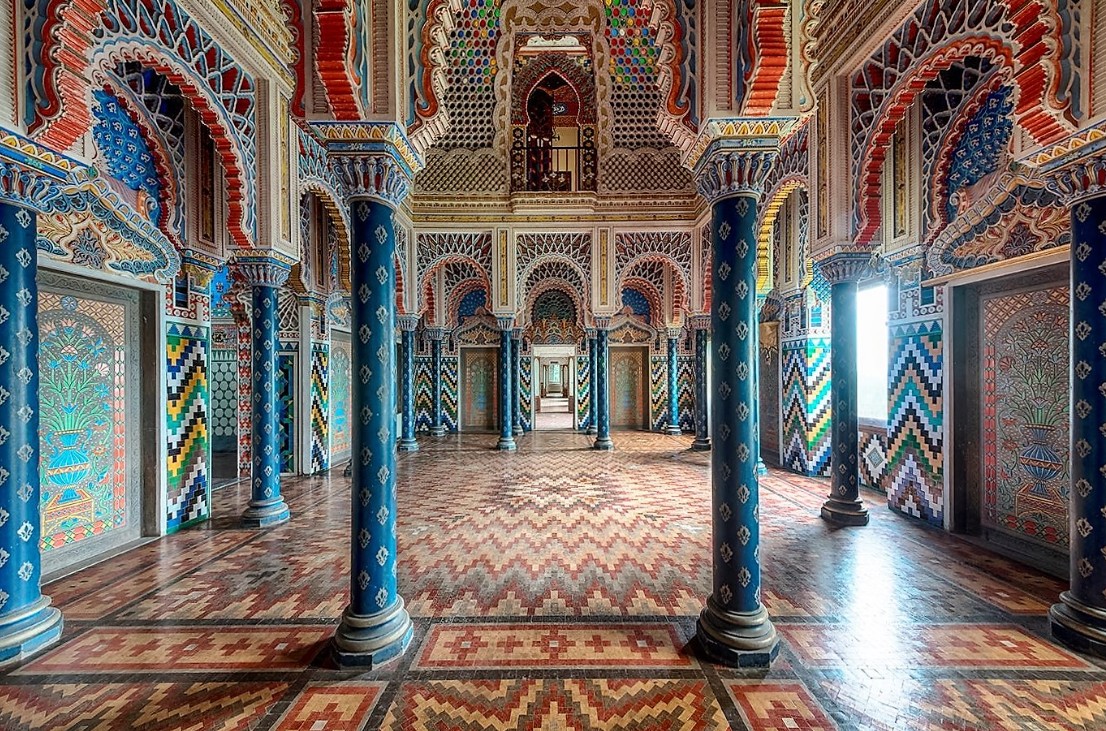
Dopo la morte del marchese, il castello visse diverse fasi. Pensate che durante la Seconda Guerra Mondiale venne adoperato alla stregua di un ospedale. Negli anni successivi, divenne un lussuoso hotel e location per eventi.
Purtroppo, negli ultimi decenni, il Castello di Sammezzano ha conosciuto un periodo di declino e abbandono, nonostante il suo immenso valore storico e artistico. È stato oggetto di aste e tentativi di recupero, ma la sua complessa situazione proprietaria ne ha ostacolato una vera rinascita fino a qualche giorno fa, quando è stato rilevato dalla famiglia Moretti.
Il fascino esotico del Castello di Sammezzano si spera torni ad essere rpesto visibile al pubblico narrando la visione straordinaria di un uomo che volle creare un angolo d’Oriente nel cuore della Toscana.
Per il momento il sempre vostro Michelangelo Buonarroti vi saluta dandovi appuntamento ai prossimi post e sui social.

Sammezzano Castle: the purchase of the Moretti family
Sammezzano Castle was acquired by the Moretti family through the proposed bankruptcy agreement for 18 million euros.
However, the Morettis did not limit themselves to purchasing the wonderful castle but it seems they intend to invest at least 50 million euros for the enhancement and recovery of the entire complex.
This is a complex project that includes, in addition to the creation of luxury accommodation activities, also the opening to visitors of the main floor of Sammezzano Castle with regulated access like a real museum.
Finally in the near future there will be the possibility of accessing one of the most evocative and particular places in the country conceived and desired by Ferdinando Panciatichi Ximenes d’Aragona. The rooms of the Castle propose a combination of architecture and decorations that combine Western and Eastern tastes, while outside there is the precious English garden that extends over 12 hectares that was commissioned by Ferdinando’s daughter, Marianna Panciatichi Ximenes.
Sammezzano Castle is a timeless place that amazes and fascinates with its complexity.
The history of Sammezzano Castle
The origins of Sammezzano Castle are so remote that they date back to Roman times, even if the first written records date back to the Middle Ages. Over the centuries, the property has passed through various noble Florentine families, including the Altoviti and the Medici.
Its most surprising transformation, however, occurred in the nineteenth century thanks to the visionary nature of Ferdinando Panciatichi Ximenes d’Aragona. An eclectic intellectual and self-taught architect, Ferdinando had inherited the estate and wanted to dedicate much of his life to reshaping the ancient structure to transform it into a sumptuous palace in Moorish style.
Between 1853 and 1889, Panciatichi Ximenes d’Aragona created a unique work that brought together East and West. The castle’s rooms became a riot of colors, stucco, mosaics and decorations inspired by the Islamic architecture of Spain, India and North Africa. Names such as the Hall of Peacocks, the Spanish Hall, the Hall of Stalactites in themselves already evoke atmospheres from One Thousand and One Nights.
After the death of the marquis, the castle went through various phases. Consider that during the Second World War it was used as a hospital. In the following years, it became a luxury hotel and event location.
Unfortunately, in recent decades, Sammezzano Castle has experienced a period of decline and abandonment, despite its immense historical and artistic value. It has been the subject of auctions and recovery attempts, but its complex ownership situation has hindered a true rebirth until a few days ago, when it was acquired by the Moretti family.
The exotic charm of Sammezzano Castle will hopefully be made visible to the public again, narrating the extraordinary vision of a man who wanted to create a corner of the Orient in the heart of Tuscany.
For the moment, yours truly, Michelangelo Buonarroti bids you farewell, making an appointment to see you in the next posts and on social media.

Sostienici – Support Us
Se questo blog ti piace e ti appassiona, puoi aiutarci a farlo crescere sempre più sostenendoci in modo concreto condividendo i post, seguendo le pagine social e con un contributo che ci aiuta ad andare avanti con il nostro lavoro di divulgazione. . ENGLISH: If you like and are passionate about this blog, you can help us make it grow more and more by supporting us in a concrete way by sharing posts, following social pages and with a contribution that helps us to move forward with our dissemination work.
10,00 €

Condividi:


Questo sono io





sostienici

Sostienici – Support Us
Se questo blog ti piace e ti appassiona, puoi aiutarci a farlo crescere sempre più sostenendoci in modo concreto condividendo i post, seguendo le pagine social e con un contributo che ci aiuta ad andare avanti con il nostro lavoro di divulgazione. . ENGLISH: If you like and are passionate about this blog, you can help us make it grow more and more by supporting us in a concrete way by sharing posts, following social pages and with a contribution that helps us to move forward with our dissemination work.
€10,00


