

Il Dipinto del giorno: il Quarto stato di Pellizza da Volpedo
Il dipinto del giorno che voglio proporvi oggi è “Il Quarto Stato” dipinto da Pellizza da Volpedo tra 1898 e il 1901 che raffigura dei braccianti marciando pacificamente per rivendicare i loro diritti.
È un’immagine potente e suggestiva che ha fatto di Pellizza un’icona del movimento operaio. In questo quadro, l’artista non si limitò a rappresentare una scena di vita, ma espresse un profondo sentimento di speranza e di riscatto.
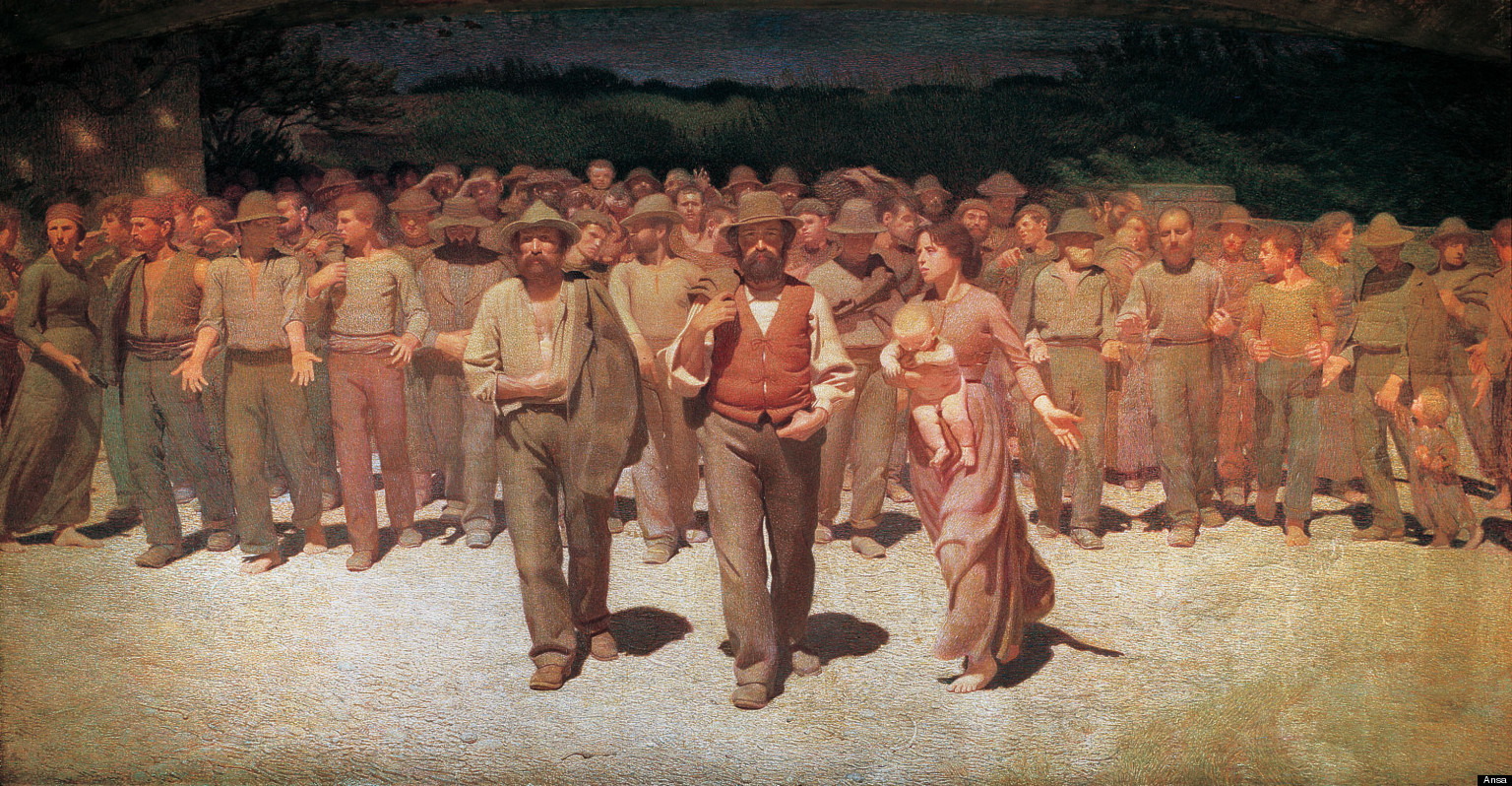
Con i suoi cinque metri e 45 di larghezza per due metri e 93 centimetri di altezza, quest’opera fu pensata dall’artista dopo aver assistito alla protesta di un nutrito gruppo di operai nella sua città di Volpedo, nella provincia di Alessandria.
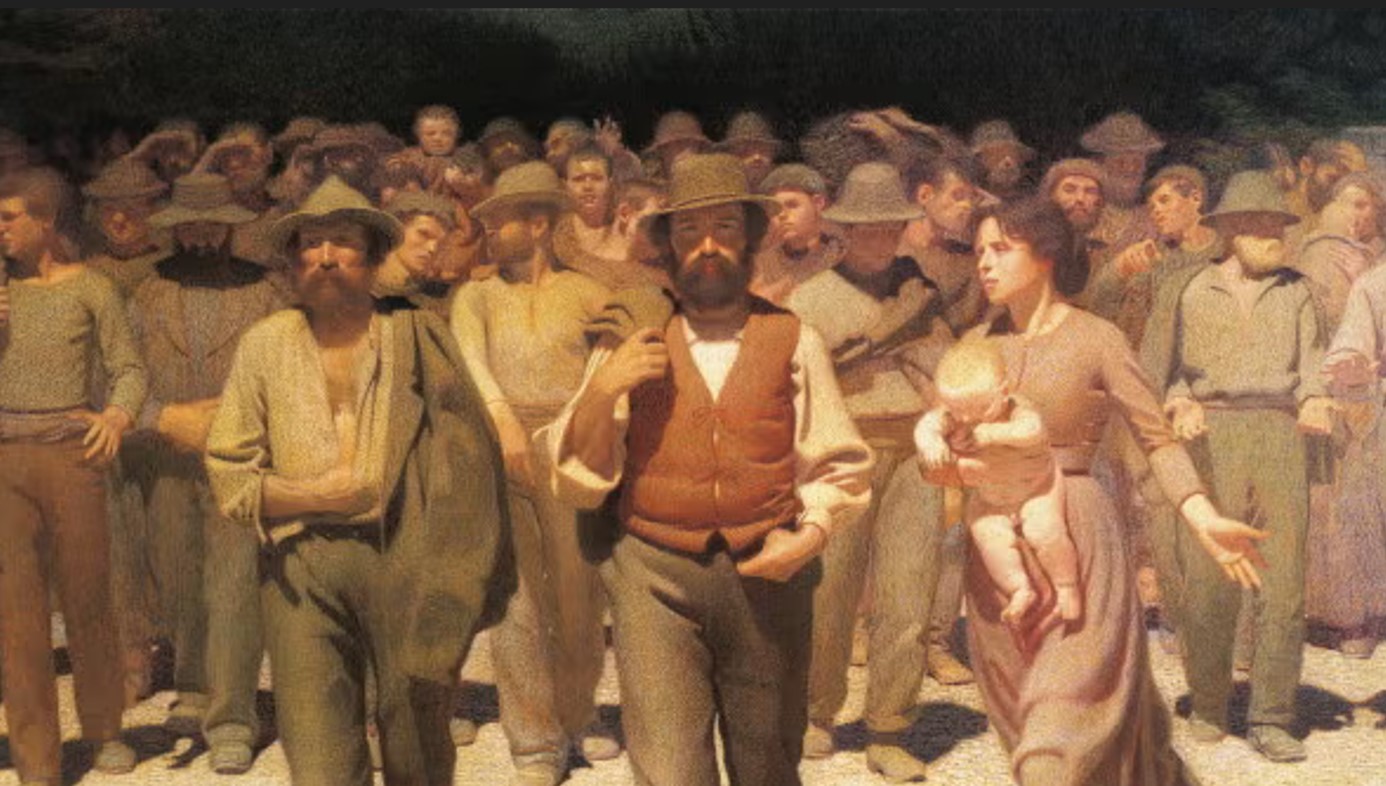
In primo piano, distaccati dagli altri personaggi che affollano la scena, compaiono due uomini e una donna che tiene un bambino in braccio.
La questione sociale
L’Italia di fine Ottocento era attraversata da profonde tensioni sociali, con crescenti rivendicazioni da parte delle classi lavoratrici, in particolare contadini e operai, che lottavano per migliori condizioni di vita e per il riconoscimento dei propri diritti.
Questo clima di contestazione e la nascita dei movimenti socialisti influenzarono profondamente Pellizza da Volpedo, artista sensibile alle tematiche sociali.
Intorno al 1891, Pellizza fu particolarmente colpito da una manifestazione di lavoratori per il caro pane.
Questa esperienza lo spinse a concepire un’opera che rappresentasse il “tumulto e l’agitazione silenziosa degli oppressi”. Un primo abbozzo di quest’idea si concretizzò nel dipinto “Ambasciatori della fame” (1892), che raffigurava tre figure in primo piano di fronte a una folla in protesta.
“La Fiumana” e l’evoluzione del concetto
Pellizza non rimase soddisfatto di questa prima versione e continuò a lavorare sul tema. Nacque così “La Fiumana” (1895-1896), un’opera più corale che rappresentava un’ondata di persone in cammino, simbolo della forza del movimento popolare.
Sul bordo della tela, Pellizza scrisse un poema che esprimeva il senso di inarrestabile avanzata dell’umanità assetata di giustizia.
Il Quarto Stato
Insoddisfatto anche di “La Fiumana”, Pellizza intraprese un lungo e meticoloso lavoro che lo portò alla realizzazione de “Il Quarto Stato”. Iniziò a lavorarci nel 1898 e lo completò nel 1901.

Inizialmente l’opera aveva il titolo di “Il cammino dei lavoratori”, ma l’artista decise di cambiarlo per sottolineare il riferimento al “Quarto Stato”, termine che all’epoca indicava il proletariato, la classe lavoratrice emergente che rivendicava un proprio ruolo nella società.
L’espressione “Quarto Stato” si riferisce alla classe dei lavoratori, in contrapposizione ai tre “stati” nobiltà, clero e borghesia che avevano caratterizzato la società pre-rivoluzionaria francese. Con la rivoluzione industriale, il termine divenne sinonimo di proletariato.
La luce gioca un ruolo fondamentale, illuminando frontalmente le figure in primo piano, conferendo loro monumentalità e importanza, quasi a volerle elevare a icone della dignità del lavoro.
Dietro le figure principali, una folla compatta segue con lo stesso piglio risoluto. Non si tratta di una massa indistinta, ma di individui riconoscibili, probabilmente abitanti di Volpedo, il paese natale dell’artista.
Pellizza volle così rappresentare una parte della società che aveva “sofferto assai” e che ora rivendicava i propri diritti con una lotta “serena, calma e ragionata”.
Il dipinto si trova nella Galleria di Arte Moderna di Milano.
Per il momento il sempre vostro Michelangelo Buonarroti vi saluta dandovi appuntamento ai prossimi post e sui social.
Painting of the day: The Fourth Estate by Pellizza da Volpedo
The painting of the day that I want to propose to you today is “The Fourth Estate” painted by Pellizza da Volpedo between 1898 and 1901, which depicts laborers marching peacefully to claim their rights.
It is a powerful and evocative image that made Pellizza an icon of the labor movement. In this painting, the artist did not limit himself to representing a scene of life, but expressed a profound feeling of hope and redemption.
With its five meters and 45 in width by two meters and 93 centimeters in height, this work was conceived by the artist after witnessing the protest of a large group of workers in his city of Volpedo, in the province of Alessandria.
In the foreground, detached from the other characters that crowd the scene, appear two men and a woman holding a child in her arms.
The social question
Italy at the end of the 19th century was experiencing deep social tensions, with growing demands from the working classes, especially farmers and workers, who were fighting for better living conditions and for the recognition of their rights.
This climate of protest and the birth of socialist movements profoundly influenced Pellizza da Volpedo, an artist sensitive to social issues.
Around 1891, Pellizza was particularly struck by a workers’ demonstration over the high price of bread.
This experience prompted him to conceive a work that would represent the “tumult and silent agitation of the oppressed”. A first draft of this idea materialized in the painting “Ambassadors of Hunger” (1892), which depicted three figures in the foreground in front of a protesting crowd.
“The River” and the evolution of the concept
Pellizza was not satisfied with this first version and continued to work on the theme. Thus was born “La Fiumana” (1895-1896), a more choral work that represented a wave of people on the move, a symbol of the strength of the popular movement.
On the edge of the canvas, Pellizza wrote a poem that expressed the sense of the unstoppable advance of humanity thirsty for justice.
The Fourth Estate
Dissatisfied also with “La Fiumana”, Pellizza undertook a long and meticulous work that led to the creation of “Il Quarto Stato”. He began working on it in 1898 and completed it in 1901.
Initially the work had the title of “Il cammino dei lavoratori”, but the artist decided to change it to emphasize the reference to the “Fourth Estate”, a term that at the time indicated the proletariat, the emerging working class that claimed its own role in society.
The expression “Fourth Estate” refers to the working class, in contrast to the three “states” of nobility, clergy and bourgeoisie that had characterized pre-revolutionary French society. With the industrial revolution, the term became synonymous with the proletariat.
Light plays a fundamental role, frontally illuminating the figures in the foreground, giving them monumentality and importance, almost as if to elevate them to icons of the dignity of work.
Behind the main figures, a compact crowd follows with the same resolute attitude. It is not an indistinct mass, but recognizable individuals, probably inhabitants of Volpedo, the artist’s hometown.
Pellizza thus wanted to represent a part of society that had “suffered a lot” and that was now claiming its rights with a “serene, calm and reasoned” fight.
The painting is located in the Galleria di Arte Moderna in Milan.
For the moment, yours truly Michelangelo Buonarroti bids you farewell, making an appointment for the next posts and on social media.

Sostienici – Support Us
Se questo blog ti piace e ti appassiona, puoi aiutarci a farlo crescere sempre più sostenendoci in modo concreto condividendo i post, seguendo le pagine social e con un contributo che ci aiuta ad andare avanti con il nostro lavoro di divulgazione. . ENGLISH: If you like and are passionate about this blog, you can help us make it grow more and more by supporting us in a concrete way by sharing posts, following social pages and with a contribution that helps us to move forward with our dissemination work.
10,00 €
Articoli
Condividi:


Questo sono io





sostienici

Sostienici – Support Us
Se questo blog ti piace e ti appassiona, puoi aiutarci a farlo crescere sempre più sostenendoci in modo concreto condividendo i post, seguendo le pagine social e con un contributo che ci aiuta ad andare avanti con il nostro lavoro di divulgazione. . ENGLISH: If you like and are passionate about this blog, you can help us make it grow more and more by supporting us in a concrete way by sharing posts, following social pages and with a contribution that helps us to move forward with our dissemination work.
€10,00


Un artista che ho potuto ammirare più volte e non solo per il Quarto stato che per tematica è quello che lo ha reso noto e vicino alla classe operaia. Di Pellizza c’è un bel ritratto che mi porto nel cuore ed è “il ricordo di un dolore’ ma questa è semplicemente una leggera deviazione dal contesto del tuo articolo. Grazie per la tua analisi professionale che arricchisce sempre conoscenza e buona domenica
"Mi piace"Piace a 1 persona
Grazie, un abbraccio
"Mi piace"Piace a 1 persona