
Il Dipinto del giorno: la dolorosa Pietà di William-Adolphe Bouguerau
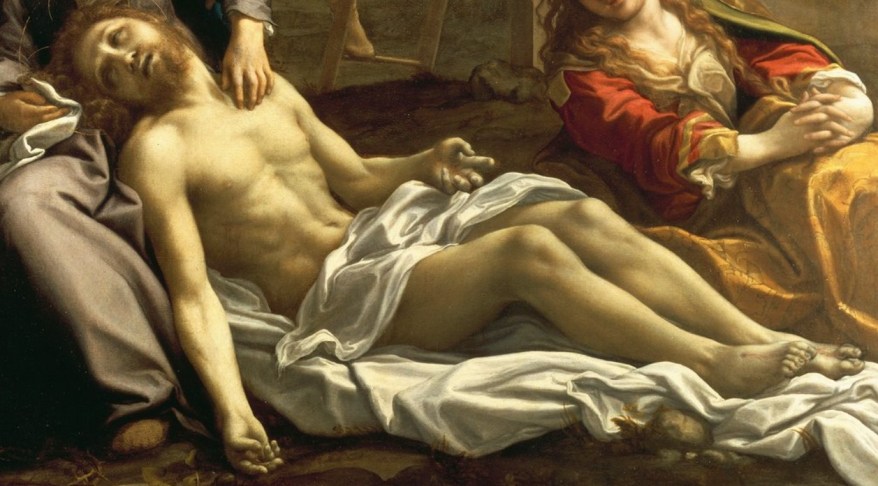
L’opera del giorno che vi propongo oggi attinente alla Pasqua è la dolorosa Pietà dipinta da William-Adolphe Bouguereau nel 1876.
Dolorosa perché è frutto del terribile vissuto dell’artista che, a un certo punto della propria esistenza, dovette fare i conti con la perdita di un figlio di sedici anni.
Nel dipinto, più che la devozione di Bourguereau, emerge la tragedia della morte del figlio maggiore Georges, avvenuta il 19 luglio del 1857.
Sopraffatto dal dolore, l’artista non riusciva più ad avere la forza di ricominciare a dipingere. Dopo qualche mese dal terribile evento, provò a buttarsi a capofitto ancora una volta nell’arte, cercando di esprimere quello che portava in petto attraverso decine e decine di schizzi sul tema della Pietà fino a quando riprese i pennelli in mano e, in soli due mesi, realizzò il mirabile dipinto di 2,30 metri d’altezza per 1,48 di larghezza.
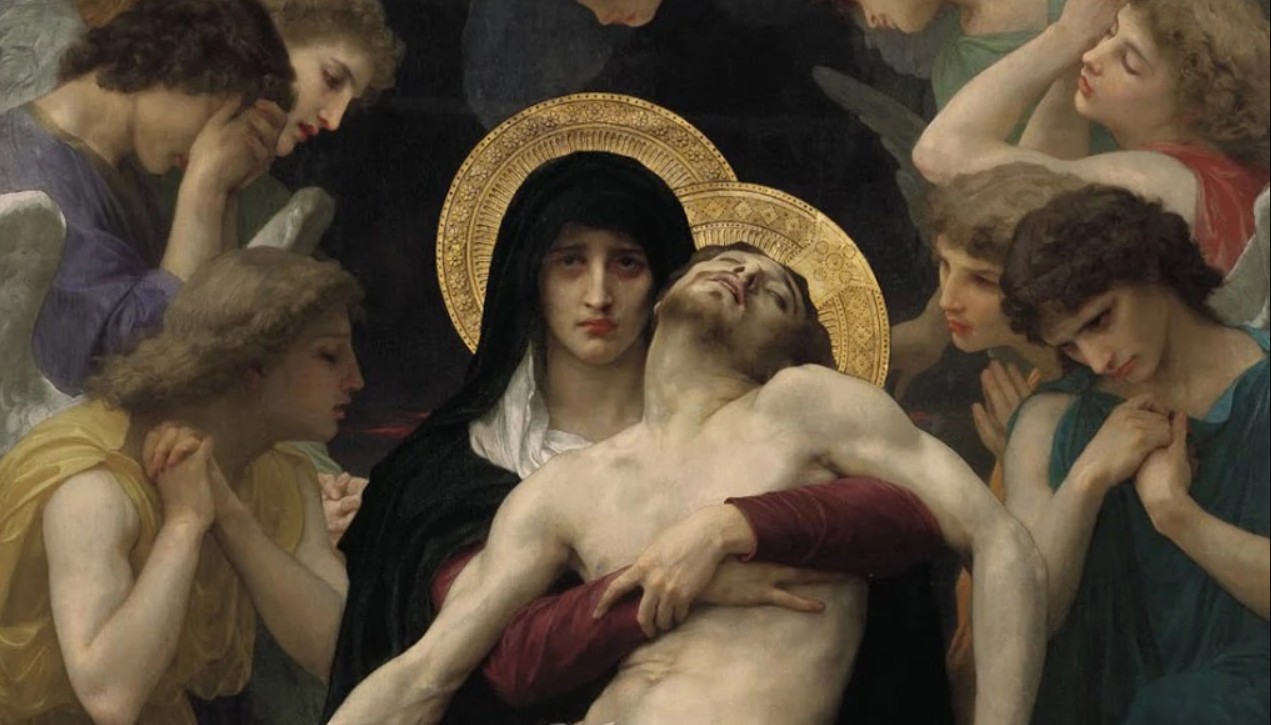
La Madonna devastata nell’animo con gli occhi arrossati e gonfi di pianto, stringe il Corpo del Figlio al petto come a volerlo trattenere ancora un po’ con sé.
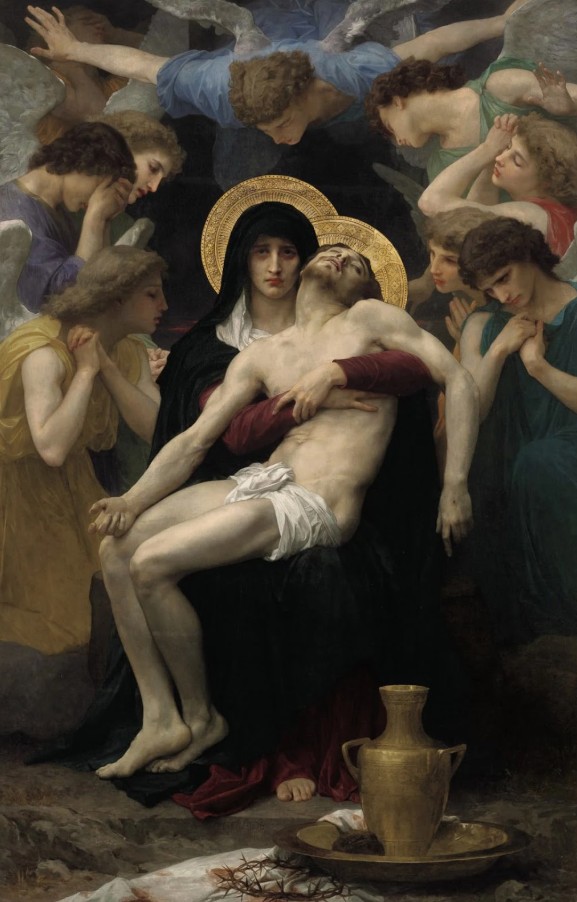
L’incrocio delle mani di Lei sopra il petto, celano alla vista la ferita sul costato. Osservando con attenzione il corpo di Cristo vi renderete conto che ci sono molte affinità con quello della Pietà Vaticana che scolpii secoli prima.
Le braccia e le gambe infatti hanno la stessa disposizione nello spazio ed è simile anche la torsione all’indietro del collo. Bouguereau però preferì lasciare il volto visibile a chi osserva l’opera mentre io lo celai alla vista.
Probabilmente l’artista ebbe modo di studiare dal vero l’opera mia nei periodi i cui soggiornò a Roma, arrivato dopo aver vinto il Prix de Rome nel 1850.

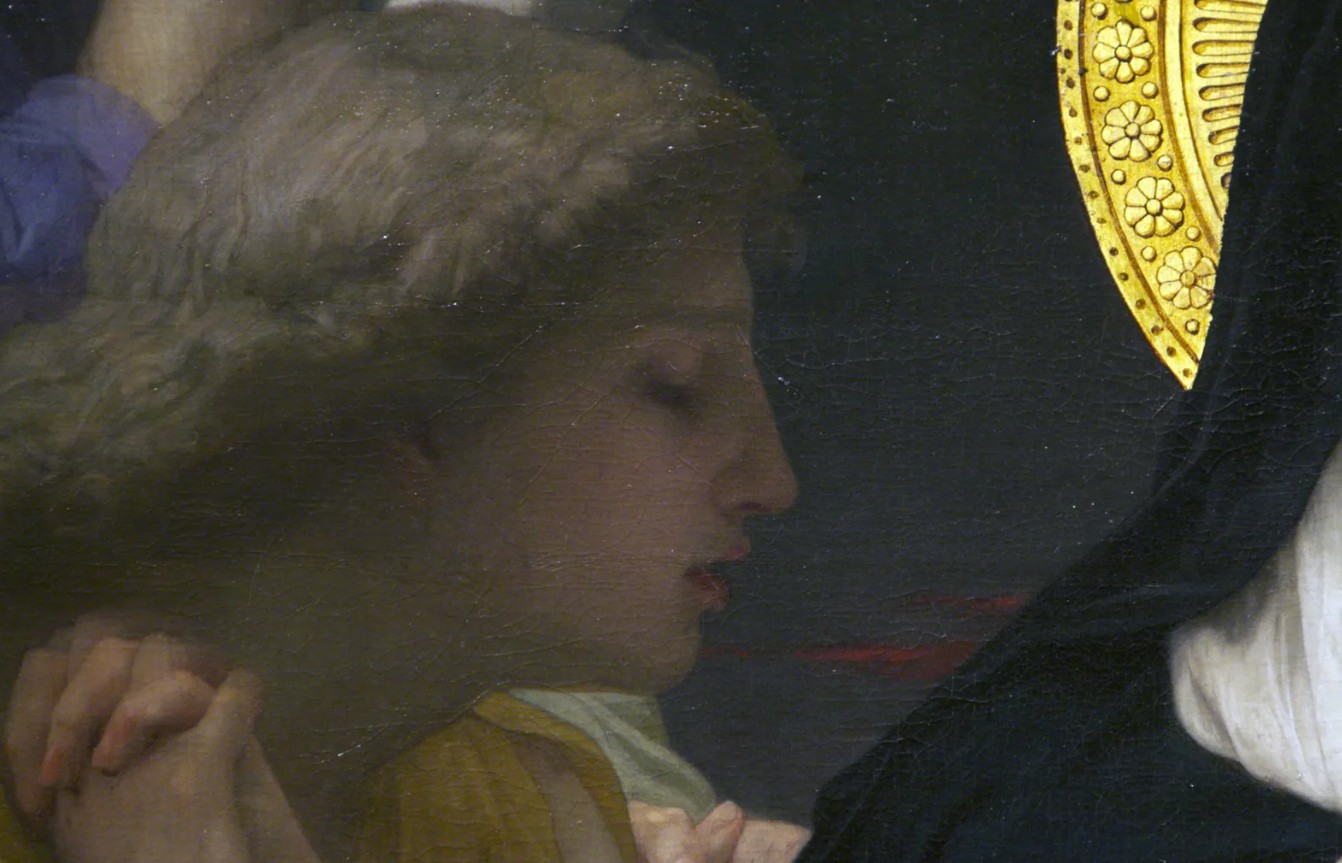
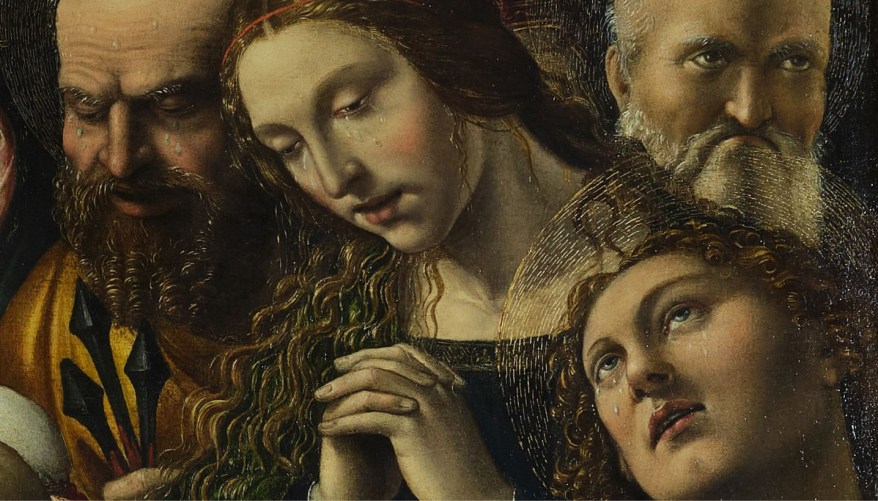
Tutt’attorno alla Vergine e a Cristo si muovono nove figure angeliche caratterizzate da volti eterei, alcuni dei quali più addolorati di altri. Una di loro si porta le mani al volto esprimendo così la propria disperazione mentre altre rimangono a mani giunte.
Il dipinto è arricchito con dettagli straordinari come la ciotola e il vaso in basso che, assieme alla corona, sono collocate sopra un telo macchiato di sangue: quello per l’appunto versato da Cristo per la salvezza di tutti.
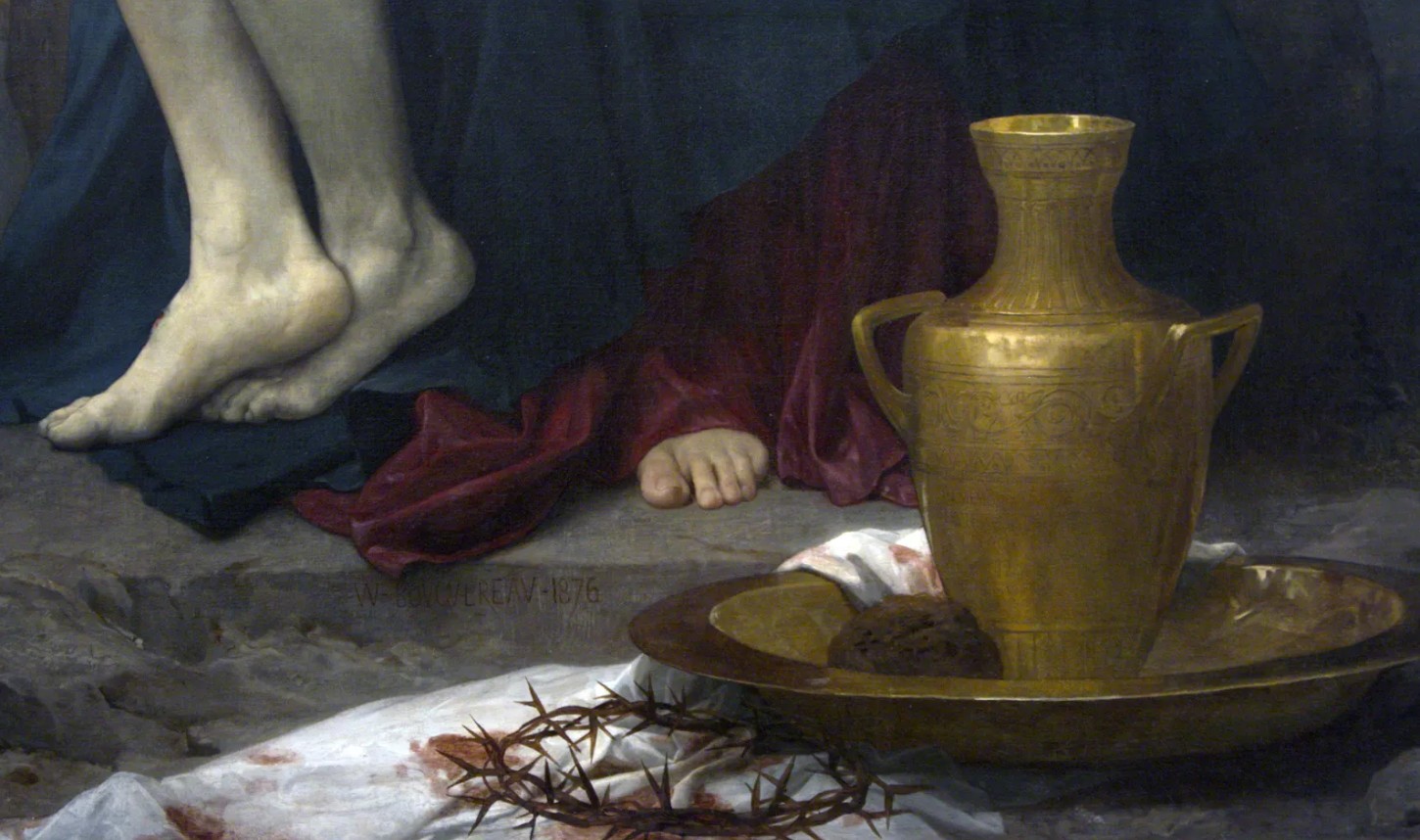
Rosenblum scrisse di questo capolavoro: “Così intensamente materiali e legati alla gravità sono gli oggetti sacri della natura morta in primo piano: uno potrebbe pungersi su questa corona di spine!”
Quando Bouguereau espose la Pietà al Salone di Parigi del 1876, furono molti gli elogi che ricevette sia da parte del pubblico che della critica soprattutto in merito alla commozione che era capace di suscitare nell’osservatore.
L’opera appartiene a una collezione privata.
Per il momento il sempre vostro Michelangelo Buonarroti vi saluta dandovi appuntamento ai prossimi post e sui social.
Painting of the day: William-Adolphe Bouguereau’s Pietà
The work of the day that I propose to you today related to Easter is the painful Pietà painted by William-Adolphe Bouguereau in 1876. Painful because it is the result of the terrible experience of the artist who at a certain point in his life had to deal with the loss of a sixteen-year-old son.
In the painting, more than Bourguereau’s devotion, the tragedy of the death of his eldest son Georges emerges, which occurred on July 19, 1857.
Overwhelmed by grief, the artist could no longer find the strength to start painting again. He tried to throw himself headlong into art once again, trying to express what he carried in his chest through dozens and dozens of sketches on the theme of the Pietà until he took up the brushes again and in just two months created the wonderful painting of 2.30 meters high by 1.48 meters wide.
The Madonna, devastated in her soul, with her eyes red and swollen from crying, holds the Body of her Son to her chest as if she wanted to hold him with her a little longer.
The crossing of her hands over her chest hides the wound on her side from view. By observing the body of Christ carefully, you will realize that there are many affinities with that of the Vatican Pietà that I sculpted centuries before.
In fact, the arms and legs have the same arrangement in space and the backward twisting of the neck is also similar. However, Bouguereau preferred to leave the face visible to those who observe the work while I hid it from view.
The artist probably had the opportunity to study my work in person during the periods in which he stayed in Rome, arriving after winning the Prix de Rome in 1850.
Nine angelic figures characterized by ethereal faces move all around the Virgin and Christ, some of which are more sorrowful than others. One of them puts her hands to her face, expressing her desperation, while others remain with clasped hands.
The painting is enriched with extraordinary details such as the bowl and the vase at the bottom which, together with the crown, are placed on a cloth stained with blood: the blood shed by Christ for the salvation of all.
Rosenblum wrote of this masterpiece: “So intensely material and bound to gravity are the sacred objects of the still life in the foreground: one could prick oneself on this crown of thorns!”
When Bouguereau exhibited the Pietà at the Paris Salon in 1876, it received much praise from both the public and critics, especially regarding the emotion it was capable of arousing in the observer.
The work belongs to a private collection.
For the moment, the ever-your Michelangelo Buonarroti bids you farewell, making an appointment with you in the next posts and on social media.

Sostienici – Support Us
Se questo blog ti piace e ti appassiona, puoi aiutarci a farlo crescere sempre più sostenendoci in modo concreto condividendo i post, seguendo le pagine social e con un contributo che ci aiuta ad andare avanti con il nostro lavoro di divulgazione. . ENGLISH: If you like and are passionate about this blog, you can help us make it grow more and more by supporting us in a concrete way by sharing posts, following social pages and with a contribution that helps us to move forward with our dissemination work.
10,00 €
Condividi:


Questo sono io





sostienici

Sostienici – Support Us
Se questo blog ti piace e ti appassiona, puoi aiutarci a farlo crescere sempre più sostenendoci in modo concreto condividendo i post, seguendo le pagine social e con un contributo che ci aiuta ad andare avanti con il nostro lavoro di divulgazione. . ENGLISH: If you like and are passionate about this blog, you can help us make it grow more and more by supporting us in a concrete way by sharing posts, following social pages and with a contribution that helps us to move forward with our dissemination work.
€10,00


