
Canova e la nascita della scultura moderna: Teseo sul Minotauro
Tutto pronto al Museo Gypsotheca Antonio Canova di Possagno per la nuova mostra-dossier dedicata al Teseo sul Minotauro, il capolavoro di Antonio Canova scolpito dall’artista a Roma nel 1783.
Proprio quella scultura segnò il passaggio dagli ideali barocchi ai principi estetici cardine del Neoclassicismo.

Oltre al calco e al modellino in gesso del gruppo scultoreo, sarà esposta per la prima volta al pubblico la testa in gesso del Teseo, affiancata da incisioni, documentazioni e pubblicazioni datate tutte relative all’opera in questione.
La mostra dal titolo ‘Canova e la nascita della scultura moderna’ aprirà al pubblico dal dal 23 marzo al 21 giugno 2025. Sarà curata dalla prof.ssa Elena Catra – membro del Comitato scientifico dell’Ente – e sponsorizzata da Continuità di idee S.R.L. di Silea.
Come accennato prima, l’occasione dell’allestimento della mostra è data dall’ingresso in collezione, grazie a un comodato gratuito, della Testa di Teseo in gesso, proveniente da una collezione privata.

La testa sarà esposta per la prima volta al pubblico nell’Ala Lazzari del museo e sarà messa a confronto con il primo modellino realizzato da Canova, come studio della scultura, e la sua versione finale in gesso.
Il percorso si completa con una sezione allestita nella Casa natale di Antonio Canova dove si troveranno incisioni, come l’acquaforte Teseo sul Minotauro (su invenzione di Antonio Canova, disegno di Salesa Bonaventura e incisa da Raffaello Morghen), documentazioni e pubblicazioni storiche.
Il periodo romano di Canova
Il periodo romano di Canova iniziò nel 1779 quando, a soli 22 anni, venne incoraggiato alla professione dall’ambasciatore veneto a Roma, Girolamo Zulian, che gli donò un blocco di marmo, lasciandogli piena libertà di scelta sul soggetto da raffigurare.

Inizialmente, Canova aveva pensato a un’ambientazione dinamica, rappresentando la Lotta di Teseo con il Minotauro, ma scelse di raffigurare il momento di quiete dell’eroe dopo la vittoria, in opposizione alla tradizione del Barocco che prediligeva scene di azione.
Teseo è seduto sul Minotauro in atto di trionfo: tiene in mano la clava con cui ha abbattuto il nemico. Il Minotauro, dal corpo umano e testa taurina, è proteso esangue, in una posa innaturale.
Il gruppo scultoreo in marmo ebbe fin da subito un enorme successo e nel 1787 venne comprato dal colto conte viennese Joseph Johann Graf von Fries, che si fece subito ritrarre da Angelika Kauffmann con la scultura sullo sfondo e commissionò l’incisione a Raffaello Morghen.
Dopo la morte prematura di Fries, l‘opera passò in Inghilterra, nelle raccolte del marchese di Londonderry, ambasciatore inglese a Vienna, e infine fu venduta al Victoria and Albert Museum di Londra, dove è tuttora conservata.

CANOVA E LA NASCITA DELLA SCULTURA MODERNA
IL TESEO SUL MINOTAURO
Possagno (TV), Museo Gypsotheca Antonio Canova (via Antonio Canova 74)
23 marzo – 21 giugno 2025
Orari:
martedì-venerdì, 9.30-18.00
sabato, domenica e festivi, 9.30-19.00
Ultimo ingresso un’ora prima della chiusura
Biglietti:
intero: €13,00; ridotto: €10
Informazioni:
T. 0423.544323; E. posta@museocanova.it
Per il momento il vostro Michelangelo Buonarroti vi saluta dandovi appuntamento ai prossimi post e sui social.
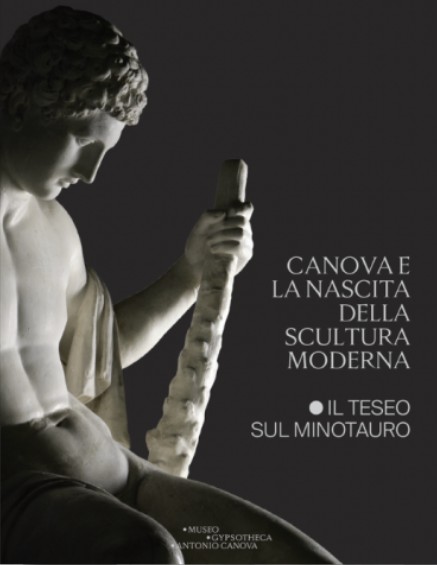
Canova and the birth of modern sculpture: Theseus and the Minotaur
Everything is ready at the Gypsotheca Antonio Canova Museum in Possagno for the new dossier exhibition dedicated to Theseus and the Minotaur, Canova’s masterpiece sculpted by the artist in Rome in 1783.
That sculpture marked the transition from Baroque ideals to the cardinal aesthetic principles of Neoclassicism.
In addition to the cast and plaster model of the sculptural group, the plaster head of Theseus will be exhibited to the public for the first time, accompanied by engravings, documentation and dated publications all relating to the work in question.
The exhibition entitled ‘Canova and the birth of modern sculpture’ will open to the public from March 23 to June 21, 2025. It will be curated by Professor Elena Catra – member of the Scientific Committee of the Institution – and sponsored by Continuità di idee S.R.L. of Silea.
As mentioned before, the occasion for the exhibition is the entry into the collection, thanks to a free loan, of the plaster Head of Theseus, from a private collection.
The head will be exhibited to the public for the first time in the Lazzari Wing of the museum and will be compared with the first model made by Canova, as a study of the sculpture, and its final plaster version.
The itinerary ends with a section set up in the birthplace of Antonio Canova where there will be engravings, such as the etching Theseus on the Minotaur (invented by Antonio Canova, drawn by Salesa Bonaventura and engraved by Raffaello Morghen), documents and historical publications.
Canova’s Roman period
Canova’s Roman period began in 1779 when, at just 22 years old, he was encouraged to take up the profession by the Venetian ambassador in Rome, Girolamo Zulian, who gave him a block of marble, leaving him full freedom to choose the subject to be depicted.
Initially, Canova had thought of a dynamic setting, representing the Fight of Theseus with the Minotaur, but he chose to depict the hero’s moment of calm after the victory, in opposition to the Baroque tradition that favored action scenes.
Theseus is seated on the Minotaur in an act of triumph: he holds in his hand the club with which he defeated the enemy. The Minotaur, with a human body and a bull’s head, is stretched out bloodless, in an unnatural pose.
The marble sculptural group was an immediate success and in 1787 it was bought by the cultured Viennese count Joseph Johann Graf von Fries, who immediately had himself portrayed by Angelika Kauffmann with the sculpture in the background and commissioned the engraving to Raffaello Morghen.
After Fries’ premature death, the work passed to England, into the collections of the Marquis of Londonderry, English ambassador to Vienna, and was finally sold to the Victoria and Albert Museum in London, where it is still preserved.
CANOVA AND THE BIRTH OF MODERN SCULPTURE
THESEUS ON THE MINOTAUR
Possagno (TV), Antonio Canova Gypsotheca Museum (via Antonio Canova 74)
March 23 – June 21, 2025
Opening hours:
Tuesday-Friday, 9.30-18.00
Saturday, Sunday and holidays, 9.30-19.00
Last admission one hour before closing
Tickets:
full price: €13.00; reduced: €10
Information:
T. 0423.544323; E. posta@museocanova.it
For now, your Michelangelo Buonarroti says goodbye and see you in the next posts and on social media.

Sostienici – Support Us
Se questo blog ti piace e ti appassiona, puoi aiutarci a farlo crescere sempre più sostenendoci in modo concreto condividendo i post, seguendo le pagine social e con un contributo che ci aiuta ad andare avanti con il nostro lavoro di divulgazione. . ENGLISH: If you like and are passionate about this blog, you can help us make it grow more and more by supporting us in a concrete way by sharing posts, following social pages and with a contribution that helps us to move forward with our dissemination work.
10,00 €
Condividi:


Questo sono io





sostienici

Sostienici – Support Us
Se questo blog ti piace e ti appassiona, puoi aiutarci a farlo crescere sempre più sostenendoci in modo concreto condividendo i post, seguendo le pagine social e con un contributo che ci aiuta ad andare avanti con il nostro lavoro di divulgazione. . ENGLISH: If you like and are passionate about this blog, you can help us make it grow more and more by supporting us in a concrete way by sharing posts, following social pages and with a contribution that helps us to move forward with our dissemination work.
€10,00


1 commento »