
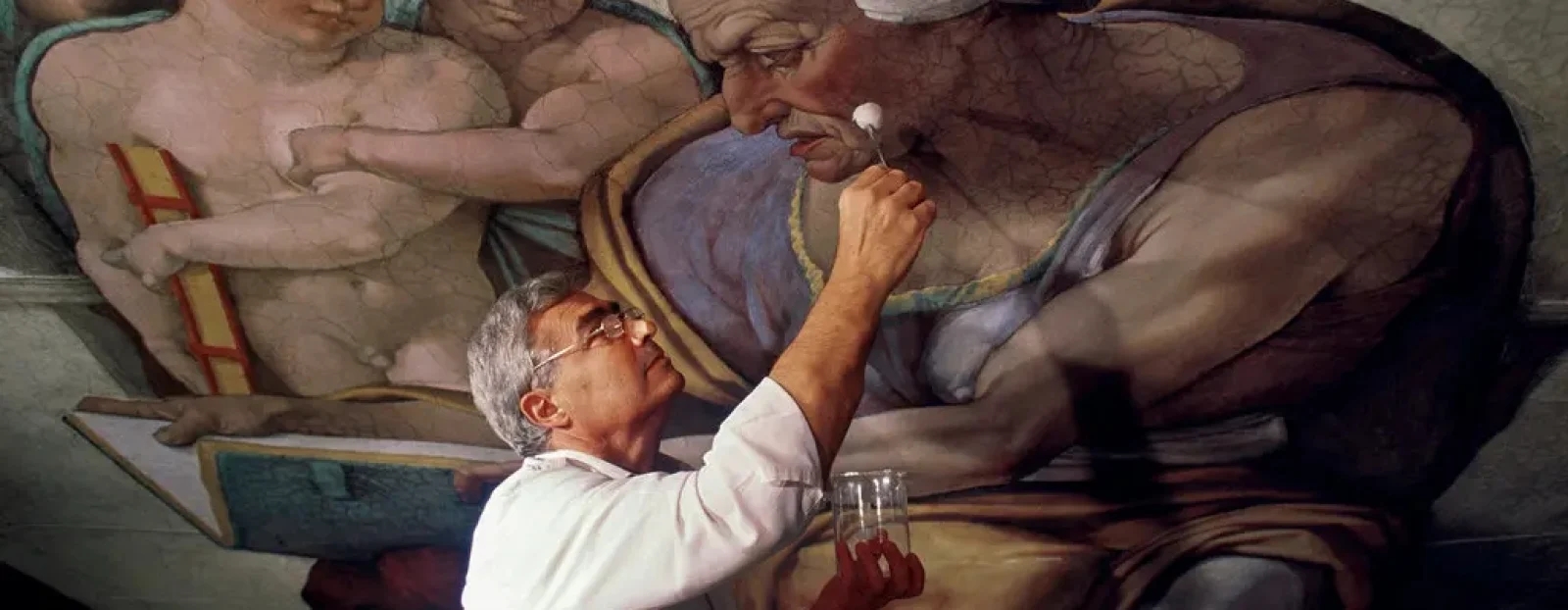
Pompei: emerso grande fregio con il corteo di Dioniso
A più di 100 anni di distanza dalla straordinaria scoperta della villa dei Misteri, emerge dagli scavi di Pompei un altro affresco che ha per soggetto il mondo classico.
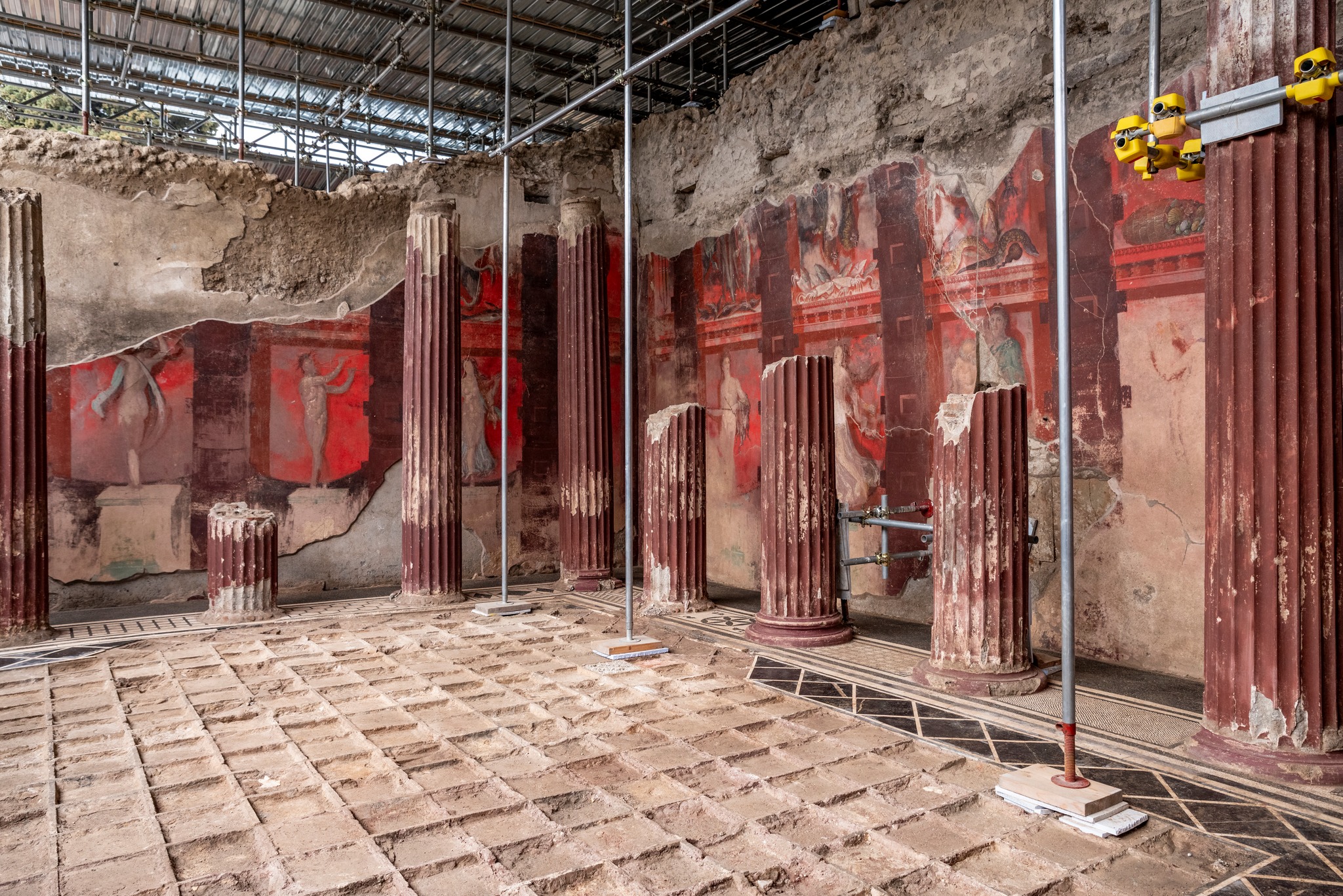
Nella sala dedicata ai banchetti, scavata in queste settimane nell’area dell’insula 10 della Regio IX, è emerso un fregio a dimensioni quasi reali, ovvero una “megalografia”, (dal greco “dipinto grande”- ciclo di pitture a grandi figure, si sviluppa sui tre lati dell’ambiente.
Il fregio mostra il corteo di Dioniso, dio del vino: Le baccanti sono state dipinte come danzatrici o cacciatrici.
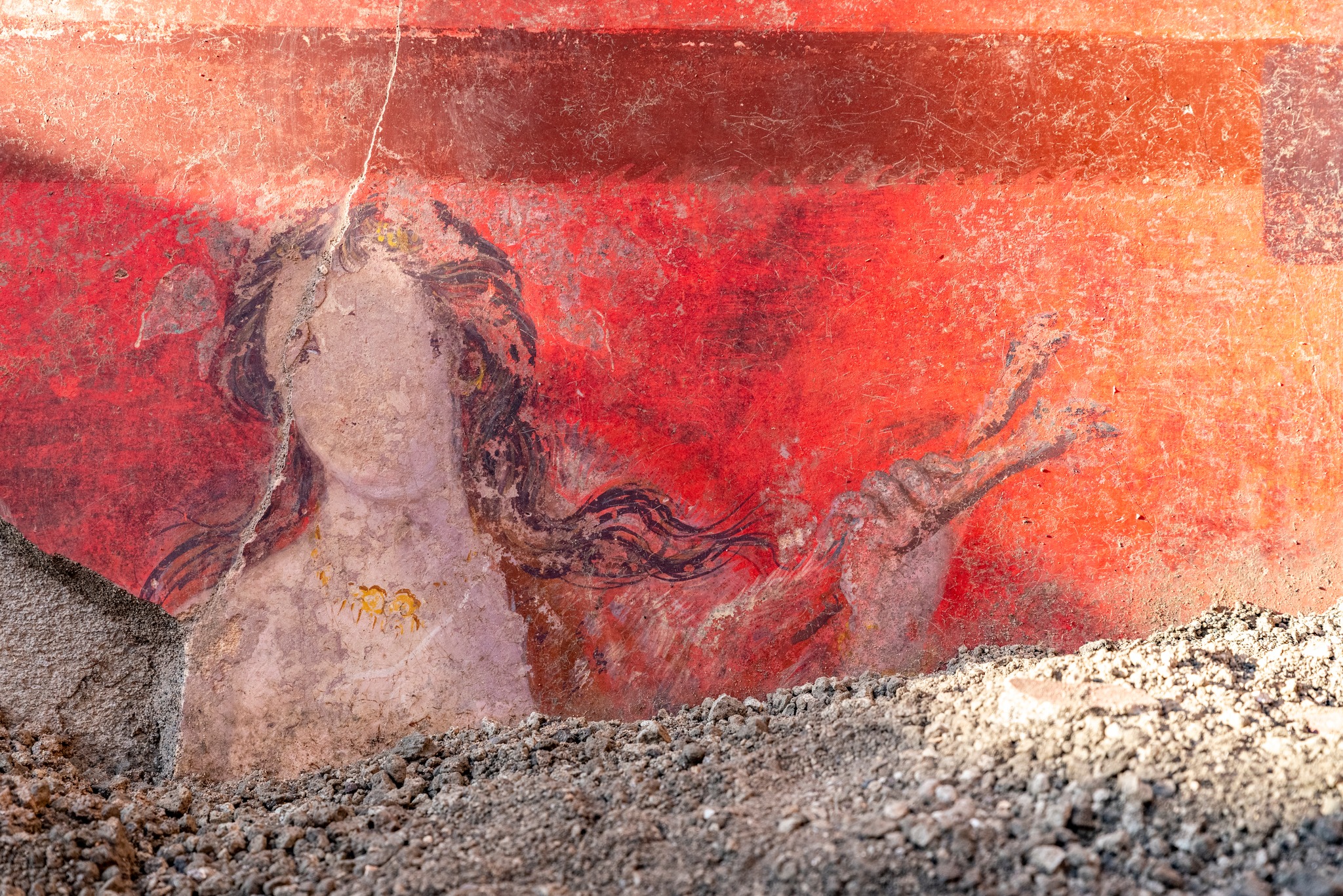
I giovani satiri con le orecchie appuntite suonano il doppio flauto mentre un altro satiro compie un sacrificio di vino (libagione) in stile acrobatico, versando dietro le proprie spalle un getto di vino da un corno potorio usato per bere in una patera, ovvero nella coppa bassa.
Al centro della composizione c’è una donna con un vecchio sileno che impugna una torcia: si tratta di una inizianda, vale a dire una donna mortale che, tramite un rituale notturno, sta per essere iniziata nei misteri di Dioniso, il dio che muore e rinasce, promettendo altrettanto ai suoi seguaci.
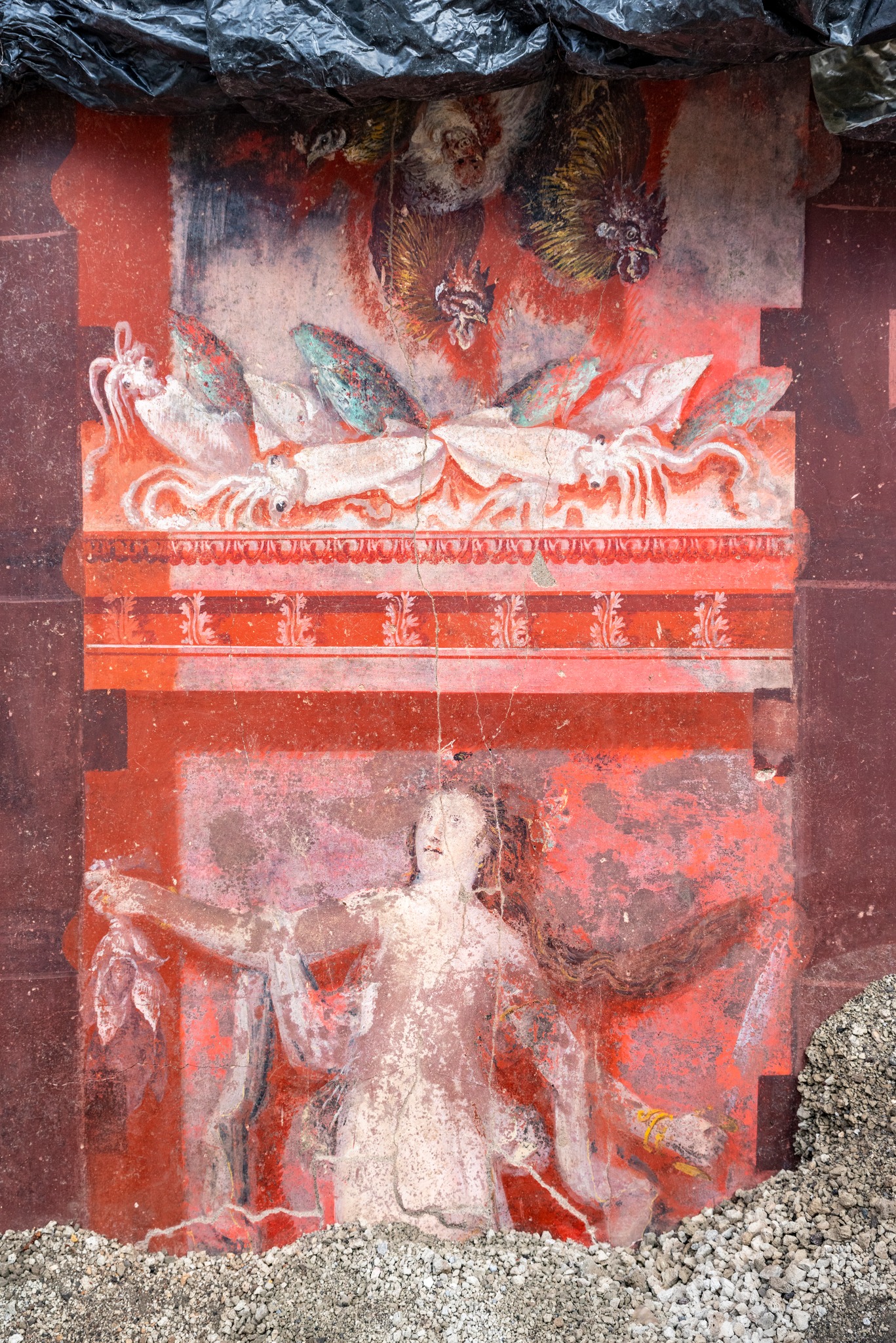
Tutte le figure del fregio sono rappresentate su piedistalli, come se fossero delle statue, mentre al tempo stesso movimenti, carnagione e vestiti le fanno apparire molto vive.
Gli archeologi hanno battezzato la dimora con il fregio “casa del Tiaso”, con riferimento al corteo di Dioniso. Nell’antichità esistevano una serie di culti, tra cui quello di Dioniso, che erano accessibili solo a chi compiva un rituale di iniziazione, come suggerito nel fregio di Pompei.
Tali culti si chiamavano misterici, perché solo gli iniziati potevano conoscerne i segreti. Spesso erano legati alla promessa di una nuova vita beata, sia in questo mondo sia in quello dell’oltretomba.
Il fregio scoperto a Pompei è attribuibile al II Stile della pittura pompeiana, che risale al I sec. a.C. Più precisamente, il fregio può essere datato agli anni 40-30 a.C. Questo significa che nel momento dell’eruzione del Vesuvio, che seppellì Pompei nel 79 d.C. sotto lapilli e ceneri, il fregio dionisiaco era già vecchio di circa un secolo.
L’unico altro esempio di una megalografia con rappresentazioni di simili rituali è il fregio detto “dei Misteri” nella omonima villa fuori le porte di Pompei, anche esso in II Stile pompeiano.
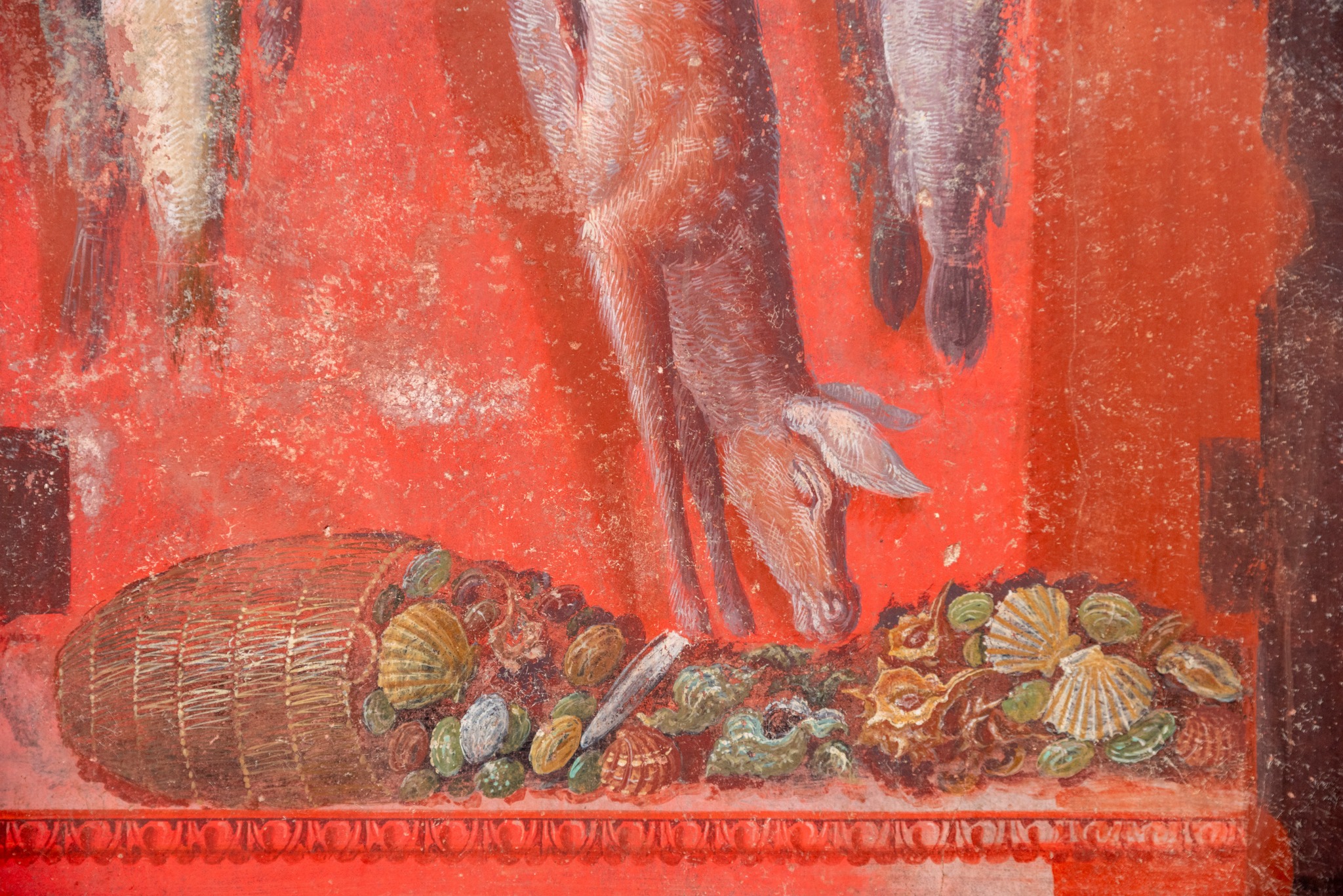
Il nuovo fregio trovato a Pompei, rispetto alla villa dei Misteri, aggiunge un altro tema all’immaginario dei rituali iniziatici di Dioniso: la caccia, che viene evocata non solo dalle baccanti cacciatrici, ma anche da un secondo, più piccolo fregio che corre al di sopra di quello con baccanti e satiri.
“La caccia delle baccanti di Dioniso a partire dalle ‘Baccanti’ di Euripide del 405 a.C., una delle più amate tragedie dell’antichità, diventa una metafora per una vita sfrenata, estatica, che mira a ‘qualcosa di diverso, di grande e di visibile’, come dice il coro nel testo di Euripide. La baccante esprimeva per gli antichi il lato selvaggio e indomabile della donna; la donna che abbandona i figli, la casa e la città, che esce dall’ordine maschile, per danzare libera, andare a caccia e mangiare carne cruda nelle montagne e nei boschi; insomma, l’opposto della donna ‘carina’, che emula Venere, dea dell’amore e delle nozze, la donna che si guarda nello specchio, che si ‘fa bella’. Sia il fregio della casa del Tiaso sia quello dei Misteri mostrano la donna come sospesa, come oscillante tra questi due estremi, due modalità dell’essere femminile a quei tempi. Sono affreschi con un significato profondamente religioso, che però qui avevano la funzione di adornare spazi per banchetti e feste.
Un po’ come quando troviamo una copia della Creazione di Adamo di Michelangelo su una parete di un ristorante italiano a New York, per creare un po’ di atmosfera. Dietro queste meravigliose pitture, con il loro gioco con illusione e realità, possiamo vedere i segni di una crisi religiosa che stava investendo il mondo antico, ma ci possiamo anche cogliere la grandezza di una ritualità che risale a un mondo arcaico, almeno fino al II millennio a.C., al Dioniso dei popoli micenei e cretesi, che era chiamato anche Zagreus, signore degli animali selvatici.”
Il direttore del Parco archeologico di Pompei, Gabriel Zuchtriegel
L’ambiente del Tiaso dionisiaco sarà visibile per il pubblico fin da subito nell’ambito delle visite al cantiere, già avviate dall’inizio dello scavo per i vari ambienti via via indagati.
Tutti i giorni dal lunedì al venerdì alle ore 11 – previa prenotazione al numero 327 2716666 – sarà possibile accedere in due gruppi da 15 persone, accompagnati dal personale di cantiere che illustrerà i principali rinvenimenti e ambienti emersi e la metodologia di scavo. Per accedere alle visite sarà necessario munirsi del regolare biglietto di ingresso al parco archeologico.
Lo scavo, in cui sono stati individuati oltre 50 nuovi ambienti distribuiti su di una superficie di oltre 1500 m2, ha restituito due case ad atrio, già parzialmente indagate nell’800, costruite in età Sannitica e trasformate nel I secolo d.C. in officine produttive: una fullonica (lavanderia) e un panificio con il forno, con gli spazi per le macine e gli ambienti per la lavorazione dei prodotti alimentari da distribuire in città.
Questa sera su Raiuno alle 21.30 Alberto Angela dedicherà una striscia di approfondimento proprio a queste ultime scoperte del Parco archeologico di Pompei.
Pompeii: large frieze with the procession of Dionysus has emerged
More than 100 years after the extraordinary discovery of the Villa of the Mysteries, another fresco has emerged from the excavations of Pompeii, which has the classical world as its subject.
In the banquet hall, excavated in recent weeks in the area of insula 10 of Regio IX, a frieze of almost life-size dimensions has emerged, that is, a “megalography” (from the Greek “large painting” – a cycle of paintings with large figures, which extends along the three sides of the room.
The frieze shows the procession of Dionysus, the god of wine: The bacchantes were painted as dancers or hunters.
Young satyrs with pointed ears play the double flute while another satyr performs a wine sacrifice (libation) in acrobatic style, pouring a jet of wine from a drinking horn used for drinking into a patera, or low cup, behind his back.
At the center of the composition is a woman with an old Silenus holding a torch: she is an initiand, that is, a mortal woman who, through a nocturnal ritual, is about to be initiated into the mysteries of Dionysus, the god who dies and is reborn, promising as well as to his followers.
All the figures in the frieze are depicted on pedestals, as if they were statues, while at the same time their movements, complexion and clothing make them appear very alive.
Archaeologists have named the house with the frieze “house of the Thiasos”, in reference to the procession of Dionysus. In ancient times there were a series of cults, including that of Dionysus, which were accessible only to those who performed an initiation ritual, as suggested in the Pompeii frieze.
These cults were called mystery cults, because only the initiates could know their secrets. They were often linked to the promise of a new blessed life, both in this world and in the afterlife.
The frieze discovered in Pompeii can be attributed to the Second Style of Pompeian painting, which dates back to the 1st century BC. More precisely, the frieze can be dated to the years 40-30 BC. This means that at the time of the eruption of Vesuvius, which buried Pompeii in 79 AD under lapilli and ash, the Dionysian frieze was already about a century old.
The only other example of a megalograph with representations of similar rituals is the frieze called “of the Mysteries” in the villa of the same name outside the gates of Pompeii, also in the Pompeian II Style.
The new frieze found in Pompeii, compared to the Villa of the Mysteries, adds another theme to the imagery of the initiatory rituals of Dionysus: the hunt, which is evoked not only by the bacchante huntresses, but also by a second, smaller frieze that runs above the one with the bacchantes and satyrs.
“The hunt of Dionysus’s bacchae, starting from Euripides’s ‘Bacchae’ of 405 BC, one of the most beloved tragedies of antiquity, becomes a metaphor for a wild, ecstatic life, aiming at ‘something different, great and visible’, as the chorus says in Euripides’ text. For the ancients, the bacchae expressed the wild and untamable side of women; the woman who abandons her children, her home and the city, who leaves the male order, to dance freely, go hunting and eat raw meat in the mountains and woods; in short, the opposite of the ‘pretty’ woman, who emulates Venus, goddess of love and marriage, the woman who looks at herself in the mirror, who ‘makes herself beautiful’. Both the frieze of the House of the Thiasos and that of the Mysteries show women as suspended, as oscillating between these two extremes, two ways of being feminine in those times. They are frescoes with a profoundly religious meaning, but here they had the function of adorning spaces for banquets and parties.
A bit like when we find a copy of Michelangelo’s Creation of Adam on the wall of an Italian restaurant in New York, to create a bit of atmosphere. Behind these wonderful paintings, with their play with illusion and reality, we can see the signs of a religious crisis that was affecting the ancient world, but we can also grasp the greatness of a ritual that dates back to an archaic world, at least until the second millennium BC, to the Dionysus of the Mycenaean and Cretan peoples, who was also called Zagreus, lord of wild animals.”
The director of the Archaeological Park of Pompeii, Gabriel Zuchtriegel
The environment of the Dionysian Thiasos will be visible to the public right away as part of visits to the construction site, already underway since the beginning of the excavation for the various environments gradually investigated.
Every day from Monday to Friday at 11 am – by reservation at 327 2716666 – it will be possible to access in two groups of 15 people, accompanied by the site staff who will illustrate the main findings and environments that emerged and the excavation methodology. To access the visits it will be necessary to obtain the regular entrance ticket to the archaeological park.
The excavation, in which over 50 new rooms were identified spread over a surface area of over 1500 m2, has revealed two atrium houses, already partially investigated in the 19th century, built in the Samnite period and transformed in the 1st century AD into production workshops: a fullonica (laundry) and a bakery with an oven, with spaces for millstones and rooms for processing food products to be distributed in the city.
This evening on Raiuno at 9:30 pm Alberto Angela will dedicate an in-depth segment to these latest discoveries of the Pompeii Archaeological Park.
Condividi:


Questo sono io





sostienici

Sostienici – Support Us
Se questo blog ti piace e ti appassiona, puoi aiutarci a farlo crescere sempre più sostenendoci in modo concreto condividendo i post, seguendo le pagine social e con un contributo che ci aiuta ad andare avanti con il nostro lavoro di divulgazione. . ENGLISH: If you like and are passionate about this blog, you can help us make it grow more and more by supporting us in a concrete way by sharing posts, following social pages and with a contribution that helps us to move forward with our dissemination work.
€10,00


Che meraviglia!! Questo sito storico non smette di regalarci meraviglie strepitose! 👏👏👏👏👍👍
"Mi piace"Piace a 1 persona
a distanza di decenni dagli inizi degli scavi, ancora regala capolavori come questo
"Mi piace"Piace a 1 persona