
La potenza di Teseo e il Centauro di Canova
La scultura del giorno che vi propongo oggi è Teseo e il Centauro di Canova che raffigura il momento in cui sta per finire la lotta tra i due, con l’oramai imminente vittoria dell’eroe greco.
Teseo sovrasta Euritone tenendolo per la gola con la mano sinistra, mentre con l’altra mano stringe la clava che di lì a poco adopererò per uccidere il nemico.
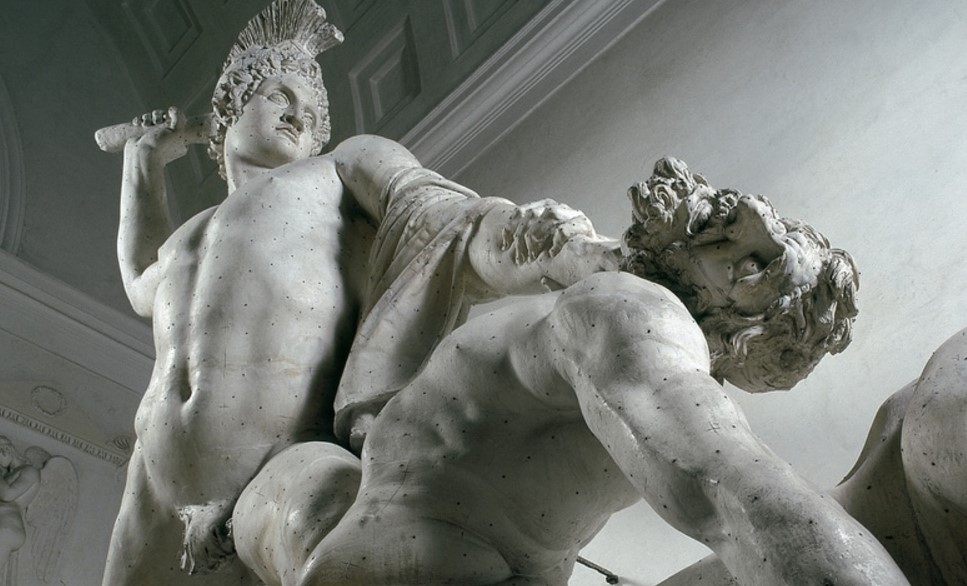
Il Centauro cerca di liberarsi dalla presa ma oramai non può più sfuggire al suo destino. Le zampe posteriori sembrano avere ancora un po’ di forza ma non possono più muoversi come vorrebbero per fuggire da quell’attacco finale.
Canova, per scolpire nel marmo tutta quella forza espressa mediante il realismo delle muscolature dei due protagonisti, studiò a lungo il progetto basandosi su studi anatomici specifici.
Purtroppo per dar forma al centauro in modo realistico ricorse a una pratica barbara. Uccise infatti un cavallo per metterlo poi in posa come desiderava e realizzarne un calco in gesso che fosse più attinente al reale possibile.

La gande opera fu commissionata all’artista dalla Repubblica Italiana nel 1804 per un costo di 10mila zecchini d’oro con l’intenzione di dedicarla a Napoleone.
La scultura però rimase nel laboratorio romano di Canova e solo nel 1821 venne comprata dall’Imperatore Francesco I d’Austria per arricchire il Theseustemple nel Volksgarten di Vienna.
A partire dal 1891, Teseo e il Centauro fu collocata definitivamente nel Kunsthistorisches Museum.

Teseo e il Centauro è il mito greco che rappresenta lo scontro tra la civiltà e la natura selvaggia, tra l’eroe e la creatura mostruosa. Teseo, fondatore di Atene era celebre per la sua forza e saggezza, incarnando l’ideale dell’eroe greco, capace di compiere imprese straordinarie.
Il Centauro invece, metà uomo e metà cavallo, erano noti per la loro forza bruta e per la loro passione per il vino.
Il gesso originale dell’opera, privo di clava, è custodito nel Museo Gypsoteca di Possagno.
Per il momento il sempre vostro Michelangelo Buonarroti vi saluta dandovi appuntamento ai prossimi post e sui social.
The Power of Theseus and the Centaur by Canova
The sculpture of the day that I propose to you today is Theseus and the Centaur by Canova which depicts the moment in which the fight between the two is about to end.
Theseus towers over Euryton holding him by the throat with his left hand, while with the other hand he holds the club that he will shortly use to kill the enemy.
The Centaur tries to free himself from the grip but by now he can no longer escape his destiny. The hind legs seem to still have some strength but they can no longer move as they would like to escape from that final attack.
Canova, to sculpt in marble all that strength expressed through the realism of the muscles of the two protagonists, studied the project for a long time based on specific anatomical studies.
Unfortunately, to give shape to the centaur in a realistic way he resorted to a barbaric practice. In fact, he killed a horse to then pose it as he wanted and make a plaster cast that was as close to reality as possible.
The great work was commissioned to the artist by the Italian Republic in 1804 for a cost of 10 thousand gold sequins with the intention of dedicating it to Napoleon.
However, the sculpture remained in Canova’s Roman laboratory and was only bought in 1821 by Emperor Francis I of Austria to enrich the Theseustemple in the Volksgarten in Vienna.
Since 1891, Theseus and the Centaur has been permanently placed in the Kunsthistorisches Museum.
Theseus and the Centaur is the Greek myth that represents the clash between civilization and wild nature, between the hero and the monstrous creature. Theseus, founder of Athens, was famous for his strength and wisdom, embodying the ideal of the Greek hero, capable of accomplishing extraordinary feats.
The Centaur, on the other hand, half man and half horse, were known for their brute strength and their passion for wine.
The original plaster cast of the work, without a club, is kept in the Museo Gypsoteca di Possagno.
For the moment, yours truly Michelangelo Buonarroti bids you farewell, making an appointment to see you in the next posts and on social media.

Sostienici – Support Us
Se questo blog ti piace e ti appassiona, puoi aiutarci a farlo crescere sempre più sostenendoci in modo concreto condividendo i post, seguendo le pagine social e con un contributo che ci aiuta ad andare avanti con il nostro lavoro di divulgazione. . ENGLISH: If you like and are passionate about this blog, you can help us make it grow more and more by supporting us in a concrete way by sharing posts, following social pages and with a contribution that helps us to move forward with our dissemination work.
10,00 €
-
6 aprile 1520: la morte di Raffaello Sanzio e la nascita di un mito immortale
🇮🇹“Qui giace Raffaello: da lui, quando visse, la natura temette d’essere vinta, ora che egli è morto, teme di morire”. Il 6 aprile 1520 Raffaello morì a soli 37 anni… 🇬🇧“Here lies Raphael: when he lived, nature feared to be conquered by him, now that he is dead, she fears to die.” On April 6,…
-
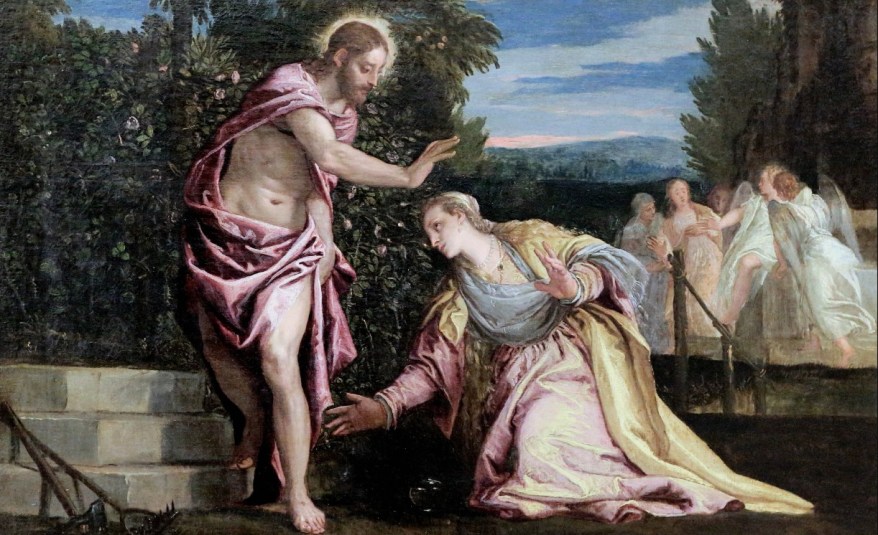
Pasquetta, tra spiritualità e arte: il significato del Lunedì dell’Angelo e i capolavori del “Noli me tangere”
🇮🇹Il Lunedì dell’Angelo racchiude uno dei momenti più intensi del Vangelo: l’incontro tra Gesù risorto e Maria Maddalena, raccontato nel celebre “Noli me tangere”. Un episodio che nei secoli ha ispirato artisti straordinari, dando vita a opere cariche di emozione, spiritualità e bellezza. .. 🇬🇧Easter Monday encompasses one of the most intense moments in the…
-
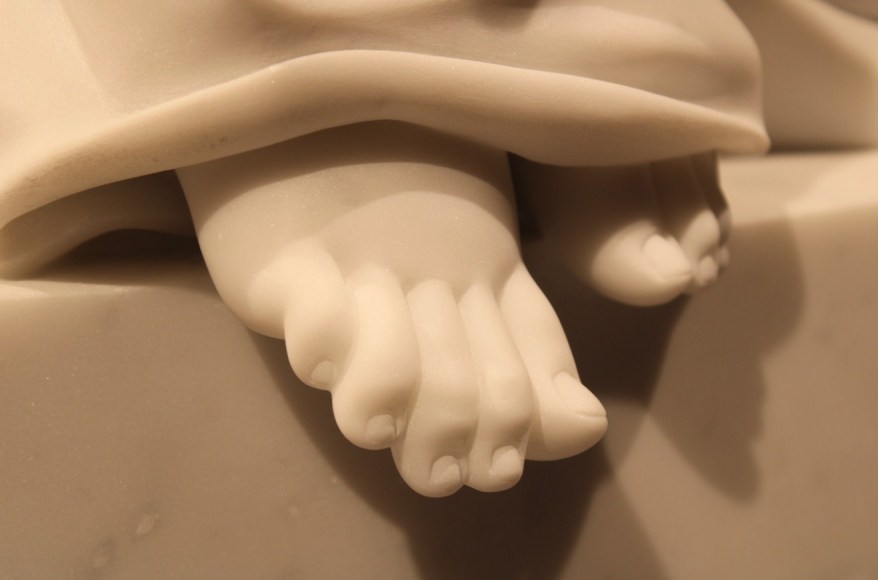
La Pietà di Tincolini: a Pontedera l’arte torna a fare domande scomode
🇮🇹“Pietà”, la scultura di Filippo Tincolini, insieme alle parole di Federico Quaranta e Andrea Pezzi, non è stato solo uno spettacolo. È stata una domanda lanciata in faccia al pubblico, impossibile da evitare: siamo ancora capaci di provare pietà? 🇬🇧 “Pietà,” Filippo Tincolini’s sculpture, along with the words of Federico Quaranta and Andrea Pezzi, wasn’t…
Condividi:


Questo sono io





sostienici

Sostienici – Support Us
Se questo blog ti piace e ti appassiona, puoi aiutarci a farlo crescere sempre più sostenendoci in modo concreto condividendo i post, seguendo le pagine social e con un contributo che ci aiuta ad andare avanti con il nostro lavoro di divulgazione. . ENGLISH: If you like and are passionate about this blog, you can help us make it grow more and more by supporting us in a concrete way by sharing posts, following social pages and with a contribution that helps us to move forward with our dissemination work.
€10,00


grande potenza dinamico espressiva
"Mi piace""Mi piace"
Grandioso Canova
"Mi piace""Mi piace"