

La Scultura del giorno: la Madonna col Bambino di Pierre Puget
La Scultura del giorno che vi propongo oggi è la Madonna col Bambino scolpita da Pierre Puget nel 1681, oggi custodita nel Museo di Sant’Agostino a Genova.
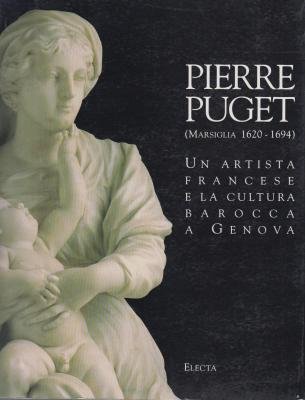
Lo scultore, architetto e pittore Pierre Paul Puget nacque a Marsiglia il 31 ottobre del 1620 e introdusse l’arte barocca in Francia. Fra il Diciottesimo e il Diciannovesimo secolo viene spesso citato come il Michelangelo di Francia.

La sua Madonna col Bambino, nota anche come Madonna Carrega, proviene dal Palazzo di Tobia Pallavicino in via Garibaldi ed è uno dei capolavori realizzati dall’artista in terra genovese.
Arrivato a Genova da Roma, fra il 1661 e il 1668 fu particolarmente produttivo. Nell’ideare la Madonna con Bambino molto si ispirò alla mia Madonna di Bruges.
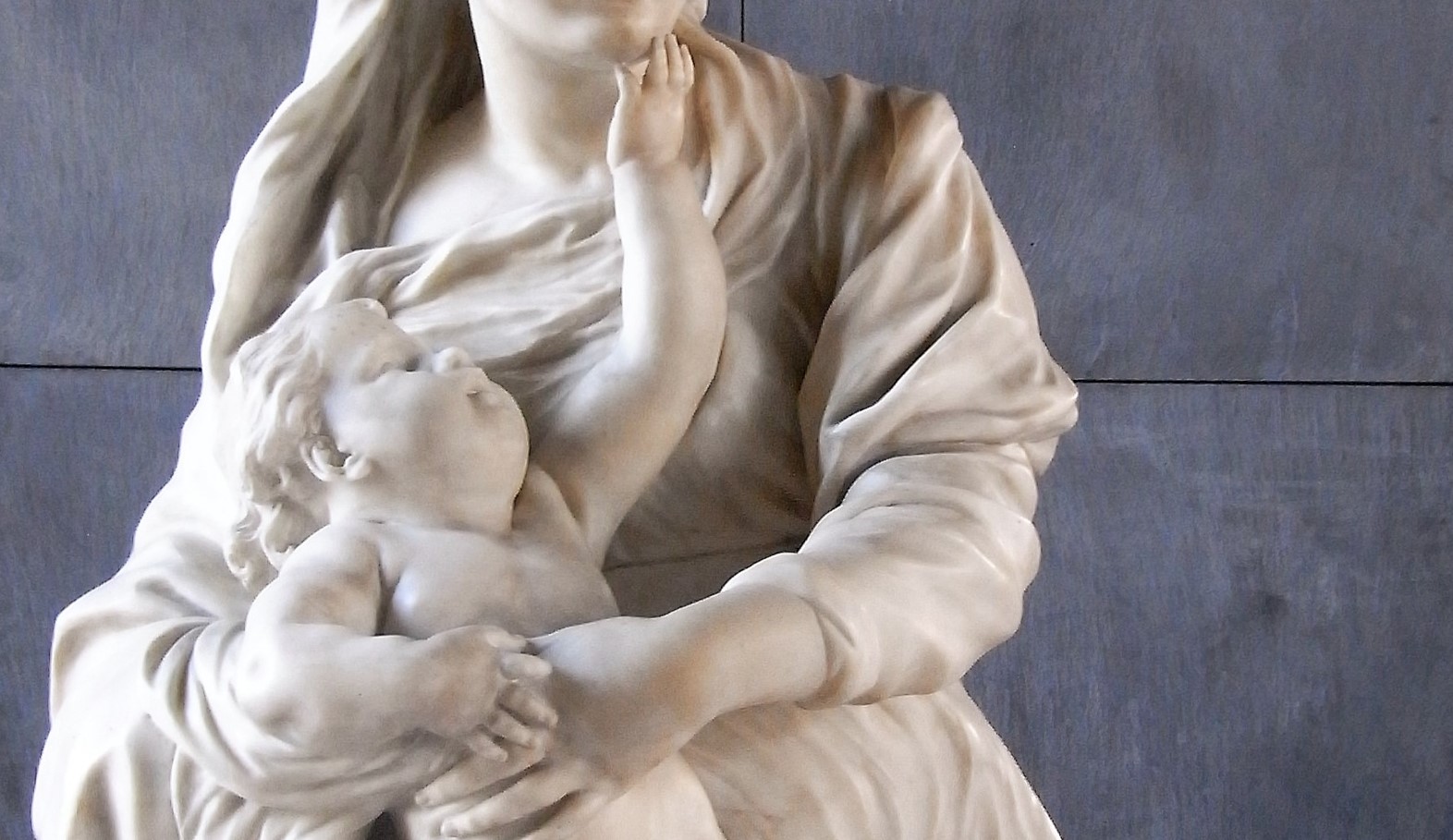
Osservate la posizione delle due figure nello spazio ma anche lo sguardo perduto nel vuoto che ha la Vergine: è lo stesso di quella che scolpii per i ricchi mercanti fiamminghi Musucron che riusciva a vedere il terribile destino del Figlio, presagendone nel dettaglio il futuro.
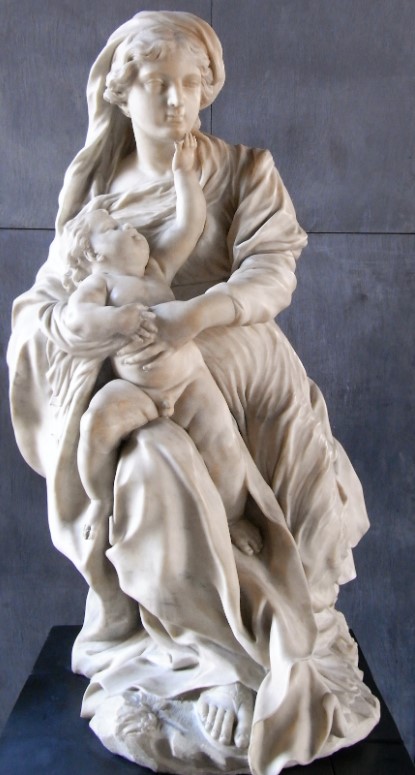
Il Bambino invece guarda la Madre e si protende verso di lei, cercando di toccarle il volto con la mano sinistra. La resa del corpo paffutello del bambino è straordinaria come è mirabile il panneggio della Vergine anche se a tratti sembra un po’ troppo forzato.
Pierre Paul Puget ebbe modo di cominciare la sua carriera artistica a quattordici anni, scolpendo i complessi ornamenti in legno delle galee che venivano costruite nei cantieri navali di Marsiglia.
A diciotto anni, nel 1640, trascorse prima un periodo a Firenze e poi a Roma dove ebbe modo di affiancare Pietro da Cortona durante gli affreschi di Palazzo Barberini.

Successivamente, a Genova, realizzò l’altare maggiore della basilica di San Siro e il progetto della decorazione interna della Basilica dell’Assunta di Carignano.
Per il momento il vostro Michelangelo Buonarroti vi saluta dandovi appuntamento ai prossimi post e sui social.
Sculpture of the day: the Madonna and Child by Pierre Puget
The Sculpture of the Day that I propose to you today is the Madonna and Child sculpted by Pierre Puget in 1681, now kept in the Sant’Agostino Museum in Genoa.
The sculptor, architect and painter Pierre Paul Puget was born in Marseille on 31 October 1620 and introduced Baroque art to France. Between the eighteenth and nineteenth centuries he was often cited as the Michelangelo of France.
His Madonna and Child, also known as Madonna Carrega, comes from the Palazzo di Tobia Pallavicino in via Garibaldi and is one of the masterpieces created by the artist in Genoa.
Having arrived in Genoa from Rome, he was particularly productive between 1661 and 1668. In designing the Madonna and Child he was very inspired by my Madonna of Bruges.
Observe the position of the two figures in space but also the gaze lost in the void that the Virgin has: it is the same as the one I sculpted for the rich Flemish merchants Musucron who was able to see the terrible fate of the Son, predicting his future in detail.
The Child instead looks at her Mother and reaches out towards her, trying to touch her face with his left hand. The rendering of the child’s chubby body is extraordinary as is the Virgin’s drapery, even if at times it seems a little too forced.
Pierre Paul Puget began his artistic career at the age of fourteen, sculpting the complex wooden ornaments of the galleys that were built in the shipyards of Marseille.
At eighteen, in 1640, he first spent a period in Florence and then in Rome where he had the opportunity to assist Pietro da Cortona during the frescoes of Palazzo Barberini.
Subsequently, in Genoa, he created the main altar of the Basilica of San Siro and the project for the internal decoration of the Basilica of the Assunta in Carignano.
For the moment, your Michelangelo Buonarroti greets you and will meet you in future posts and on social media.

Sostienici – Support Us
Se questo blog ti piace e ti appassiona, puoi aiutarci a farlo crescere sempre più sostenendoci in modo concreto condividendo i post, seguendo le pagine social e con un contributo che ci aiuta ad andare avanti con il nostro lavoro di divulgazione. . ENGLISH: If you like and are passionate about this blog, you can help us make it grow more and more by supporting us in a concrete way by sharing posts, following social pages and with a contribution that helps us to move forward with our dissemination work.
8,00 €
-
Sotto un cielo di glicine: la magia di Villa Bardini
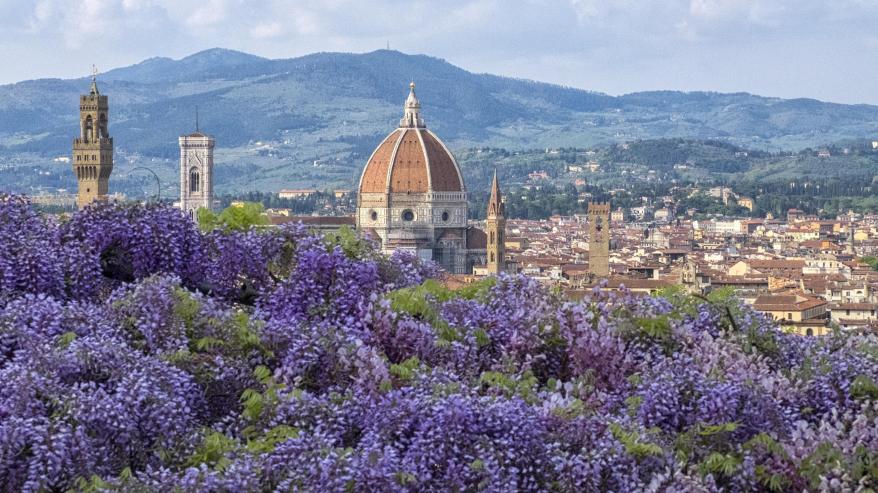
🇮🇹Per pochi giorni all’anno, il pergolato di Villa Bardini si trasforma in un tunnel lilla lungo 70 metri, dove profumo e bellezza si intrecciano sopra una delle viste più romantiche di Firenze… 🇬🇧For a few days a year, the pergola of Villa Bardini transforms into a 70-meter-long lilac tunnel, where scent and beauty intertwine above…
-
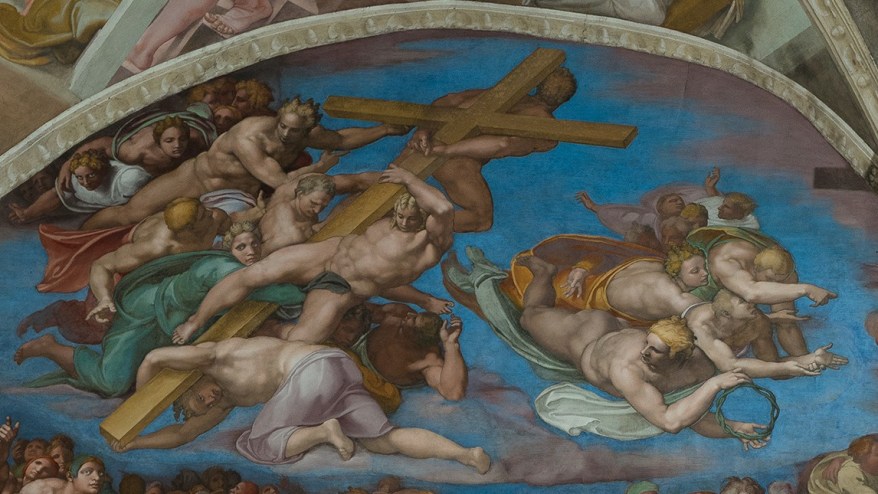
Come se la giustizia negata in vita possa compiersi altrove
🇮🇹Se davvero l’anima, una volta sciolta dal corpo, ritorna sulla terra per vivere ancora, così mi domando, quale sorte attende chi oggi appare tanto bella ai miei occhi, ma così crudele nel cuore? 🇬🇧If the soul, once freed from the body, truly returns to earth to live again, I ask myself, what fate awaits the…
-
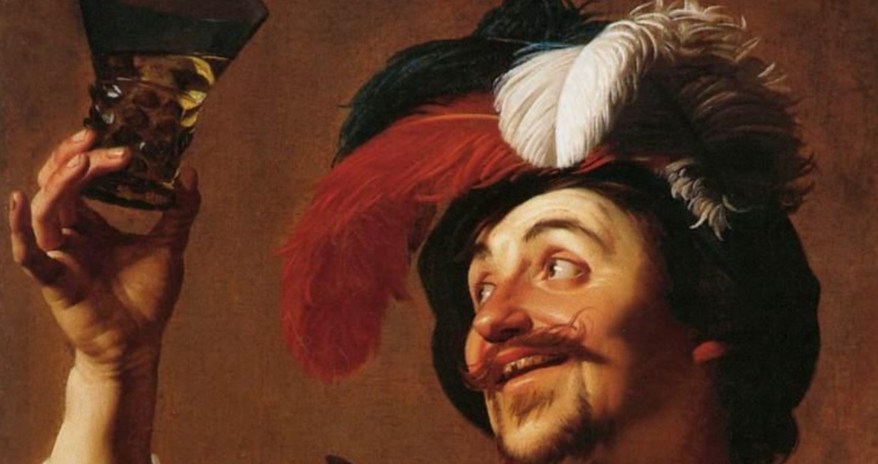
Quel sorriso del violinista felice di Gerrit van Honthorst
🇮🇹Un brindisi, un sorriso, una luce che taglia il buio. Conoscete il dipinto del violinista felice con un bicchiere di vino (1624) di Gerrit van Honthorst?… 🇬🇧A toast, a smile, a light that cuts through the darkness. Are you familiar with the painting of the Happy Violinist with a Glass of Wine (1624) by Gerrit…
Condividi:


Questo sono io





sostienici

Sostienici – Support Us
Se questo blog ti piace e ti appassiona, puoi aiutarci a farlo crescere sempre più sostenendoci in modo concreto condividendo i post, seguendo le pagine social e con un contributo che ci aiuta ad andare avanti con il nostro lavoro di divulgazione. . ENGLISH: If you like and are passionate about this blog, you can help us make it grow more and more by supporting us in a concrete way by sharing posts, following social pages and with a contribution that helps us to move forward with our dissemination work.
€10,00


