
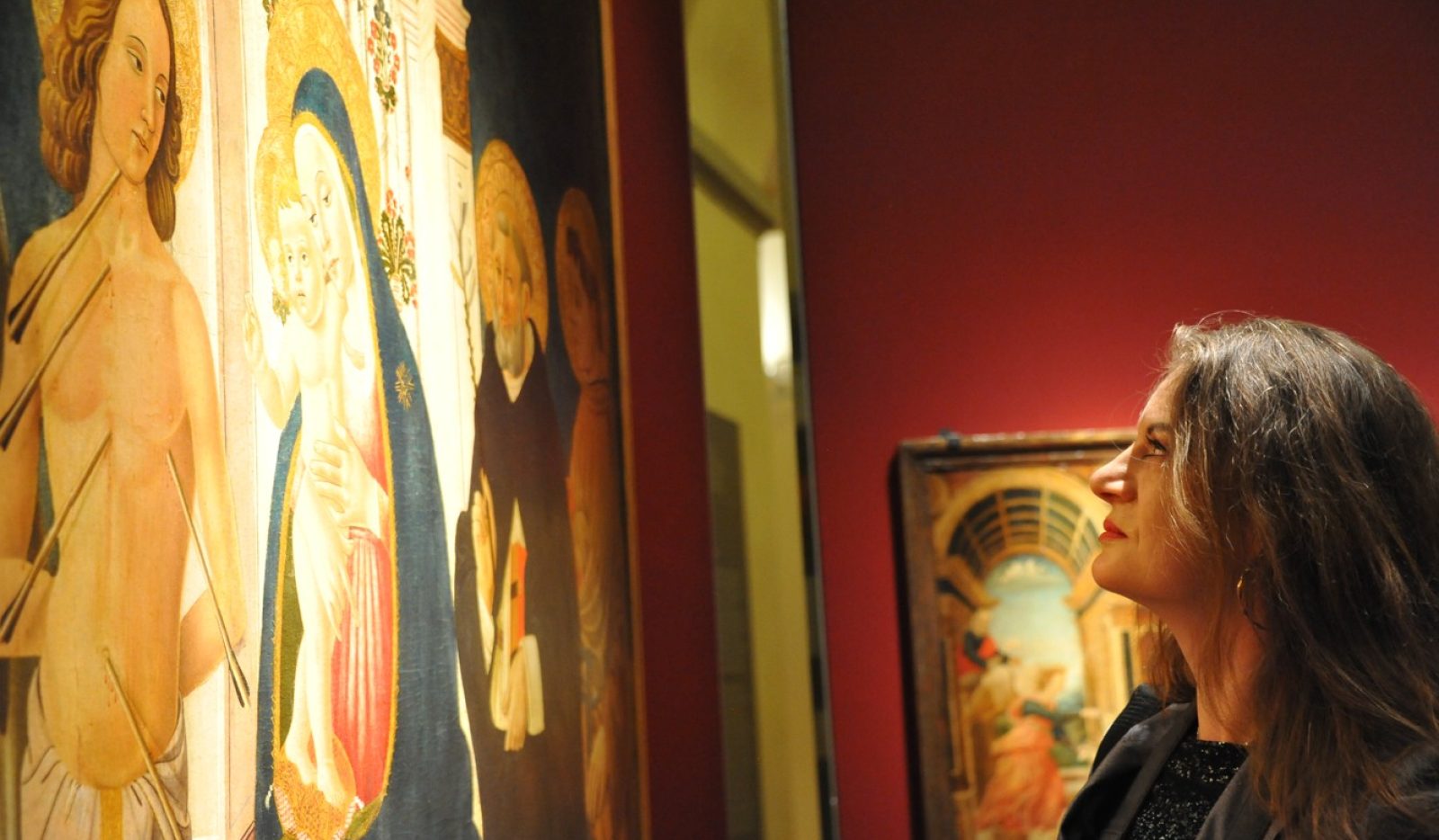
La Madonna di Bruges nella posizione sbagliata?
Osservando da vicino la posizione attuale della Madonna di Bruges sorge un dubbio: davvero sapevo a che altezza sarebbe stata collocata?
Eh si perchè guardando l’opera diventano evidenti alcuni problemi causati dalla prospettiva obbligata che ha lo spettatore che si trova al suo cospetto che, al contrario, spariscono abbassando idealmente la scultura.
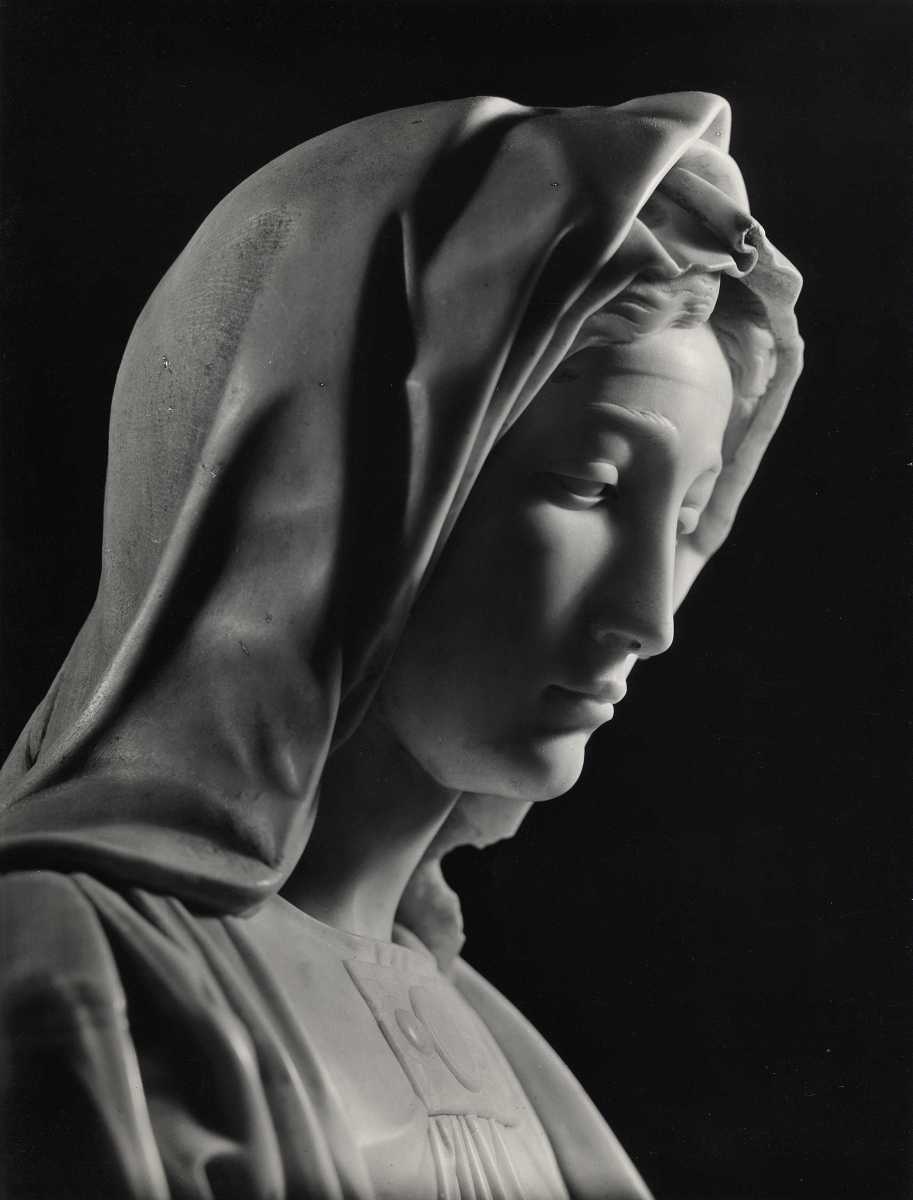
Sicuramente avevo ben chiaro che sarebbe stata collocata all’interno di una nicchia che ne avrebbe limitato la visione del retro tanto che, sulla parte retrostante del manto sono sempre ben leggibili i segni della gradina e il modellato non è così curato come quello della parte laterale o anteriore.

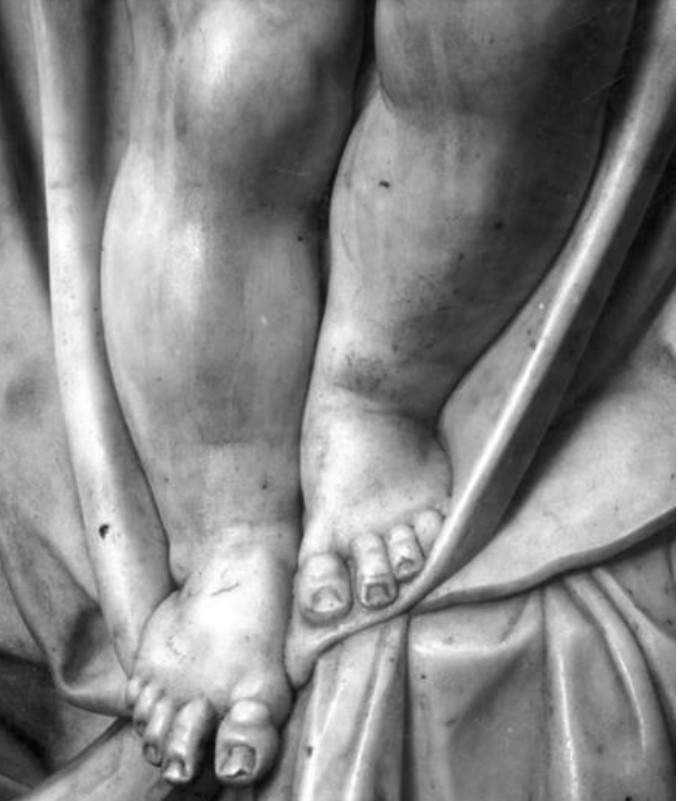
La posizione elevata della Madonna di Bruges rispetto al piano di calpestio della chiesa fa perdere completamente la visione di alcuni dettagli come i bottoni che decorano i polsini dell’abito della Madonna e le fossette sulle nocche del Bambino.
Vista così in alto inoltre sembra che il Bambino stia per scivolare verso il basso da un momento all’altro, effetto che svanisce completamente portando l’opera un po’ più in basso.
Addirittura l’avambraccio della Madonna sembra più lungo di quello che in realtà è. Anche in questo caso il problema di prospettiva si risolve completamente collocando la scultura ad altezza d’occhi o comunque spostandola più in basso.
Pare davvero che studiai ogni minimo dettaglio di quel capolavoro per avere una visione diversa da quella che viene proposta oggi ai fedeli.
Per il momento il vostro Michelangelo Buonarroti vi saluta dandovi appuntamento ai prossimi post e sui social.
Our Lady of Bruges in the wrong position?
Looking closely at the current position of the Madonna of Bruges, a doubt arises: did I really know at what height it would be placed?
Yes, because when looking at the work some problems become evident caused by the forced perspective that the spectator has in front of it which, on the contrary, disappear by ideally lowering the sculpture.
I was certainly very clear that it would be placed inside a niche which would limit the view of the back so much so that on the rear part of the covering the signs of the steps are always clearly legible and the modeling is not as accurate as that of the side part or anterior.
The elevated position of the Madonna of Bruges compared to the walking surface of the church makes one completely lose sight of some details such as the buttons that decorate the cuffs of the Madonna’s dress and the dimples on the Child’s knuckles.
Seen so high, it also seems that the Child is about to slide downwards at any moment, an effect that disappears completely when the work is brought a little lower.
Even the Madonna’s forearm seems longer than it actually is. Also in this case the perspective problem is completely resolved by placing the sculpture at eye level or in any case by moving it lower.
It really seems that I studied every single detail of that masterpiece to have a different vision from the one that is proposed to the faithful today.
For the moment, your Michelangelo Buonarroti greets you and will meet you in future posts and on social media.

Sostienici – Support Us
Se questo blog ti piace e ti appassiona, puoi aiutarci a farlo crescere sempre più sostenendoci in modo concreto condividendo i post, seguendo le pagine social e con un contributo che ci aiuta ad andare avanti con il nostro lavoro di divulgazione. . ENGLISH: If you like and are passionate about this blog, you can help us make it grow more and more by supporting us in a concrete way by sharing posts, following social pages and with a contribution that helps us to move forward with our dissemination work.
8,00 €
-
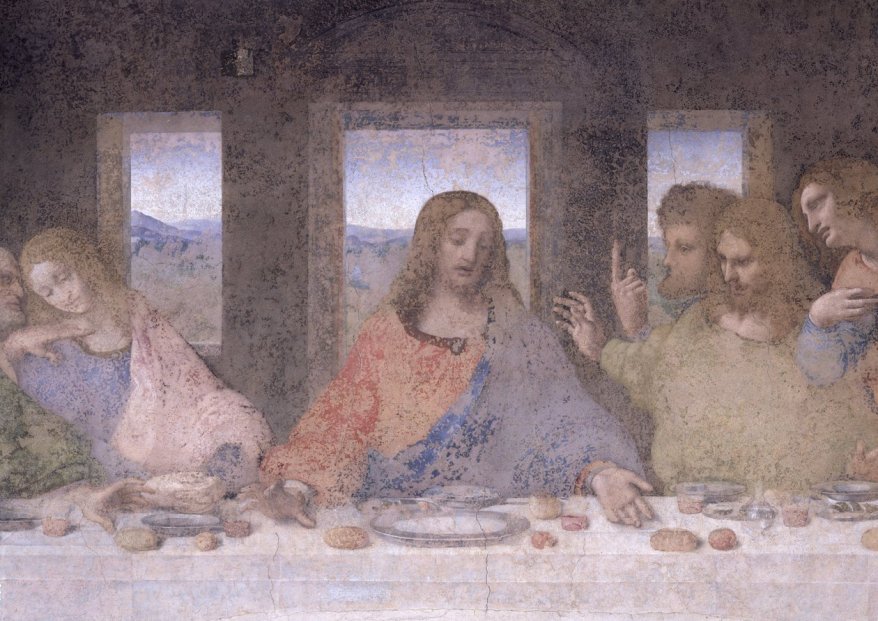
Cenacolo di Leonardo: i dettagli che raccontano il tradimento
🇮🇹Nel Cenacolo di Leonardo da Vinci, custodito a Santa Maria delle Grazie, Cristo annuncia il tradimento e il tempo si ferma… 🇬🇧In Leonardo da Vinci’s Last Supper, housed in Santa Maria delle Grazie, Christ announces the betrayal and time stands still…
-
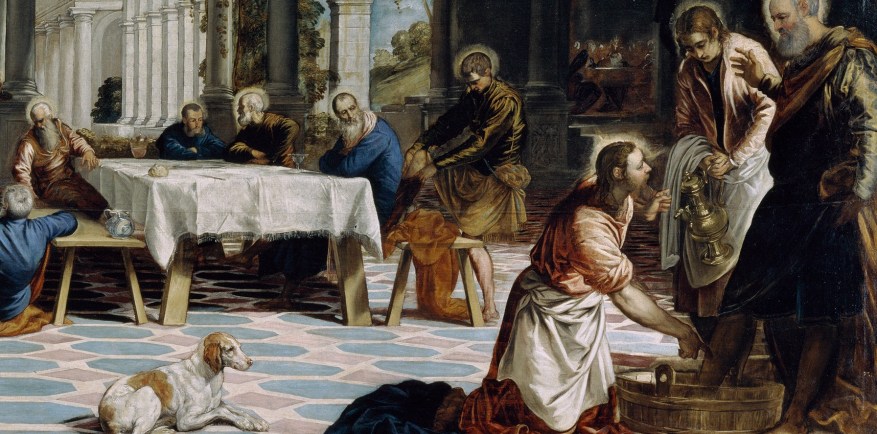
La Lavanda dei Piedi di Tintoretto: Il Capolavoro Veneziano al Prado
🇮🇹Tra i capolavori più affascinanti del Rinascimento veneziano, “La Lavanda dei Piedi” di Jacopo Tintoretto rappresenta un perfetto equilibrio tra spiritualità, innovazione compositiva e straordinaria forza narrativa… 🇬🇧Among the most fascinating masterpieces of the Venetian Renaissance, Jacopo Tintoretto’s “The Washing of the Feet” represents a perfect balance between spirituality, compositional innovation, and extraordinary narrative force…
-
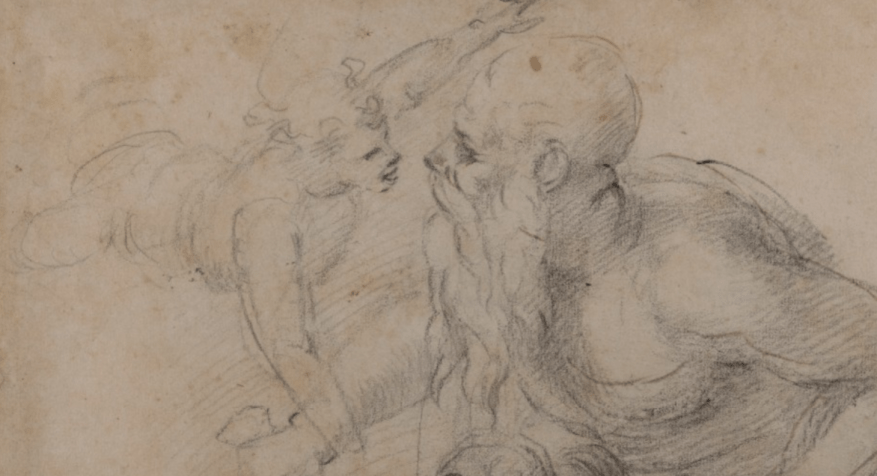
Il Sacrificio di Isacco e quel momento tra la vita e la morte
🇮🇹Oggi voglio raccontarvi alcuni dettagli sul mio disegno del Sacrificio di Isacco, conservato oggi a Casa Buonarroti. Su quel foglio volli tracciare il momento preciso in cui la paura fa spazio al miracolo… 🇬🇧Today I want to tell you some details about my drawing of the Sacrifice of Isaac, now preserved at Casa Buonarroti. On…
Condividi:


Questo sono io





sostienici

Sostienici – Support Us
Se questo blog ti piace e ti appassiona, puoi aiutarci a farlo crescere sempre più sostenendoci in modo concreto condividendo i post, seguendo le pagine social e con un contributo che ci aiuta ad andare avanti con il nostro lavoro di divulgazione. . ENGLISH: If you like and are passionate about this blog, you can help us make it grow more and more by supporting us in a concrete way by sharing posts, following social pages and with a contribution that helps us to move forward with our dissemination work.
€10,00


