
La Scultura del giorno: l’Atlante Farnese con la più antica rappresentazione della sfera celeste
La scultura del giorno che vi propongo oggi è l’Atlante Farnese, una scultura ellenistica di autore ignoto custodita nel Salone della Meridiana del Museo Archeologico di Napoli.
Fu scolpita nel secondo secolo dopo Cristo e raffigura il titano Atlante mentre sembra sostenere a stento il globo che lo sovrasta. Ha la schiena curvata dal peso e si sta inginocchiando mentre con le mani tenta di reggere quell’enorme peso.
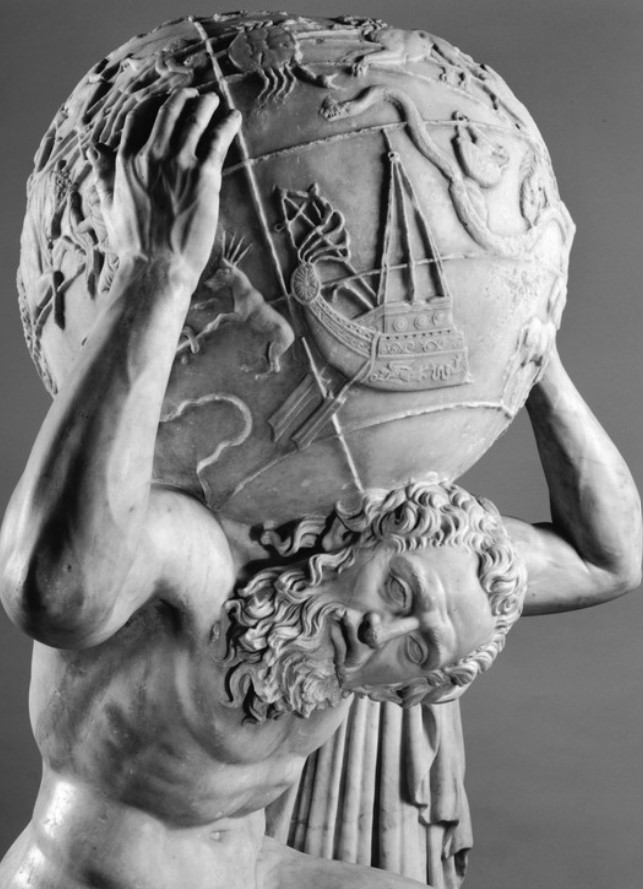
Lo scultore volle raffigurare Atlante come un uomo maturo nel pieno delle forze completamente nudo. Dalla spalla sinistra pende un mantello drappeggiato che scende fino a terra. Ha un corpo muscoloso ma snello la cui anatomia pressoché perfetta viene accentuata dalla struttura del torace che diventa evidente sotto la pelle tesa.
La testa piegata e voltata verso sinistra aumenta la sensazione che ha lo spettatore di percepire l’immane sforzo compiuto dal titano.

Cosa rappresenta la sfera che Atlante ha sulle spalle?
Il grande oggetto che sembra tanto gravargli sulle spalle è la sfera celeste che raffigura una delle più esaustive e antiche riproduzioni della volta celeste e dello Zodiaco che siano arrivate fino ai nostri giorni.
In rilievo sono raffigurati i due meridiani che passano per i poli e per i punti degli equinozi e dei solstizi, l’equatore celeste, l’eclittica con la fascia zodiacale e il circolo artico e antartico.
Inoltre sono scolpite le costellazioni Boreali e quelle australi in forma antropomorfa e tutti i dodici segni dello Zodiaco.

Al di sopra del globo è presente una cavità che indica un intervento volto a modificare la destinazione d’uso dell’opera.
Probabilmente si è tentato di ricavarne una fontana o di inserirci un altro elemento lavorato come uno gnomone in metallo, ovvero una sorta di orologio solare per adoperare la scultura come una vera e propria meridiana.
Ma chi era Atlante?
Atlante era il figliolo del titano Giapeto e della ninfa Climene ed era noto per la sua furbizia. Durante lo scontro fra titani, si schierò dalla parte di Crono, contro Zeus ma perse la battaglia e venne condannato a passare il resto dell’esistenza a sorreggere la volta celeste sul capo, contando solo sulla forza delle sue mani.

Provenienza e integrazioni
L’Atlante faceva parte della collezione di Paolo del Bufalo e fu comprata da lui da Alessandro Farnese per un costo di 255 scudi, entrando così a far parte delle collezioni di famiglia nel 1562.
Non è noto il luogo di ritrovamento esatto e l’ipotesi di Pirro Ligorio del ritrovamento presso le Terme di Caracalla è da escludere.
Nella documentazione grafica e letteraria arrivata fino ai nostri giorni è possibile risalire al fatto che l’Atlante fra il 1550 e il 1554 ancora fosse privo del volto, delle braccia e delle gambe Marteen de Vos, più o meno negli stessi anni, disegna l’opera con le integrazioni già effettuate.

Ulisse Aldovrandi attorno al 1550 scrive di aver visto la scultura dell’Atlante in casa di Bernardino Fabio che probabilmente era in attesa dei restauri integrativi condotti poi da Guglielmo della Porta, entro il 1560.
Successivamente l’Atlante Farnese fu portato a Palazzo Farnese ma, anni dopo, divenuto proprietà dei Borboni, fu prima fatta restaurare da Carlo Albacini e poi condotta fino a Napoli nel 1786 dove fu fatta confluire in quello che poi diverrà il Museo Archeologico di Napoli.
Per il momento il vostro Michelangelo Buonarroti vi saluta dandovi appuntamento ai prossimi post e sui social.
Sculpture of the day: the Farnese Atlas with the oldest representation of the celestial sphere
The sculpture of the day that I propose to you today is the Farnese Atlas, a Hellenistic sculpture in Parian marble kept in the Meridiana Hall of the Archaeological Museum of Naples.
It was sculpted in the second century after Christ and depicts the Titan Atlas as he seems to barely support the globe above him. His back is bent by the weight and he is kneeling while his hands are trying to support that enormous weight.
The sculptor wanted to represent Atlas as a mature man in full force, completely naked. From the left shoulder hangs a draped cloak that descends to the ground. He has a muscular but slender body whose near-perfect anatomy is accentuated by the structure of the chest that becomes evident under the tight skin.
The head bent and turned to the left increases the sensation that the viewer has of perceiving the enormous effort made by the titan.
What does the sphere that Atlas has on his shoulders represent?
The large object that seems to weigh heavily on his shoulders is the celestial sphere which depicts one of the most exhaustive and ancient reproductions of the celestial vault and the Zodiac that have come down to our days.
The two meridians passing through the poles and the points of the equinoxes and solstices, the celestial equator, the ecliptic with the zodiacal band and the arctic and antarctic circle are depicted in relief.
Furthermore, the boreal and southern constellations are carved in anthropomorphic form and all twelve signs of the Zodiac.
Above the globe there is a cavity that indicates an intervention aimed at changing the intended use of the work. An attempt was probably made to obtain a fountain from it or to insert another worked element or even a metal gnomon, or a sort of sundial to use the sculpture as a real sundial.
But who was Atlas?
Atlas was the son of the Titan Iapetus and the nymph Clymene and was known for his cunning. During the clash between the titans, he sided with Cronus, against Zeus but lost the battle and was condemned to spend the rest of his existence supporting the celestial vault on his head, relying only on the strength of his hands.
Origin and additions
The Atlas was part of Paolo del Bufano’s collection and was bought from him by Alessandro Farnese for a cost of 255 scudi, thus becoming part of the family collections in 1562.
The exact place of discovery is not known and Pirro Ligorio’s hypothesis of the discovery at the Baths of Caracalla cannot be excluded.
In the graphic and literary documentation that has come down to our days it is possible to trace the fact that the Atlas between 1550 and 1554 still lacked the face, arms and legs while Marteen de Vos, more or less in the same years, draws the works with the integrations already made.
Ulisse Aldovrandi around 1550 wrote that he had seen the sculpture of the Atlas in the house of Bernardino Fabio who was probably awaiting the supplementary restorations then carried out by Guglielmo della Porta, between 1550 and 1560.
Subsequently the Farnese Atlas was brought to Palazzo Farnese but, years later, when it became the property of the Bourbons, it was first restored by Carlo Albacini and then taken to Naples in 1786 where it was merged into what would later become the Museo Archeologico di Napoli.
For the moment, your Michelangelo Buonarroti greets you by making an appointment for the next posts and on social media.

Sostienici – Support Us
Se questo blog ti piace e ti appassiona, puoi aiutarci a farlo crescere sempre più sostenendoci in modo concreto condividendo i post, seguendo le pagine social e con un contributo che ci aiuta ad andare avanti con il nostro lavoro di divulgazione. . ENGLISH: If you like and are passionate about this blog, you can help us make it grow more and more by supporting us in a concrete way by sharing posts, following social pages and with a contribution that helps us to move forward with our dissemination work.
8,00 €
-
Venerdì Santo: gli “Ecce Homo” più intensi della storia dell’arte
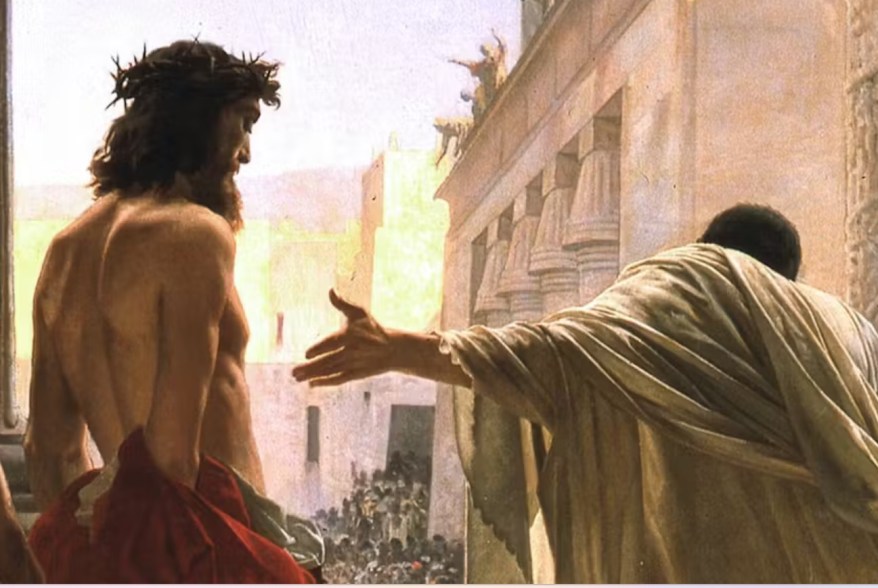
🇮🇹Ecce Homo. Da Antonello da Messina a Tintoretto, fino al sorprendente capolavoro di Antonio Ciseri, questo soggetto ha attraversato i secoli raccontando dolore, umanità e coscienza… 🇬🇧Ecce Homo. From Antonello da Messina to Tintoretto, to Antonio Ciseri’s astonishing masterpiece, this subject has spanned the centuries, recounting pain, humanity, and conscience…
-
Attacco hacker agli Uffizi: rubati dati sensibili, mappe e codici di sicurezza
🇮🇹Attacco hacker alle Gallerie degli Uffizi: rubati dati sensibili, mappe e sistemi di sicurezza. A rischio opere, archivi e cybersicurezza del patrimonio artistico… 🇬🇧Hacker attack on the Uffizi Galleries: sensitive data, maps, and security systems stolen. Works of art, archives, and the cybersecurity of the artistic heritage are at risk…
-
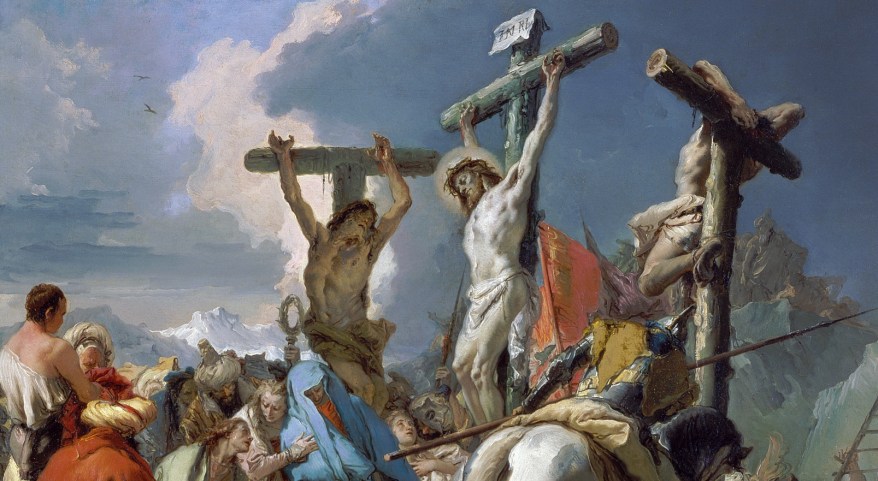
Venerdì Santo: la Crocifissione secondo Tiepolo
🇮🇹Nel giorno del Venerdì Santo, c’è un’opera che riesce ancora a scuotere lo sguardo. La Crocifissione di Giambattista Tiepolo non è come le altre: niente simmetrie perfette, niente distanza. Qui si entra dentro la scena, da un punto di vista obliquo, tra movimento, tensione e umanità… 🇬🇧On Good Friday, there’s a work that still manages…
Condividi:


Questo sono io





sostienici

Sostienici – Support Us
Se questo blog ti piace e ti appassiona, puoi aiutarci a farlo crescere sempre più sostenendoci in modo concreto condividendo i post, seguendo le pagine social e con un contributo che ci aiuta ad andare avanti con il nostro lavoro di divulgazione. . ENGLISH: If you like and are passionate about this blog, you can help us make it grow more and more by supporting us in a concrete way by sharing posts, following social pages and with a contribution that helps us to move forward with our dissemination work.
€10,00


1 commento »