
La Scultura del giorno: San Lorenzo del Bernini
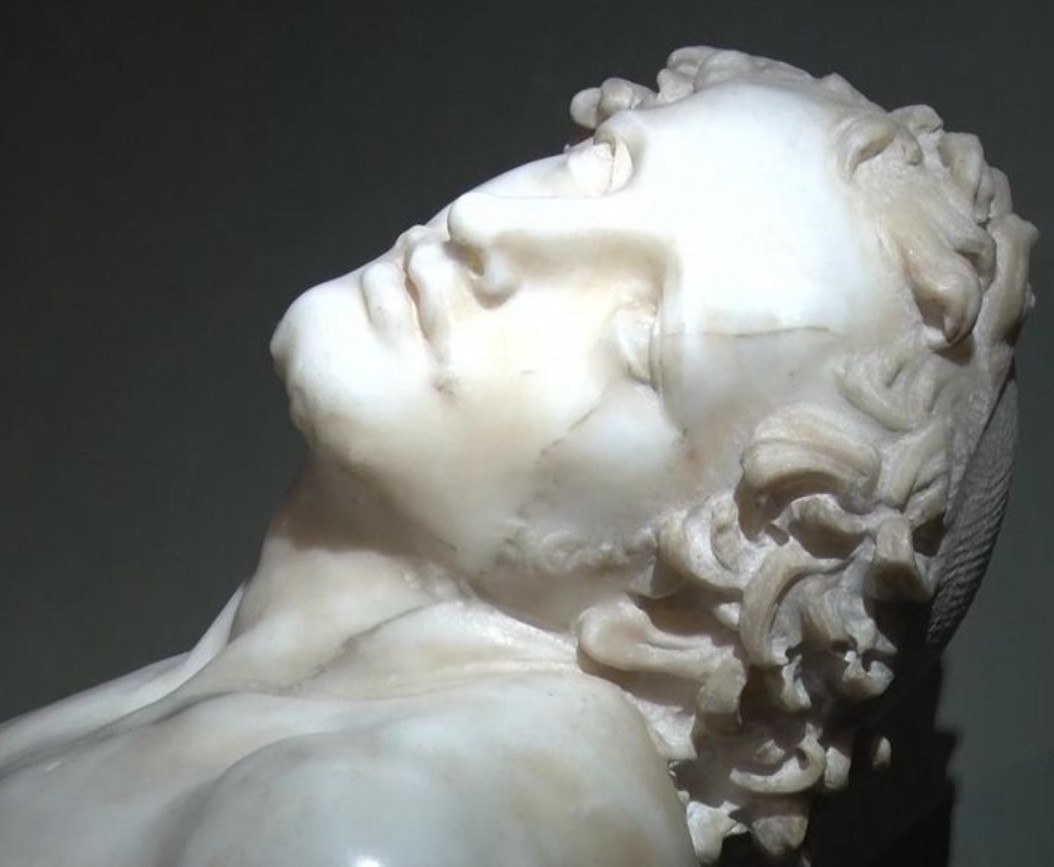
La scultura del giorno che vi propongo oggi è il San Lorenzo di Gian Lorenzo Bernini, scolpito dall’artista a soli diciannove anni, nel 1617.
Un’opera giovanile dunque in cui però è possibile già ravvisare tutte quelle caratteristiche che renderanno unico lo stile dell’artista nella sua maturità.

Non è dato sapere chi sia stato il committente ma Filippo Baldinucci, nel 1683, racconta che l’opera si trovasse nelle collezioni di Leone Strozzi, ubicata presso la popria villa romana. Da lì fu poi trasferita a fine Settecento presso Palazzo Strozzi alle Stimmate sempre a Roma e successivamente trasportata fino a Firenze, sempre nel palazzo di famiglia.
Sulla base lignea dell’opera è presente l’emblema della famiglia Strozzi mascherato nel ceppo in fiamme che ne sostiene il peso.
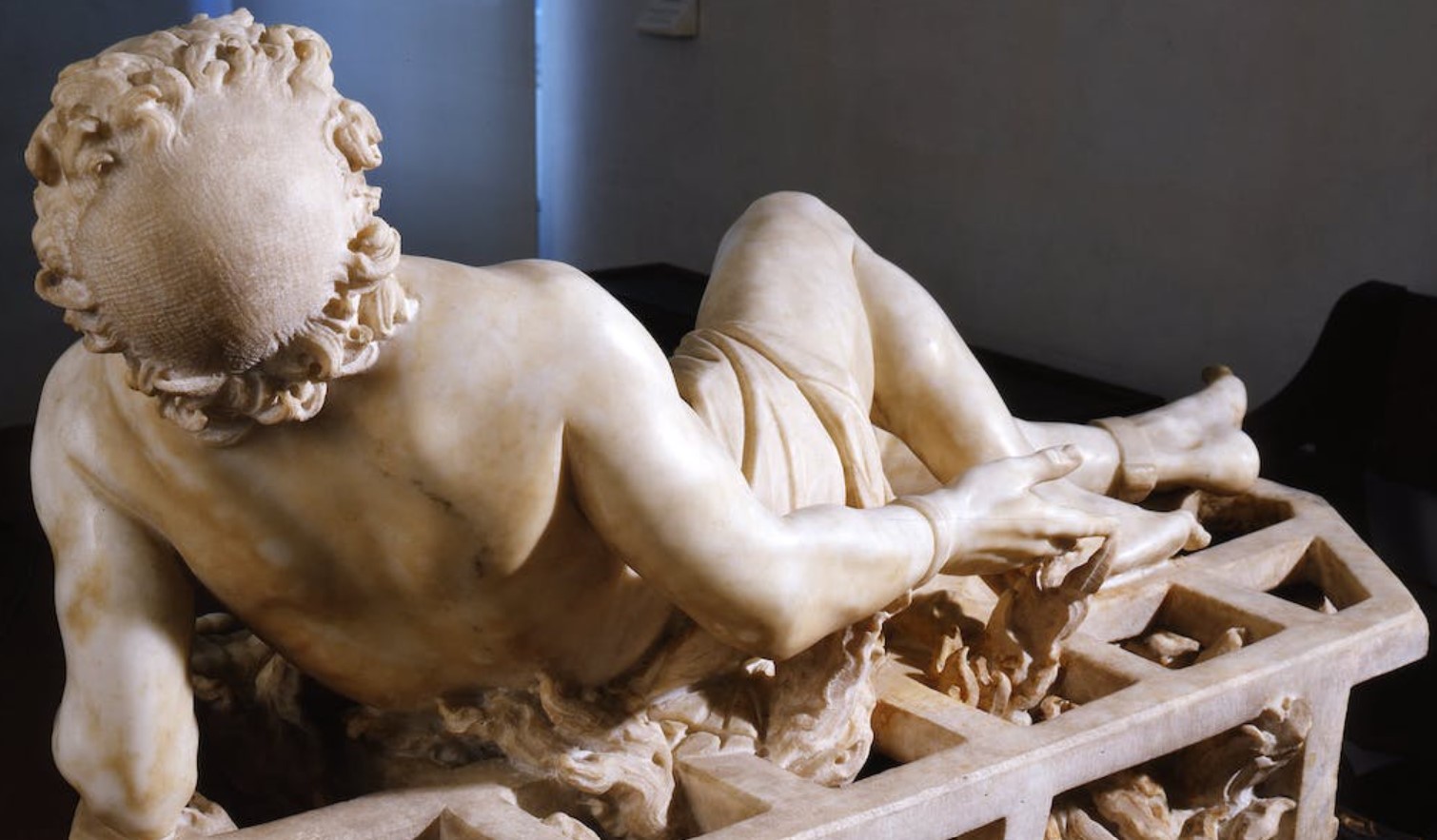
Il San Lorenzo fu scolpito nello stesso periodo in cui Bernini era impegnato con il San Sebastiano, oggi appartenente alla collezione Thyssen-Bornemisza.
In entrambe le opere non è difficile intuire quanto Bernini si sia ispirato ai miei lavori.

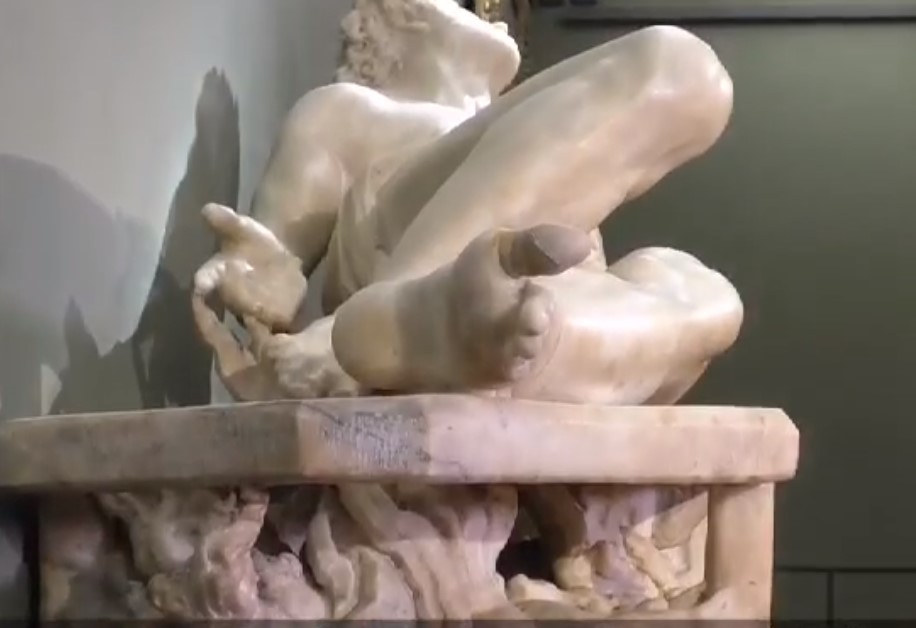
Nello specifico lo scultore mentre lavorava al San Lorenzo aveva ben presente il Cristo morto della mia Pietà Vaticana ma anche il modello per il Dio Fluviale oggi all’Accademia del Disegno a Firenze.
Riuscì a mettere assieme la torsione evidente del modello in argilla allo stato di abbandono del corpo del Cristo della Pietà di San Pietro.
Domenico Bernini, scrivendo la biografia del padre Gian Lorenzo, narra che l’artista mentre era intento a scolpire il San Lorenzo, volle ritrarre una reale espressione di dolore per imprimere al volto un estremo realismo.
Per farlo accostò una gamba alle braci ardenti e ritrasse il suo volto angosciato a lapis mettendosi uno specchio dinnanzi.
“Si pose egli medesimo con una gamba, e coscia nuda presso la bragia accesa, per cui venendo a provare in se il Martirio del Santo, ritraeva poi col lapis alla vista di uno specchio i dolorosi moti della sua faccia, e osservava i varii effetti, che facevano le propie carni alterate dal calore della fiamma”
Vita del Cavalier Gio. Lorenzo Bernini, 1713.
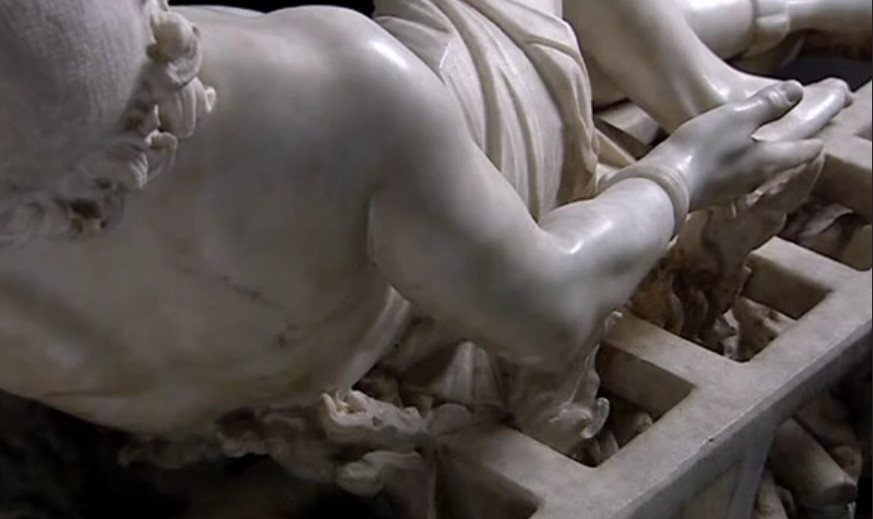
Il volto di San Lorenzo però, a guardarlo bene, non mostra tutto il dolore provato ma piuttosto sembra che trascenda ciò che prova attraverso il contatto diretto con Dio.
La preziosa scultura giovanile del Bernini fa parte della Collezione Contini Bonaccosi delle Gallerie degli Uffizi ed è adagiata sulla base originale probabilmente realizzata su disegno dell’artista: un tavolo intagliato a forma di albero che viene avvolto dalle fiamme ardenti.
Per il momento il vostro Michelangelo Buonarroti vi saluta dandovi appuntamento ai prossimi post e sui social.
Sculpture of the day: Bernini’s San Lorenzo
The sculpture of the day that I propose to you today is the San Lorenzo by Gian Lorenzo Bernini, sculpted by the artist when he was only nineteen, in 1617.
A youthful work therefore in which, however, it is already possible to recognize all those characteristics that will make the artist’s style unique in its maturity.
It is not known who commissioned it but Filippo Baldinucci, in 1683, recounts that the work was in the collections of Leone Strozzi, located in his Roman villa. From there it was then transferred at the end of the eighteenth century to Palazzo Strozzi alle Stimmate in Rome and subsequently transported to Florence, always in the family palace.
On the wooden base of the work there is the emblem of the Strozzi family masked in the burning log that supports its weight.
The San Lorenzo was sculpted at the same time Bernini was busy with the San Sebastiano, now in the Thyssen-Bornemisza collection.
In both works it is not difficult to understand how much Bernini was inspired by my works.
Specifically, the sculptor while working at San Lorenzo is well aware of the dead Christ of my Vatican Pietà but also the model for the River God today at the Accademia del Disegno in Florence.
He manages to put together the evident twist of the clay model with the state of abandonment of the body of Christ of the Pietà of St. Peter.
Domenico Bernini, writing the biography of his father Gian Lorenzo, narrates that while the artist was intent on sculpting the San Lorenzo, he wanted to portray a real expression of pain to give his face extreme realism.
To do this, he brought his leg up to the burning embers and drew his anguished face in pencil, placing himself in front of a mirror.
“He placed himself with one leg and bare thigh near the burning embers, whereby, coming to feel the martyrdom of the Saint in himself, he then drew with pencil in the sight of a mirror the painful motions of his face, and observed the various effects , who made their own flesh altered by the heat of the flame”
Life of Cavalier Gio. Lorenzo Bernini, 1713.
The face of San Lorenzo however, looking closely, does not show all the pain felt but rather seems to transcend what he feels through direct contact with God.
The precious youthful sculpture by Bernini is part of the Contini Bonaccosi Collection of the Uffizi Galleries and rests on the original base probably based on a drawing by the artist. It is a table carved in the shape of a tree which is engulfed in blazing flames.
For the moment, your Michelangelo Buonarroti greets you by making an appointment for the next posts and on social media.

Sostienici – Support Us
Se questo blog ti piace e ti appassiona, puoi aiutarci a farlo crescere sempre più sostenendoci in modo concreto condividendo i post, seguendo le pagine social e con un contributo che ci aiuta ad andare avanti con il nostro lavoro di divulgazione. . ENGLISH: If you like and are passionate about this blog, you can help us make it grow more and more by supporting us in a concrete way by sharing posts, following social pages and with a contribution that helps us to move forward with our dissemination work.
8,00 €
-
31 marzo 1889: inaugurata la Torre Eiffel tra critiche feroci e un destino inaspettato
🇮🇹Il 31 marzo 1889 segna una data destinata a cambiare per sempre il volto di Parigi e dell’immaginario collettivo globale: viene inaugurata la Torre Eiffel, l’opera più audace e discussa del suo tempo… 🇬🇧March 31, 1889 marks a date destined to change the face of Paris and the global collective imagination forever: the Eiffel Tower,…
-
Sodoma in mostra a Torino: il Rinascimento al Museo Accorsi-Ometto
🇮🇹Al Museo di Arti Decorative Accorsi-Ometto arriva una mostra dedicata al Sodoma: oltre 50 opere, alcune mai viste prima, raccontano la formazione dell’artista e il suo dialogo con maestri come Pinturicchio… 🇬🇧An exhibition dedicated to Sodoma arrives at the Accorsi-Ometto Museum of Decorative Arts: over 50 works, some never before seen, recount the artist’s development…
-
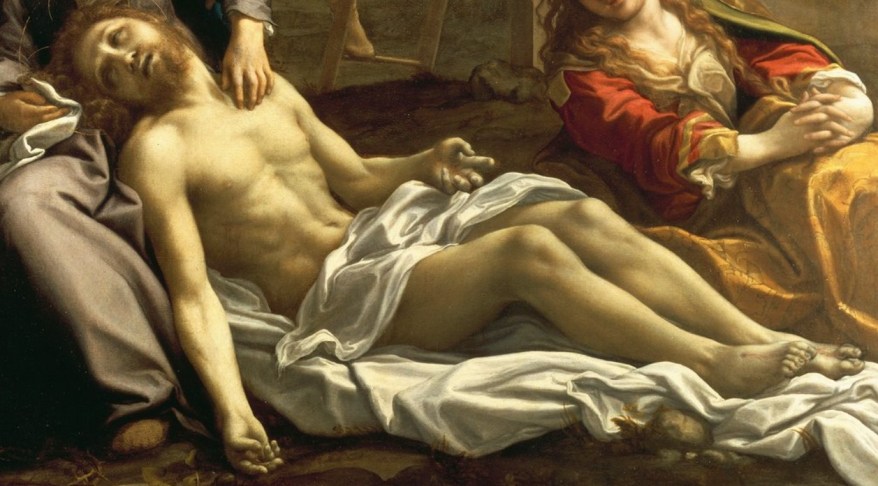
Il Compianto sul Cristo morto di Correggio: pathos e devozione
🇮🇹Con l’inizio della Settimana Santa, vi propongo il Compianto sul Cristo morto di Antonio Allegri, più noto come il Correggio: uno dei vertici assoluti della pittura emiliana del Cinquecento… 🇬🇧With the beginning of Holy Week, I propose the Lamentation over the Dead Christ by Antonio Allegri, better known as Correggio: one of the absolute peaks…
Condividi:


Questo sono io





sostienici

Sostienici – Support Us
Se questo blog ti piace e ti appassiona, puoi aiutarci a farlo crescere sempre più sostenendoci in modo concreto condividendo i post, seguendo le pagine social e con un contributo che ci aiuta ad andare avanti con il nostro lavoro di divulgazione. . ENGLISH: If you like and are passionate about this blog, you can help us make it grow more and more by supporting us in a concrete way by sharing posts, following social pages and with a contribution that helps us to move forward with our dissemination work.
€10,00


codesta è altra indiscutibile meraviglia!
"Mi piace"Piace a 1 persona
ed era giovanissimo…stupenda opera
"Mi piace"Piace a 1 persona