

Il San Girolamo: un disegno consumato dal tempo
Il disegno che vi propongo è lo studio di San Girolamo inginocchiato, un foglio appartenente alle collezioni del Louvre molto consumato dal tempo e danneggiato ai margini.
Una brutta piegatura trasversale lo ha reso ancora più fragile tanto che nell’Ottocento si decise di controfondarlo.
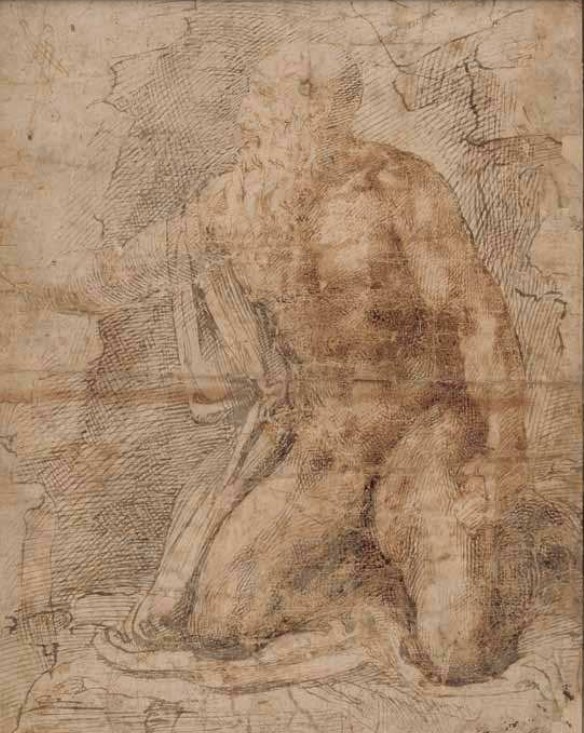
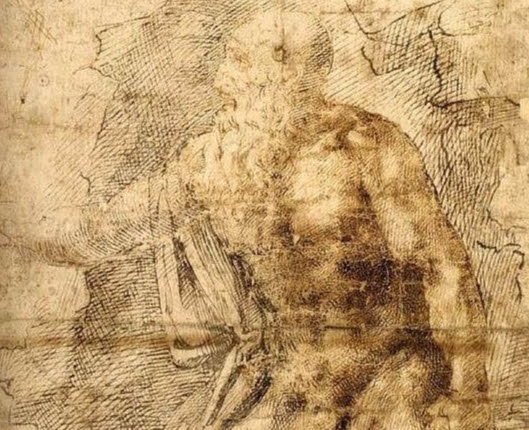
Studiai con attenzione la posa del Santo dinnanzi alla sua grotta. E’ privo di vesti ed è inginocchiato sopra un panneggio che inizia dalla sua spalla destra, gli scende lungo il fianco e finisce direttamente al di sotto delle sue gambe.
Osservate con attenzione la posa delle cosce: cosa vi ricordano? Ebbene, hanno la stessa posizione ma rovesciata di quelle del Torso del Belvedere.
Diversi esperti hanno avanzato l’ipotesi mi fossi realizzato un modello di cera o di gesso della celeberrima scultura dei Musei Vaticani per studiarne a distanza ravvicinata tutte le possibili varianti. Chissà, avevo realmente realizzato quel modello o sfruttavo la mia memoria portentosa?

Quello che è certo è che non sono poche le opere mie che hanno in comune con il Torso del Belvedere la posa.
Il disegno del San Girolamo ha una datazione al momento ancora discussa. Lionel Cust lo data attorno al 1500-1510 scrivendo “Je crois que un dessin original de Michel-nge aura servi comme base de ceci. Le peu d’ecriture est biende la main de Michel-Ange époque florentine 1500-1510” ovvero “Credo che un disegno originale di Michelangelo sarà servito come base per questo. La piccola scritta è infatti di mano di Michelangelo fiorentino periodo 1500-1510”.
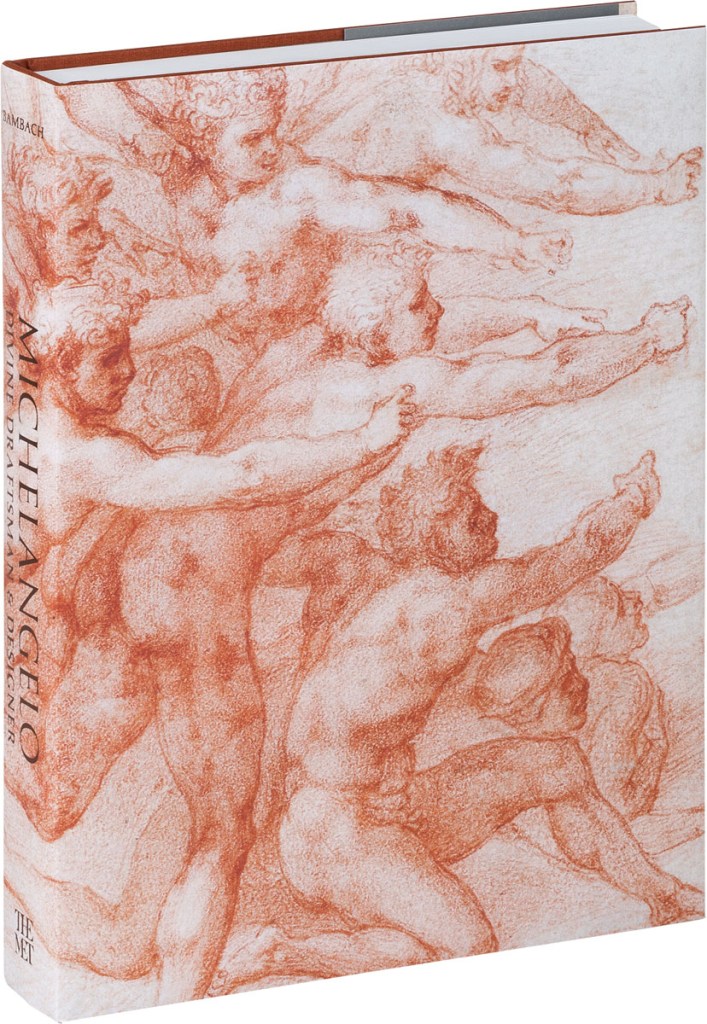
Carmen Bambach invece pensa possa essere precedente e colloca nel periodo che va dal 1496 al 1499 proprio per l’utilizzo dei due inchiostri, caratteristica dei miei disegni realizzati in quella porzione di tempo che per lo stile del disegno stesso.
Per il momento il vostro Michelangelo Buonarroti vi saluta dandovi appuntamento ai prossimi post e sui social.
The San Girolamo: a drawing consumed by time
The drawing I propose to you is the study of a kneeling Saint Jerome, a sheet belonging to the collections of the Louvre very worn by time and damaged in the margins.
An ugly transversal fold made it even more fragile, so much so that in the 19th century it was decided to counter-found it.
I carefully studied the Saint’s pose in front of his grotto. He is without clothes and is kneeling above a drapery that starts from his right shoulder, runs down his side and ends directly below his legs.
Look carefully at the pose of the thighs: what do they remind you of? Well, they have the same position but reversed as those of the Belvedere Torso.
Several experts have put forward the hypothesis that I had made a wax or plaster model of the famous sculpture in the Vatican Museums to study all the possible variants at close range. Who knows, had I actually made that model or was I using my prodigious memory?
What is certain is that there are not a few of my works that have the pose in common with the Torso del Belvedere.
The drawing of the San Girolamo has a date that is still under discussion at the moment. Lionel Cust dates it around 1500-1510 writing “Je crois que un dessin original de Michel-nge aura servi comme base de ceci. Le peu d’ecriture est biende la main de Michel-Ange époque florentine 1500-1510” or “I believe that an original drawing by Michelangelo will have served as the basis for this. The small inscription is in fact by the hand of the Florentine Michelangelo from the period 1500-1510”.
Carmen Bambach, on the other hand, thinks it could be earlier and places it in the period from 1496 to 1499 precisely because of the use of the two inks, a characteristic of my drawings made in that portion of time, and because of the style of the drawing itself.
For the moment, your Michelangelo Buonarroti greets you by making an appointment for the next posts and on social media

Sostienici – Support Us
Se questo blog ti piace e ti appassiona, puoi aiutarci a farlo crescere sempre più sostenendoci in modo concreto condividendo i post, seguendo le pagine social e con un contributo che ci aiuta ad andare avanti con il nostro lavoro di divulgazione. . ENGLISH: If you like and are passionate about this blog, you can help us make it grow more and more by supporting us in a concrete way by sharing posts, following social pages and with a contribution that helps us to move forward with our dissemination work.
8,00 €
-
Piero della Francesca moriva il 12 ottobre 1492: il genio della prospettiva
🇮🇹Il 12 ottobre 1492, mentre Cristoforo Colombo approdava nel continente americano, a Sansepolcro si spegneva Piero della Francesca… 🇬🇧On October 12, 1492, while Christopher Columbus was landing on the American continent, Piero della Francesca passed away in Sansepolcro…
-
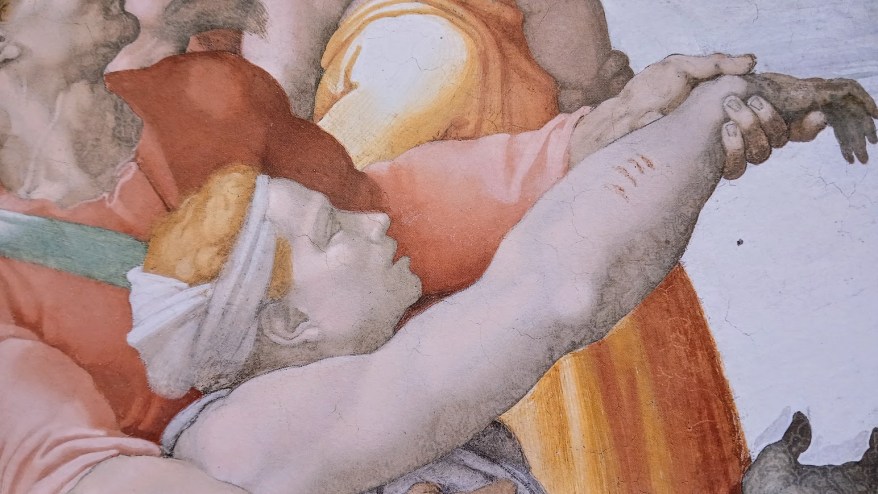
La donna morsa dal serpente nella Cappella Sistina
🇮🇹Quattro segni sul braccio. Nella volta della Cappella Sistina ho dipinto serpenti velenosi, corpi contorti e volti deformati dal terrore. Ma c’è un particolare che potrebbe sfuggirvi… 🇬🇧Four marks on the arm. On the ceiling of the Sistine Chapel, I painted venomous snakes, contorted bodies, and faces twisted by terror. But there is a detail…
-
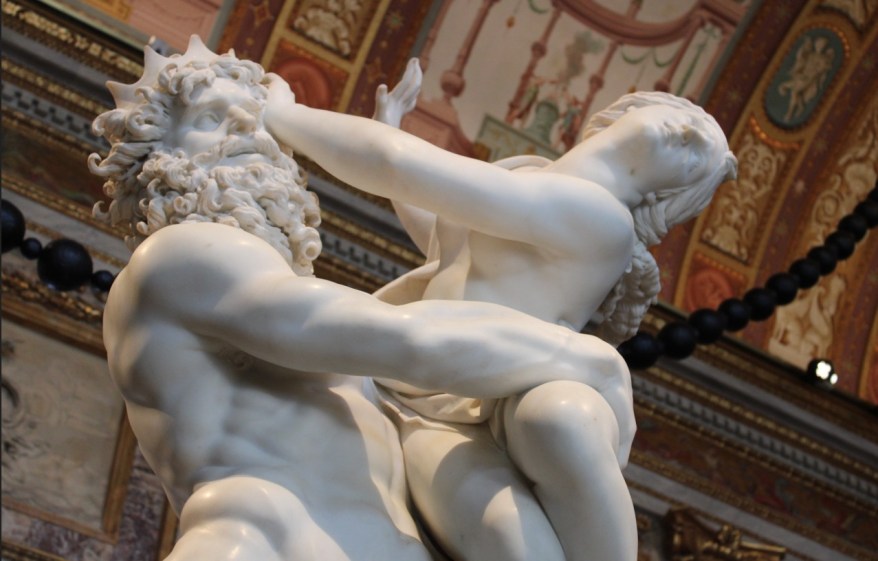
Gian Lorenzo Bernini: l’uomo che fece muovere il marmo
🇮🇹Davanti a una scultura di Gian Lorenzo Bernini, capita di avvicinarsi per osservare un dettaglio e ritrovarsi a seguire con lo sguardo l’intera scena. Una mano stringe una coscia, un volto si volta per sfuggire a uno sguardo, le dita si trasformano in foglie… 🇬🇧When standing before a sculpture by Gian Lorenzo Bernini, you might…
Condividi:


Questo sono io




sostienici

Sostienici – Support Us
Se questo blog ti piace e ti appassiona, puoi aiutarci a farlo crescere sempre più sostenendoci in modo concreto condividendo i post, seguendo le pagine social e con un contributo che ci aiuta ad andare avanti con il nostro lavoro di divulgazione. . ENGLISH: If you like and are passionate about this blog, you can help us make it grow more and more by supporting us in a concrete way by sharing posts, following social pages and with a contribution that helps us to move forward with our dissemination work.
€10,00


