
La Scultura del giorno: la Leda col Cigno di Caradossi
La scultura del giorno che vi propongo oggi è la Leda col Cigno scolpita da Vittorio Caradossi.
Caradossi nacque a Firenze nacque nel 1861 e studiò presso l’Accademia di Belle Arti assieme ad Augusto Rivalta. La maggior parte della sua produzione artistica fu incentrata su gruppi decorativi e single figure nude, caratterizzate da differenti allegorie per soddisfare al massimo le richieste internazionali.

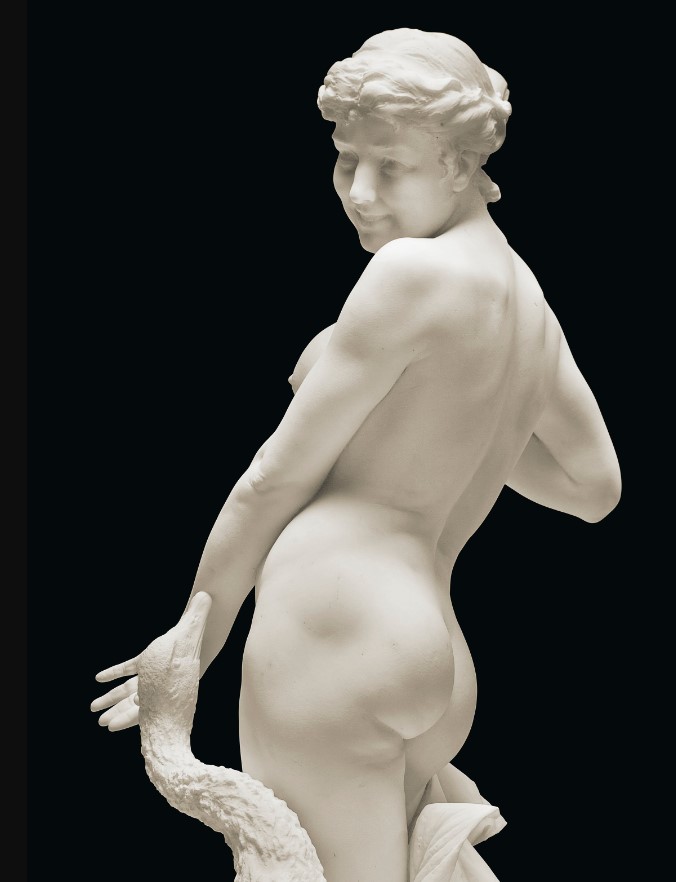
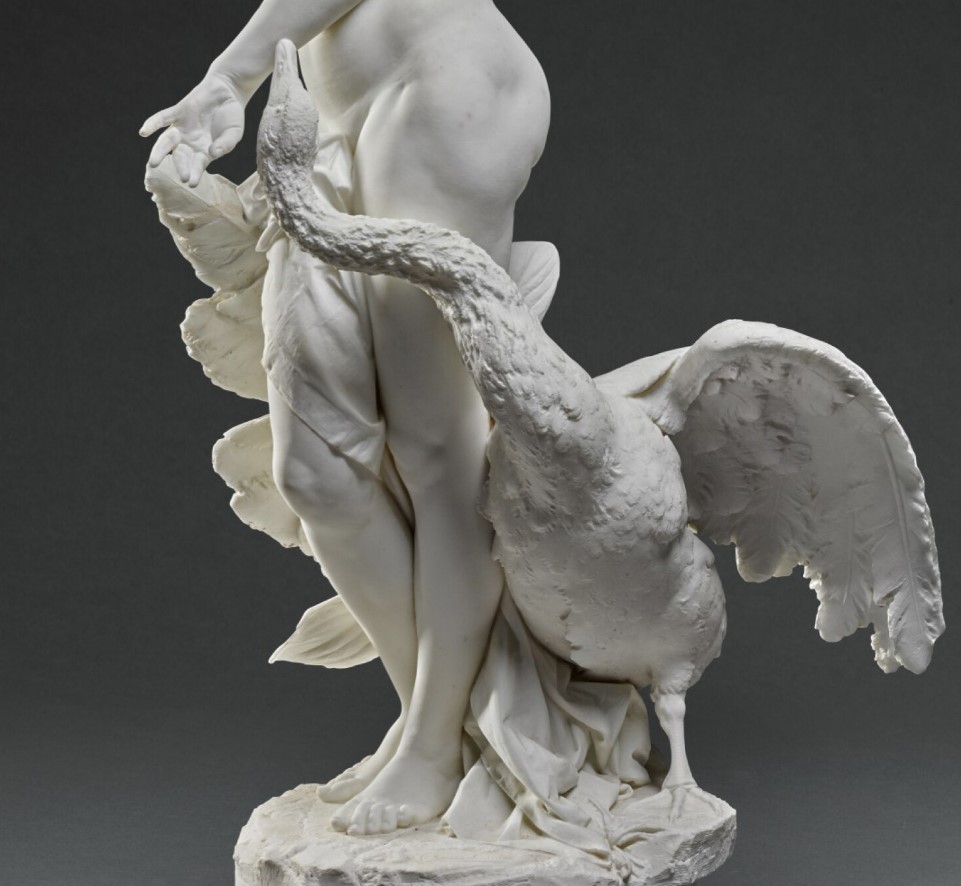
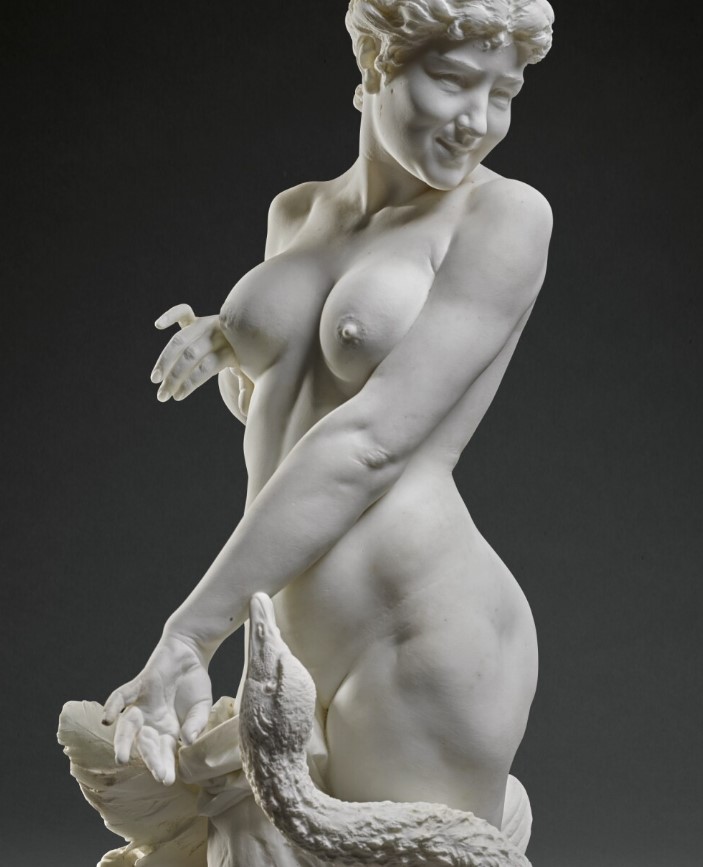
Raramente le opere di Caradossi erano collegate a temi mitologici e Leda con il Cigno ne è un mirabile esempio. L’artista diede forma a una sensuale Leda priva di vesti con Zeus travestito da cigno che la trattiene con l’ala destra mentre si allunga con il collo verso l’alto.
Il tema della Leda è il Cigno è forse uno degli argomenti mitologici più rappresentati nel corso della storia dell’arte.
Mi cimentai anch’io con questo soggetto dipinto per il duca di Ferrara ma lo fecero anche Leonardo da Vinci, il Correggio e tanti altri.
Nella versione greca della storia leggendaria, Leda era dotata di una bellezza sconvolgente. Era nata da Testio, il re di Etolia e Zeus volle sedurla trasformandosi in cigno.
Da quella unione nacquero i due gemelli Castore e Polluce.

Della Leda col Cigno di Caradossi sorprende la sensualità conturbante.
Il panneggio minimo che copre solo parte di una gamba della Leda, le ali del cigno, l’espressione della giovane, i seni e anche l’acconciatura raccolta dei capelli hanno una resa particolarmente accurata.

Questa raffinata opera appartiene a una collezione privata.
Per il momento il vostro Michelangelo Buonarroti vi saluta dandovi appuntamento ai prossimi post e sui social.
Sculpture of the day: Leda with the Swan by Caradossi
The sculpture of the day that I propose to you today is the Leda with the Swan sculpted by Vittorio Caradossi.
Caradossi was born in Florence in 1861 and studied at the Academy of Fine Arts together with Augusto Rivalta. Most of his artistic production was focused on decorative groups and single nude figures, characterized by different allegories to satisfy international requests as much as possible.
Caradossi’s works were rarely connected to mythological themes and Leda with the Swan is an admirable example. The artist gave shape to a sensual Leda without clothes with Zeus disguised as a swan who holds her with his right wing while stretching his neck upwards.
The theme of Leda is the Swan is perhaps one of the most represented mythological topics throughout the history of art.
I too tried my hand at this subject painted for the Duke of Ferrara but Leonardo da Vinci, Correggio and many others did it too.
In the Greek version of the legendary story, Leda was endowed with shocking beauty. She was born from Thestius, the king of Aetolia and Zeus wanted to seduce her by transforming himself into a swan.
From that union the twins Castor and Pollux were born.
Della Leda with Caradossi’s Swan surprises the disturbing sensuality.
The minimal drapery that covers only part of one leg of Leda, the wings of the swan, the expression of the young woman, the breasts and even the gathered hairstyle have a particularly accurate rendering.
This fine work belongs to a private collection.
For the moment, your Michelangelo Buonarroti greets you by making an appointment for the next posts and on social media.

Sostienici – Support Us
Se questo blog ti piace e ti appassiona, puoi aiutarci a farlo crescere sempre più sostenendoci in modo concreto condividendo i post, seguendo le pagine social e con un contributo che ci aiuta ad andare avanti con il nostro lavoro di divulgazione. . ENGLISH: If you like and are passionate about this blog, you can help us make it grow more and more by supporting us in a concrete way by sharing posts, following social pages and with a contribution that helps us to move forward with our dissemination work.
8,00 €
-
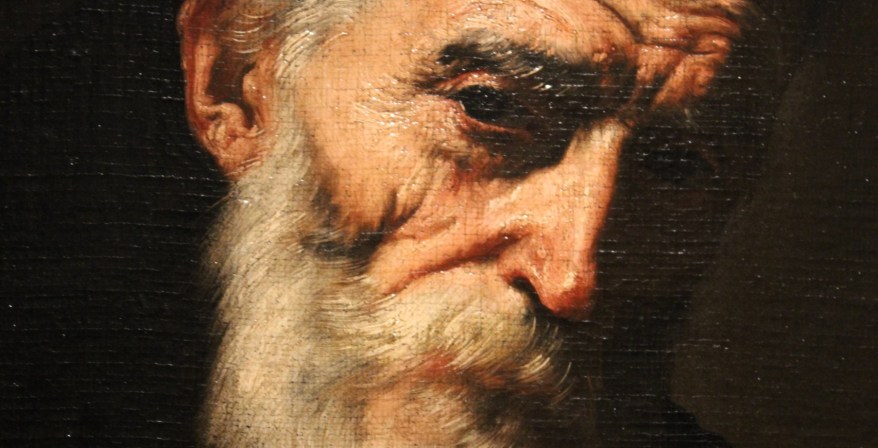
Il realismo che trafigge l’anima: il Sant’Antonio abate di Jusepe de Ribera
🇮🇹Il Sant’Antonio abate di Ribera non si guarda, si sente sottopelle. Rughe, luce, verità. E quegli occhi che raccontano… 🇬🇧You can’t look at Ribera’s Saint Anthony the Abbot, you can feel it under your skin. Wrinkles, light, truth. And those eyes that tell a story…
-
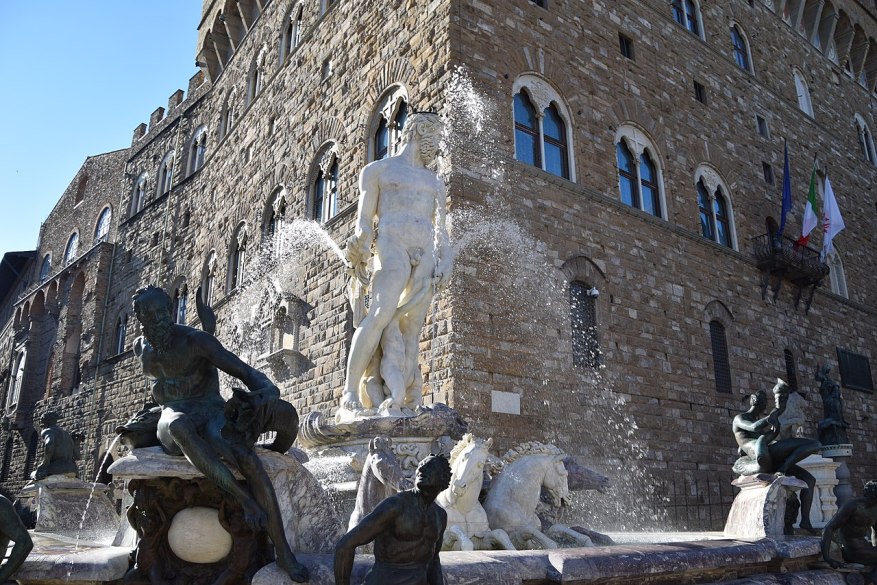
13 aprile 1592: muore Ammannati, il genio del “Biancone” tra capolavori e feroci critiche
🇮🇹Il 13 aprile 1592 si spegneva a Firenze Bartolomeo Ammannati, uno dei protagonisti più complessi e discussi del Rinascimento italiano. Morì nella sua casa di Via della Stufa… 🇬🇧On April 13, 1592, Bartolomeo Ammannati, one of the most complex and controversial figures of the Italian Renaissance, passed away in Florence. He died in his home…
-
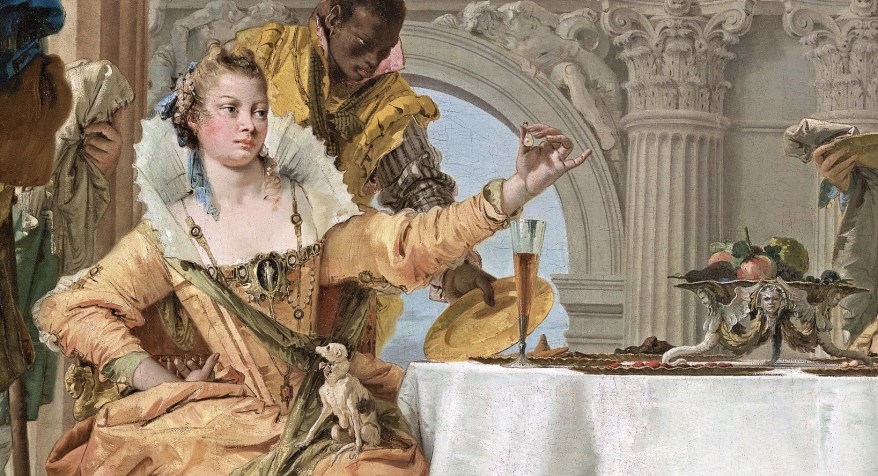
Quando Cleopatra umiliò Roma: il significato nascosto del celebre dipinto di Tiepolo
🇮🇹 Il dipinto che vi propongo è pura teatralità, lusso e strategia. Cleopatra scommette con Marco Antonio di poter offrire il banchetto più sontuoso della storia e per vincere compie un gesto folle… 🇬🇧 The painting I propose is pure theatricality, luxury, and strategy. Cleopatra bets Mark Antony that she can offer the most sumptuous…
Condividi:


Questo sono io





sostienici

Sostienici – Support Us
Se questo blog ti piace e ti appassiona, puoi aiutarci a farlo crescere sempre più sostenendoci in modo concreto condividendo i post, seguendo le pagine social e con un contributo che ci aiuta ad andare avanti con il nostro lavoro di divulgazione. . ENGLISH: If you like and are passionate about this blog, you can help us make it grow more and more by supporting us in a concrete way by sharing posts, following social pages and with a contribution that helps us to move forward with our dissemination work.
€10,00


