
Astuzie adoperate per affrescare la volta della Sistina
Così come posi una particolare attenzione nello scolpire o nel dipingere anche i dettagli più minuti, prestai la medesima cura nel preparare il supporto per la pittura a buon fresco.
Durante il restauro della volta della Cappella Sistina, si sono scoperte alcune particolarità degne di nota: delle vere e proprie astuzie che misi in pratica per ottenere effetti ottici diversi e per allungare i tempi di asciugatura dell’intonaco in alcune zone ben precise.

La stesura della malta non è sempre uguale ma cambia in base a ciò che poi ci avrei dipinto sopra. Appare infatti più pressata nelle zone interessate dagli incarnati e dai panneggi mentre è meno compressa laddove poi raffigurai i fondi.
Sapete cosa c’è dietro questa scelta apparentemente bizzarra? Premendo in modo diverso la base di malta ottenevo un grado differente di assorbimento della luce ottenendo così una diversa resa cromatica finale. Ve lo sareste mai immaginato?

Altra particolarità è quella che riguarda la quantità di inerte, ovvero di pozzolana, presente nel tonachino: l’ultimo dei tre strati di intonaco che si stende prima di procedere con la realizzazione di un affresco che poi alla fine è quello che sarà a diretto contatto con i pigmenti.
Nelle lunette, la quantità di pozzolana presente nel tonachino è di gran lunga superiore rispetto a quella del resto della volta e l’intonaco risulta molto meno stretto. Quello fu uno stratagemma tecnico che mi permise di aumentare in modo considerevole i tempi di asciugatura dell’affresco.
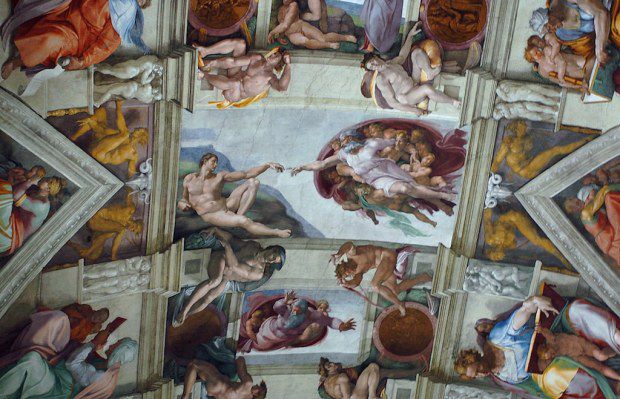
In questo modo, avendo più ore a disposizione per lavorare, riuscivo a dipingere porzioni più ampie di superficie in una sola giornata.
Per il momento il vostro Michelangelo Buonarroti vi saluta dandovi appuntamento ai prossimi post e sui social.
Tricks used to fresco the vault of the Sistine Chapel
Just as I paid particular attention to sculpting or painting even the smallest details, I paid the same care in preparing the support for the fresco painting.
During the restoration of the vault of the Sistine Chapel, some noteworthy peculiarities were discovered: real tricks that I put into practice to obtain different optical effects and to lengthen the drying times of the plaster in some very specific areas.
The application of the mortar is not always the same but changes based on what I would then paint on top of it. In fact, it appears more compressed in the areas affected by the flesh tones and drapery while it is less compressed where I then depicted the backgrounds.
Do you know what is behind this seemingly bizarre choice? By pressing the mortar base in different ways, I obtained a different degree of light absorption, thus obtaining a different final color rendering. Would you have ever imagined it?
Another peculiarity is that which concerns the quantity of inert, or pozzolana, present in the plaster: the last of the three layers of plaster that is applied before proceeding with the creation of a fresco which in the end is the one that will be in direct contact with pigments.
In the lunettes, the quantity of pozzolana present in the plaster is much higher than that of the rest of the vault and the plaster is much less tight. That was a technical stratagem that allowed me to considerably increase the drying times of the fresco.
In this way, having more time available to work, I was able to paint larger portions of the surface in a single day.
For the moment, your Michelangelo Buonarroti greets you by making an appointment for the next posts and on social media.

Sostienici – Support Us
Se questo blog ti piace e ti appassiona, puoi aiutarci a farlo crescere sempre più sostenendoci in modo concreto condividendo i post, seguendo le pagine social e con un contributo che ci aiuta ad andare avanti con il nostro lavoro di divulgazione. . ENGLISH: If you like and are passionate about this blog, you can help us make it grow more and more by supporting us in a concrete way by sharing posts, following social pages and with a contribution that helps us to move forward with our dissemination work.
5,00 €
-
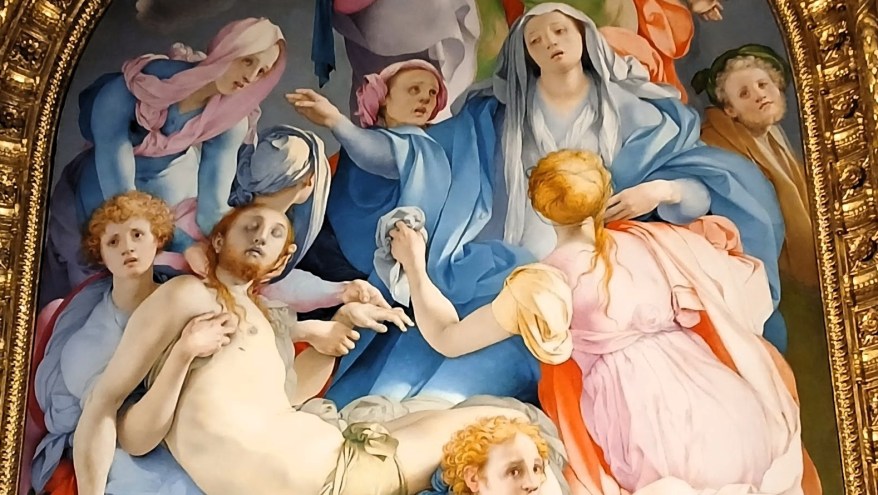
La Deposizione del Pontormo: il capolavoro dell’artista
🇮🇹Ti coinvolge. Ti mette a disagio. Ti costringe a sentire. E’ la Deposizione dalla Croce, dipinta da Jacopo Pontormo tra il 1525 e il 1528 per la Cappella Capponi… 🇬🇧It draws you in. It makes you uncomfortable. It forces you to feel. It’s the Deposition from the Cross, painted by Jacopo Pontormo between 1525 and…
-
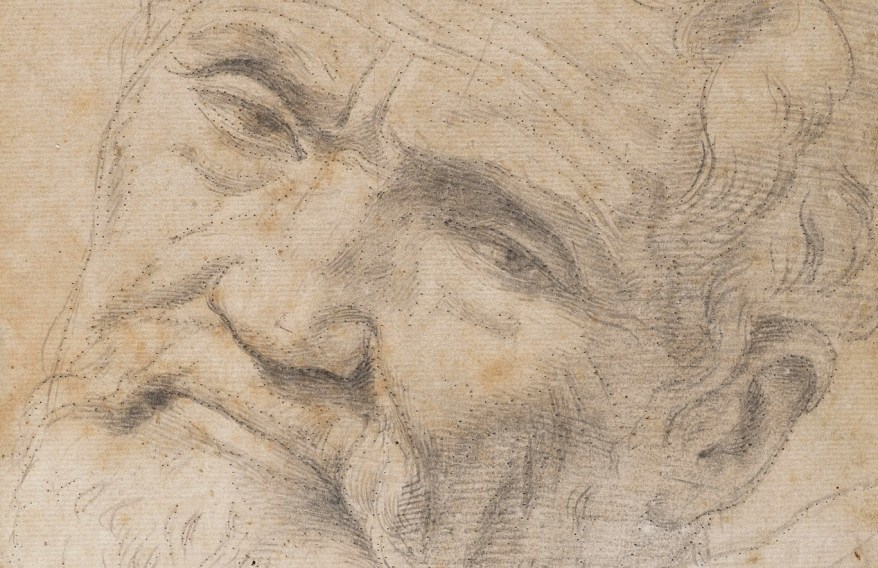
Non chiamatelo Braghettone: il 4 aprile del 1566 muore Daniele da Volterra, l’artista che salvò il Giudizio Universale
🇮🇹Braghettone? No, molto di più. Il 4 aprile 1566 moriva Daniele da Volterra, il mio allievo più fedele, l’uomo che mi rimase accanto fino all’ultimo respiro e che salvò il mio Giudizio Universale dalla distruzione… 🇬🇧Braghettone? No, much more. On April 4, 1566, Daniele da Volterra died, my most faithful student, the man who remained…
-
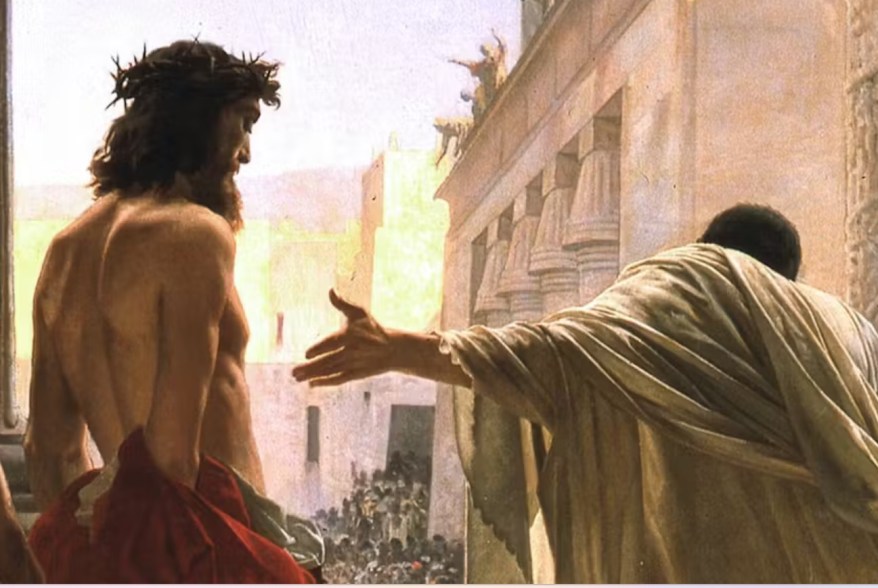
Venerdì Santo: gli “Ecce Homo” più intensi della storia dell’arte
🇮🇹Ecce Homo. Da Antonello da Messina a Tintoretto, fino al sorprendente capolavoro di Antonio Ciseri, questo soggetto ha attraversato i secoli raccontando dolore, umanità e coscienza… 🇬🇧Ecce Homo. From Antonello da Messina to Tintoretto, to Antonio Ciseri’s astonishing masterpiece, this subject has spanned the centuries, recounting pain, humanity, and conscience…
Condividi:


Questo sono io





sostienici

Sostienici – Support Us
Se questo blog ti piace e ti appassiona, puoi aiutarci a farlo crescere sempre più sostenendoci in modo concreto condividendo i post, seguendo le pagine social e con un contributo che ci aiuta ad andare avanti con il nostro lavoro di divulgazione. . ENGLISH: If you like and are passionate about this blog, you can help us make it grow more and more by supporting us in a concrete way by sharing posts, following social pages and with a contribution that helps us to move forward with our dissemination work.
€10,00


1 commento »