
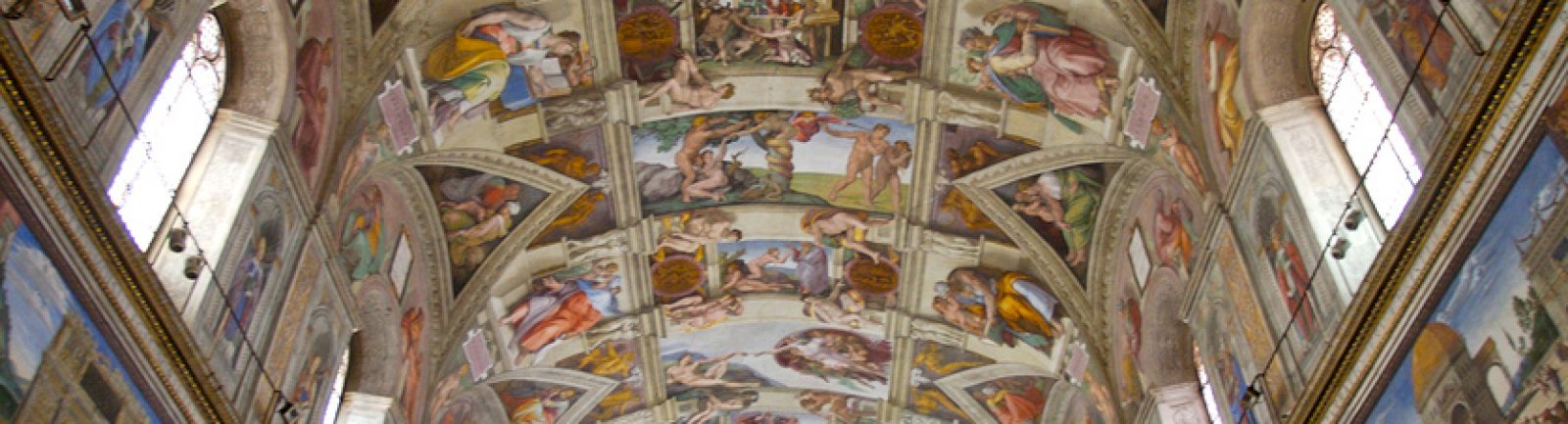
Il mio cenotafio nella chiesa dei Santi Apostoli a Roma
Il giorno dopo la mia morte, avvenuta a Roma il 18 febbraio del 1564, le mie spoglie furono portate nella Basilica dei Santi Apostoli, nel cuore del Rione Trevi.
Papa Pio IV desiderava che rimanessi lì ma in realtà ci sostai solo una manciata di giorni.
Cosimo I che non era riuscito a farmi tornare da vivo in quel di Firenze non si sarebbe arreso così facilmente. Non è azzardato pensare che dietro l’impresa del mi nipote Lionardo ci fosse proprio lui. Lionardo arrivò a Roma il 24 Febbraio e iniziò ad architettare assieme ad altri collaboratori la mia fuga da morto.
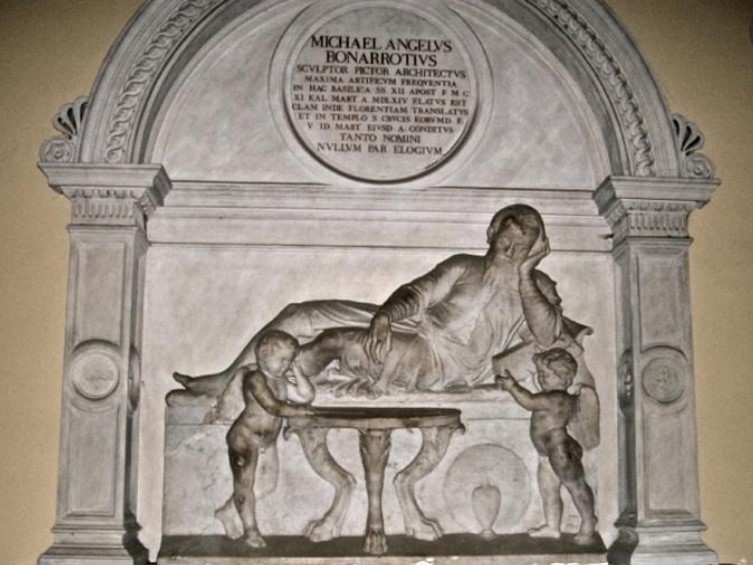
Ebbene, quella mia sosta nella chiesa dei Santi Apostoli mi valse un cenotafio che tutt’oggi potete vedere nel corridoio congiunto alla chiesa.
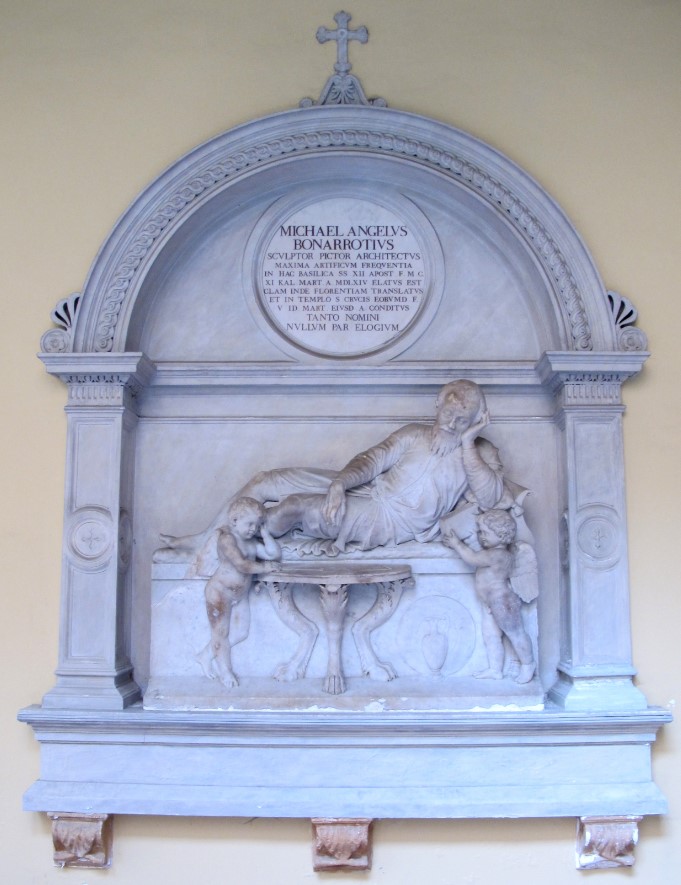
Il monumento funebre fu realizzato da Giacomo del Duca che da me aveva appreso molto nel corso degli ultimi anni e fu anche mio collaboratore nella realizzazione di Porta Pia.
Per il momento il vostro Michelangelo Buonarroti vi saluta dandovi appuntamento ai prossimi post e sui social.
My cenotaph in the church of the Santi Apostoli in Rome
The day after my death, which took place in Rome on February 18, 1564, my remains were taken to the Basilica dei Santi Apostoli, in the heart of the Trevi district.
Pope Pius IV wanted me to stay there but in reality I only stayed there for a handful of days.
Cosimo I, who had not managed to get me back alive in Florence, would not have given up so easily. It is not hazardous to think that he was behind my nephew Lionardo’s enterprise. Lionardo arrived in Rome on February 24 and began to plan my escape from the dead together with other collaborators.
On 7 March, the courier who used to bring me the gifts and what I bought in Florence through Lionardo, loaded me onto a lead-lined crate and we left for Florence.
Well, my stop in the church of the Holy Apostles earned me a cenotaph that you can still see today in the corridor connected to the church.
The funeral monument was built by Giacomo del Duca who had learned a lot from me over the last few years and was also my collaborator in the construction of Porta Pia.
For the moment, your Michelangelo Buonarroti greets you by giving you an appointment at the next posts and on social networks.

Sostienici – Support Us
Se questo blog ti piace e ti appassiona, puoi aiutarci a farlo crescere sempre più sostenendoci in modo concreto condividendo i post, seguendo le pagine social e con un contributo che ci aiuta ad andare avanti con il nostro lavoro di divulgazione. . ENGLISH: If you like and are passionate about this blog, you can help us make it grow more and more by supporting us in a concrete way by sharing posts, following social pages and with a contribution that helps us to move forward with our dissemination work.
5,00 €
-
Dentro il catalogo di Bernini e i Barberini: arte, potere e immagini mozzafiato
Arte, storia e immagini sorprendenti: il catalogo “Bernini e i Barberini” racconta il legame tra Bernini e Urbano VIII in modo unico.
-
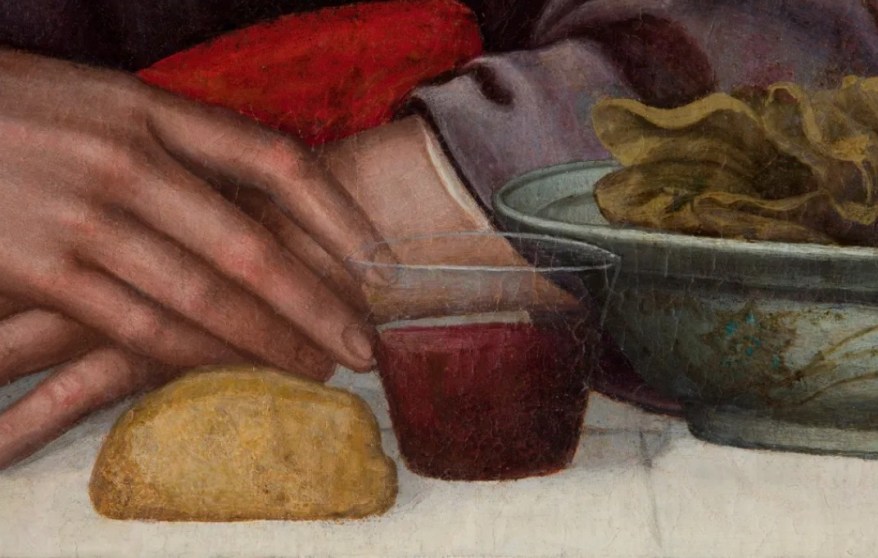
Pasqua: l’Ultima Cena della monaca pittrice Plautilla Nelli
🇮🇹Nel tempo della Pasqua, tra riflessione e rinascita, emerge la figura straordinaria di Plautilla Nelli: un’artista che, sfidando i limiti imposti alle donne, ha lasciato un segno profondo nella storia del Rinascimento. Vi propongo il suo capolavoro: l’Ultima Cena di Santa Maria Novella, a Firenze 🇬🇧During the Easter season, between reflection and rebirth, the extraordinary…
-
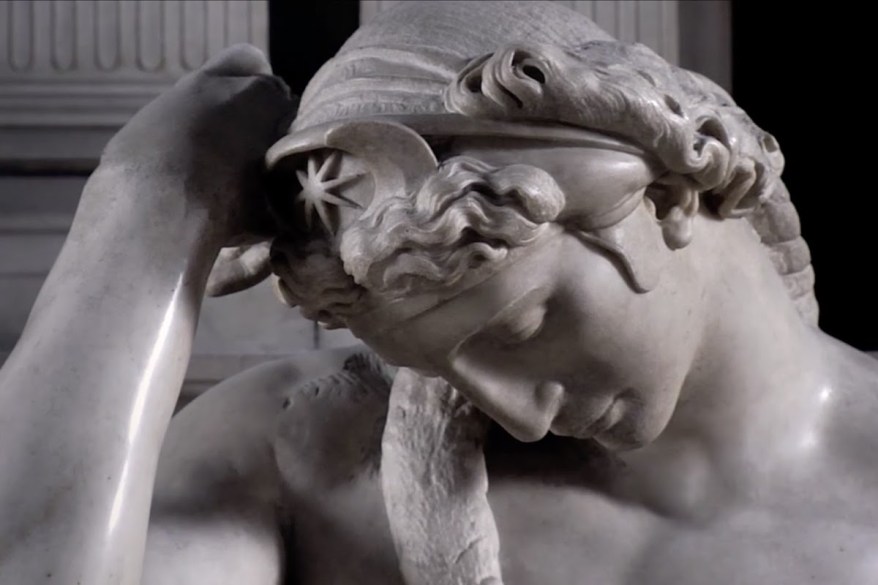
Il Giorno e la Notte: eterni nel loro alternarsi
🇮🇹Il marmo respira? No, ma è capace di trattenere il fiato fissando nell’eternità momenti che altrimenti si perderebbero per sempre… 🇬🇧Does marble breathe? No, but it is capable of holding its breath, capturing in eternity moments that would otherwise be lost forever…
Condividi:


Questo sono io





sostienici

Sostienici – Support Us
Se questo blog ti piace e ti appassiona, puoi aiutarci a farlo crescere sempre più sostenendoci in modo concreto condividendo i post, seguendo le pagine social e con un contributo che ci aiuta ad andare avanti con il nostro lavoro di divulgazione. . ENGLISH: If you like and are passionate about this blog, you can help us make it grow more and more by supporting us in a concrete way by sharing posts, following social pages and with a contribution that helps us to move forward with our dissemination work.
€10,00


