

L’Adorazione dei Magi di Matthias Stomer: analisi, significato e storia del capolavoro del Seicento
L’Adorazione dei Magi di Matthias Stomer è una delle interpretazioni più intense e teatrali del celebre episodio narrato nel Vangelo di Matteo.
I tre re d’Oriente, guidati dalla luce della stella, giungono a Betlemme per rendere omaggio al “re dei Giudei”, portando con sé i doni simbolici di oro, incenso e mirra. Nella tradizione cristiana, questi doni rappresentano rispettivamente la regalità, la natura divina e l’umanità e dunque la mortalità di Cristo.
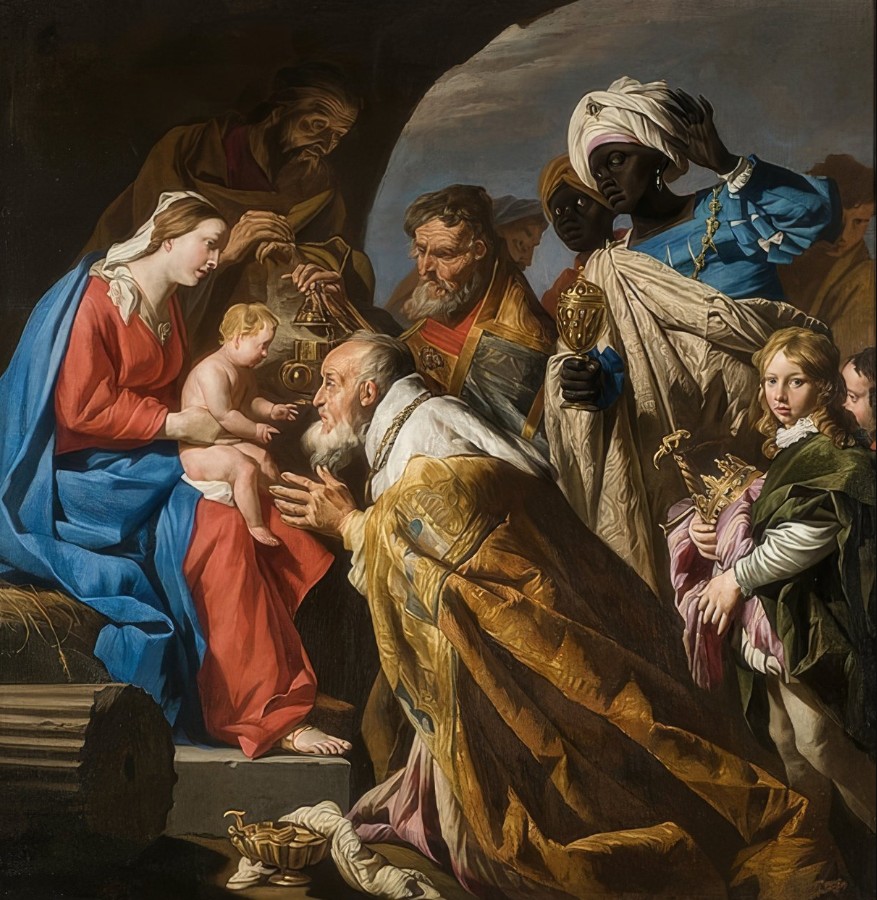

Fin dal Medioevo, i Magi sono stati interpretati come figure provenienti da tre continenti Europa, Africa e Asia, a testimonianza della diffusione universale della fede cristiana e della sottomissione dei poteri terreni all’autorità spirituale della Chiesa.
Iconografia e il significato teologico
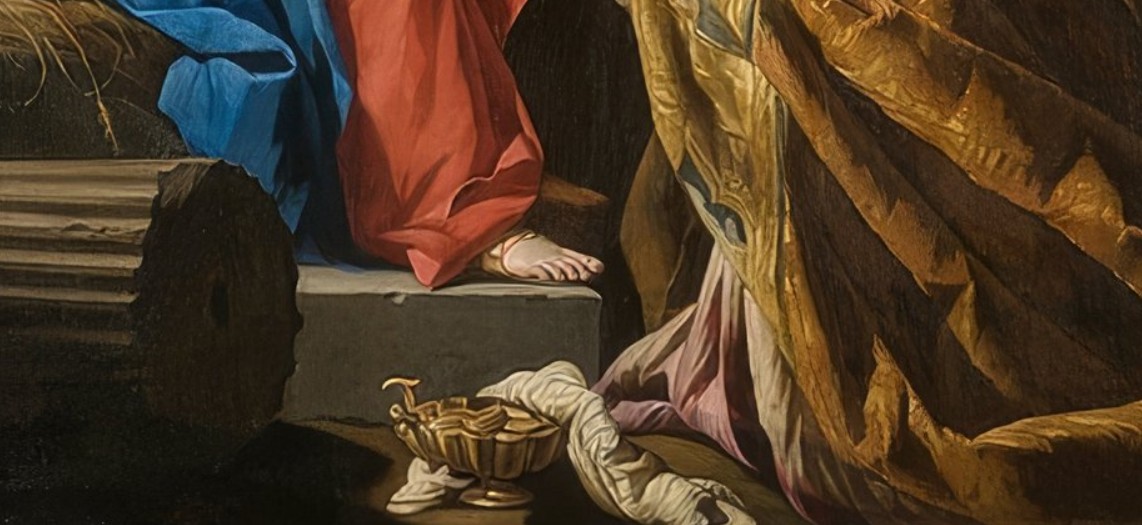
Stomer accentua la dimensione simbolica del tema inserendo la Sacra Famiglia e il seguito dei Magi all’interno di un ambiente dove sono presenti rovine architettoniche. Le colonne spezzate e i frammenti di un antico tempio sono una chiara allusione al crollo dell’Antica Legge e alla nascita della Nuova Alleanza portata da Cristo.
Questo motivo, molto diffuso nel Seicento, collega la nascita di Gesù all’idea di rinnovamento spirituale e al superamento della tradizione pagana.
La luce e la teatralità: l’eredità caravaggesca
Matthias Stomer, pittore olandese attivo per gran parte della sua carriera in Italia, è uno dei più originali maestri del caravaggismo nordico. La sua arte si distingue per l’uso straordinariamente consapevole della luce naturale: nei suoi dipinti, la fonte luminosa, spesso una candela, una torcia o, come in questo caso, un bagliore soprannaturale, diventa il vero motore narrativo della scena.
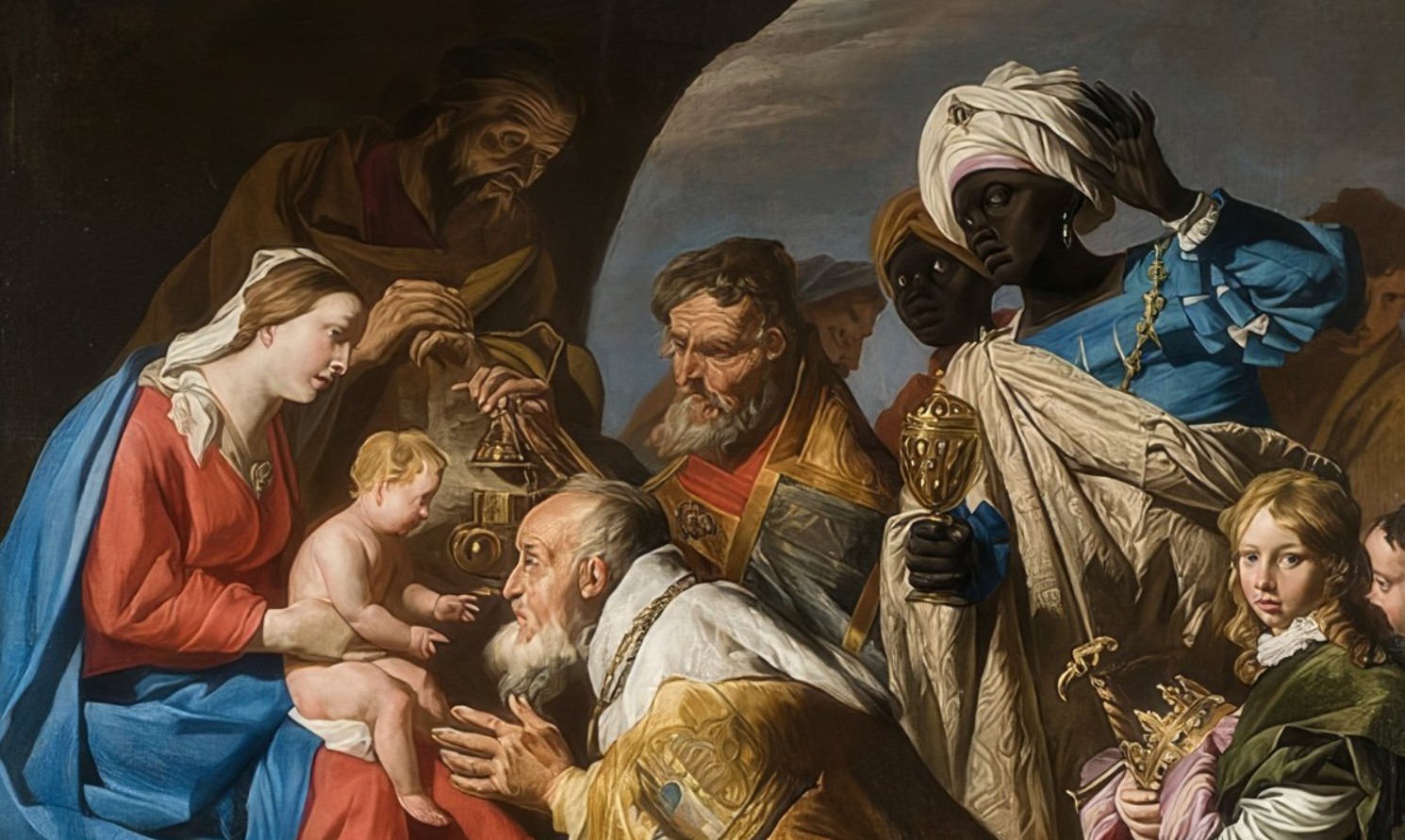
Nell’Adorazione dei Magi, una luce e viva e intensa illumina i protagonisti, creando contrasti netti che modellano i volti e i drappi con un effetto quasi scultoreo. La ricchezza materica delle vesti dei Magi, realizzate con un’attenzione minuziosa alle trame dei broccati e delle sete, si combina con un’impostazione rigorosa e chiara della composizione, tipica della sensibilità narrativa dell’artista.
Realismo e idealizzazione
La scena è popolata da figure virili dai tratti fortemente realistici, una caratteristica che tradisce l’interesse di Stomer per l’osservazione diretta e per i modelli popolari, come era consuetudine tra i seguaci di Caravaggio. A questo naturalismo intenso delle figure maschili si contrappone la rappresentazione più idealizzata di Maria e Gesù: i loro volti sereni, delicatamente levigati dalla luce, richiamano una dimensione sacra e atemporale, distinguendoli dal mondo terreno che li circonda.
Stomer e il suo contesto artistico
Matthias Stomer, o Stom che dir si voglia, fu un artista itinerante, attivo tra Napoli, Roma e soprattutto la Sicilia, dove produsse alcune delle sue opere più celebri.
La sua pittura rimane sempre fedele ai principi fondamentali del caravaggismo, pur sviluppando una personale inclinazione per la monumentalità delle figure e per un tenebrismo meno drammatico e più equilibrato rispetto a quello dei suoi modelli italiani. L’Adorazione dei Magi dello Stoccolma Museum rappresenta uno degli esempi più alti della sua maturità artistica: una scena sacra immersa in una luce che è al tempo stesso simbolo, rivelazione e protagonista.
Per il momento il sempre vostro Michelangelo Buonarroti vi saluta dandovi appuntamento ai prossimi post e sui social.
The Adoration of the Magi by Matthias Stomer: Analysis, Meaning, and History of the 17th-Century Masterpiece
Matthias Stomer’s Adoration of the Magi is one of the most intense and theatrical interpretations of the famous episode narrated in the Gospel of Matthew.
The three kings of the East, guided by the light of the star, arrive in Bethlehem to pay homage to the “king of the Jews,” bringing with them symbolic gifts of gold, frankincense, and myrrh. In Christian tradition, these gifts represent, respectively, kingship, the divine nature, and humanity—and therefore, the mortality—of Christ.
Since the Middle Ages, the Magi have been interpreted as figures from three continents: Europe, Africa, and Asia, testifying to the universal spread of the Christian faith and the submission of earthly powers to the spiritual authority of the Church.
Iconography and Theological Significance
Stomer accentuates the symbolic dimension of the theme by placing the Holy Family and the Magi’s entourage within a setting filled with architectural ruins. The broken columns and fragments of an ancient temple are a clear allusion to the collapse of the Old Law and the birth of the New Covenant brought by Christ.
This motif, widespread in the 17th century, links the birth of Jesus to the idea of spiritual renewal and the overcoming of pagan tradition.
Light and Theatricality: The Caravaggesque Legacy
Matthias Stomer, a Dutch painter active for much of his career in Italy, is one of the most original masters of Northern Caravaggism. His art is distinguished by his extraordinarily deliberate use of natural light: in his paintings, the light source—often a candle, a torch, or, as in this case, a supernatural glow—becomes the true narrative engine of the scene.
In the Adoration of the Magi, a bright and intense light illuminates the protagonists, creating sharp contrasts that shape the faces and drapes with an almost sculptural effect. The rich texture of the Magi’s robes, crafted with meticulous attention to the weave of the brocades and silks, combines with a rigorous and clear composition, typical of the artist’s narrative sensibility.
Realism and Idealization
The scene is populated by male figures with highly realistic features, a characteristic that betrays Stomer’s interest in direct observation and popular models, as was common among Caravaggio’s followers. This intense naturalism of the male figures contrasts with the more idealized representation of Mary and Jesus: their serene faces, delicately smoothed by the light, evoke a sacred and timeless dimension, distinguishing them from the earthly world around them.
Stomer and his artistic context
Matthias Stomer, or Stom as he is known, was an itinerant artist, active between Naples, Rome, and especially Sicily, where he produced some of his most famous works.
His painting remained faithful to the fundamental principles of Caravaggism, while developing a personal penchant for monumental figures and a less dramatic and more balanced tenebrism than that of his Italian models. The Adoration of the Magi at the Stockholm Museum represents one of the finest examples of his artistic maturity: a sacred scene bathed in light that is simultaneously symbol, revelation, and protagonist.
For now, yours truly, Michelangelo Buonarroti bids you farewell, and we’ll see you in future posts and on social media.

Sostienici – Support Us
Se questo blog ti piace e ti appassiona, puoi aiutarci a farlo crescere sempre più sostenendoci in modo concreto condividendo i post, seguendo le pagine social e con un contributo che ci aiuta ad andare avanti con il nostro lavoro di divulgazione. . ENGLISH: If you like and are passionate about this blog, you can help us make it grow more and more by supporting us in a concrete way by sharing posts, following social pages and with a contribution that helps us to move forward with our dissemination work.
10,00 €
Condividi:


Questo sono io





sostienici

Sostienici – Support Us
Se questo blog ti piace e ti appassiona, puoi aiutarci a farlo crescere sempre più sostenendoci in modo concreto condividendo i post, seguendo le pagine social e con un contributo che ci aiuta ad andare avanti con il nostro lavoro di divulgazione. . ENGLISH: If you like and are passionate about this blog, you can help us make it grow more and more by supporting us in a concrete way by sharing posts, following social pages and with a contribution that helps us to move forward with our dissemination work.
€10,00


