
L’opera del giorno: il San Giovanni Battista di Houdon
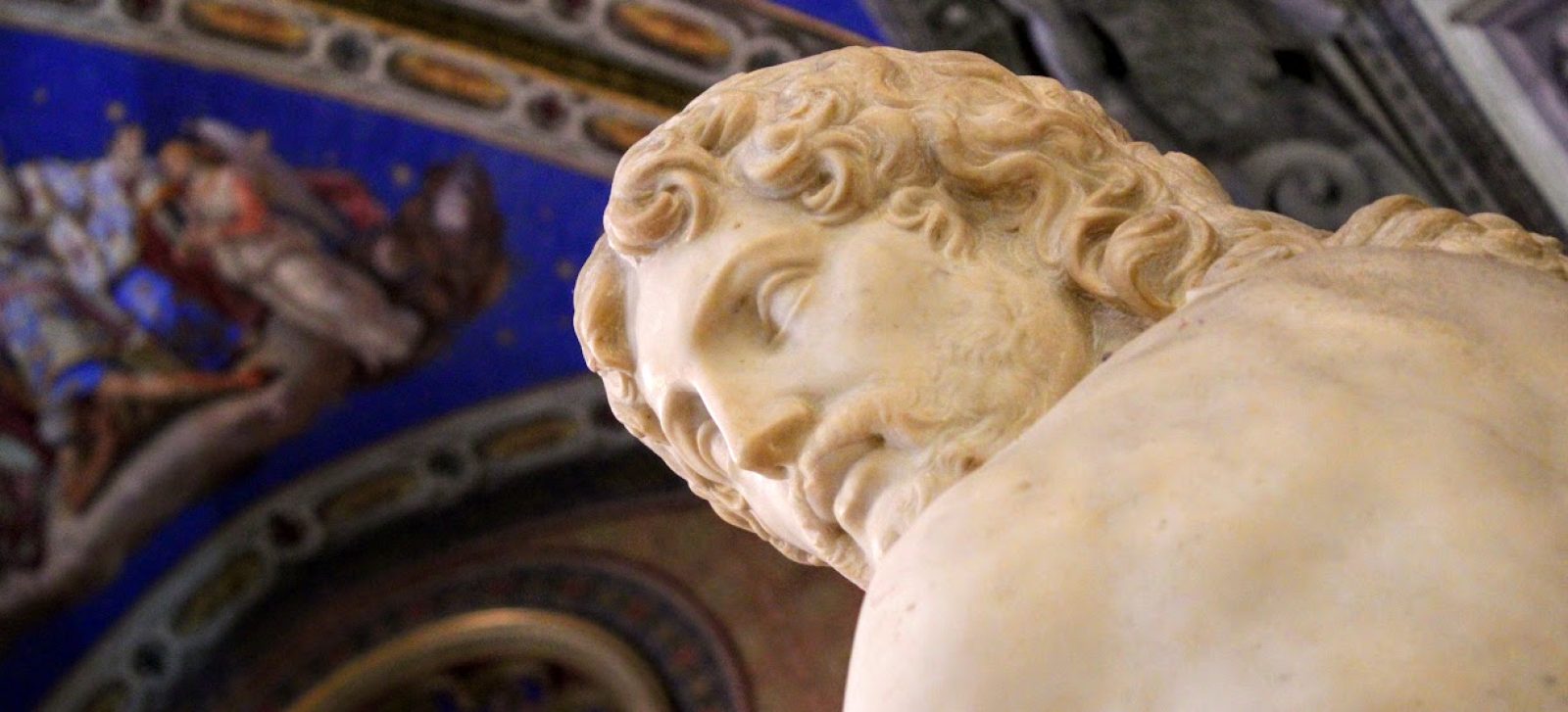
L’opera del giorno che vi propongo oggi è il San Giovanni Battista commissionato nel 1766 a Jean-Antoine Houdon per la chiesa romana di Santa Maria degli Angeli.
Fu André Le Masson, procuratore generale dei Certosini, a chiedere quel lavoro a Houdon con l’intenzione di collocarlo in una delle due nicchie del vestibolo realizzato da Luigi Vanvitelli.
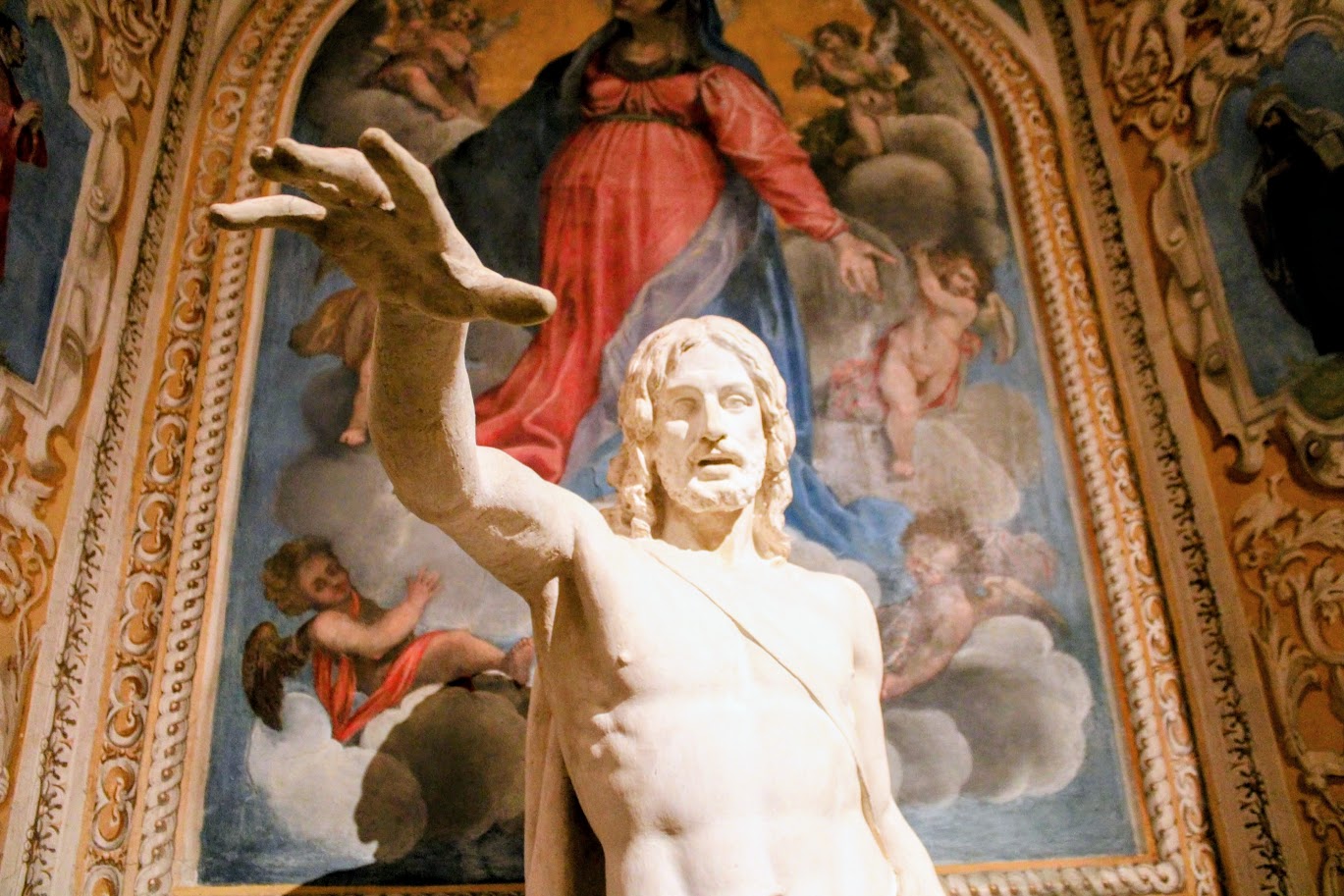
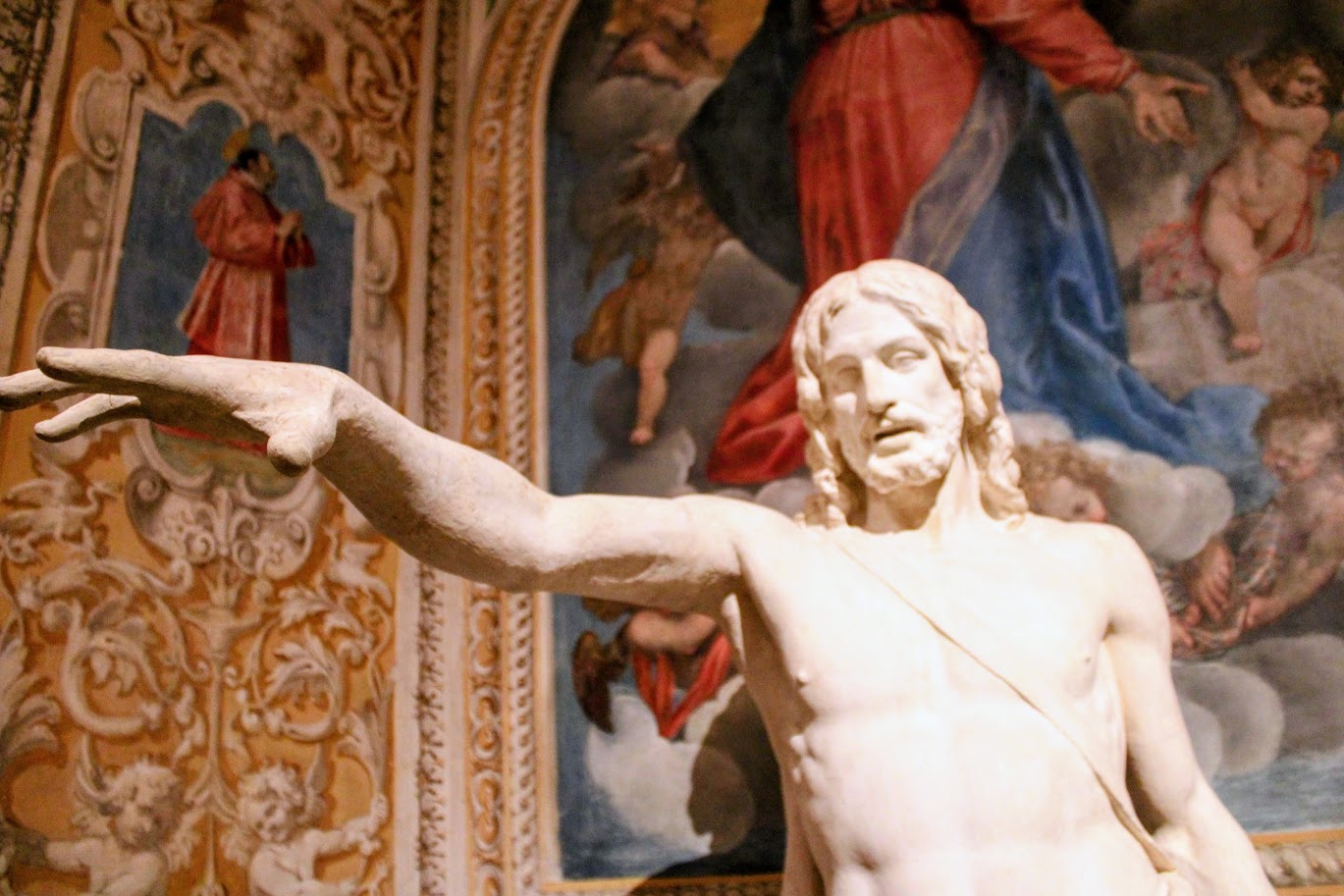
Il Santo venne rappresentato dall’artista con la mano destra levata, mentre sta per battezzare o benedire qualcuno. Indossa solo una semplice pelliccia di animale annodata sui fianchi e ha uno sguardo penetrante.
Sta avanzando verso lo spettatore e si intuisce dalla posizione delle gambe e da quello sbilanciamento in avanti, accentuato dal braccio proteso.
Quest’opera in gesso venne ritrovata rotta in più parti solo nel 1921, all’interno di un ambiente del Museo nazionale Romano. Subito venne identificata come il bozzetto preparatorio per la scultura del San Giovanni Battista commissionato a Houdon assieme al San Bruno per arricchire la chiesa di Santa Maria degli Angeli, a Roma.
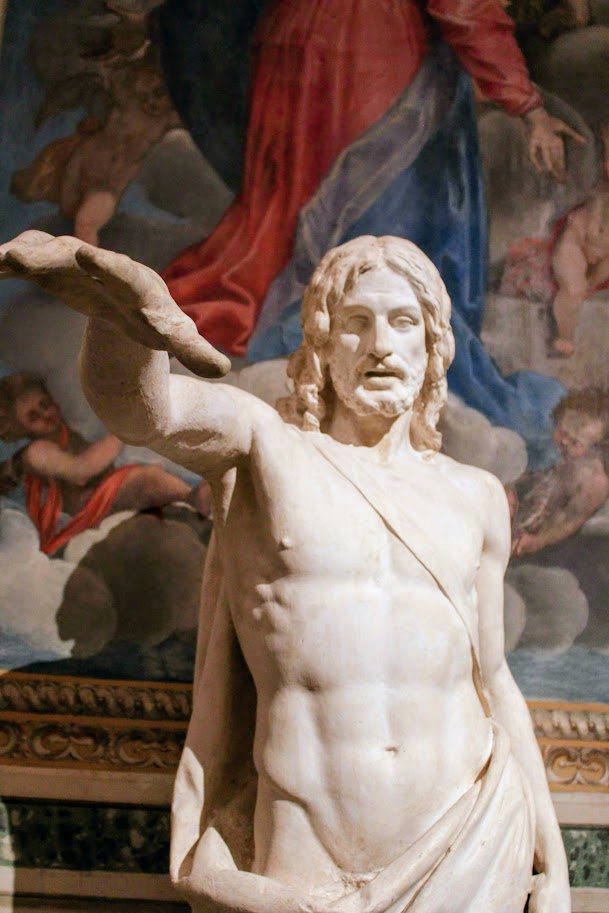
L’opera finale venne poi realizzata dall’artista sempre in gesso ma fu letteralmente distrutta nel 1894. Guardando il gesso si ha ben chiaro quanto l’artista conoscesse l’anatomia umana. Dovete sapere che per elaborare questo modello, Hudson realizzò studi accurati della muscolatura e dei tendini, fino a realizzare un modello scorticato.
Affinò le sue conoscenze anatomiche seguendo con particolare interesse i corsi di anatomia impartiti presso l’infermeria di San Luigi dei Francesi, impartiti da un affermato chirurgo dell’epoca.
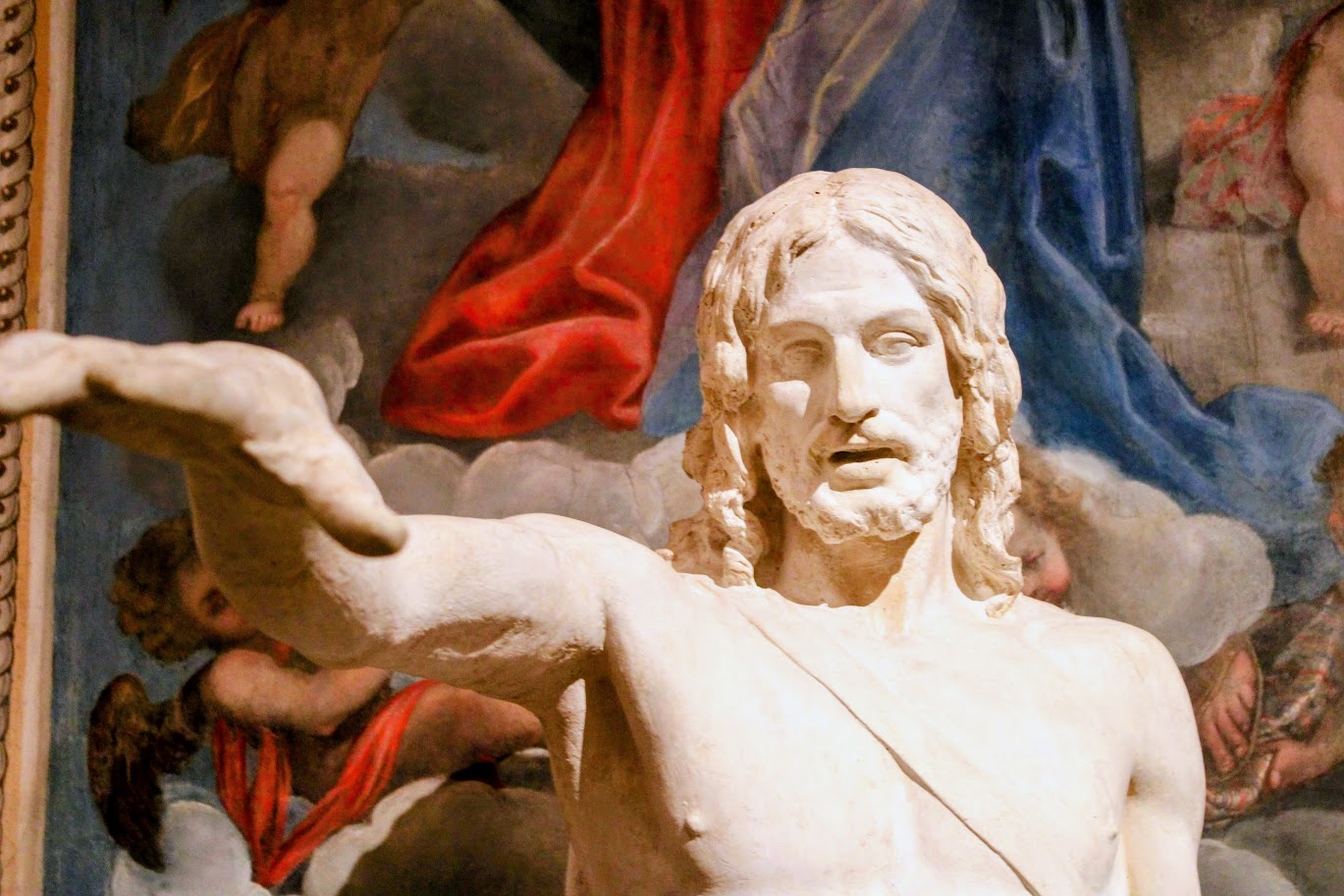
Osservate con attenzione questo San Giovanni Battista: non vi ricorda forse un’opera mia? Ebbene sì, ha molto a che fare con il mio Cristo Portacroce della Basilica di Santa Maria sopra Minerva.
Non è dato sapere i motivo per il quale il San Giovanno non fu mai trasporto in marmo e, nella nicchia della chiesa, fu collocata un’opera in gesso colossale che riprendeva esattamente il modello di Hudson, ma alta 3,15 metri.
Se volete vedere dal vero questo San Giovanni Battista stante, non vi rimane altro che visitare la Galleria Borghese, dove è esposto.
Per il momento il sempre vostro Michelangelo Buonarroti vi saluta dandovi appuntamento ai prossimi post e sui social.
Work of the Day: Houdon’s Saint John the Baptist
The work of the day I’m featuring today is the Saint John the Baptist commissioned in 1766 from Jean-Antoine Houdon for the Roman church of Santa Maria degli Angeli.
André Le Masson, procurator general of the Carthusians, commissioned the work from Houdon, intending to place it in one of the two niches in the vestibule designed by Luigi Vanvitelli.
The artist depicted the saint with his right hand raised, about to baptize or bless someone. He wears only a simple animal fur knotted at his hips and has a penetrating gaze. He is advancing toward the viewer, as can be seen from the position of his legs and the forward lean, accentuated by his outstretched arm.
This plaster work was discovered broken into several pieces in 1921, inside a room of the National Roman Museum. It was immediately identified as the preparatory sketch for the sculpture of Saint John the Baptist, commissioned from Houdon along with Saint Bruno, to adorn the church of Santa Maria degli Angeli in Rome.
The final work was later created by the artist, again in plaster, but was literally destroyed in 1894. Looking at the plaster cast, it becomes clear how much the artist knew about human anatomy. To develop this model, Hudson made meticulous studies of the muscles and tendons, ultimately creating a flayed model.
He refined his anatomical knowledge by following with particular interest the anatomy courses taught at the infirmary of San Luigi dei Francesi, taught by an established surgeon of the time.
Look closely at this Saint John the Baptist: doesn’t it remind you of one of my works? Yes, it has a lot to do with my Christ Carrying the Cross in the Basilica of Santa Maria sopra Minerva.
It’s unknown why the Saint John was never transported in marble, and why a colossal plaster work was placed in the church’s niche, exactly modeled after Hudson’s model, but 3.15 meters tall.
If you want to see this standing Saint John the Baptist in person, all you have to do is visit the Borghese Gallery, where it is on display.
For now, yours truly, Michelangelo Buonarroti bids you farewell and says he’ll see you in future posts and on social media.

Sostienici – Support Us
Se questo blog ti piace e ti appassiona, puoi aiutarci a farlo crescere sempre più sostenendoci in modo concreto condividendo i post, seguendo le pagine social e con un contributo che ci aiuta ad andare avanti con il nostro lavoro di divulgazione. . ENGLISH: If you like and are passionate about this blog, you can help us make it grow more and more by supporting us in a concrete way by sharing posts, following social pages and with a contribution that helps us to move forward with our dissemination work.
10,00 €
Articoli
Condividi:


Questo sono io





sostienici

Sostienici – Support Us
Se questo blog ti piace e ti appassiona, puoi aiutarci a farlo crescere sempre più sostenendoci in modo concreto condividendo i post, seguendo le pagine social e con un contributo che ci aiuta ad andare avanti con il nostro lavoro di divulgazione. . ENGLISH: If you like and are passionate about this blog, you can help us make it grow more and more by supporting us in a concrete way by sharing posts, following social pages and with a contribution that helps us to move forward with our dissemination work.
€10,00


