
Considerazioni sull’attribuzione della Madonna di Manchester
La cosiddetta Madonna di Manchester col Bambino, San Giovannino e quattro angeli è la tavola che da meno di due secoli viene attribuita a me ma più volte ne è stata messa in discussione la paternità, fornendo argomentazioni tutt’altro che trascurabili.
Parte della critica, seguendo tracce documentarie, ritiene possa averla dipinta attorno al 1497 a Roma.
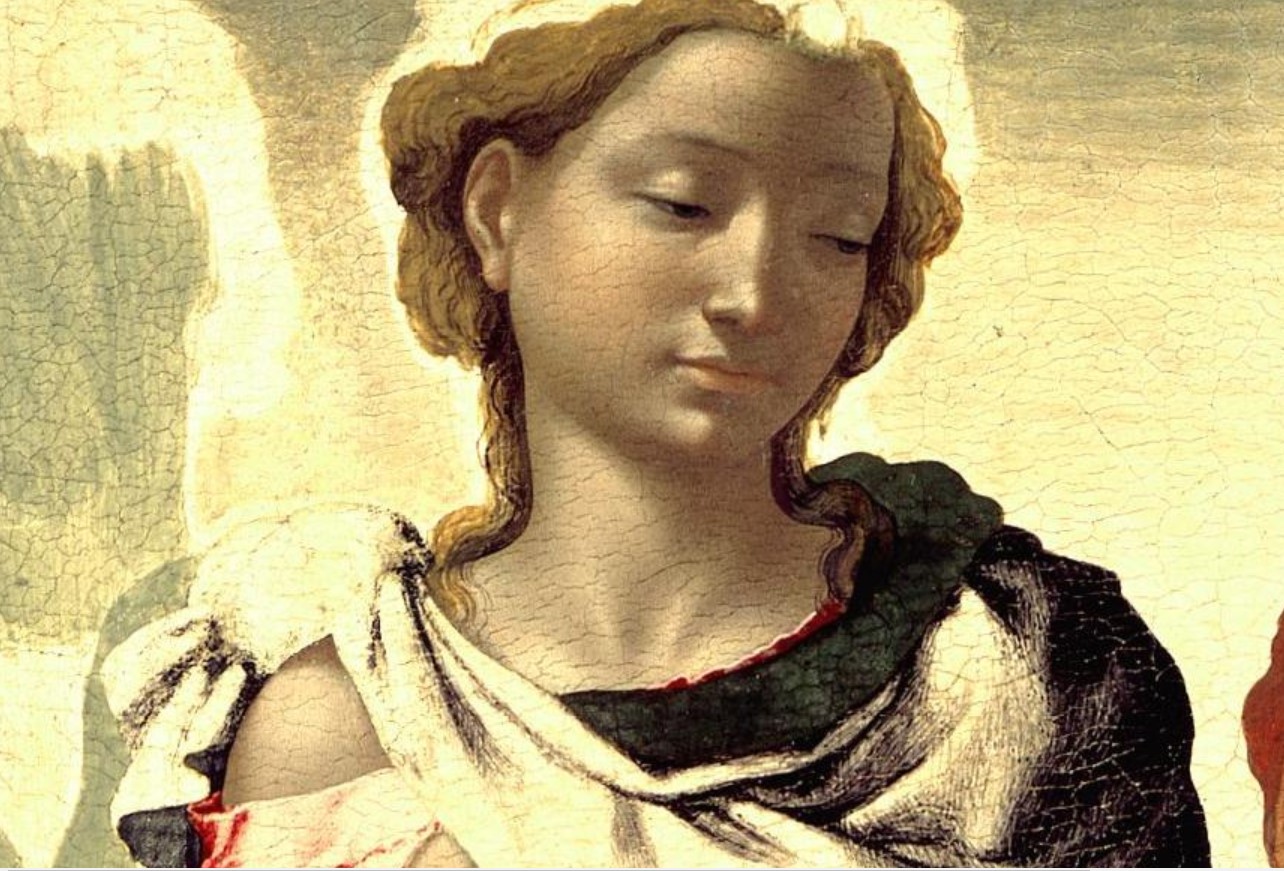
Sappiamo per certo che l’opera si trovasse a Villa Borghese nel 1700 e la sua notorietà esplose grazie alla mostra Art Treasures del 1857, organizzata a Manchester. Fu proprio in quell’occasione che la tavola acquisì il nome con il quale oggi la conosciamo.
Mentre Federico Zeri nel 1953 sosteneva la Madonna di Manchester appartenesse a un gruppo formato da sette dipinti da attribuire a non non identificato Maestro di Manchester, in una mostra successiva del 1994 vennero proposti studi fatti a seguire, portando a pensare il gruppo di tavole fosse realizzato da pittori di secondo piano collegati in qualche modo a me come per esempio Piero d’Argenta e l’Indaco.
Nella stessa occasione è stato possibile constatate quanto fosse diversa qualitativamente la pittura della Madonna di Manchester rispetto alle altre opere del gruppo.
Il non finito dell’opera non aiuta a risolvere certe problematiche relative all’attribuzione o meno a me.
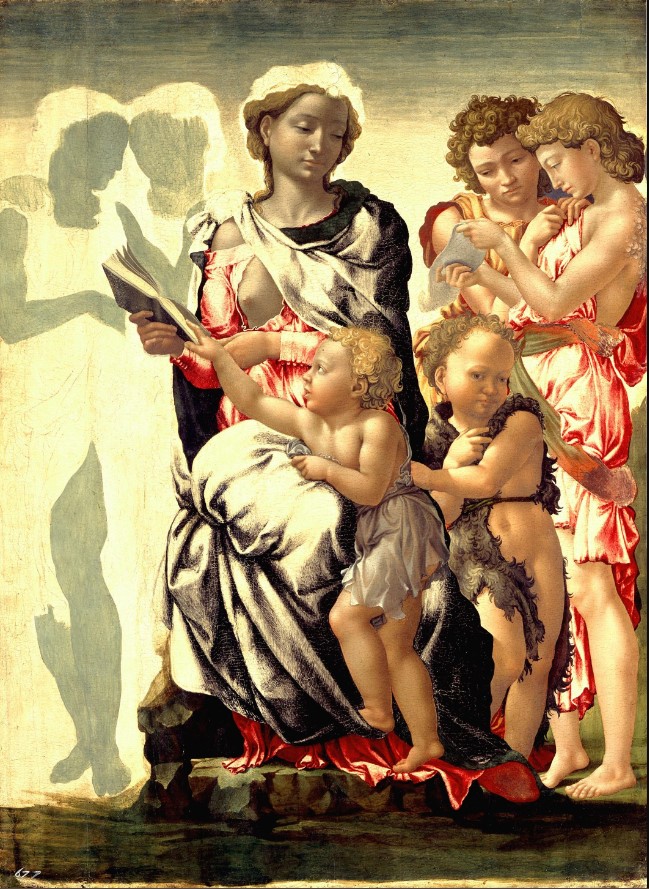
Nella tavola la Madonna al centro trattiene il Bambino fra le ginocchia mentre Giovanni Battista è alle sue spalle, vestito di pelliccia e tocca la veste di Gesù con la mano sinistra.
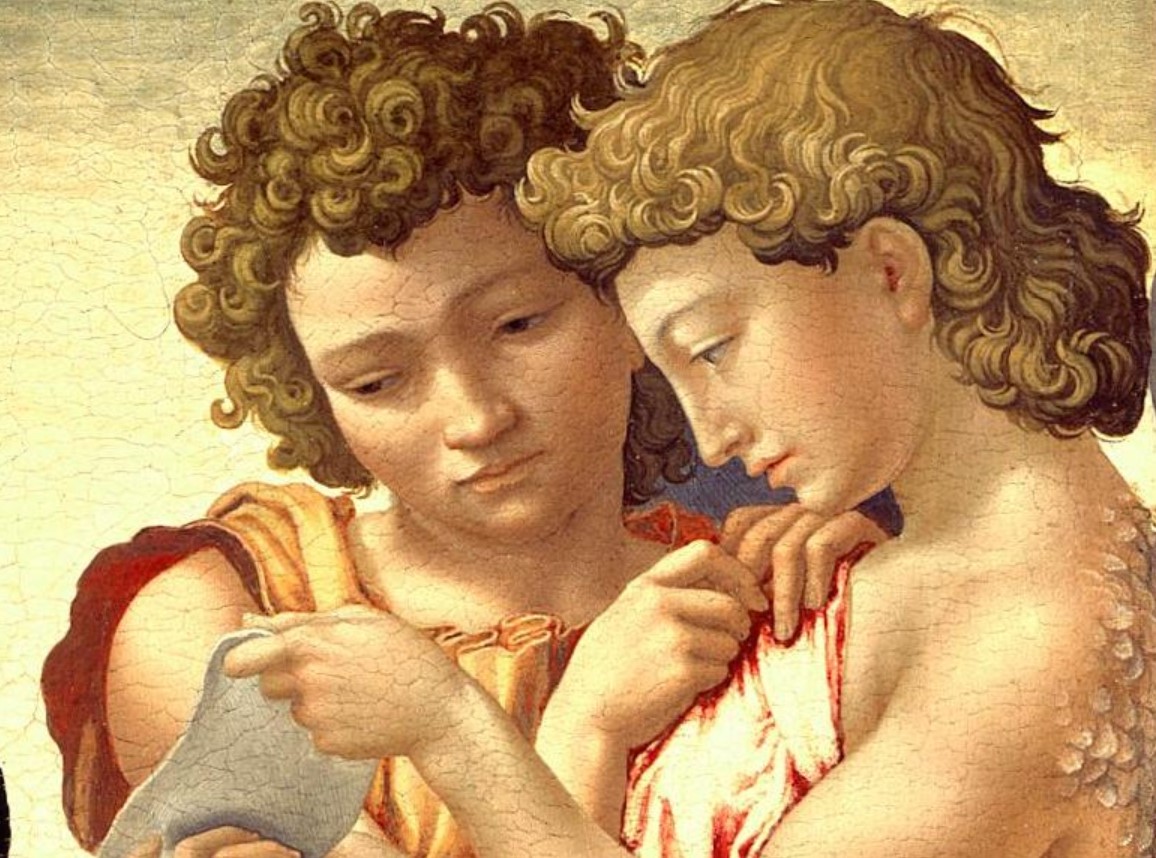
Ai lati si vedono i quattro angeli stanti: due sono già ben definiti mentre degli altri si intuiscono solo i contorni.
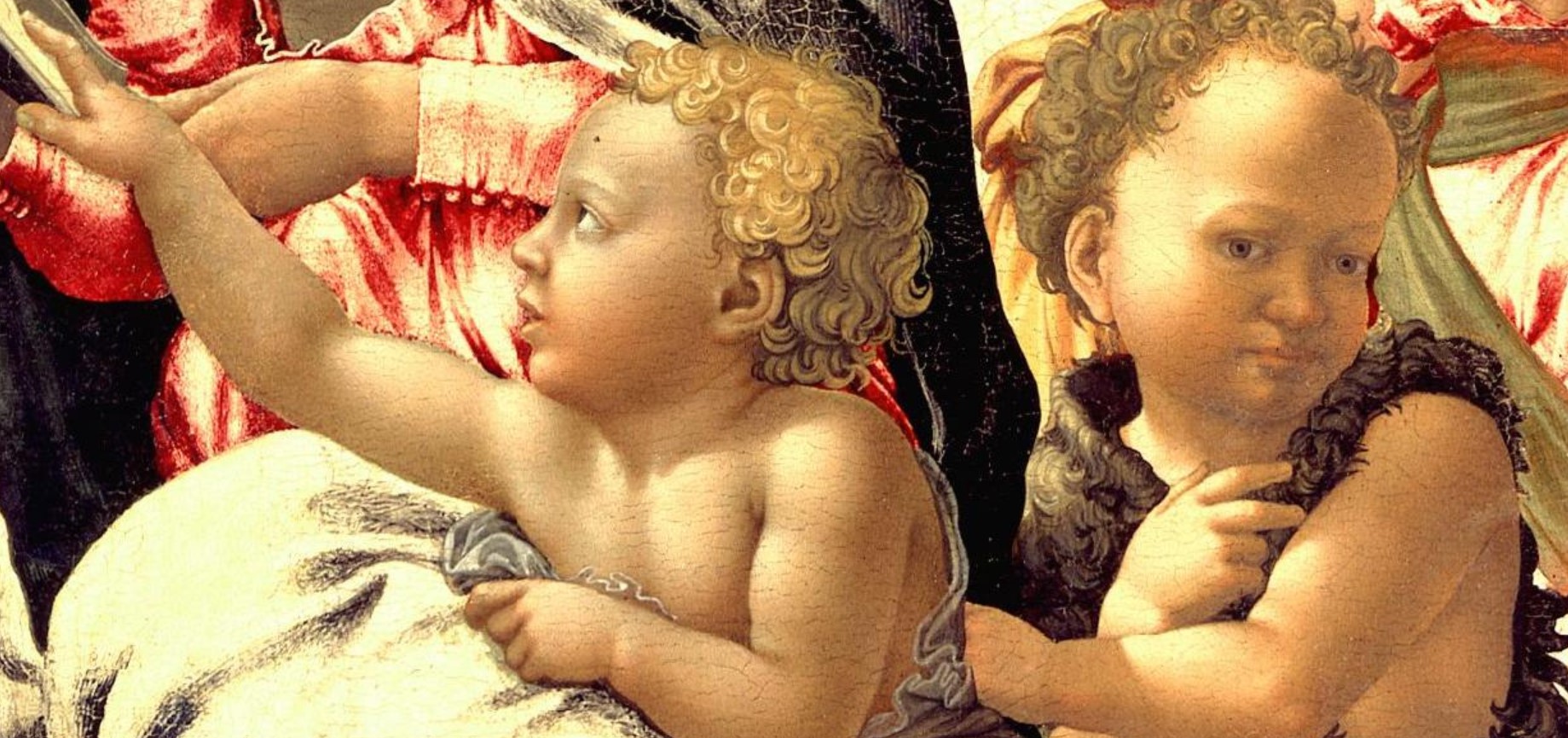
La Madonna ha un seno scoperto che lascia intuire che il Figlio abbia appena terminato di nutrirsi.
Se volete vedere con i vostro occhi questa tavola dipinta, dovete andare necessariamente alla National Gallery di Londra.
Per il momento il vostro Michelangelo Buonarroti vi saluta dandovi appuntamento ai prossimi post e sui social.

Considerations on the attribution of the Manchester Madonna
The so-called Manchester Madonna with child, San Giovannino e quattro angeli is the panel that has been attributed to me for less than two centuries but its authorship has been questioned several times, providing arguments that are anything but negligible.
Part of the critics, following documentary traces, believe he may have painted it around 1497 in Rome.
We know for sure that the work was in Villa Borghese in 1700 and its notoriety exploded thanks to the Art Treasures exhibition of 1857, organized in Manchester. It was on that occasion that the table acquired the name by which we know it today.
While Federico Zeri in 1953 claimed the Manchester Madonna belonged to a group made up of seven paintings to be attributed to an unidentified Master of Manchester, in a subsequent exhibition in 1994 studies were proposed to follow, leading to think the group of panels was made by second-rate painters who were connected in some way to me such as Piero d’Argenta and l’Indaco.
On the same occasion it was possible to ascertain how qualitatively the painting of the Manchester Madonna was different from the other works of the group.
The unfinished work does not help to resolve certain issues relating to the attribution or not to me.
In the work, the Madonna at the center of her holds the Child between her knees while John the Baptist is behind her, dressed in fur and touching Jesus’ garment with his left hand.
On the sides you can see the four standing angels: two are already well defined while only the outlines of the others can be guessed.
The Madonna has an uncovered breast which suggests that the Son has just finished feeding.
If you want to see this painted table with your own eyes, you must necessarily go to the National Gallery in London.
For the moment, your Michelangelo Buonarroti greets you by making an appointment for the next posts and on social media.

Sostienici – Support Us
Se questo blog ti piace e ti appassiona, puoi aiutarci a farlo crescere sempre più sostenendoci in modo concreto condividendo i post, seguendo le pagine social e con un contributo che ci aiuta ad andare avanti con il nostro lavoro di divulgazione. . ENGLISH: If you like and are passionate about this blog, you can help us make it grow more and more by supporting us in a concrete way by sharing posts, following social pages and with a contribution that helps us to move forward with our dissemination work.
8,00 €
-
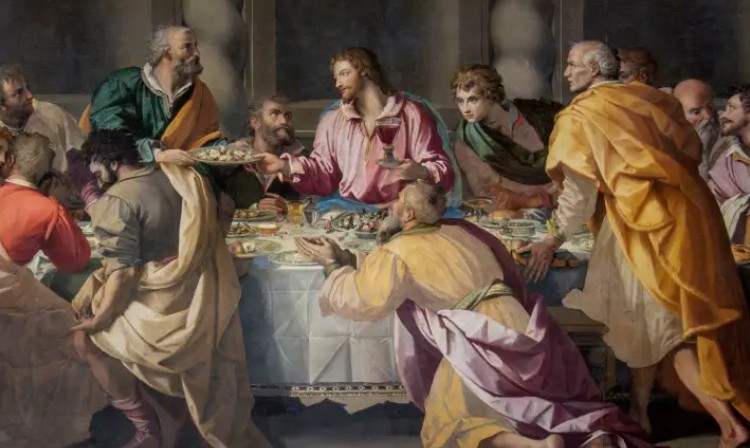
Giovedì Santo: l’Ultima Cena di Allori che pochi conoscono a Firenze
🇮🇹Nel cuore di Museo di Santa Maria Novella, a Firenze, si conserva una delle interpretazioni più affascinanti e meno note dell’Ultima Cena: quella realizzata da Alessandro Allori nel 1584… 🇬🇧In the heart of the Santa Maria Novella Museum in Florence, one of the most fascinating and least-known interpretations of the Last Supper is preserved: the…
-
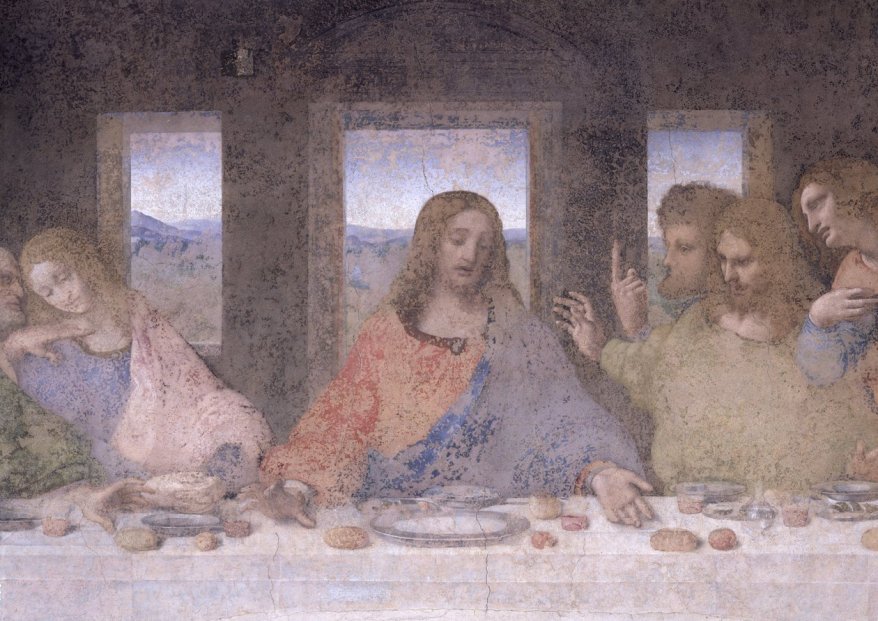
Cenacolo di Leonardo: i dettagli che raccontano il tradimento
🇮🇹Nel Cenacolo di Leonardo da Vinci, custodito a Santa Maria delle Grazie, Cristo annuncia il tradimento e il tempo si ferma… 🇬🇧In Leonardo da Vinci’s Last Supper, housed in Santa Maria delle Grazie, Christ announces the betrayal and time stands still…
-
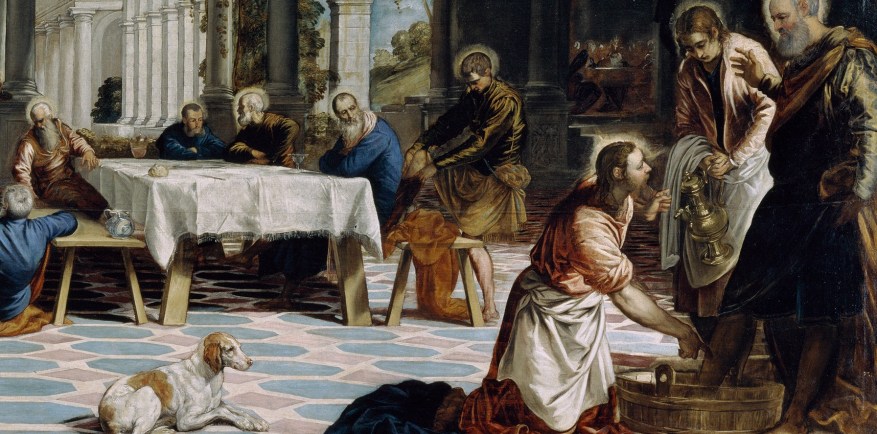
La Lavanda dei Piedi di Tintoretto: Il Capolavoro Veneziano al Prado
🇮🇹Tra i capolavori più affascinanti del Rinascimento veneziano, “La Lavanda dei Piedi” di Jacopo Tintoretto rappresenta un perfetto equilibrio tra spiritualità, innovazione compositiva e straordinaria forza narrativa… 🇬🇧Among the most fascinating masterpieces of the Venetian Renaissance, Jacopo Tintoretto’s “The Washing of the Feet” represents a perfect balance between spirituality, compositional innovation, and extraordinary narrative force…
Condividi:


Questo sono io





sostienici

Sostienici – Support Us
Se questo blog ti piace e ti appassiona, puoi aiutarci a farlo crescere sempre più sostenendoci in modo concreto condividendo i post, seguendo le pagine social e con un contributo che ci aiuta ad andare avanti con il nostro lavoro di divulgazione. . ENGLISH: If you like and are passionate about this blog, you can help us make it grow more and more by supporting us in a concrete way by sharing posts, following social pages and with a contribution that helps us to move forward with our dissemination work.
€10,00


