

La Scultura del giorno: L’Umanità contro il Male di Gaetano Cellini
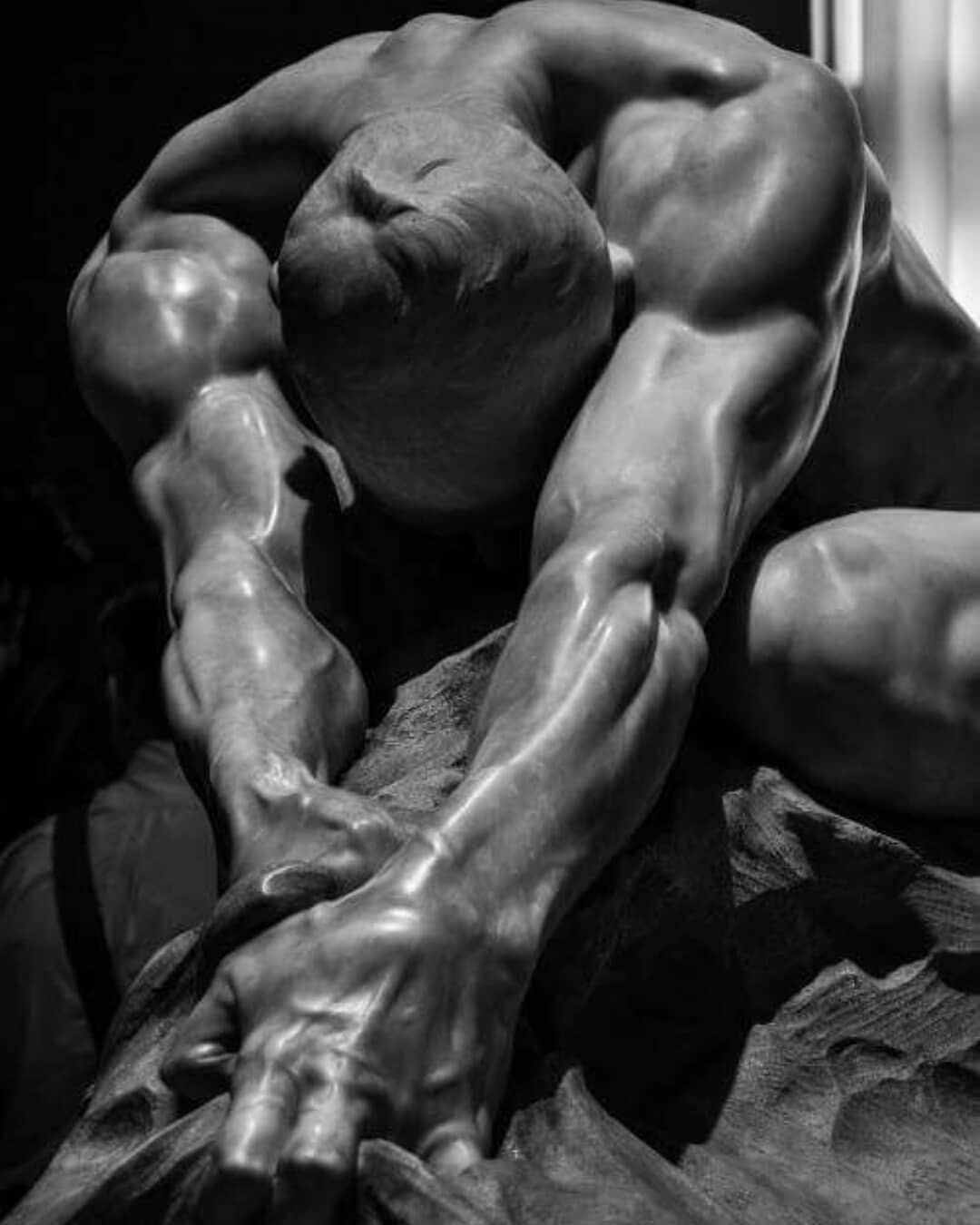
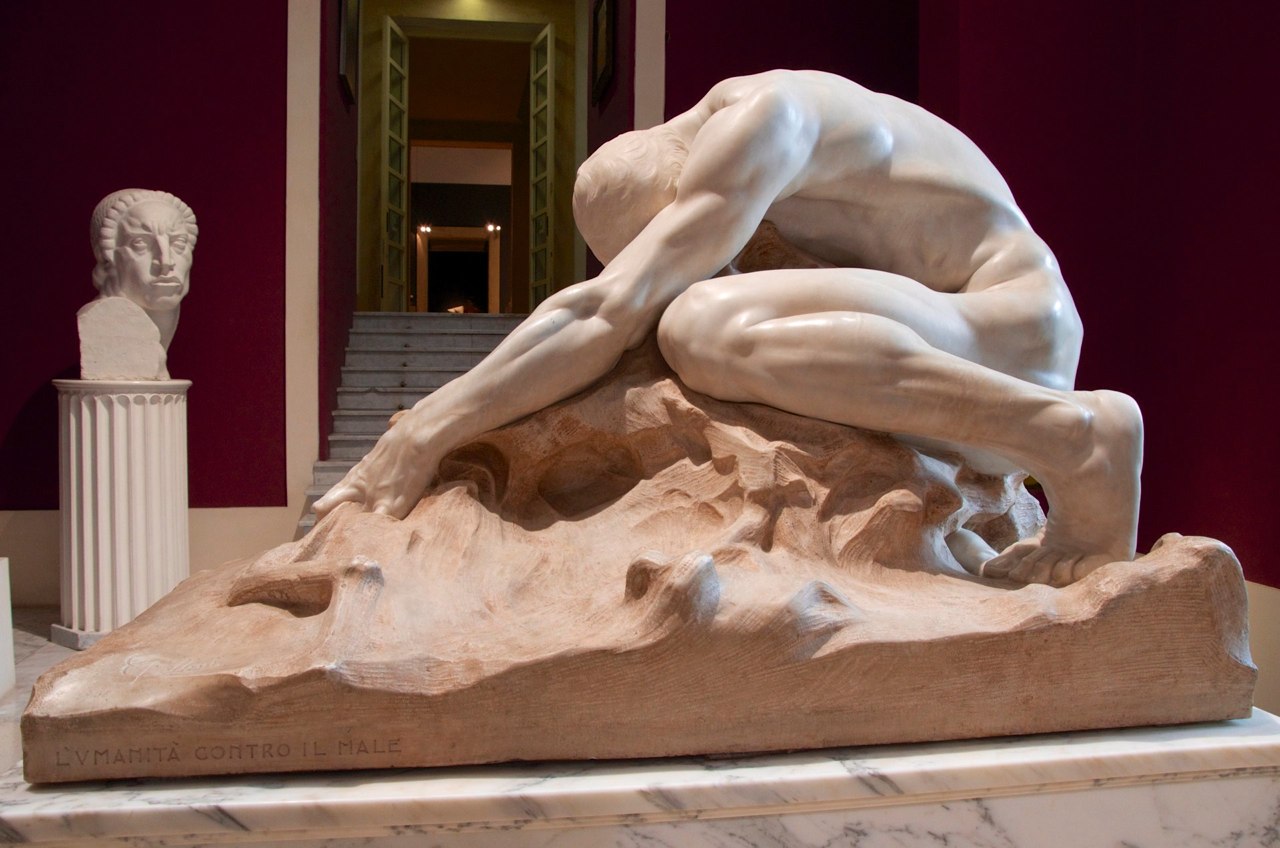
La Scultura del giorno che vi propongo oggi è l’Umanità contro il Male di Gaetano Cellini, scolpita nel marmo dall’artista nel 1908.
Lo scultore ravennate volle rappresentare la superba allegoria della quotidiana lotta che l’intera umanità deve combattere contro il male.
Lo sforzo che compie il protagonista è immane e il suo corpo è completamente impegnato nel conflitto che pare non aver mai fine.
“Così ti sterperò coi denti e l’ugne / Dolore eterno che nel cor mi pugne”, sono le parole che il Cellini scolpì sulla base dell’opera, accanto alla propria firma.
Senza dubbio le mie opere prima e quelle di Rodin poi furono di grande ispirazione per l’artista che presentò il gesso di quest’opera all’Esposizione Nazionale di Milano nel 1906 e la tradusse in marmo nel 1908.

Gaetano Cellini nacque a Ravenna nel 1873 e cominciò a lavorare e studiare presso la bottega artigiana di Stefano Furati per passare poi a quella del Maltoni. In questi laboratori apprese l’arte della scultura studiando soprattutto su opere destinate ai cimiteri.
Le sue opere mostrano forme vigorose e superfici ben levigate. Fra i temi da lui preferiti ci sono i nudi e i ritratti accademici.

Nel suo massimo capolavoro, l’Umanità contro il Male, non c’è segno di resa. Scolpisce un uomo in lotta continua contro la malvagità, non disposto ad arrendersi al destino.
La schiena ha un’anatomia impeccabile e i muscoli del corpo in tensione danno un senso di forza incredibile. L’artista di proposito volle nascondere il volto dell’uomo, evitando di mostrare un volto probabilmente sfigurato dal dolore e mettendo in primo piano le braccia tese.
Celando i lineamenti del viso, il Cellini al contempo consente a tutti di riconoscersi in quella persona in costante lotta durante il corso dell’esistenza.

Osservate le mani, fulcro di tutta la composizione. Hanno una definizione perfetta, con le falangi riprodotte in modo esemplare, le vene e finanche le ossa del polso percettibili sotto l’epidermide e contornate dalla muscolatura.
L’Umanità contro il Male scolpita da Gaetano Cellini è custodita nella Galleria d’Arte Moderna di Roma.

Per il momento il vostro Michelangelo Buonarroti vi saluta dandovi appuntamento ai prossimi post e sui social.
Sculpture of the day: Humanity against Evil by Gaetano Cellini
The Sculpture of the day that I propose to you today is Humanity against Evil by Gaetano Cellini, sculpted in marble by the artist in 1908.
The sculptor from Ravenna wanted to represent the superb allegory of the daily struggle that all of humanity must fight against evil. The effort that the protagonist makes is enormous and his body is completely engaged in the conflict that seems to never end.
“So I will root out the eternal pain that stings in my heart with my teeth and nails”, are the words that Cellini sculpted on the base of the work, next to his signature.
Undoubtedly my works first and then those of Rodin were a great inspiration for the artist who presented the plaster of this work at the National Exhibition of Milan in 1906 and translated it into marble in 1908.
Gaetano Cellini was born in Ravenna in 1873 and began to work and study in Stefano Furati’s workshop before moving on to Maltoni’s. In these workshops he learned the art of sculpture by studying above all works intended for cemeteries.
His works show vigorous forms and well-polished surfaces. Among his favorite themes are nudes and academic portraits.
In his most famous work, Humanity against Evil, there is no sign of surrender. It sculpts a man in constant struggle against wickedness, unwilling to surrender to destiny.
His back has impeccable anatomy and the muscles of the body in tension give an incredible sense of strength. The artist wanted to hide the man’s face, avoiding showing a face probably disfigured by pain and putting his outstretched arms in the foreground.
By concealing the features of the face, Cellini at the same time allows everyone to recognize themselves in that person in constant struggle during the course of existence.
Observe the hands, the fulcrum of the whole composition. They have a perfect definition, with the phalanges reproduced in an exemplary way, the veins and even the bones of the wrist perceptible under the epidermis and surrounded by the muscles.
Humanity against Evil sculpted by Gaetano Cellini is kept in the Modern Art Gallery in Rome.
For the moment, your Michelangelo Buonarroti greets you by making an appointment for the next posts and on social media.

Sostienici – Support Us
Se questo blog ti piace e ti appassiona, puoi aiutarci a farlo crescere sempre più sostenendoci in modo concreto condividendo i post, seguendo le pagine social e con un contributo che ci aiuta ad andare avanti con il nostro lavoro di divulgazione. . ENGLISH: If you like and are passionate about this blog, you can help us make it grow more and more by supporting us in a concrete way by sharing posts, following social pages and with a contribution that helps us to move forward with our dissemination work.
10,00 €
-

Il dipinto della Resurrezione di Benjamin West che racconta il significato della Pasqua
🇮🇹Il dipinto “La Resurrezione” di Benjamin West racconta con luce e dramma il momento della Resurrezione di Gesù Cristo. Un capolavoro neoclassico che torna protagonista nel periodo di Pasqua… 🇬🇧Benjamin West’s painting “The Resurrection” depicts the moment of Jesus Christ’s resurrection with light and drama. A neoclassical masterpiece that returns to prominence during the Easter…
-
Chi è davvero Banksy? Reuters svela l’identità segreta del re della street art
🇮🇹Reuters svela l’identità di Banksy: secondo l’inchiesta, il celebre artista di graffiti sarebbe Robin Gunningham, il volto nascosto dietro il mito della street art.. 🇬🇧Reuters reveals Banksy’s identity: according to the investigation, the famous graffiti artist is Robin Gunningham, the hidden face behind the myth of street art..
-
14 marzo 1665: nasce Giuseppe Maria Crespi, lo Spagnoletto che rese moderna la pittura del quotidiano
🇮🇹Il 14 marzo 1665 nasce a Bologna Giuseppe Maria Crespi, detto lo Spagnoletto: il pittore che portò nella pittura barocca scene di vita quotidiana e una sorprendente modernità… 🇬🇧Giuseppe Maria Crespi, known as lo Spagnoletto, was born in Bologna on March 14, 1665: the painter who brought scenes of everyday life and a surprising modernity…
Condividi:


Questo sono io





sostienici

Sostienici – Support Us
Se questo blog ti piace e ti appassiona, puoi aiutarci a farlo crescere sempre più sostenendoci in modo concreto condividendo i post, seguendo le pagine social e con un contributo che ci aiuta ad andare avanti con il nostro lavoro di divulgazione. . ENGLISH: If you like and are passionate about this blog, you can help us make it grow more and more by supporting us in a concrete way by sharing posts, following social pages and with a contribution that helps us to move forward with our dissemination work.
€10,00


potente nel messaggio senza perdere in armonia
"Mi piace"Piace a 1 persona
Non conoscevo questo scultore. Grazie! Approfondirò cercando ulteriori opere.
"Mi piace"Piace a 1 persona
Mi fa piacere, un abbraccio
"Mi piace""Mi piace"