
La Vocazione di San Matteo del Caravaggio
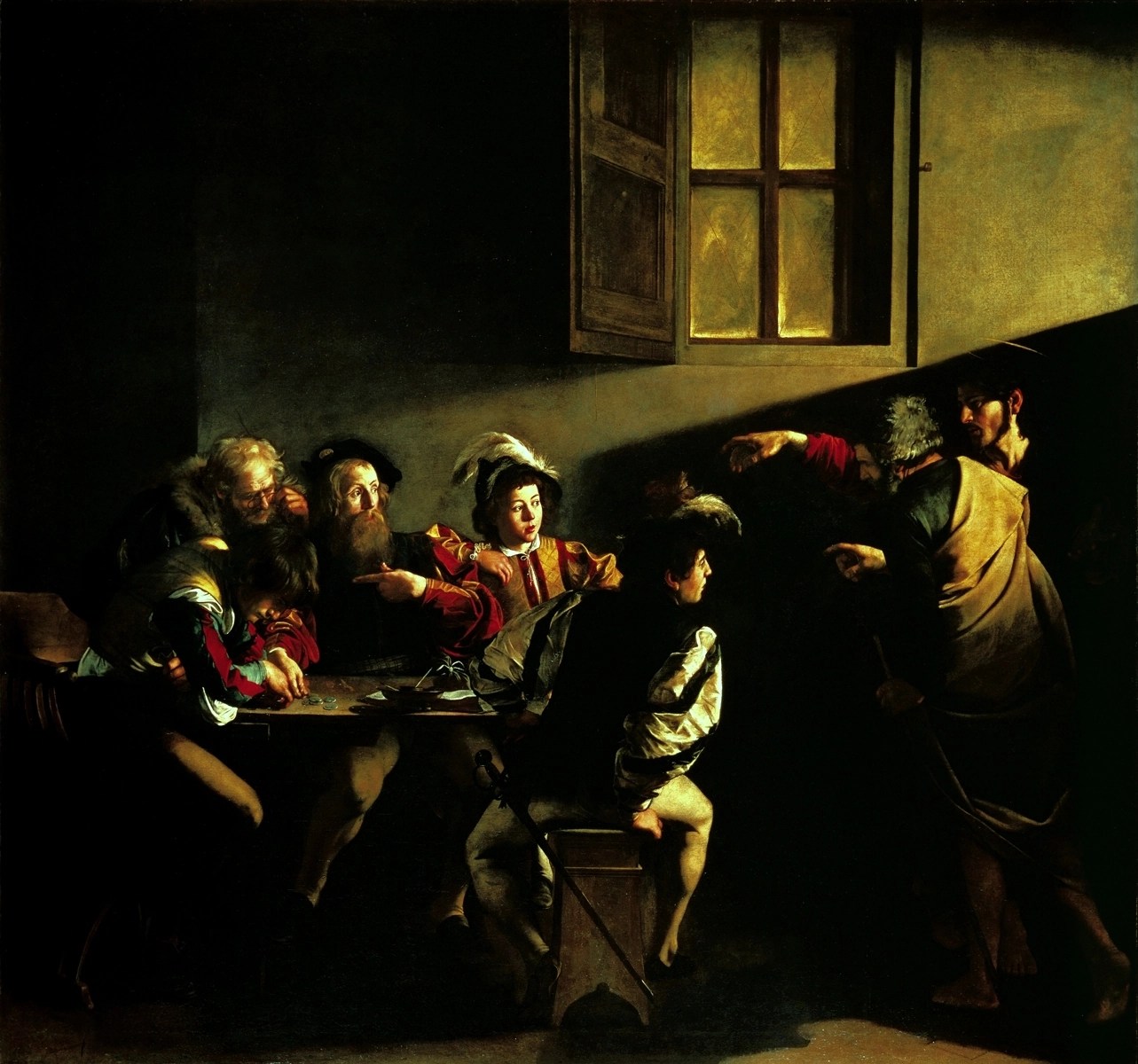
La Vocazione di San Matteo è un capolavoro assoluto del Caravaggio. L’artista dipinse questa tela a olio per la Cappella Contarelli della chiesa di San Luigi dei Francesi fra il 1599 e il 1610.
Caravaggio volle rappresentare il momento in cui Cristo incontra Matteo e lo chiama per seguirlo. Matteo fino ad allora pareva non aver provato nessuna attrazione per la nuova via indicata dal Salvatore ed era un abile esattore delle tasse. Fatto sta che senza esitare abbandona troppo per seguire il Messia.
Andando via di là, Gesù vide un uomo, seduto al banco delle imposte, chiamato Matteo, e gli disse: “Seguimi”. Ed egli si alzò e lo seguì.
Matteo 9,9 – 13
I protagonisti della Vocazione di San Matteo
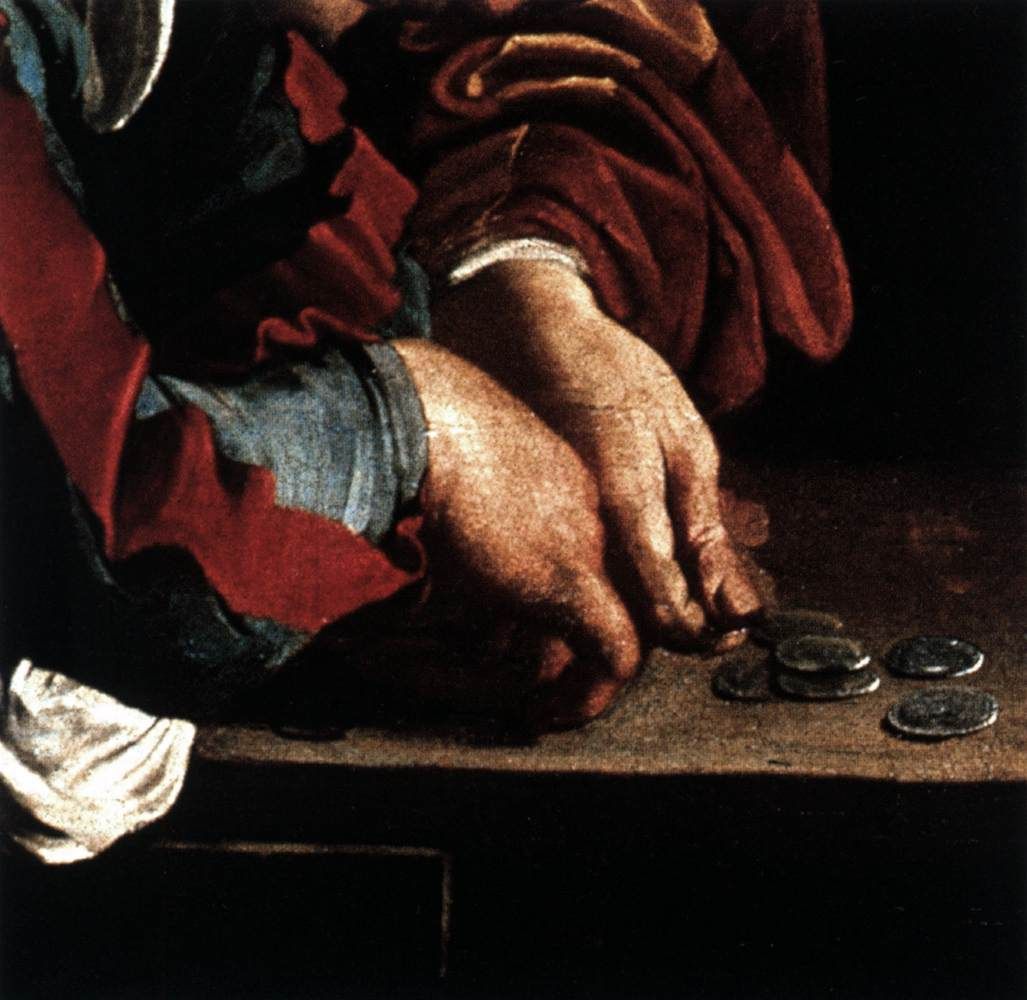
Nella parte sinistra della tela, raccolti attorno al tavolo, si vedono cinque uomini seduti. Il più giovane sta contando i denari mentre alle spalle, un uomo più maturo con gli occhiali sul naso, controlla che effettivamente i soldi vengano contati bene.
Mentre il gruppo è impegnato a controllare i danari, irrompe sulla scena Cristo assieme all’Apostolo Pietro che Caravaggio volle dipingere di spalle.
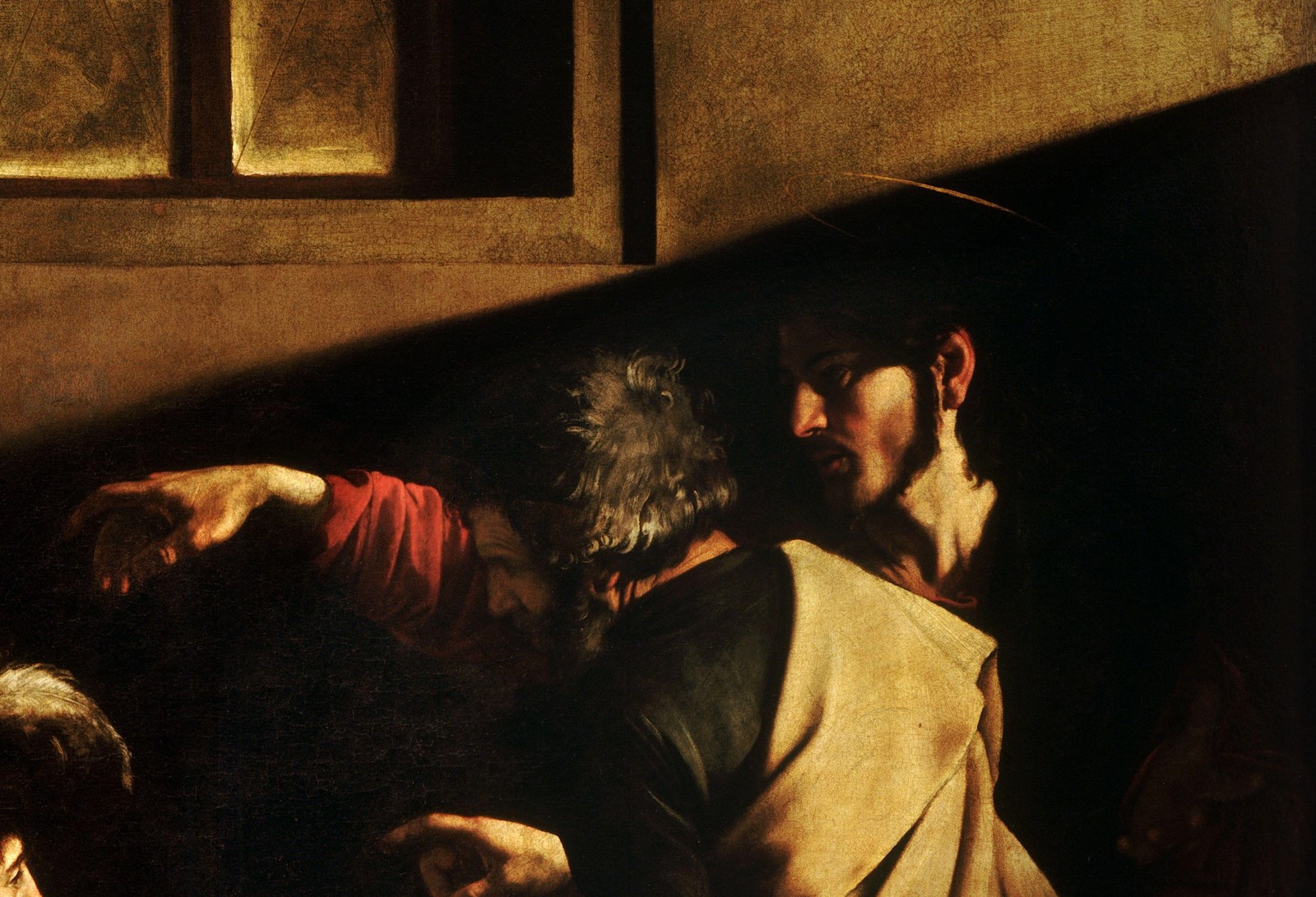
Cristo indica con il braccio teso e l’indice levato citando palesemente la mia Creazione di Adamo un uomo seduto al tavolo che lo sta guardando con fare stupito. Indicandosi il petto pare voler dire “Chi io?”. E’ San Matteo, indicato anche se con fare meno imperioso da Pietro.
Un fascio di luce che arriva da una finestra fuori campo sulla destra investe San Matteo, lasciando in ombra Cristo. E’ proprio la luce a essere protagonista nel dipinto indirizzando lo sguardo dello spettatore da destra verso sinistra.
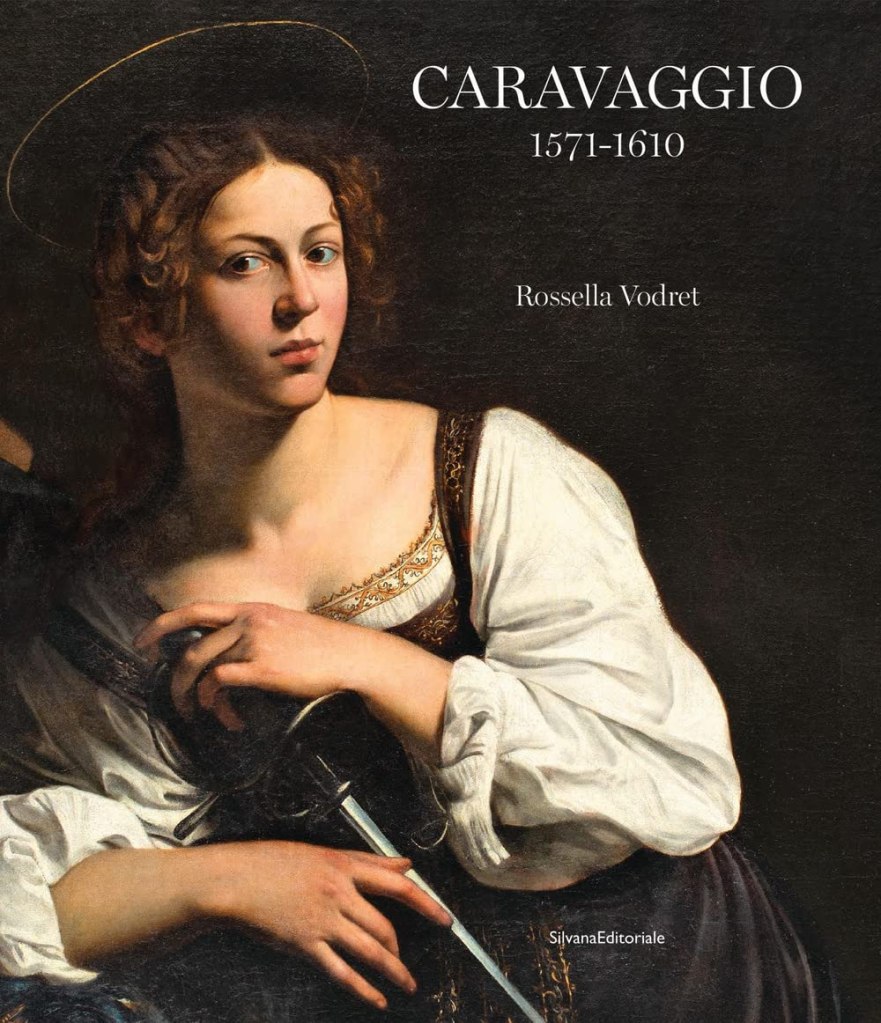
Per il momento il vostro Michelangelo Buonarroti vi saluta dandovi appuntamento ai prossimi post e sui social. A proposito, se siete alla ricerca di un buon libro sul Caravaggio e le sue opere, riccamente illustrato, vi consiglio quello che trovate QUA.
The Vocation of San Matteo by Caravaggio
The Vocation of San Matteo is an absolute masterpiece by Caravaggio. The artist painted this oil canvas for the Contarelli Chapel of the church of San Luigi dei Francesi between 1599 and 1610.
Caravaggio wanted to represent the moment in which Christ meets Matthew and calls him to follow him. Until then Matthew seemed to have felt no attraction for the new way indicated by the Savior and was a skilled tax collector. The fact is that without hesitation he abandons too much to follow the Messiah.
Going away from there, Jesus saw a man, sitting at the tax office, called Matthew, and he said to him, “Follow me.” And he got up and followed him.
Matthew 9: 9 – 13

The protagonists of the Vocation of St. Matthew
On the left side of the canvas, gathered around the table, we see five seated men. The younger is counting the money while behind him, a more mature man with glasses on his nose, checks that the money is actually being counted well.
While the group is busy checking the money, Christ bursts on the scene together with the Apostle Peter whom Caravaggio wanted to paint from behind.
Christ points with his outstretched arm and raised index finger, clearly quoting my Creation of Adam at a man sitting at the table who is looking at him with amazement. Pointing to his chest it seems to mean “Who me?”. It is St. Matthew, indicated even if with a less imperious attitude by Peter.
A beam of light coming from an out-of-view window on the right hits San Matteo, leaving Christ in the shade. It is precisely the light that is the protagonist in the painting, directing the viewer’s gaze from right to left.
For the moment, your Michelangelo Buonarroti greets you by giving you an appointment at the next posts and on social networks.

Sostienici – Support Us
Se questo blog ti piace e ti appassiona, puoi aiutarci a farlo crescere sempre più sostenendoci in modo concreto condividendo i post, seguendo le pagine social e con un contributo che ci aiuta ad andare avanti con il nostro lavoro di divulgazione. . ENGLISH: If you like and are passionate about this blog, you can help us make it grow more and more by supporting us in a concrete way by sharing posts, following social pages and with a contribution that helps us to move forward with our dissemination work.
10,00 €
-
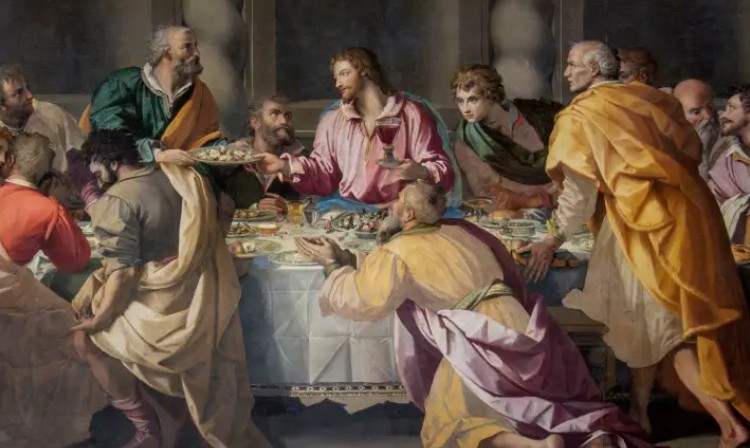
Giovedì Santo: l’Ultima Cena di Allori che pochi conoscono a Firenze
🇮🇹Nel cuore di Museo di Santa Maria Novella, a Firenze, si conserva una delle interpretazioni più affascinanti e meno note dell’Ultima Cena: quella realizzata da Alessandro Allori nel 1584… 🇬🇧In the heart of the Santa Maria Novella Museum in Florence, one of the most fascinating and least-known interpretations of the Last Supper is preserved: the…
-
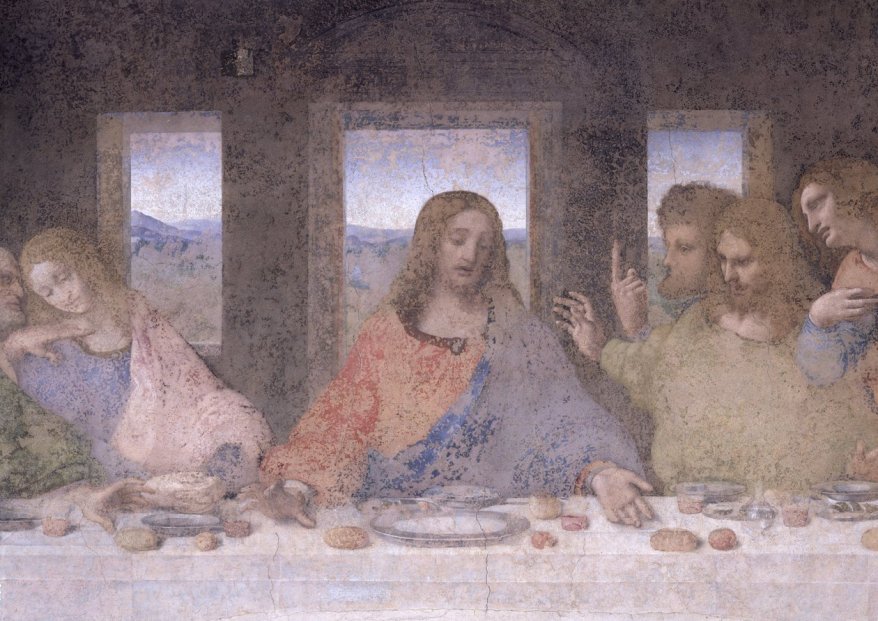
Cenacolo di Leonardo: i dettagli che raccontano il tradimento
🇮🇹Nel Cenacolo di Leonardo da Vinci, custodito a Santa Maria delle Grazie, Cristo annuncia il tradimento e il tempo si ferma… 🇬🇧In Leonardo da Vinci’s Last Supper, housed in Santa Maria delle Grazie, Christ announces the betrayal and time stands still…
-
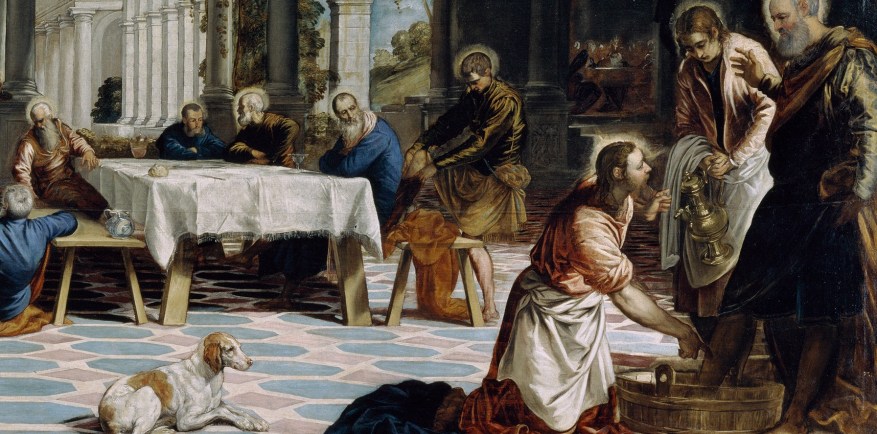
La Lavanda dei Piedi di Tintoretto: Il Capolavoro Veneziano al Prado
🇮🇹Tra i capolavori più affascinanti del Rinascimento veneziano, “La Lavanda dei Piedi” di Jacopo Tintoretto rappresenta un perfetto equilibrio tra spiritualità, innovazione compositiva e straordinaria forza narrativa… 🇬🇧Among the most fascinating masterpieces of the Venetian Renaissance, Jacopo Tintoretto’s “The Washing of the Feet” represents a perfect balance between spirituality, compositional innovation, and extraordinary narrative force…
Condividi:


Questo sono io





sostienici

Sostienici – Support Us
Se questo blog ti piace e ti appassiona, puoi aiutarci a farlo crescere sempre più sostenendoci in modo concreto condividendo i post, seguendo le pagine social e con un contributo che ci aiuta ad andare avanti con il nostro lavoro di divulgazione. . ENGLISH: If you like and are passionate about this blog, you can help us make it grow more and more by supporting us in a concrete way by sharing posts, following social pages and with a contribution that helps us to move forward with our dissemination work.
€10,00


1 commento »